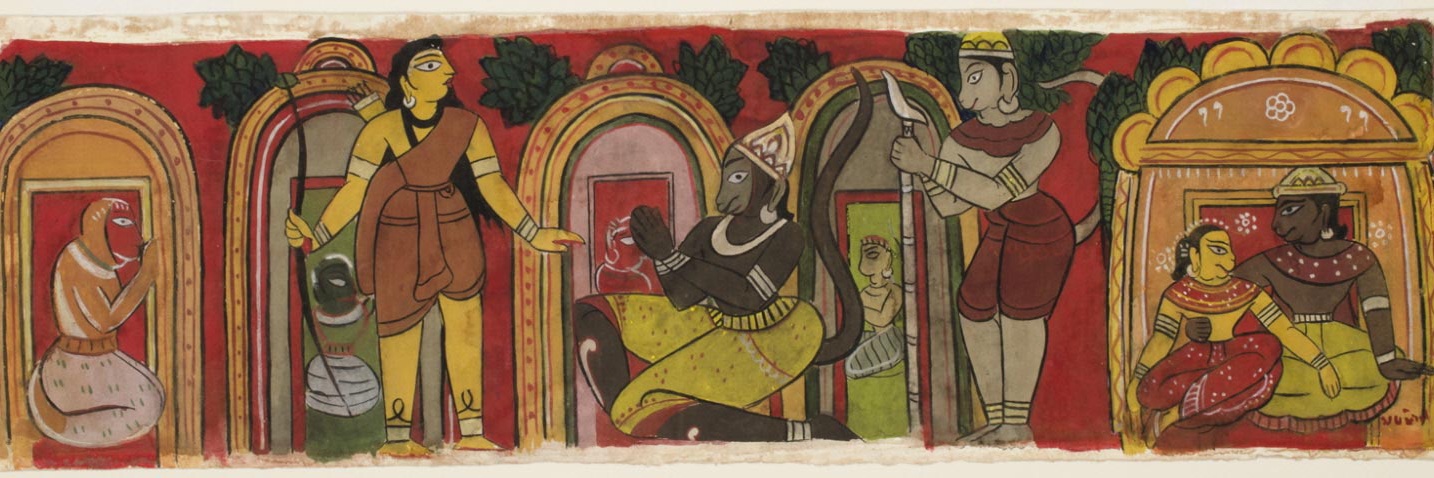
A long read detailing the discourse surrounding the ancient tradition of cremation which, during British rule became a powerful symbol of resistance, redefining Hindu identity in the face of colonial and religious challenges. https://t.co/dYPJxb1iM8
There's a really good article about this called "Why Johnny Can't Dissent" which basically argues that any dissident or countercultural movement gets commodified and absorbed to serve capitalism
https://t.co/4BjyTQI8pZ
I decided to do a little historical research to understand exactly why the United States consistently votes "NO" to making food a basic, non-negotiable human right at the United Nations. What I discovered was truly shocking and highly revealing.
It appears that the entire American legal system is built almost exclusively on the cold, individualistic concept of "negative rights": which are mere freedoms from direct government interference, such as the freedom of speech, the freedom of religion, the right to bear arms, and protection against unlawful search and seizure.
A "right to food", on the other hand, is a positive right, meaning it legally, structurally requires the government to actively provide a material service, a life-saving commodity, or survival resources to its citizens. Now it becomes glaringly clear why the US government has historically resisted codifying any positive economic, social, or cultural rights, such as the rights to universal healthcare, affordable housing, clean drinking water, or basic food, into law.
They claim that these survival needs are merely "policy goals" to be debated and legislated democratically, rather than fundamental, non-negotiable constitutional rights.
The US Mission to Geneva has explicitly admitted that if the right to food were formally recognized as a legally binding, international human right, the US government deeply fears it would face massive, endless domestic lawsuits from its own impoverished citizens over systemic poverty, structural food insecurity, and widespread malnutrition. Furthermore, Washington fiercely opposes the legal concept of extraterritorial obligations: the revolutionary idea that wealthy, imperialist nations have a binding legal duty to provide aid, agricultural resources, financial assistance, or food to the starving citizens of other countries that they have spent centuries exploiting, plundering, and destabilizing.
This stark contrast between the US government’s fierce opposition to a legally binding "right to food" and its absolute willingness to instantly intervene with trillions of dollars to bail out failing private corporations, massive banks, and corporate monopolies is the ultimate double standard. It can only be described as the classic, brutal reality of "socialism for the rich and cutthroat capitalism for the poor."
Indeed, we always see that America proudly, eagerly guarantees an ironclad financial safety net for bloated corporate entities, massive defense contractors, and Wall Street venture capitalists to prevent market failures, bankruptcies, and bad investments. Yet, they flatly, ironically decline to guarantee even a basic safety net for human lives to prevent widespread nutritional failures.
every word, every thought and every feeling is accompanied by an image nowadays. before, we “saw” and “felt” words in our imaginations in unique ways. i’m finding that though it can be great for artistic expression, images often restrict/limit our experience of the words we read.
"In any another literary society, such a mind would have been celebrated as a theorist of modernity from within tradition. In his own time, he was often portrayed as old-fashioned.
This was the cruelty of colonial modernity in Indian languages. It did not merely produce new institutions. It produced new embarrassment.
A Telugu paṇḍita, once a figure of textual authority, memory, grammar, taste, and pedagogy, became, by the turn of the twentieth century, a faintly comic figure in the eyes of the English-educated middle class. "
A fitting tribute by @Anuraag_Shukla to one of the greatest modern Dharmic intellectuals of Bharata.
A colossus who dared to look at the might of the colonizer with the indefatigable power of Dharmic cultural rootedness
In the era of spectacle as self expression, 'democratizing creativity' via exponential tech without investing in cleansing citta and a sacred worldview is to put senses on steroids and sensemaking on ventilator.
i think a lot about that guy in the early 1900s who went to bosnia to the last illiterate communities in europe and found out they were still reciting homer epic-length poems to each other from memory.
but when they became literate they lost the ability to remember the poems
Śrī Viswanatha Satyanarayana was a one-man republic of poetry, aesthetics, epic memory, criticism, philosophy, and language.
A mind carrying such mastery still embarrasses the English-educated idea of literature, writes Dr. @Anuraag_Shukla.
https://t.co/G3LG7MgfAu
Our review of 'The Greatest Books of Ancient India': A celebration of India's intellectual heritage that informs, inspires and sparks a lifelong interest in Indian Knowledge Systems by @priya_27_.
https://t.co/G8nfwyxzwI
my pet peeve with movies set in the antiquity/bronze age is that most directors refuse to treat mythology as an actual religion. those people didn’t believe they were sharing mythes, they actually believed their gods walker amongst them and influenced their lives.
AMERICA COMMITTED UNFORGIVABLE CRIMES IN VIETNAM…
In February 1969, American forces pumped chemicals into the Saigon River in South Vietnam to destroy vegetation and wildlife.
this is the real problem. all these poor animals died to feed someone, and instead the meat goes in the trash. this should be highly illegal on a planet w finite resources, and instead its an economic guarantee under capitalism
PARIKRAMA Edition-3 is here
- Did we borrow civic sense from the West? We didn’t have to.
- It was already ours, written in texts older than most civilisations.
- Come see for yourself.
This time we walk through a 400-year-old living temple and have a conversation that’ll change how you see our ancient texts.
- Sunday, 26th July 2026
- 10:00 AM onwards
- Shri Kumaraswamy Temple, Hanumanthanagar, Bengaluru
https://t.co/sdyCNDKZo3
₹99 per person · Registration mandatory for 12+ years
Register now: https://t.co/nf4JTfsazj
Come Curious. Leave Connected.
Parikrama by Sanatanam Connect
Knowledge Partner Bṛhat
In order to make ₹1 Cr, you'd need to make lakhs of kilograms of chalk-salt mixture. This needs a proper factory with workers.
You can't operate even a legit factory without greasing the right palms for permissions. Imagine how many neta-babus must be involved in this scam.
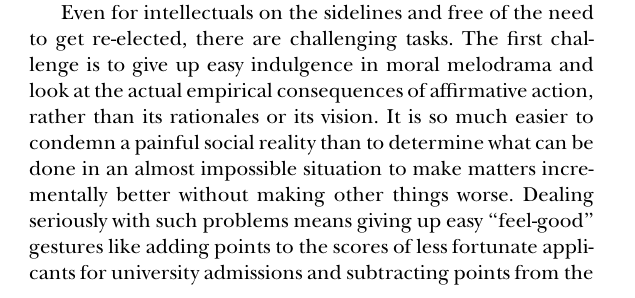
Sowell urges Indian intellectuals to stop doing moral melodrama of justifying reservation by citing some 5000 years of dehydration instead to see if reservations as a policy have even been able to fulfill its purpose i.e uplift the scheduled castes
The Answer is No
Mahāprabhu Jagannātha, his sister Subhadra and brother Balabhadra journey out on their magnificent chariots each year - so that everyone may receive His darśana.
From the ancient worship of Śrī Nīlamādhava among the Śabara communities to Dāru Brahma, to the sacred construction of the three magnificent chariots-Jagannātha Ratha Yātrā carries within it many layers of history, ritual, devotion and civilizational memory.
May Lord Jagannātha bless your life with peace, devotion, prosperity, and the strength to walk the path of Dharma. Jai Jagannātha!