How can Linux features be examined through a safety-critical lens?
Alessandro Carminati of NVIDIA shares how the LFSCS Working Group investigates minimal Linux footprints, memory isolation, VMAs, and other safety-relevant behavior.
Read the recap: https://t.co/3eVK0U93Fm
How is open source advancing safety-critical and embedded Linux?
Join the ELISA Project community at Embedded Linux Conference and Open Source Summit Europe 2026, October 7–9 in Prague.
Learn more: https://t.co/D2gMZFQ1fm #linux#ELISAproject
How can Linux improve requirements traceability without slowing upstream development?
Join the ELISA Project at the Safe Systems with Linux Microconference during Linux Plumbers Conference 2026, October 5–7 in Prague. Learn more: https://t.co/DbGk3u8VgI
How can software teams clearly separate user needs, requirements, design, and implementation?
Join the ELISA Seminar on July 23 to explore the WHAT-WHY-HOW model with Stanislav Pankevich of Reflex Aerospace GmbH.
Register: https://t.co/WA4YwJQshm
What is inside the binaries your team ships—and can they be traced back to their source? This blog explains how the Yocto Project supports SBOMs, SPDX, reproducible builds, static library tracking, and build traceability. https://t.co/HBf74rcr2x
How can open source advance safety-critical systems?
Join ELISA Project at Open Source Summit 2026 in Seoul, August 11–12, for sessions on AI-driven security, Linux in safety-critical domains, requirements traceability, SPDX, and SBOMs.
Learn more: https://t.co/YATzF24ljz
How can teams keep user needs, requirements, design, and implementation clear and traceable?
Join the ELISA Seminar on July 23 with Stanislav Pankevich to explore the practical WHAT-WHY-HOW model for software requirements.
Register: https://t.co/V0HmO9mR3k
How can open source practices support safety-critical systems? The ELISA Lighthouse SIG explores best practices for code-first, CI-driven open source development in regulated industries, including project assessments and evidence confidence.
Get involved: https://t.co/T856Ewh8X8
How can safety supply chain documentation become more standardized?
In a recent ELISA Workshop, Nicole Pappler discusses the SPDX Safety Profile Release Candidate & how it supports structured safety documentation, transparency, and compliance.
Learn more: https://t.co/LFOL0yvOLP
How can open source support functional safety?
Xen as a Type-1 hypervisor, static partitioning, deterministic execution, freedom from interference, MISRA C, MPU support, traceability, testing, fuzzing, and reusable safety artifacts. https://t.co/kIqmQqGZXg
What’s wrong with this requirement?
In this ELISA Project Seminar clip, learn how to spot common issues in requirements, reduce ambiguity, and make requirements easier to evaluate and maintain.
Watch: https://t.co/Vgcrc8vB5m
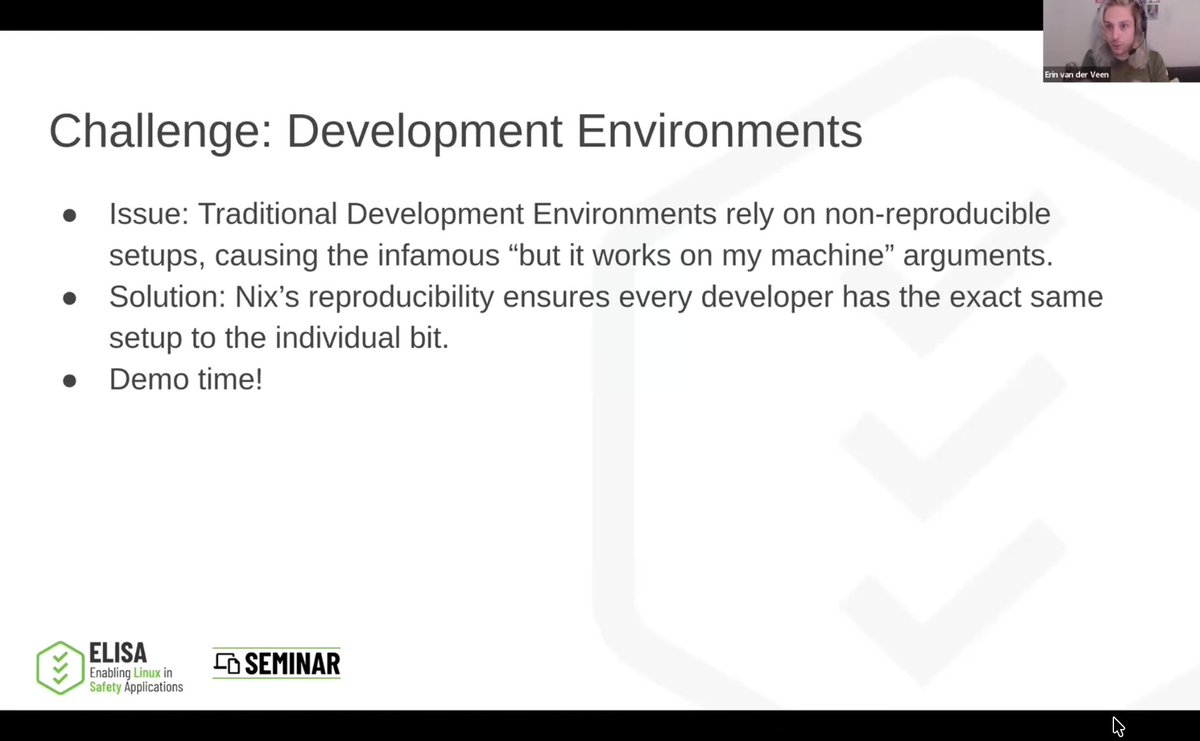
How can Linux-based avionics development become easier to reproduce, debug, and share?
Learn how Nix, NixOS, and AvioNix help address setup challenges, “works on my machine” issues, SBOM tracking, cross-compilation, and reproducible builds. Read the blog: https://t.co/jj1u6BIl5j
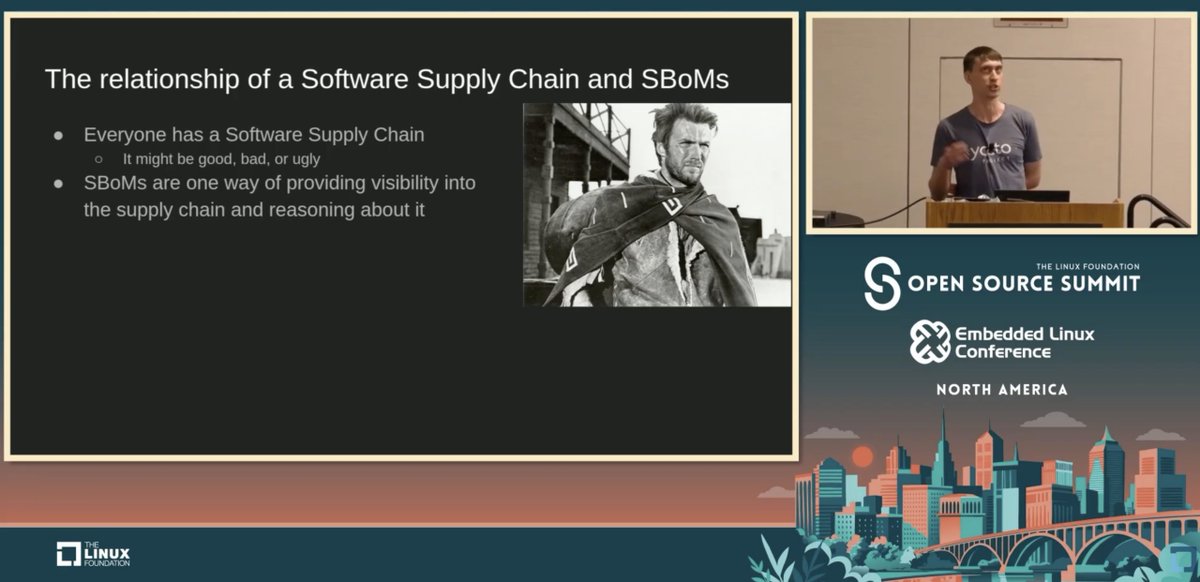
What’s inside your shipped binaries?
This week’s session highlight features Software Supply Chain Management With the Yocto Project by Joshua Watt, Garmin.
Learn about SBOMs, SPDX, BitBake task hashes, reproducible builds, and build tool traceability. https://t.co/wOE0ytwl8h
How can open source support safety-critical avionics?
Matthew Weber of Boeing shares insights on DO-178C, ARINC 653, deterministic partitioning, testing rigor, and lifecycle traceability for mixed-criticality systems.
Watch: https://t.co/BYk0o0ipam
How can open source support functional safety?
In this ELISA Project Seminar, Ayan Kumar Halder of AMD and Matthew Weber of Boeing discuss Xen, Zephyr, and Linux for mixed-criticality systems, including key safety certification artifacts.
Watch: https://t.co/0Pv3eaagju
Missed the ELISA Project Seminar on AvioNix: Infrastructure as Code for Linux in Avionics? The recording is now available. Learn how AvioNix, Nix, and NixOS support efforts to bring Linux into safety-critical aviation applications.
Watch now: https://t.co/lkevWXCcyr
How can teams keep requirements clear, traceable, & separate from design?
Join the Seminar, WHAT-WHY-HOW, with Stanislav Pankevich, Reflex Aerospace GmbH.
Learn how WHY, WHAT, HOW, and interfaces support clearer documentation, code, testing, and reviews. https://t.co/csJlr89em6
How can modern verification methods strengthen safety-critical software?
Read our latest recap of “Modernizing Software Verification” by Craig Christianson, United States Air Force, from the Safety-Critical Software Track at #OSSNA 2026: https://t.co/jmKHe2BzuP
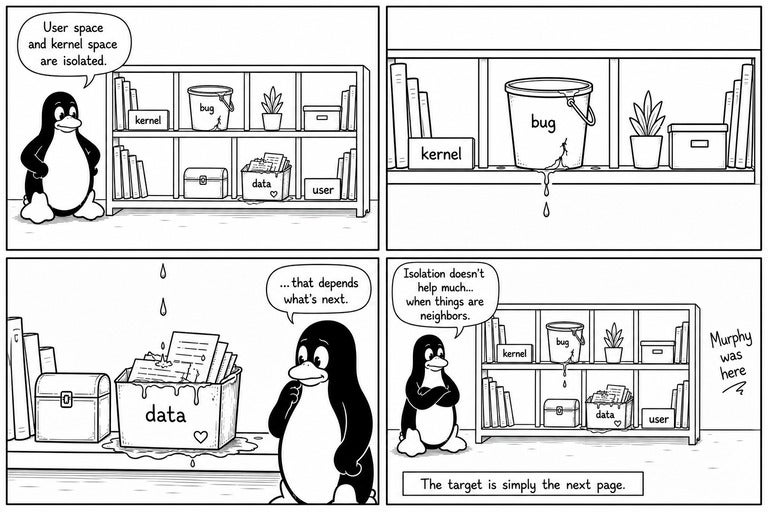
Is “probably safe” safe enough? In his ELISA Project blog, Alessandro Carminati explores Linux virtual isolation, physical memory adjacency, and why safety cases need clear guarantees. Read more: https://t.co/xp79g9N12W
How can Linux support safety-critical railway infrastructure? Join the ELISA Project Railways SIG to connect with railway stakeholders and the open source community on standards, requirements, and collaboration.
Learn more: https://t.co/l5W8XxgEXX