1/3. They’re back! India’s 224 billionaires have recovered to cross the $1 trillion-mark in terms of cumulative net worth. Heartening to learn from the Forbes live list that as of May 27, all our beloved billionaires have shrugged off the ill-effects of the annoying war in West Asia. That conflict briefly pulled India’s Billi Brotherhood down to a humiliating 980-billion dollar rung. Now they’ve bounced back. Could it be that the austerity of others feeds into the opulence of the Brothers?
With a little bit of help from their friends, the Brotherhood have returned to an honourable cumulative worth of $1011 billion, or just over a trillion dollars. A saga of stunning endurance, and a demo of how to keep raking it in when most other Indians reel under repeated blows and show no spark of resistance.
3/3. When oil prices tanked at the onset of the pandemic, at one point briefly falling to almost 20 dollars a barrel – the government did not pass on any benefits to the people. It raised its taxes on fuel to a record high to keep the final prices as high as before. Now, it’s breaking its own records. A litre of petrol cost 115 rupees in Hyderabad this morning. The other big cities, just a few bucks behind, will catch up.
Feels like a new tax on ordinary people every 2-3 days. But the Billionaire Brotherhood stands tall. They haven’t paid a paisa in wealth tax since we abolished that anachronism in 2016. All Hail the Big Boys.
1/3. They’re back! India’s 224 billionaires have recovered to cross the $1 trillion-mark in terms of cumulative net worth. Heartening to learn from the Forbes live list that as of May 27, all our beloved billionaires have shrugged off the ill-effects of the annoying war in West Asia. That conflict briefly pulled India’s Billi Brotherhood down to a humiliating 980-billion dollar rung. Now they’ve bounced back. Could it be that the austerity of others feeds into the opulence of the Brothers?
With a little bit of help from their friends, the Brotherhood have returned to an honourable cumulative worth of $1011 billion, or just over a trillion dollars. A saga of stunning endurance, and a demo of how to keep raking it in when most other Indians reel under repeated blows and show no spark of resistance.
2/3. The government has raised petrol prices four times in 9 days. It earlier raised the price of 14.2 kg LPG cylinders commonly used in millions of households, by Rs. 60. And before that the cost of the 19 kg (commercial) cylinder used by countless thousands of dhabbas, small eateries and tea stalls, by Rs. 993. Many workers have returned or are even now returning to Bihar and UP unable to cope with the soaring costs of food in the far-off cities they serve as migrant labourers. In some places, even the midday meal – the one nutritious meal millions of poor Indian kids get in a day – is shaky. With price hikes in fertilizer in the offing, and all its accompanying and cascading effects, the worst is yet to come.
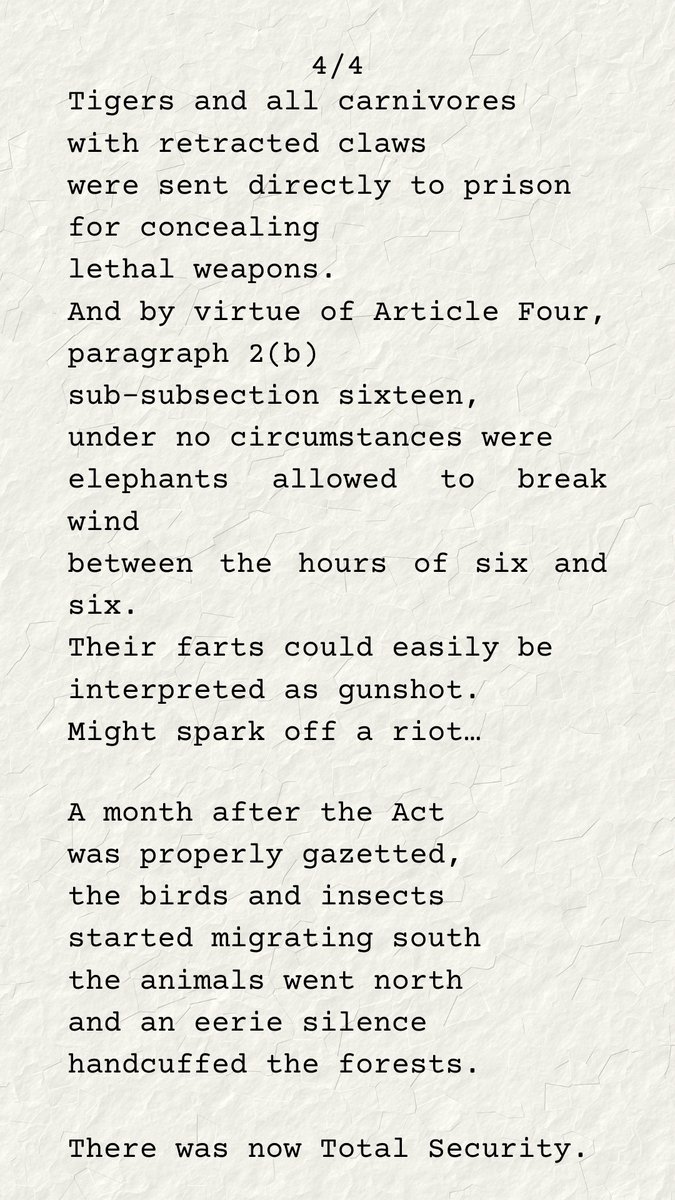
Even by the standards of a country ranking 157 of 180 nations in the World Press Freedom Index, the reaction of the authorities to the ‘Cockroach Janata Party’ is beyond extraordinary. The public response to that imaginative prank should have signalled to them a deep discontent, even distress, among young people. Instead, as The Indian Express reported, it was framed as jeopardising the country’s ‘national security’ and ‘posing a threat to the sovereignty of India.’ Decades ago, the Malaysian lawyer and poet Cecil Rajendra wrote this brilliant poem that captures the idiocy of it better than any pompous editorialising could (not that our ‘mainstream’ media would dare do even that much).
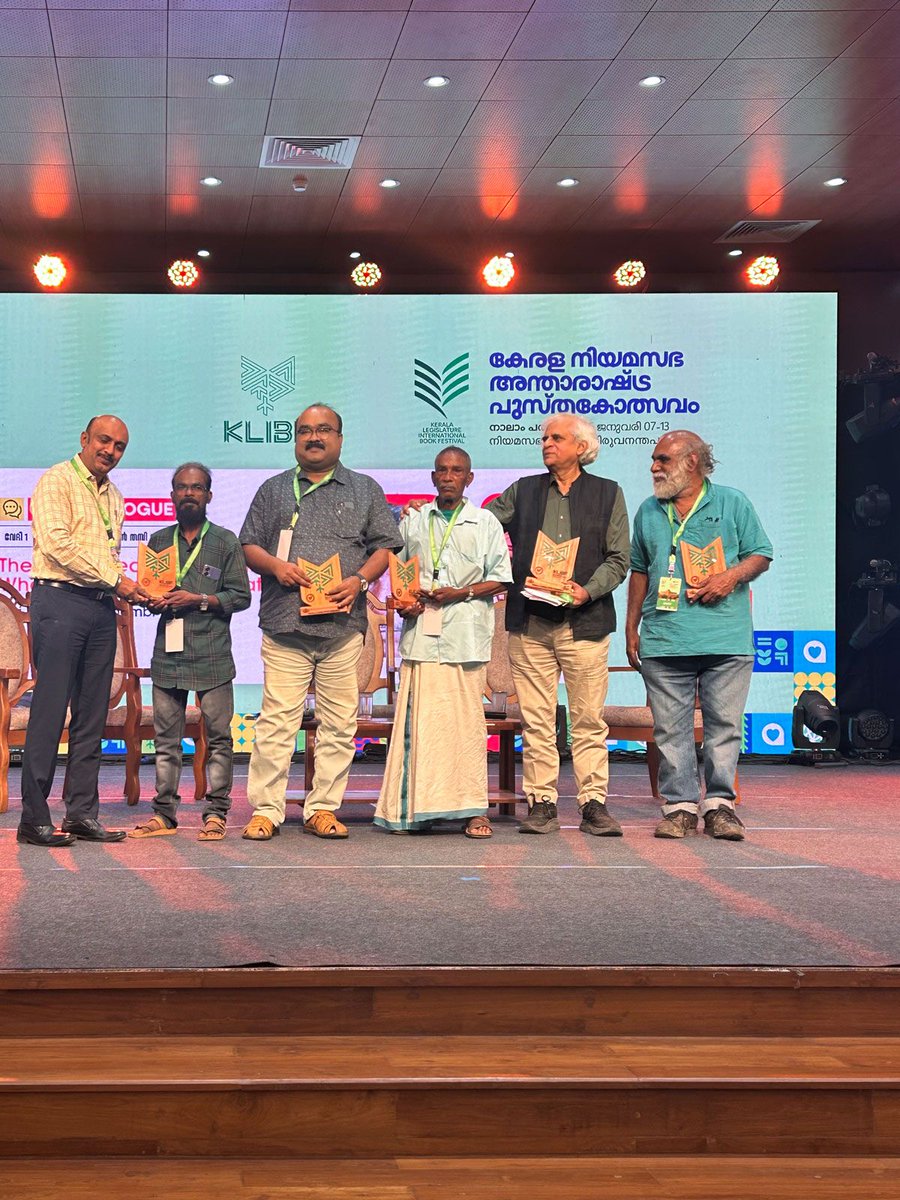
6/6. Chinnathambi’s only regret: the autobiography we had found him writing in 2014 is no longer with him. “I’d done about 25 per cent of the manuscript when this journalist from Thiruvananthapuram took it from me. He promised to help complete it – and find a publisher. I never saw him again.” We made an appeal from the platform of the KLIBF session held to felicitate him for the recovery of his manuscript or assistance for him to do it over again. Kerala being Kerala, volunteers were lining up before the session ended (which it did with the audience giving the 86-year-old a standing ovation).
Image: The KLIBF session held to felicitate him and (right) Chinnathambi at 86.
1/6. At age 86, P. V. Chinnathambi still runs a unique library in the hilly forests of Idukki in Kerala. He has run that library – 2,000 books, all classics – for 15 years now. The books are borrowed, read and returned by poor Muthuvan Adivasis. All this in Edamalakudi, Kerala’s only tribal panchayat and perhaps its – relatively speaking – lowest literacy spot and least educated region. PARI story link https://t.co/VvjratRss7
5/6. Wild elephants have destroyed the structure we visited in 2014 – but not the library. So he shifted the library (saving all the books) to another hamlet also in the forests of Edamalakudi. We reunited with Chinnathambi this year on a platform at the 4th Kerala Legislature International Book Festival (KLIBF) in Trivandrum on January 09. He bears no bitterness towards the elephants recognising they were disturbed by deforestation and climate issues.
Image: A forest department machan for elephant spotting from a safe distance!
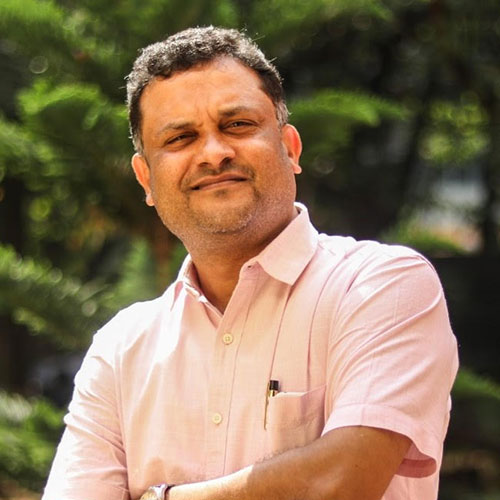
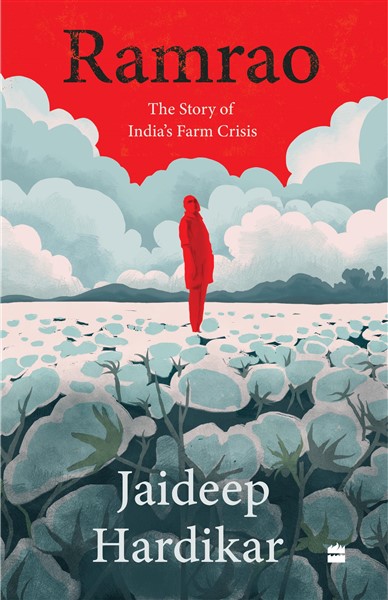
PARI’s Jaideep Hardikar has won the Ramoji Excellence award in the journalism category in its inaugural year – on National Press Day. No one deserves it more than he. For nearly three decades, this unassuming journalist from Nagpur has consistently done some of the finest reporting on the everyday lives of everyday people. I do believe his book Ramrao: The story of India's farm crisis, looking at the agrarian crisis through the life of a single farmer who attempted suicide in April 2014 (and who Jaideep monitored thereafter for 7 years), is to date the best and most powerful book on the subject. Over those three decades, and always based out of Nagpur, Jaideep has worked at The Lokmat Times, The Hitvad, DNA and The Telegraph.
Jaideep’s article A fateful triangle: tigers, humans and development published in the People’s Archive of Rural India in August this year is just one example of his recent field reporting. He brought to the story a deep understanding of all three angles of that triangle. I should also mention that I’ve had the opportunity to watch him work with enormous energy and diligence, and grow in the field – he and I have travelled countless thousands of kilometres together in the countryside, mainly in the Vidarbha region of Maharashtra, but also in Marathwada. I believe both of us learned a lot on of those trips.
At Rs. 10 lakh, the Ramoji Excellence award is the biggest in Indian journalism. It comes from the Eenadu group of publications in Andhra Pradesh and Telangana and has been established in the name of their founder the late Shri Ramoji Rao garu. I knew enough about him to know he’d have been very happy to see Jaideep Hardikar get the prize in his name today.
Tamil Nadu has always been a torchbearer of social and educational progress, pioneering some of the most transformative reforms in India. It has been at the forefront of movements that have shaped modern education, uplifted marginalized communities, and fostered an inclusive learning environment: Dharmendra Pradhan, Union Education Minister in his letter to TN CM MK Stalin urging the State to implement NEP 2020.
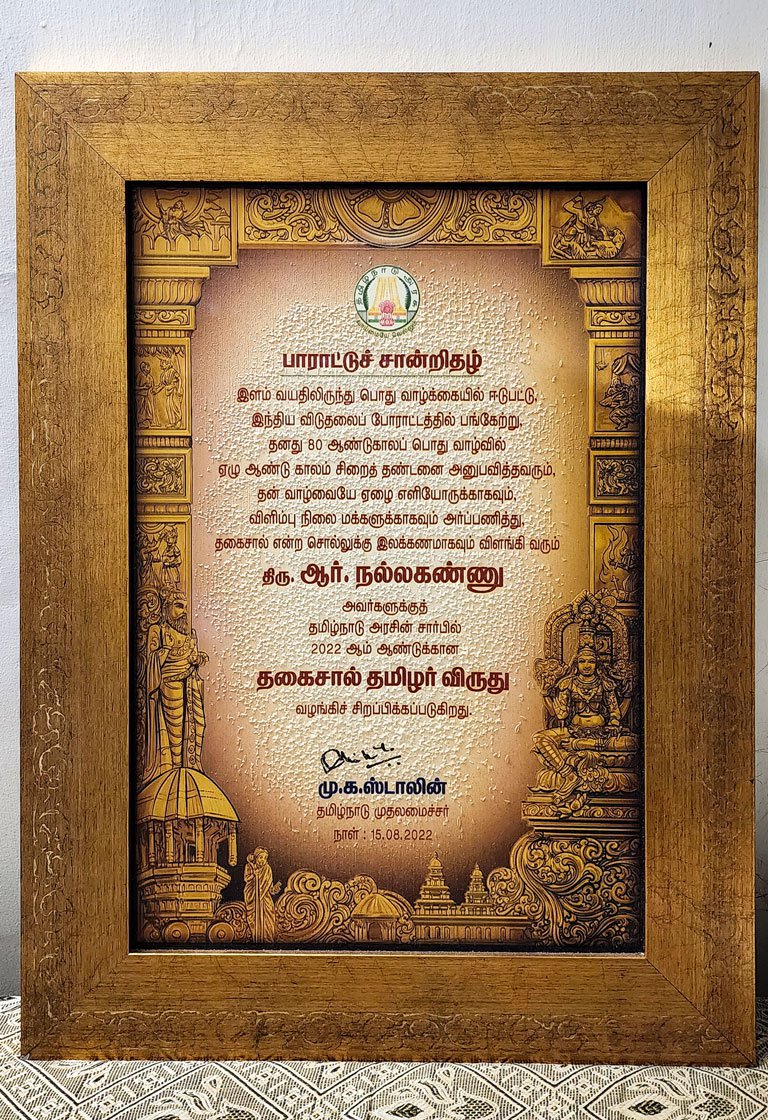
3/3. On Independence Day 2022, the Tamil Nadu government conferred the Thagaisal Thamizhar Award on ‘Comrade RNK’ – which carried a cash prize of Rs. 10 lakhs. Typically, RNK, even while accepting the award, donated the Rs. 10 lakhs – adding another Rs. 5,000 to it – to the Chief Minister’s Relief Fund.
#freedomfighter”
1/3. One of India’s very last living freedom fighters, R. Nallakannu, turns 100 years of age today. The CPI veteran was one of the founding members of the farmers’ movement in Tamil Nadu. Nallakannu’s struggles seamlessly integrated farmers’ battles with the anticolonial movement. And also, very importantly, with the anti-feudal battles that were so crucial to Tamil Nadu of that time. Those too flow over strongly post-1947. His fight was and remains one for many forgotten freedoms. not just Independence from British rule. https://t.co/NFudj1Ljp0
#freedomfighter”
2/3. “Freedom movement, social reform, anti-feudal struggles—we combined these issues. That’s how we worked,” he told me when I interviewed him for my book The Last Heroes(Penguin). “We fought for better and equal wages. We fought for the abolition of untouchability. We played a serious role in the temple entry movements. The campaign for abolition of the zamindari system was a major movement in Tamil Nadu.”
#freedomfighter”
4/4 With Bhabani Mahato’s passing, only four of the 16 freedom fighters in my book The Last Heroes: Foot Soldiers of Indian Freedom (Penguin November 2022) now remain alive.
Story link: https://t.co/DSjLJXBau9
#BhabaniMahato#FreedomFighters
1/4 Freedom fighter Bhabani Mahato passed away peacefully in her sleep soon after midnight of August 29-30, 2024. She was 106 years old. With her passing, the numbers of India’s freedom fighters are thinner than ever. In 3-5 years, the golden generation will be gone and not a single one of those who fought to bring this country to Independence will be left alive. Present and future generations of Indian children will never get to speak with, listen to, see or touch, or in any way engage with a bona fide, genuine freedom fighter. Bhabani story link at end of thread.
#BhabaniMahato #FreedomFighters
3/4 Bhabani was going by the very flawed definition of freedom fighters that we have, which largely focuses on jail time and rules out most fighters of the revolutionary underground. What Babani did in 1942-43, at the height of the Bengal famine, was to grow food, cook and feed often 20 or more fugitive revolutionaries hiding in the jungles of Purulia in West Bengal. The risks involved were far greater than those taken by satyagrahis courting jail time. Read: https://t.co/mNoHNLEZz9
#BhabaniMahato #FreedomFighters
8/8. Nothing indicates that the marriage of the millennium had the enthusiastic approval of ‘most Indians.’ But it certainly won (or purchased) the hearts and pockets of a nauseatingly narcissistic elite. These are not just Nero’s Guests, these are Nero’s Hosts. #ambaniwedding #psainath
1/8. Most Indians see the Big Fat Indian Wedding as a national achievement and are not put off by it, according to TV commentary, including on BBC. Really? Did BBC, anyone, do a poll/survey of most Indians? People hit the streets for what they see as a national achievement – like to greet the returning T20 world cup winning team. Anyone seen Mumbaikars dancing on the streets to celebrate the Ambani wedding? #ambaniwedding #psainath
7/8. Anyways, 320 million USD is just 0.27 per cent of Ambani’s wealth of 118 billion dollars. That 118 billion is 7.5 times India’s agriculture budget. And he’d have been a huge labharthi of the farm laws had those not been repealed. He and his fellow 199 Indian billionaires hold cumulative wealth of 974 billion dollars – over a fifth of India’s GDP, 62 times our agriculture budget, and 100 times what we last spent on the MNREGs scheme. And do remember we abolished wealth tax in 2015. #ambaniwedding #psainath