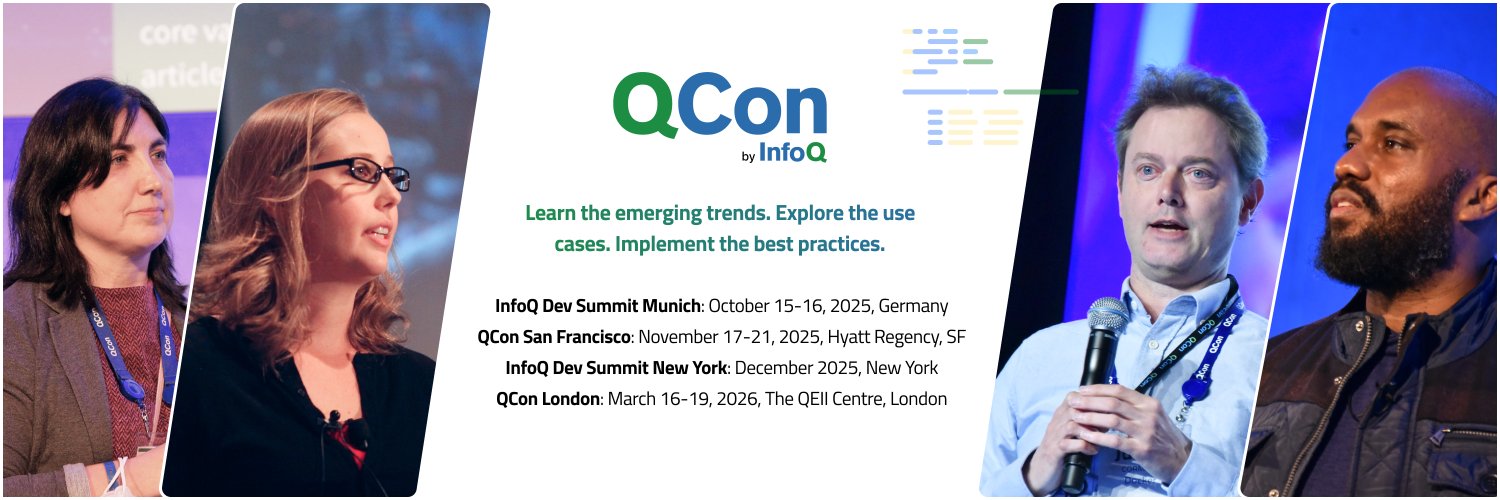
Uncover emerging trends and practices from the world’s most innovative software professionals to help you validate your software roadmap. Celebrating 17 years.
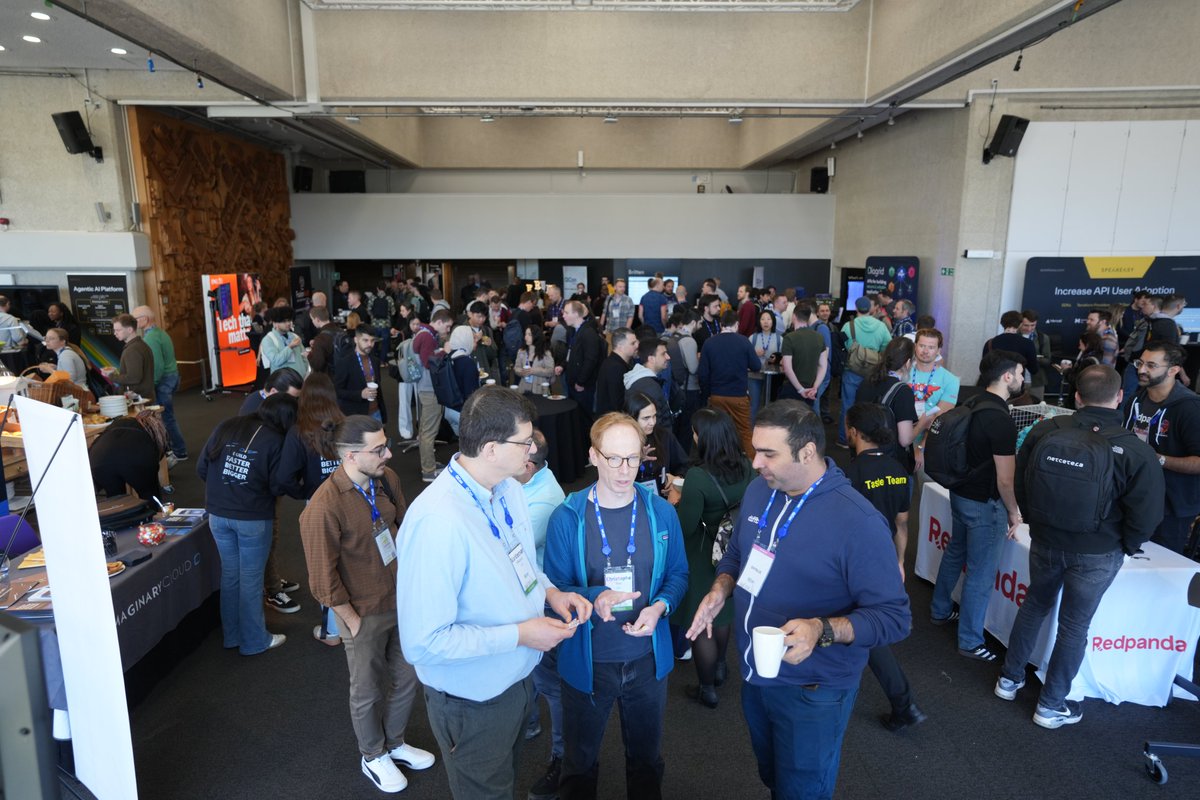
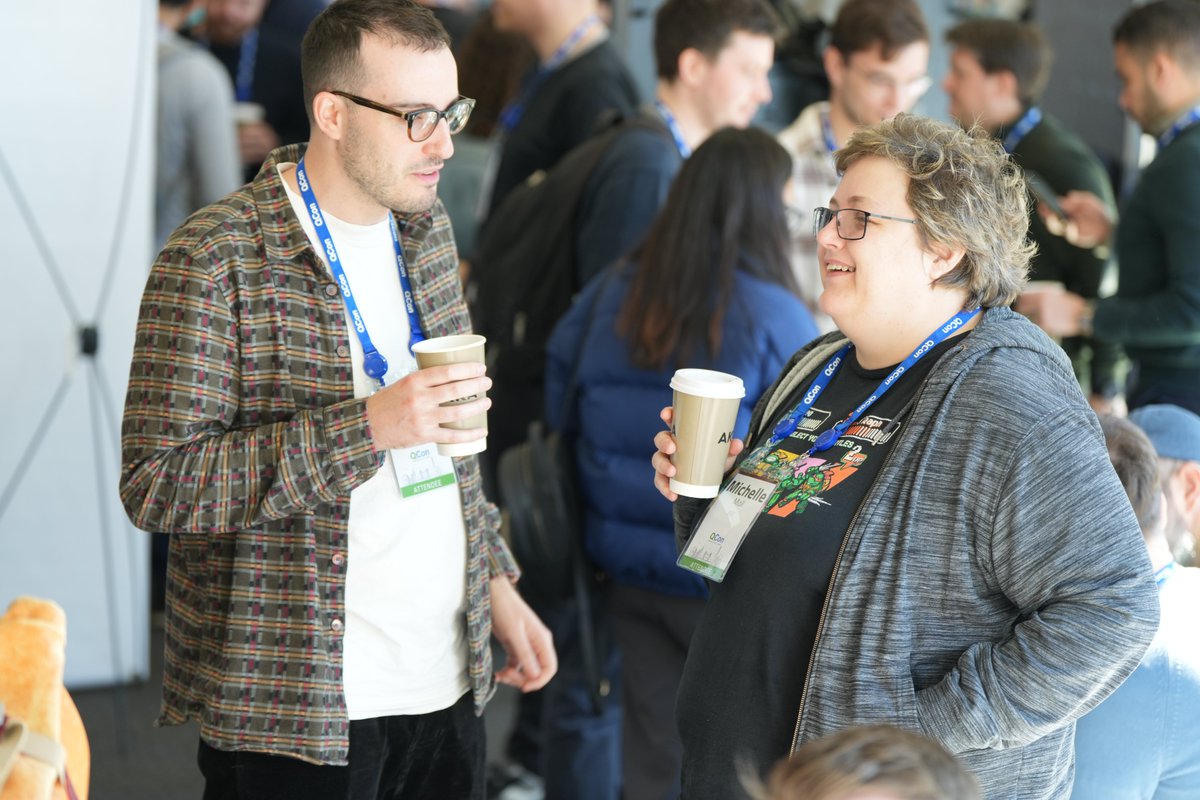
🎉 Welcome to QCon London 2025! 🇬🇧
We’re back and excited to bring together senior software practitioners for three days of insightful talks, real-world case studies & deep technical discussions: https://t.co/pEuC0vzWMc
Let’s learn, connect, and grow together!
#QConLondon
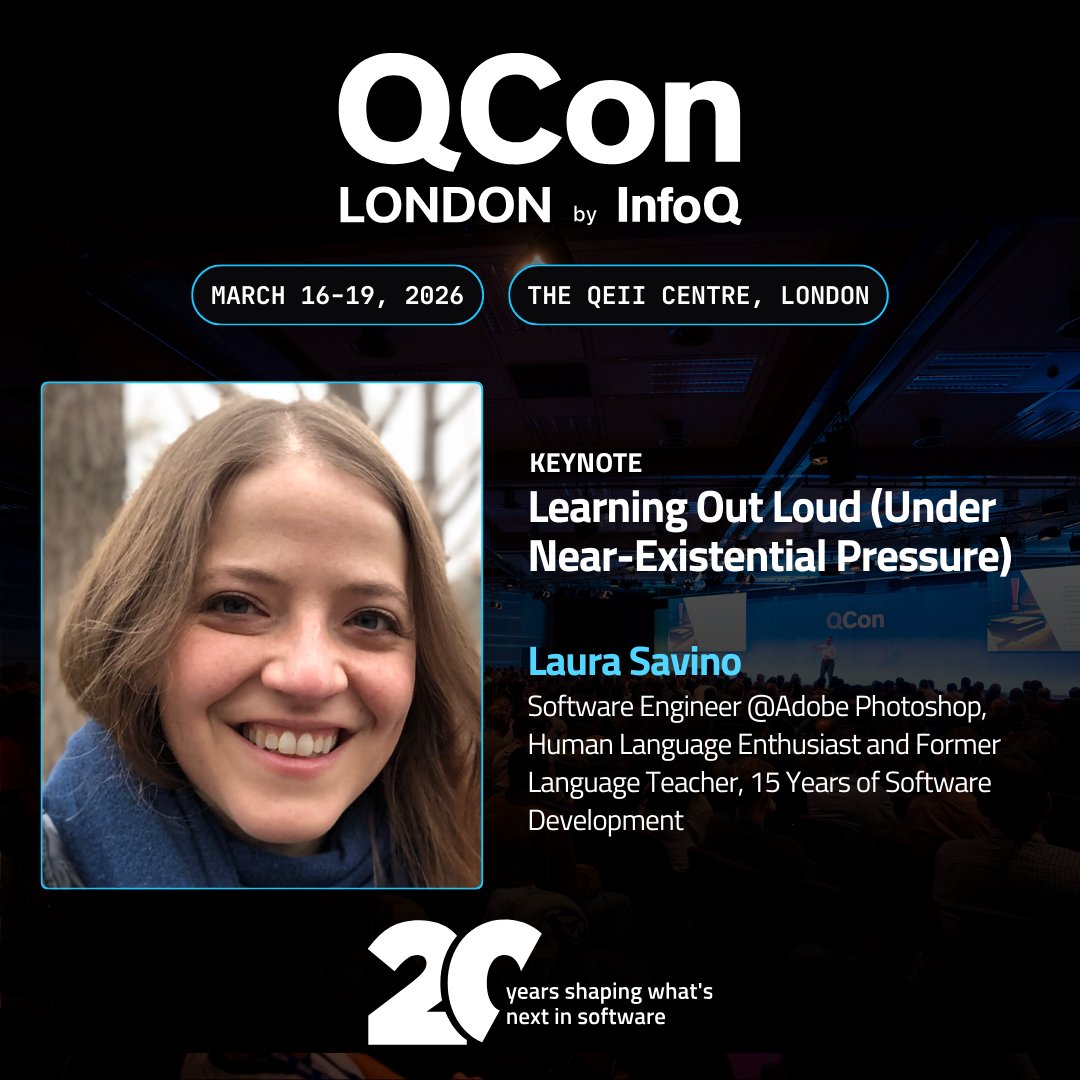
Learning in public under real pressure. That's the current state of the field.
Laura Savino (@Adobe Photoshop) opens the final day of QCon London with a keynote on what happens when the pace of change outstrips your ability to feel competent.
🔗 https://t.co/dnNrkDCykI
Why do the same ideas keep coming back? Holly Cummins closes QCon London on March 18 with "The Free-Lunch Guide to Idea Circularity."
Find out more about the keynote: https://t.co/HcPhesAdwR
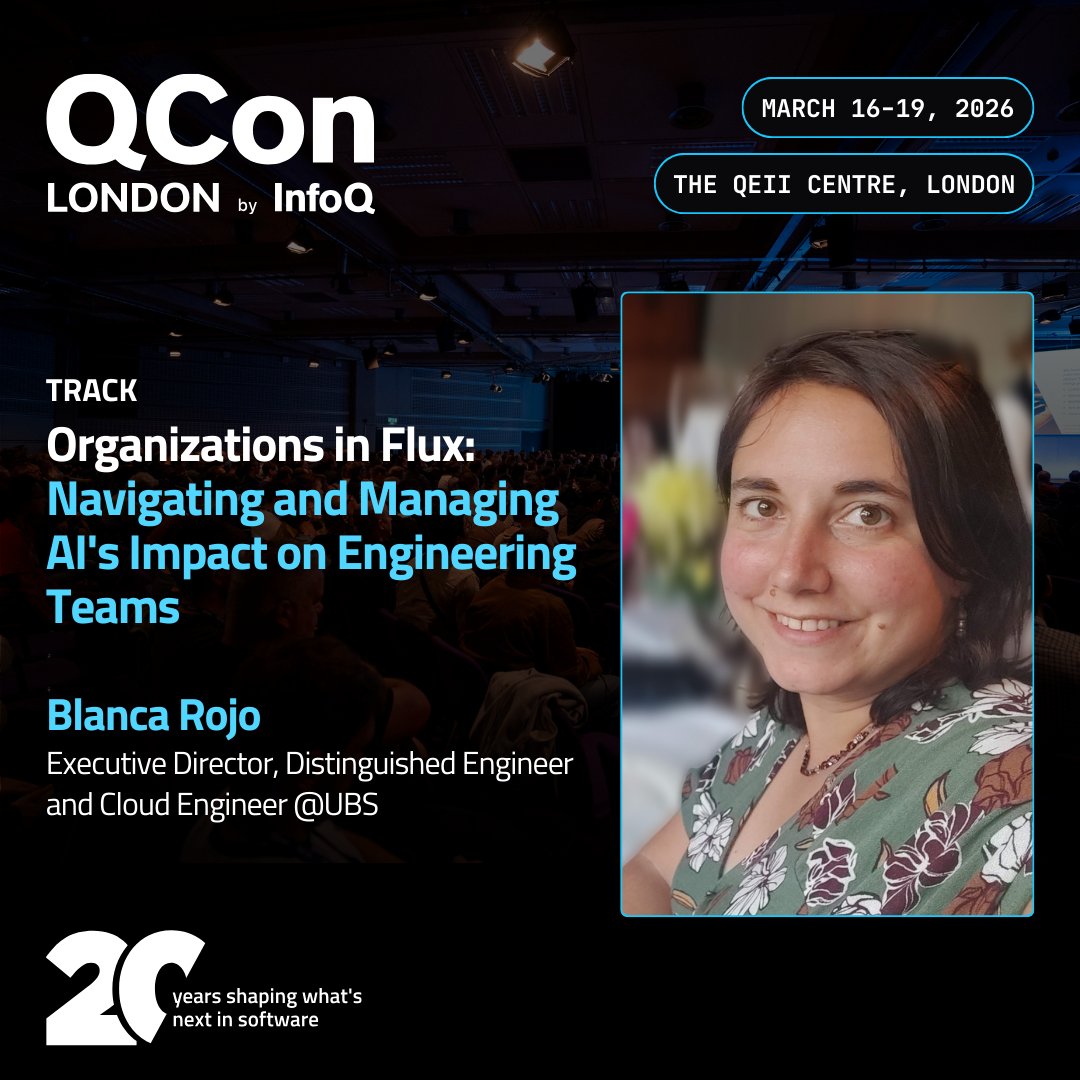
Most engineering teams are somewhere in the middle of figuring out AI adoption. The Organizations in Flux track at QCon London is built around that reality. Wednesday, March 18.
🔗 https://t.co/Lyb55gHa9K
The morning ICSAET certification group at QCon London is sold out. An afternoon group on March 19 has been added. Limited places.
🔗 https://t.co/9qfDq8OD2X
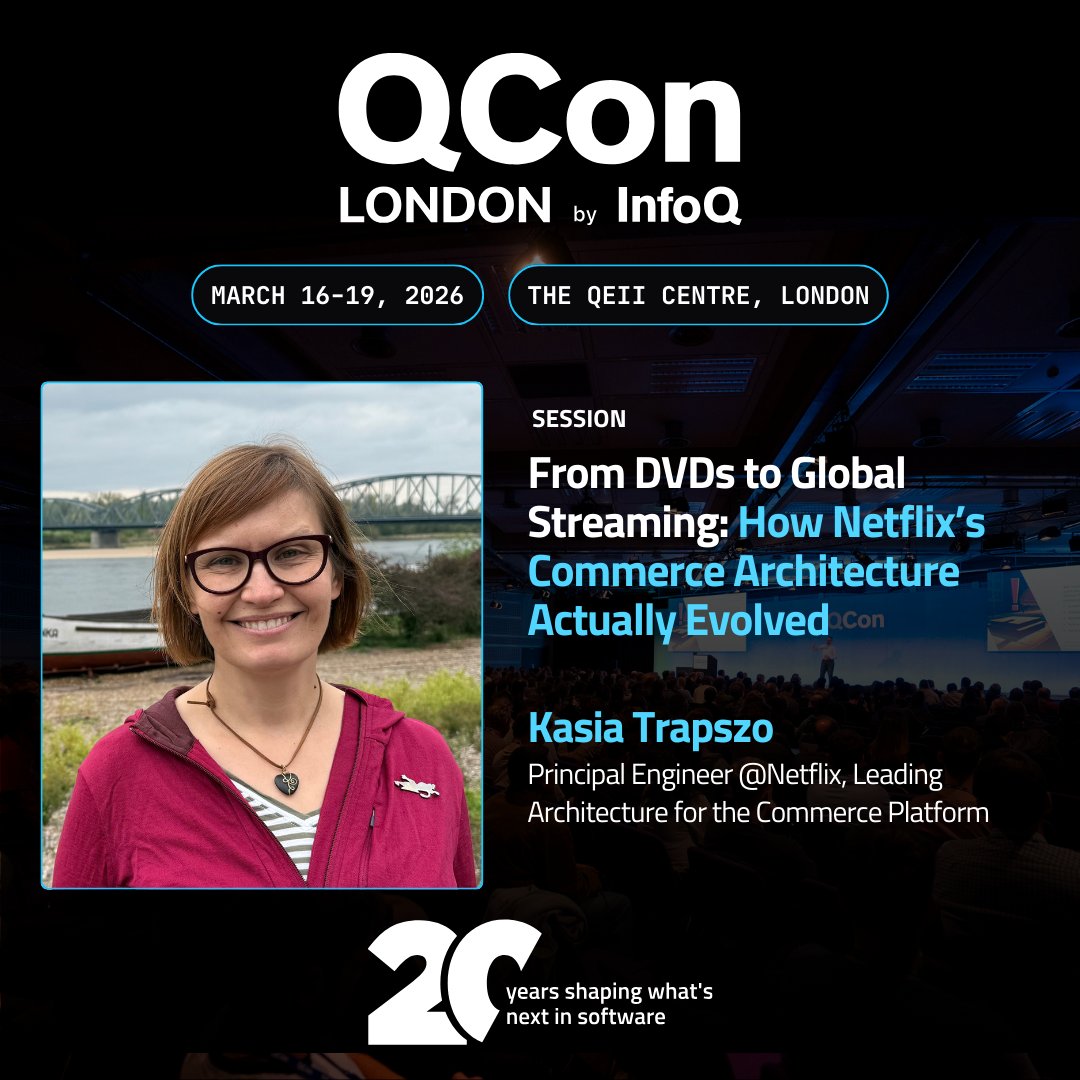
Three sessions worth knowing about at QCon London 2026:
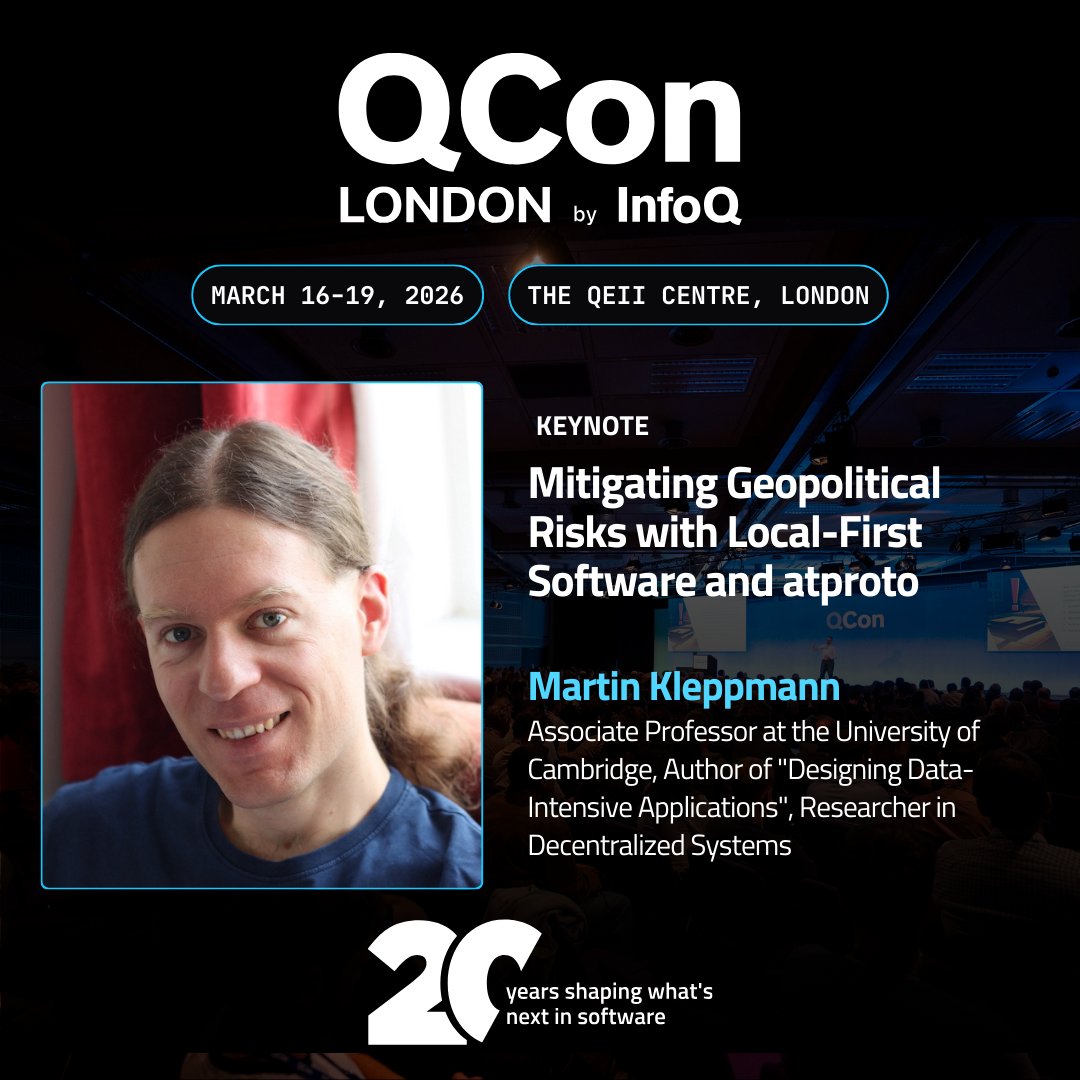
Sam Newman on cascading failures. Martin Kleppmann on local-first software and cloud sovereignty. Kasia Trapszo on how Netflix's architecture actually evolved.
Early bird ends March 10.
🔗 https://t.co/5NGEhTGnvp
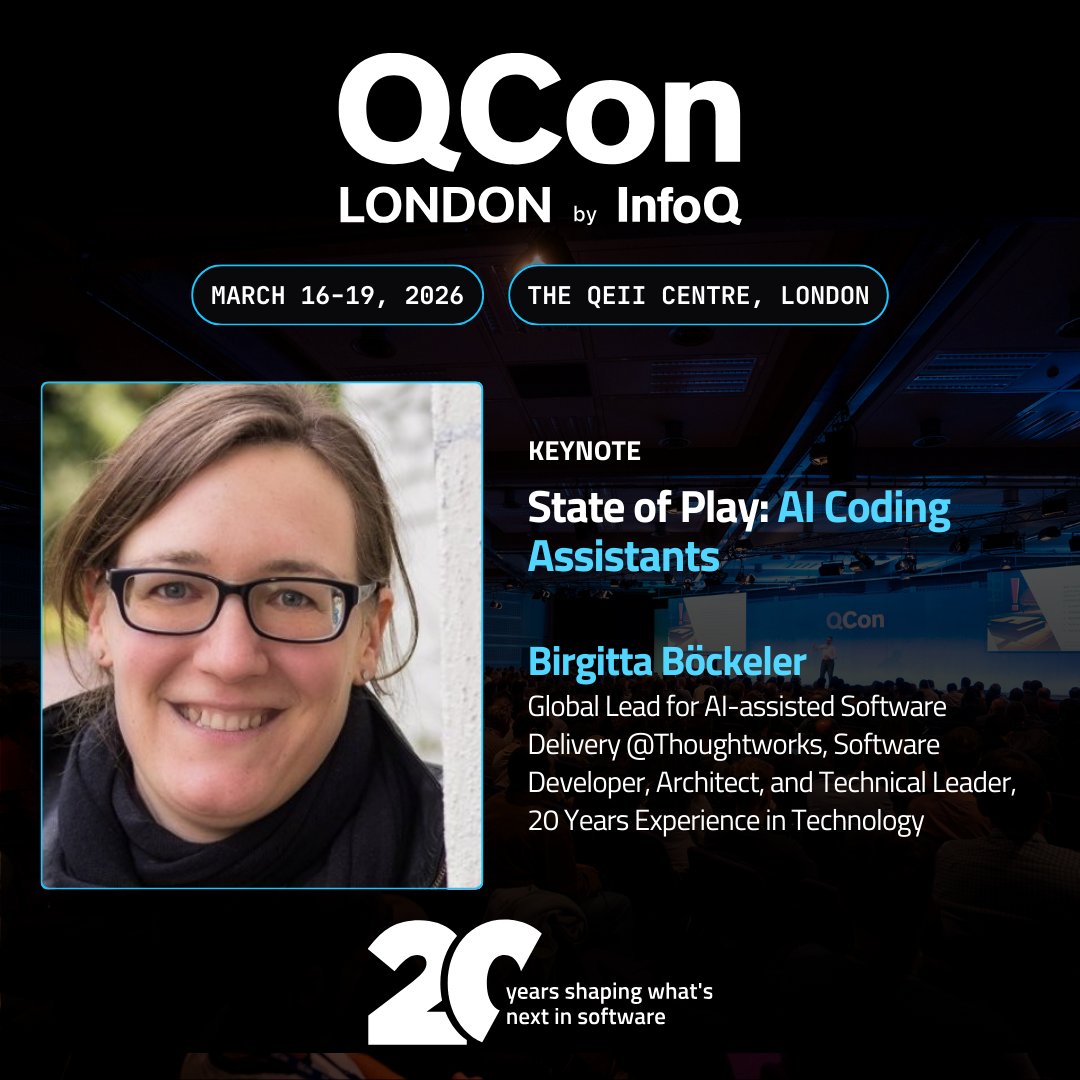
Is your team feeling "model fatigue"?
Birgitta Böckeler @Thoughtworks delivers a keynote at #QConLondon to help you see the forest for the trees. A high-altitude look at the last 12 months of AI coding assistants and where the industry stands today.
🔗 https://t.co/lIcXhivLJr
Join Shawna Martell and leaders from the BBC, Personio, and Carta at #QConLondon 2026 for "The Long Game" track.
🔹 Mastering "boring" problems
🔹 Sociotechnical architecture
🔹 Tech debt in the AI era
🔹 The Influence Toolkit
🔗 https://t.co/Ge7sYFQAwu
Cloud dependency is now a geopolitical risk. 🌍
Martin Kleppmann, author of Designing Data-Intensive Applications, delivers the #QConLondon keynote on technological sovereignty.
🔹Local-first software 🔹atproto & Bluesky
🔗 https://t.co/gXtrTmL5pi
Management playbooks from 5 years ago are hitting a wall.
Join Wes Reisz at #QConLondon to rethink engineering teams for 2026.
🔹 Hiring signals
🔹 Broken career ladders
🔹 Cross-stack data ownership
🔹 Agency-led structure
🔗 https://t.co/4BKuKy3xNA
Building a production AI gateway shouldn't mean inheriting a massive framework.
Join Amit Navindgi @Zoox at #QConLondon to explore Cortex: the "Agents as an API" platform serving 100+ internal clients.
Find out more here: https://t.co/ZfH4E4Sh6V
20 years of QCon = 20 years of looking under the hood.
In 2017, it was Instagram. In 2026, we’re dissecting:
🔹 Netflix: Commerce evolution for 230M+ members
🔹 Nubank: Scaling to 127M users
🔹 Tesco: Architecting a Cloud-to-Edge retail platform
🔗 https://t.co/2qbD8y6g4P
Join Track Host Sid Anand at QCon London for 5 sessions on the new stack:
🔹 Lean Kafka operations
🔹 The rise of the Streamhouse
🔹 S3-to-GPU memory in one copy
🔹 Netflix-scale graph observability
🔹 Chronon’s data processing algorithms
🔗 https://t.co/IzYfcL7ml7
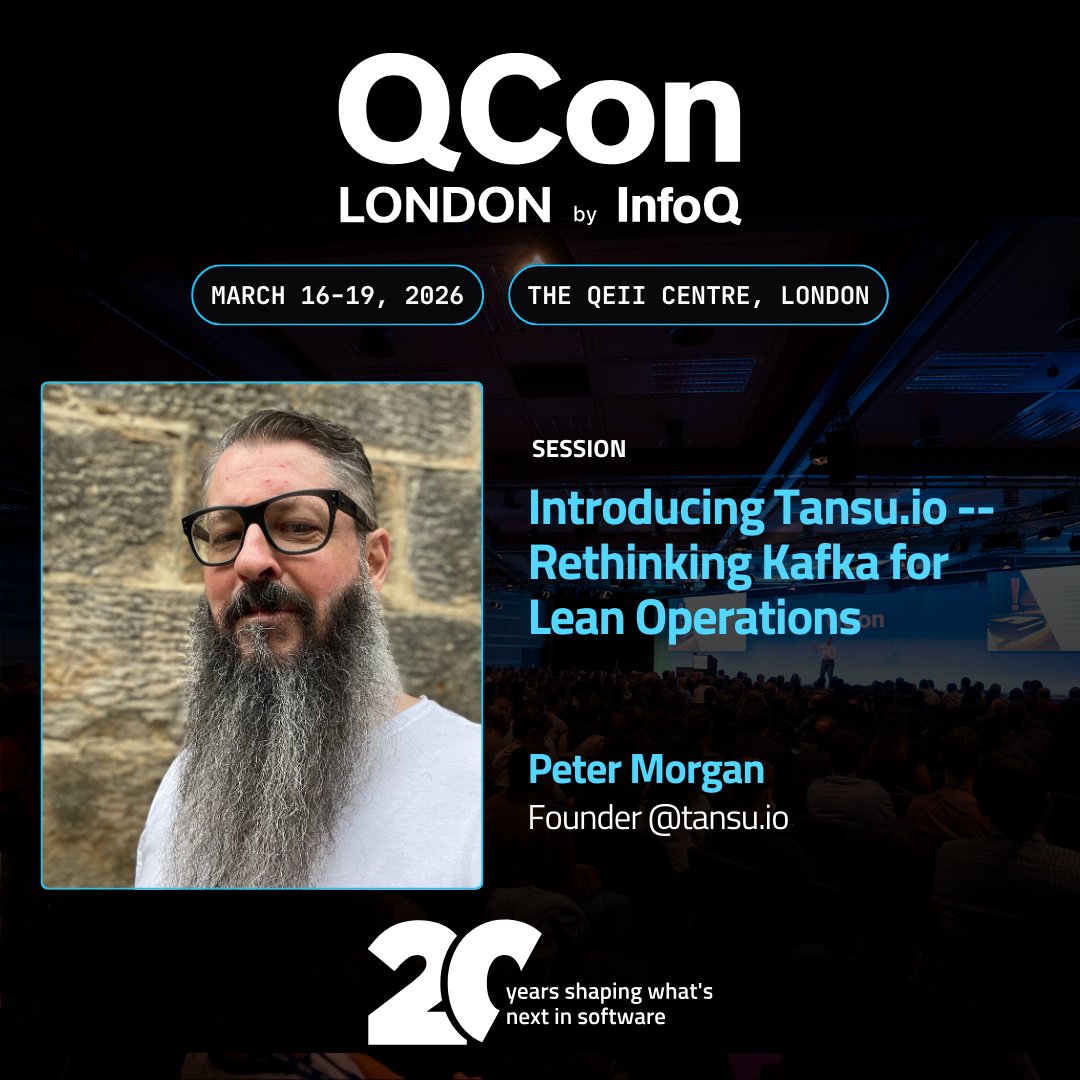
Kafka API compatibility without the operational headache of ZooKeeper or Raft. 🛠️
Join Peter Morgan, @tansu_io at #QConLondon to explore Tansu: a stateless, open-source broker with pluggable storage (PostgreSQL, S3, libSQL).
Streamline your data stack: https://t.co/VhRo2nmo9w
Skip the marketing hype. QCon London is about direct access to practitioners who ship. 🛠
Talk resilience with Sam Newman, context engineering with Patrick Debois, or get certified with Luca Mezzalira.
🔗 https://t.co/MNK4budlcf
#QConLondon
Governance without bureaucracy. Memory safety without a language rewrite.
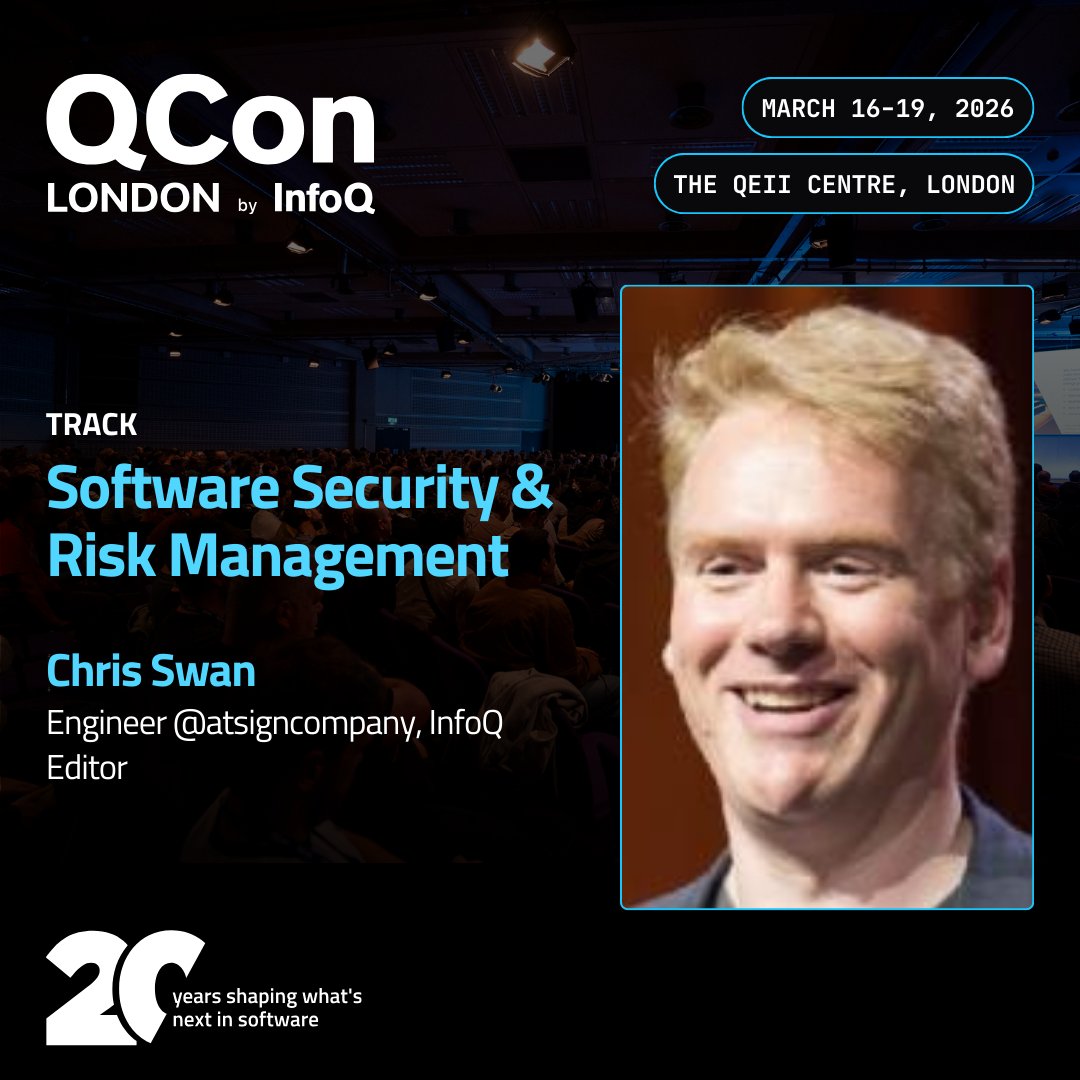
The Security and Risk Management track at #QConLondon 2026 covers three layers most security conversations skip. Led by Chris Swan, Engineer @atsigncompany.
🔗 https://t.co/ymebJkqRpv
Is async/await just for I/O? Orson Peters (@Polars) says no.
At #QConLondon, Orson shares how Polars uses Rust's async paradigm for computational scheduling, NUMA-aware parallelism, and streaming data beyond memory limits.
🔗 https://t.co/8uYy3F1xKK
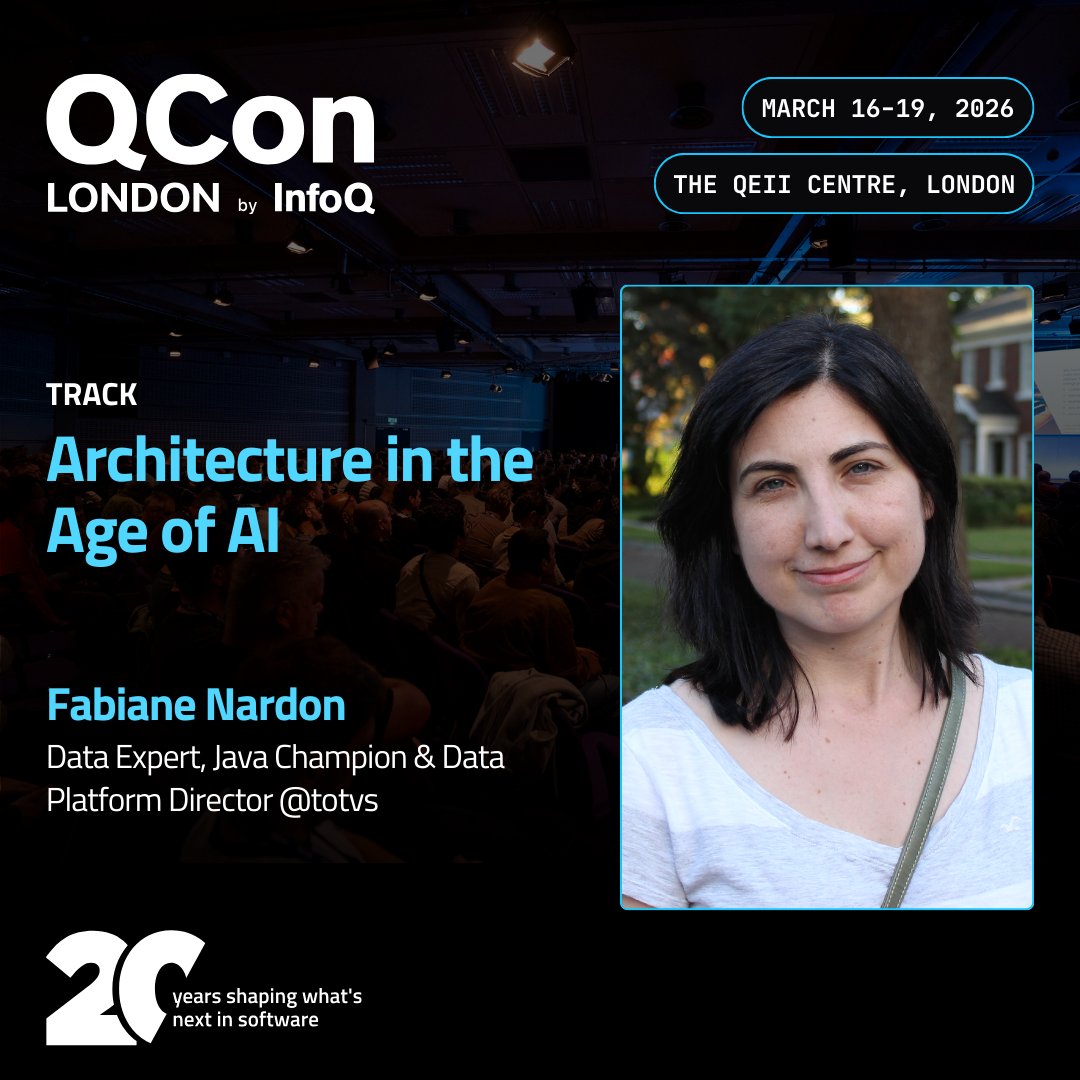
The Architecture in the Age of AI track at #QConLondon covers context engineering, agent authorization, and evaluation beyond benchmarks.
Led by Fabiane Nardon, Data Platform Director @totvs.
🔗 https://t.co/PlOjXWsXcU
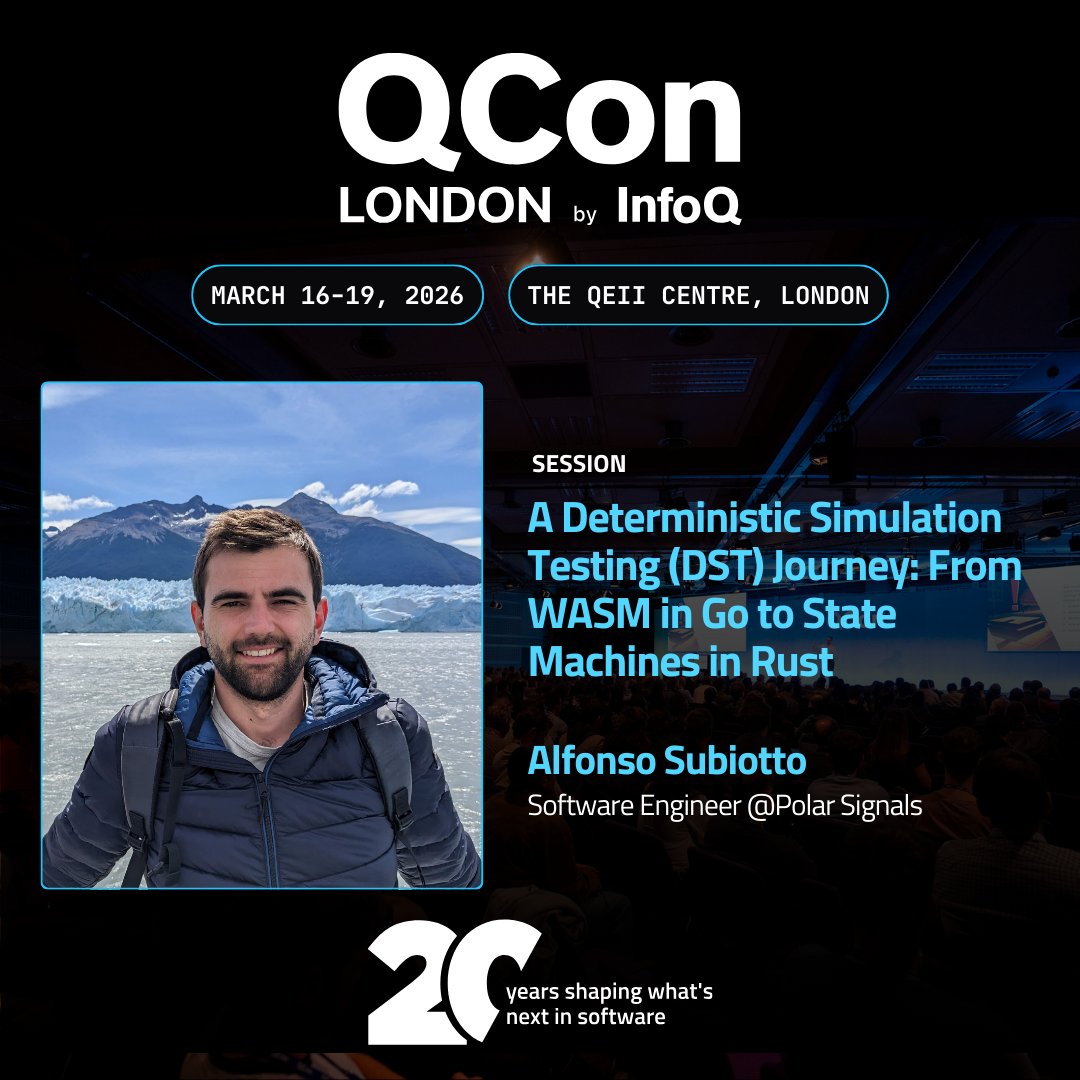
Alfonso Subiotto, Software Engineer @PolarSignals, shares how they use Deterministic Simulation Testing to replay any failure from a single seed. The journey: from WASM in Go to state machines in Rust.
🔗 https://t.co/2I9XoSg9JJ
The pressure to chase every new framework is relentless. And the most impactful engineering work is still the boring stuff nobody celebrates.
If that tension feels familiar, the Staff+ track at #QConLondon is for senior ICs navigating the same thing.
🔗 https://t.co/7221hbq642