1/3 Today, an anecdote shared by an invited speaker at #NeurIPS2024 left many Chinese scholars, myself included, feeling uncomfortable. As a community, I believe we should take a moment to reflect on why such remarks in public discourse can be offensive and harmful.
💡Unlocking New Frontiers: 2nd LLM Hackathon for Applications in Materials and Chemistry💡
Join us on May 8-9th for the 2nd Large Language Model Hackathon for Applications in Materials and Chemistry! This hybrid event is designed to connect brilliant minds to explore applications of Large Language Models (LLMs) in these rapidly evolving fields.
https://t.co/ATvqGJPgb2
Happy to announce our new publication applying geometrical\topological methods to material sciences (batteries):
*Predicting Ion Diffusion from the Shape of Potential Energy Landscapes*
https://t.co/KT6nnU6Bqv…… +Hannes Gustafsson, Melania Kozdra,
@SmitBerend, and Amber Mace
Checkout my latest article on the Review of Low-cost Self-driving Laboratories: The “Frugal Twin” Concept (https://t.co/h4M7aQJNii) It was great working with @SterlingBaird1 where we sparked a lot of fascinating discussion! Big thanks to all of our co-authors as well!
We are happy to announce that the Open Reaction Database (ORD) has been awarded a grant as recommended by @SchmidtFutures, a philanthropic initiative founded by Eric and Wendy Schmidt. This grant will support the next phase of growth and adoption for the ORD, including:
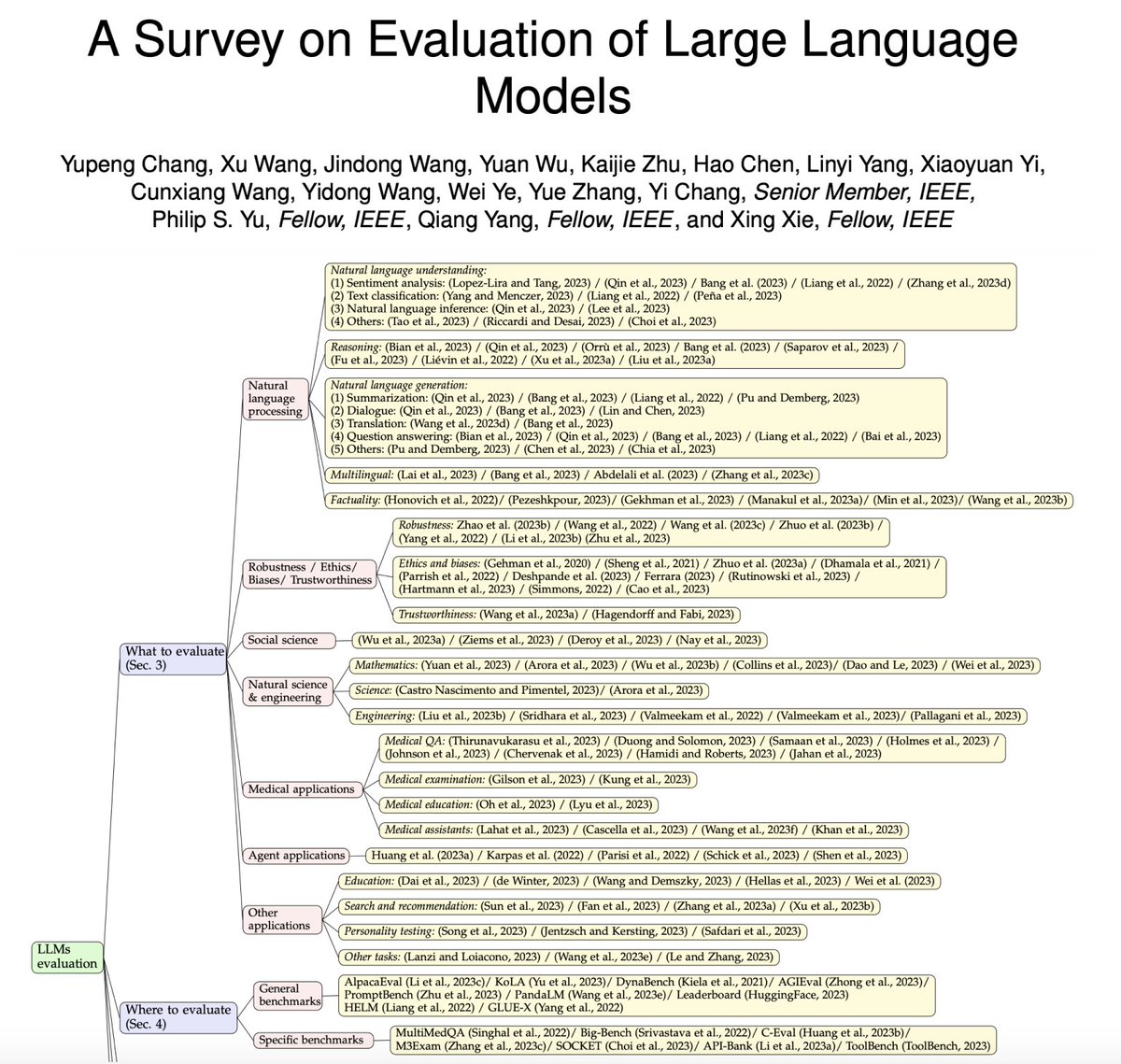
A Survey on Evaluation of LLMs
If I had to pick, I think this would be one of the more important topics when working with LLMs today.
It's nice to see a survey paper on it. Lots of important papers are referenced so definitely worth checking out.
https://t.co/vy6hwrWgRU
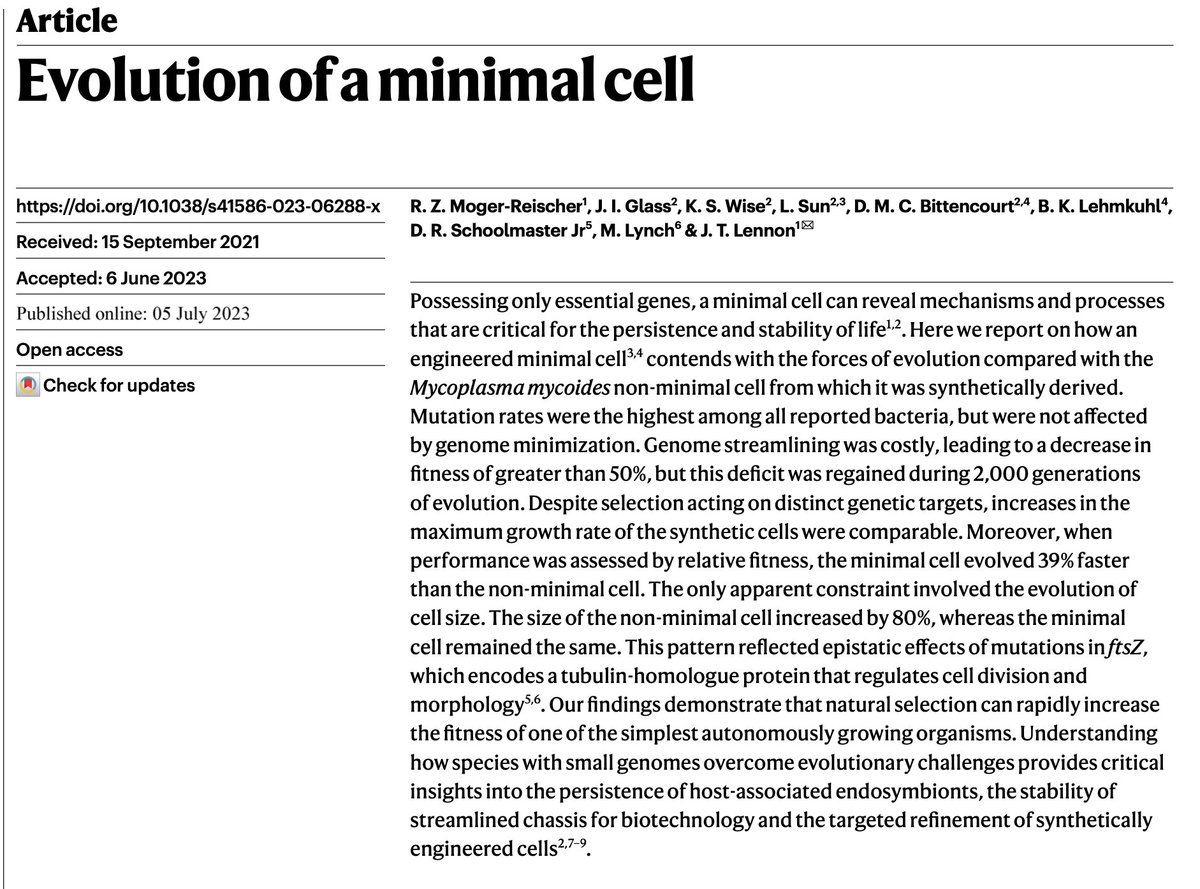
A mind-blowing paper has come out today in @Nature
In 2016, JC Venter Institute scientists trimmed a bacterial genome to its barest minimum required for life to synthesize what they called a "minimal genome" (https://t.co/Rk8oZJ0bUj).
Today, a group of scientists from Indiana University reports how that minimal genome evolved over 2000 generations in comparison to the non-minimal genome.
The authors found that even when you reduce a bacterial genome to its absolute minimum where every nucleotide matters, the genome undergoes mutational events generation after generation as much as the non-minimal genome. One simply cannot stop the evolution.
Just over 300 days of evolution (equivalent to 40,000 years in humans) the minimal cell has gained everything it lacked in fitness on day one in comparison to the non-minimal cell.
When comparing the evolved traits between the minimal and non-minimal cells, the scientists found something striking. The evolutionary process increased the cell size of non-minimal cells but not that of the minimal cell. But that is not the striking part.
The scientists were able to identify the key mutation that resulted in cell size evolution. And it turned out that the mutation that helped the non-minimal cells to grow bigger is the same that helped the minimal cells to stay smaller. Growing bigger had a survival advantage for non-minimal cells and not growing bigger had a survival advantage for minimal cells. So, the mutation had a context-dependent effect. This just demonstrates that the evolutionary effects on traits have no absolute direction. All that matter is what is beneficial for the organism's survival.
The conclusion of the paper is metaphorically a quote from the Jurassic Park movie:
“Listen, if there’s one thing the history of evolution has taught us is that life will not be contained. Life breaks free. It expands to new territories, and it crashes through barriers painfully, maybe even dangerously, but . . . life finds a way". (https://t.co/UlxRlb86CT)
https://t.co/zA9OAqSoAu
The amazing package led by Riley Hickman, #Olympus 2.0 @UofT@chemuoft@VectorInst@UofT@acceleration_c got revamped
with several new features. If you want to benchmark optimizers for materials science and chemistry, check it out! https://t.co/U85uFVKdcY
For the honor of science, sometimes you have to destroy myths: there is no such novel, unique "metavalency" bonding type but, instead, simple multicenter bonding in electron-rich matter. An open-access perspective together with Bob Jones & Stephen Elliott:
https://t.co/CIAVXp5DOn
@Yun349231291386 The demo site is available at https://t.co/9GsIOFMvNJ where the results were generated from a fine-tuned openai model. We are currently working on open source LLMs for this task.
Use LLM to parse free text synthesis recipes to structured data! With only 300 training pairs, the fine tuned model can already pick up chemical identities/amounts and generate valid JSON in ORD schema. Check out our video demo!
Its out in the open!
Our paper is born 🐣 @NaturePhysics
Emergent stability in complex network dynamics
https://t.co/77KykKtwiV
A thread with more details will come soon. Meanwhile hit the link 👆
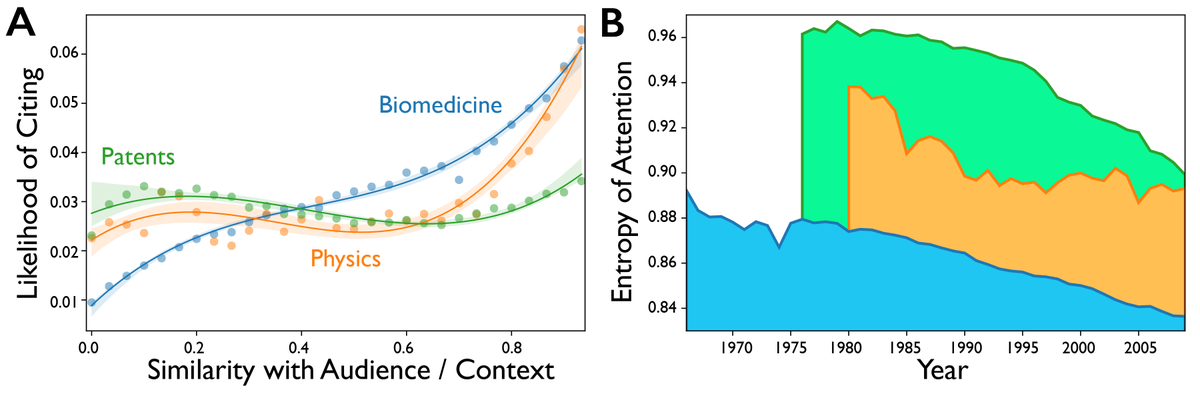
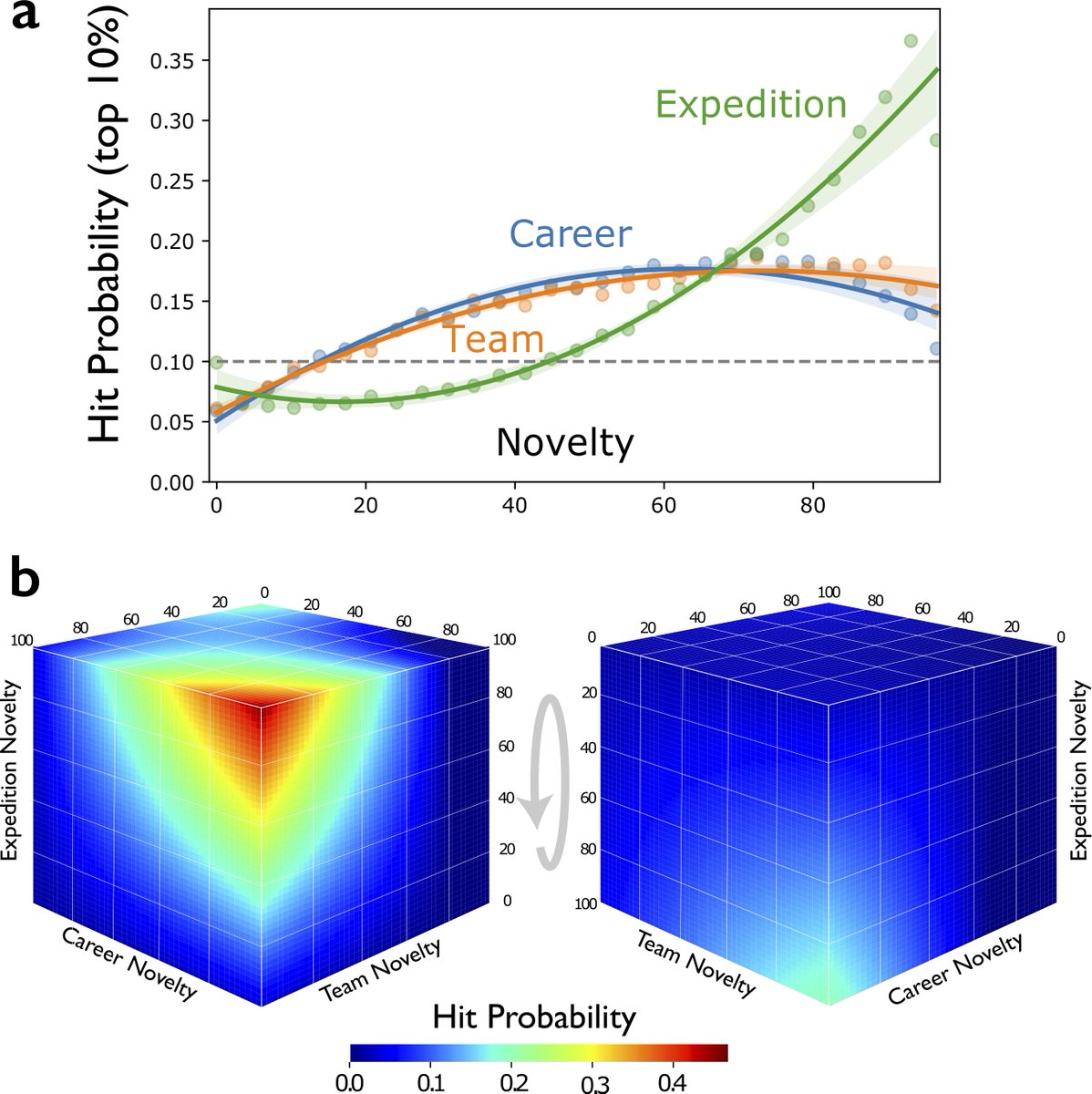
Excited about my recent paper led by the amazing Feng (Bill) Shi in Nature Communications on How Science and Technology are Driven by Surprise, as driven by Expeditions from Intellectual & Technical Outsiders: https://t.co/QCKPfzyVs6
@MichaelMPieler@openbioml Thanks for your interest! The reaction data used in training is structured based on the data model in https://t.co/udX5lkr6L4. In this demo we focused on ReactionInput field.