I spent years being paid to analyse markets.
Then I became a trader…
and realised analysis and trading are two completely different fucking skills.
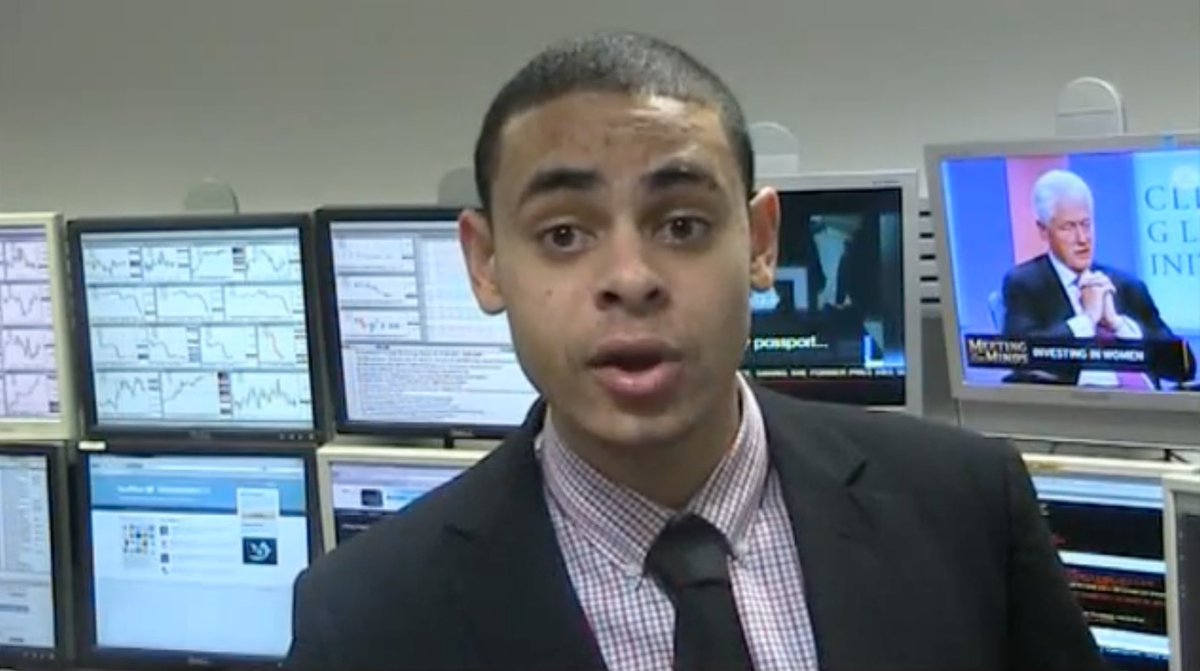
This photo was me on a trading floor before I made that transition.
Back then my job was simple:
Find the information.
Understand the information.
Explain what it should mean.
Sounds perfect for trading, right?
Wrong.
Because trading adds something analysis doesn’t:
YOU.
Your money.
Your fear.
Your ego.
Your need to be right.
Your ability to watch a perfectly good idea go against you without doing something stupid.
I learned that very quickly when I moved into execution in 2016.
I had years of market knowledge.
I could explain central banks.
I understood economic data.
I could build a macro argument.
And for months…
I still struggled to trade it properly.
That taught me something I wish more traders understood:
KNOWING WHY A MARKET SHOULD MOVE
IS NOT THE SAME AS KNOWING HOW TO TRADE IT.
You need both.
Macro tells you:
Why is money moving?
What does the market believe?
What could change that belief?
Technicals tell you:
Where am I wrong?
Where do I enter?
Where does risk make sense?
And execution decides whether any of that knowledge actually makes you money.
This is basically the framework I’ve built my entire trading process around:
DATA
↓
EXPECTATIONS
↓
RATE PRICING
↓
YIELDS
↓
MONEY
↓
MARKET
↓
EXECUTION
Most traders start at the bottom.
They see a candle move…
then go searching for a reason afterwards.
I want to know the reason before I risk the money.
But there’s another lesson that took me years to properly learn:
A good analysis can still produce a losing trade.
And a terrible decision can still make money.
If you judge your process purely by the outcome of one trade, the market will eventually destroy your decision-making.
That’s why I care so much about:
process over prediction.
I don’t need to know the next candle.
I need to know:
What is priced?
What changes it?
Where does the money move if it does?
And:
Where am I objectively wrong?
That’s what I talk about here.
Gold.
FX.
Bonds.
Central banks.
Economic data.
Positioning.
And most importantly…
how the fuck you connect all of it into an actual trading decision.
If that’s the kind of trader you’re trying to become:
follow along.
I’ll keep making the complicated shit stupidly simple.
THE NASDAQ HAS JUST HAD ITS WORST WEEK SINCE 2020.
THIS MORNING, NASDAQ FUTURES ARE SURGING ALMOST 3%.
GOLD IS RALLYING NEARLY 3% AFTER CRASHING TO A 14-MONTH LOW.
SOUTH KOREA'S STOCK MARKET PLUNGED ALMOST 6%, TRIGGERING EMERGENCY TRADING CURBS.
AND THE US TREASURY SECRETARY IS WARNING THAT THE FEDERAL RESERVE COULD BE MAKING A SERIOUS POLICY MISTAKE.
LET THAT SINK IN.
Because I think something VERY important is developing underneath these financial markets.
And most traders are completely missing it.
For months, I've been explaining how inflation, interest rates, Treasury yields and the US dollar are connected.
We've watched gold collapse.
Silver get absolutely hammered.
The Nasdaq suffer an enormous sell-off.
And technology stocks across Asia get demolished.
But look at what's happened over the weekend.
South Korea is preparing an approximately $8 BILLION stock market stabilisation fund.
China has announced measures to make leveraged stock purchases easier.
And US Treasury Secretary Scott Bessent has warned about the dangers of the Federal Reserve overtightening monetary policy.
THINK ABOUT WHAT THAT MEANS.
The same inflation problem that has forced central banks to become increasingly aggressive is now creating serious concerns about the DAMAGE that aggressive monetary policy could cause.
That's the contradiction I want traders to understand.
HIGH INFLATION IS A PROBLEM.
But raising interest rates too aggressively to fight that inflation can create an entirely different problem.
A GROWTH SHOCK.
Higher borrowing costs.
Pressure on company valuations.
More expensive financing.
Reduced investment.
And potentially serious stress across financial markets.
NOW LOOK AT GOLD.
Last week, gold was getting absolutely demolished alongside equities.
Many traders couldn't understand why the supposed safe-haven asset was falling during a stock market crash.
But gold doesn't simply trade on fear.
It trades on the opportunity cost of holding it.
Real interest rates.
The US dollar.
Liquidity conditions.
And expectations about what the Federal Reserve will do NEXT.
When investors expect rates to remain elevated, gold can struggle.
When investors urgently need cash, even gold can get sold.
But here's where things become REALLY interesting.
What happens if the economic damage from high interest rates becomes so severe that markets begin anticipating a LESS aggressive Federal Reserve?
Potentially lower bond yields.
Lower real yields.
A weaker US dollar.
And an environment that could eventually become much more supportive for gold.
THIS IS WHY TODAY'S REVERSAL MATTERS.
Gold is rebounding.
Nasdaq futures are rebounding.
And policymakers are beginning to acknowledge the risks developing across financial markets.
But I'm NOT calling the bottom.
Not even close.
A violent rally after an enormous sell-off is NOT necessarily the beginning of a new bull market.
Sometimes it's simply short covering.
Sometimes it's investors unwinding defensive positions.
And sometimes it's the first indication that expectations are genuinely changing.
The challenge is identifying WHICH ONE.
For gold, I'm watching whether the dollar and REAL Treasury yields begin to retreat sustainably.
For the Nasdaq, I'm watching whether this rebound develops into genuine buying demand or simply creates another opportunity for sellers.
And for BOTH markets, the next US inflation data and the Federal Reserve's December decision could be absolutely crucial.
Remember what I've been saying about gold.
$3,500.
AND THEN $3,300.
Those downside areas remain relevant if the bearish macroeconomic environment persists.
But if the conditions driving that sell-off begin to reverse, the entire picture changes.
Markets don't wait for the economy to recover.
They start moving when EXPECTATIONS change.
And right now, we could be entering a period where expectations become incredibly volatile.
TRADERS....THOUGHTS??
IS THIS THE BEGINNING OF A MAJOR RECOVERY IN GOLD AND THE NASDAQ?
OR ARE WE WATCHING A MASSIVE RELIEF RALLY BEFORE THE NEXT WAVE OF SELLING?
Because I think the answer could define how these markets trade into the end of 2026.
THE NASDAQ EXPLODED 6.5% IN A SINGLE SESSION.
NVIDIA SURGED 31.5%.
NEARLY $1 TRILLION ADDED BACK TO NVIDIA'S MARKET VALUE.
SOUTH KOREAN STOCKS ARE NOW SURGING OVER 7%.
JAPAN'S NIKKEI HAS JUMPED AS MUCH AS 5%.
BUT GOLD IS STRUGGLING AROUND $3,620.
AND THE FEDERAL RESERVE JUST BECAME EVEN MORE LIKELY TO RAISE INTEREST RATES IN DECEMBER.
WHAT IF THE VERY RALLY EVERYONE IS CELEBRATING IS ACTUALLY MAKING THE NEXT SELL-OFF MORE LIKELY?
Let me explain my thinking.
Yesterday, Wall Street witnessed one of its most extraordinary trading sessions in years.
Nvidia exploded higher following Jensen Huang's return as CEO.
The Nasdaq surged.
Technology stocks across the globe followed.
And suddenly, after last week's brutal sell-off, everyone's talking about a recovery.
But while everyone was watching Nvidia, I was watching something else.
FEDERAL RESERVE RATE HIKE EXPECTATIONS.
Last Friday, markets were pricing roughly an 89% probability of a December rate hike.
This morning?
A December hike is now considered virtually certain.
So we've got stocks absolutely flying.
Investors piling back in.
Financial conditions easing.
And a Federal Reserve that's STILL expected to tighten monetary policy.
See the problem?
When stock markets crash, financial conditions tighten.
Businesses become more cautious.
Investors pull back.
Concerns about economic growth increase.
And markets begin questioning how much further central banks can realistically push interest rates.
But when stocks suddenly explode higher?
Financial conditions loosen.
Growth concerns ease.
And the Fed potentially has MORE room to keep fighting inflation.
AND GOLD?
We've been discussing the enormous downside risks for months.
Last week, gold collapsed to its lowest level in 14 months.
I've said this repeatedly.
Gold doesn't simply go up because there's a war or because investors are scared.
REAL INTEREST RATES MATTER.
THE DOLLAR MATTERS.
LIQUIDITY MATTERS.
FED EXPECTATIONS MATTER.
And this morning?
The US 2-year Treasury yield is around 4.68%.
The 10-year yield is around 4.93%.
The dollar remains strong.
And traders are pricing in further monetary tightening.
Not exactly the environment gold bulls want to see.
Now consider what's happening with oil.
BRENT CRUDE HAS FALLEN BELOW $90.
Oil is falling.
Stocks are rallying.
Yet the Federal Reserve is STILL expected to raise interest rates.
Lower energy prices SHOULD eventually help ease inflationary pressure.
But will they fall quickly enough to change what the Fed does next?
That's the question.
And tomorrow we have US PCE inflation data.
One of the Federal Reserve's most closely watched inflation indicators.
A hotter inflation reading could put even more upward pressure on bond yields and the dollar.
Potentially bad news for BOTH gold and highly valued technology stocks.
But a softer reading?
That could start pulling back some of these aggressive rate hike expectations.
And completely change how these markets trade.
For gold, I'm still watching the major downside areas I've been discussing.
$3,500.
AND THEN $3,300.
Those levels haven't disappeared just because stocks had one incredible session.
But I'm also watching for the point where the conditions driving gold lower start to change.
Because by the time the Fed officially changes direction, markets may have already made their move.
That's how markets work.
They trade EXPECTATIONS.
Not yesterday's news.
And this is why I'm not getting carried away with the Nasdaq rally.
A 6.5% surge doesn't make inflation disappear.
It doesn't suddenly make borrowing cheap.
And it certainly doesn't guarantee the sell-off is over.
In fact, if this rally gives the Fed more room to tighten, we could end up right back where we started.
TRADERS, I WANT YOUR THOUGHTS.
IS THIS THE BEGINNING OF ANOTHER MAJOR NASDAQ RALLY?
OR IS WALL STREET GETTING CARRIED AWAY WHILE THE FEDERAL RESERVE PREPARES TO TIGHTEN MONETARY POLICY EVEN FURTHER?
AND WHAT DOES THAT MEAN FOR GOLD?
WE'VE BEEN CALLING THESE MOVES.
MORE IMPORTANTLY, WE'VE BEEN TRADING THEM.
The gold collapse.
The Nasdaq sell-off.
The dollar strength.
And now we're breaking down the potential reversals BEFORE the next major moves unfold.
THIS IS NOT GUESSWORK.
It's understanding how inflation, central banks, bond yields and global markets ALL connect.
And that's exactly what we're doing inside the KEN MACRO TRADING CLUB.
Daily LIVE trading sessions.
Real market analysis.
Actual trade setups.
18 years of trading experience.
And a complete trading education designed to teach you HOW to think, not just what to buy or sell.
The goal isn't to chase the next move.
IT'S TO UNDERSTAND WHY IT COULD HAPPEN BEFORE IT DOES.
If you've been reading my analysis and wondering how to apply it to your own trading...
THIS IS WHERE YOU START.
Join the Ken Macro Trading Club 👇🏽
https://t.co/Ccmfol0G4n
THE DOW JUST CRASHED 1,100 POINTS.
THE NASDAQ IS GETTING HAMMERED.
JAPAN'S NIKKEI HAS PLUNGED 5%.
SOUTH KOREAN STOCKS HAVE PLUNGED 5%.
GOLD HAS CRASHED BELOW $3,600.
AND ALL OF THIS IS HAPPENING AFTER NVIDIA MORE THAN DOUBLED ITS REVENUE AND THE BIGGEST IPO IN HISTORY.
LET THAT SINK IN.
Nvidia reported quarterly revenue of $115.8 BILLION.
Up 103% from a year ago.
Anthropic just raised $81 billion in its stock market debut.
Yet investors are dumping technology stocks across the GLOBE.
And there's something even more fascinating happening.
GOLD IS CRASHING ALONGSIDE THEM.
Isn't gold supposed to protect you when stock markets crash?
This is where understanding macroeconomics becomes incredibly important.
I've been discussing the downside risks to gold and the Nasdaq for months.
Because underneath all the excitement surrounding AI, there was a much bigger problem developing.
THE COST OF MONEY.
US inflation remains elevated.
The market is effectively pricing in another Federal Reserve rate hike in December.
There's now roughly a 65% probability of ANOTHER hike in January.
And US 10-year Treasury yields remain around 5%.
Think about that for a second.
Investors can earn around 5% annually from US government debt before inflation, without taking the same equity market risk as investing in highly valued technology companies.
Suddenly, those enormous AI valuations become much harder to justify.
And gold, an asset that pays absolutely ZERO interest, faces its own problem.
But there's another mechanism that could be accelerating this entire sell-off.
FORCED LIQUIDATION.
When volatility explodes and leveraged investors start losing significant amounts of money, they may be forced to sell other assets to raise cash.
Sometimes they're not selling gold because they think gold is a bad investment.
They're selling it because they NEED liquidity.
That's how selling pressure in one market can spread into another.
And we're now seeing weakness across equities, precious metals and cryptocurrencies.
Meanwhile, US government bonds are finding buyers this morning.
THAT is something I'm watching very closely.
Because if this equity market sell-off becomes severe enough to change expectations around economic growth and future Fed policy, the entire macroeconomic picture could change again.
Yesterday I reiterated my major downside areas for gold, BEEN CALLING SINCE MARCH!
$3,500.
AND THEN $3,300.
We're now approaching the first of those levels.
But the Nasdaq is particularly interesting to me.
When a company can more than DOUBLE its revenue and the market STILL struggles to rally...
You have to ask yourself how much optimism was already priced in.
Good news is no longer enough.
And that should concern investors.
ARE WE WITNESSING A HEALTHY CORRECTION IN THE BIGGEST TECHNOLOGY BOOM OF OUR GENERATION?
OR IS THE AI BUBBLE FINALLY BEGINNING TO UNRAVEL?