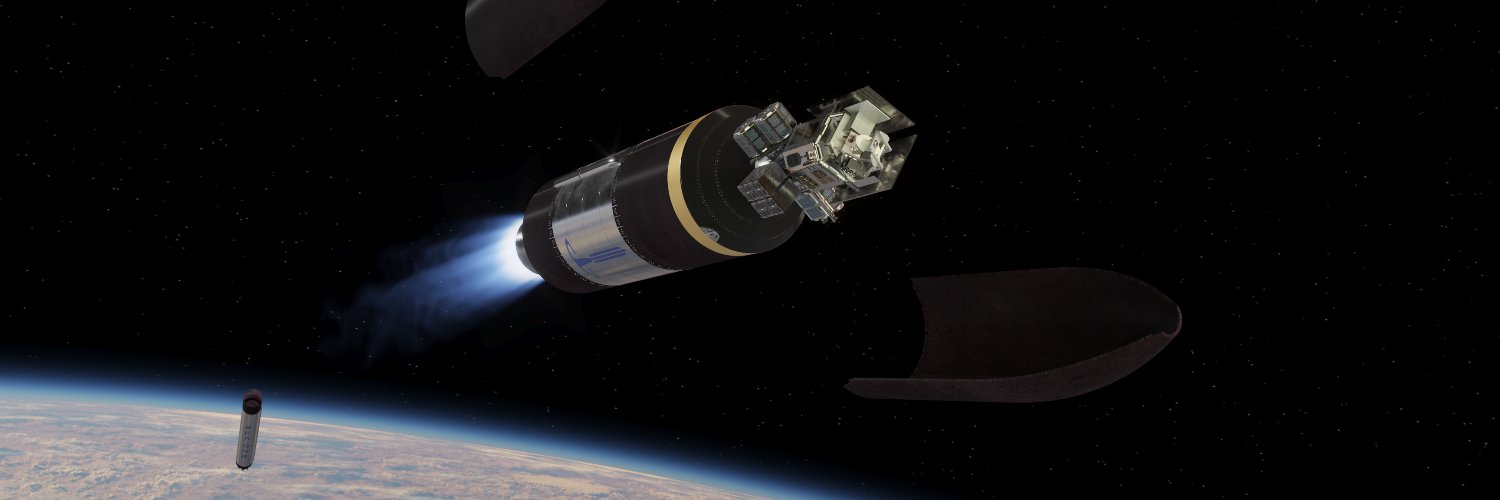
Opening easy, frequent, and low-cost access to #space to better understand & protect our Earth with data from space. RFA flies into space to get closer to Earth
🚀 A major milestone on the road to RFA ONE’s orbital test flight!
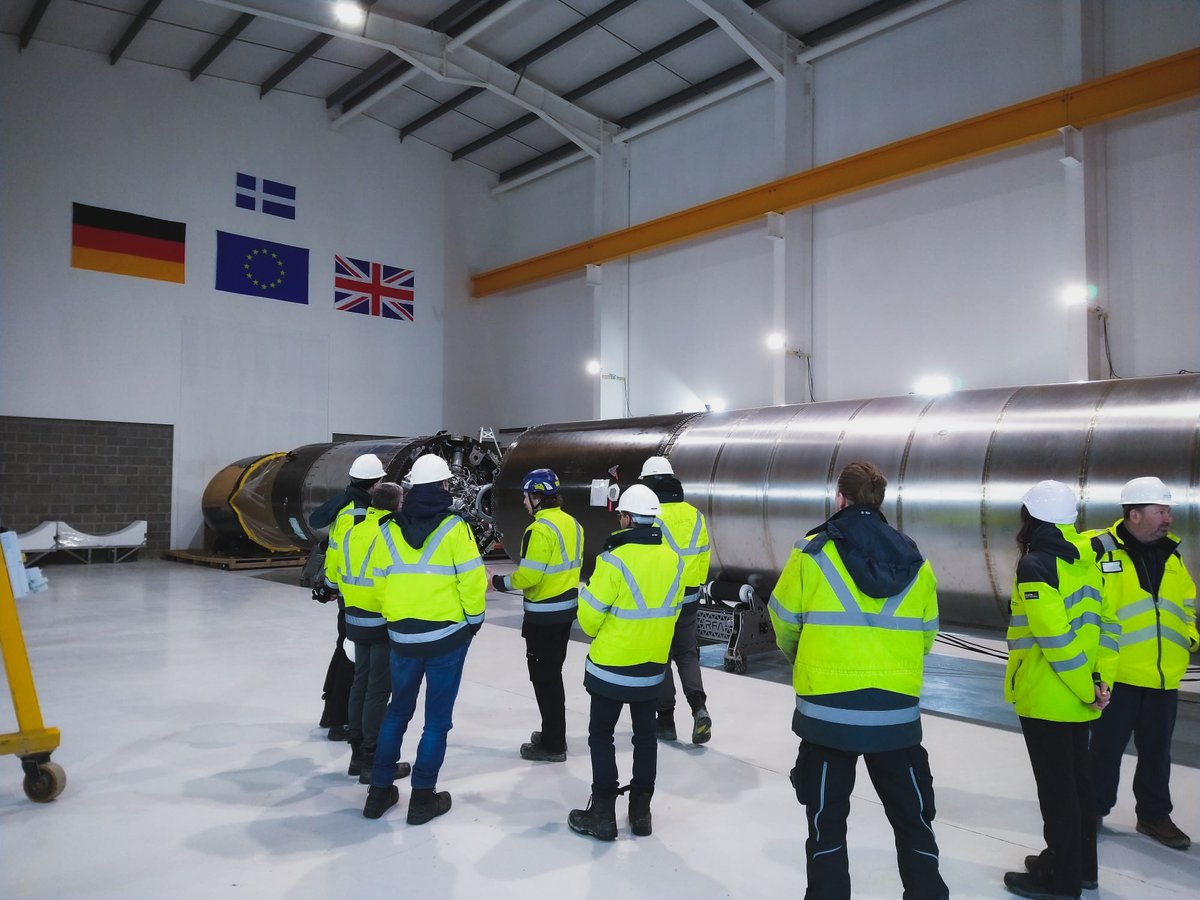
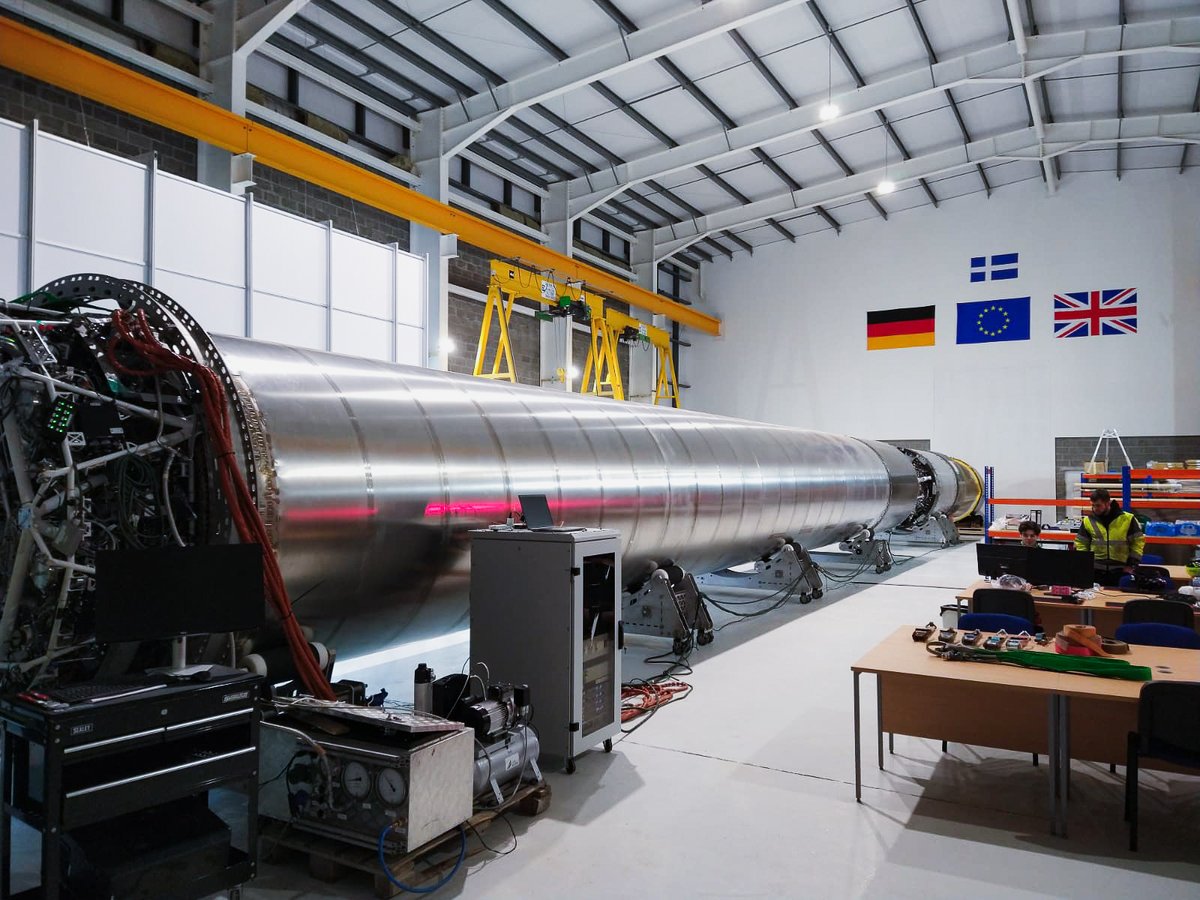
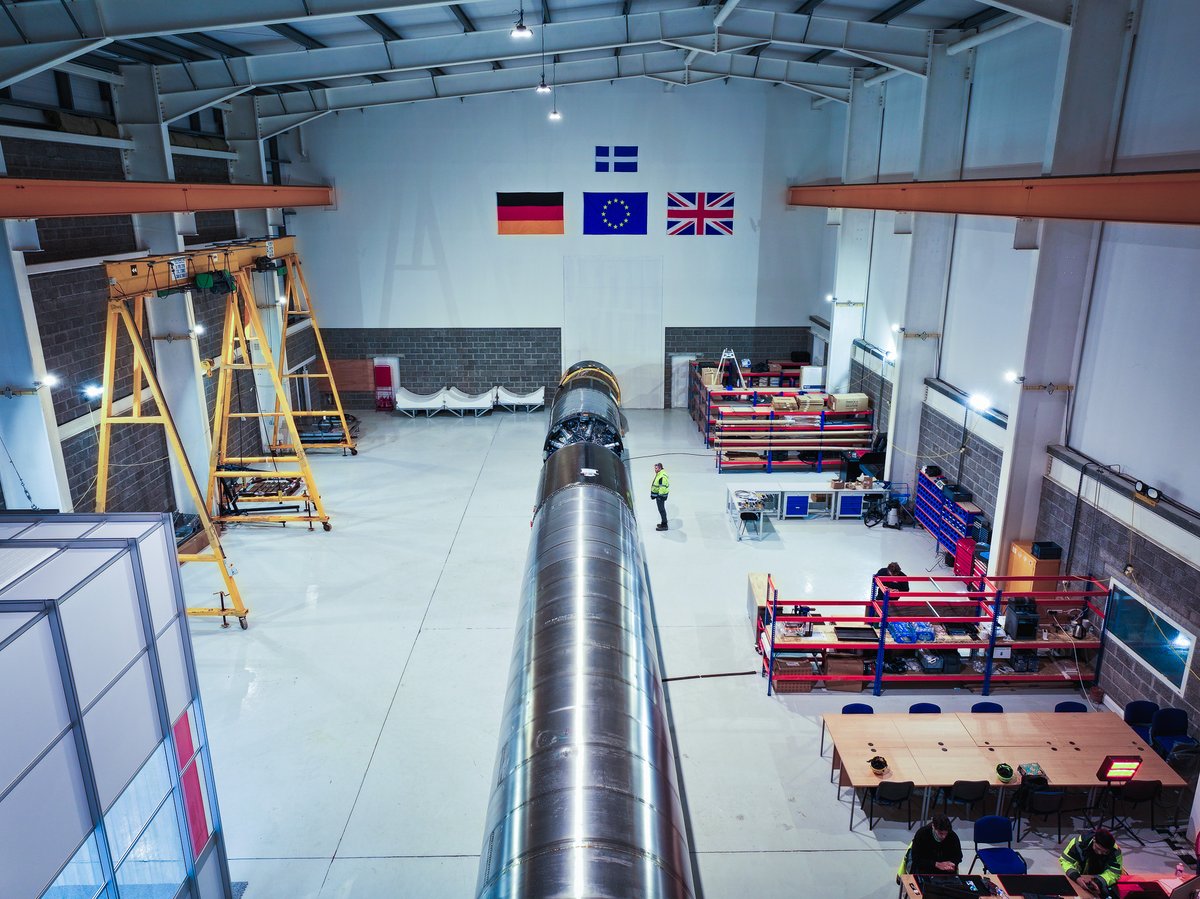
We have delivered the first and second stages of our RFA ONE launch vehicle to @SaxaVord_Space in Scotland. This marks an important step as we move toward our first orbital launch, currently planned for summer 2026.
Over the past 18 months, our teams have advanced the development of both stages, with improvements to the Helix engine, tank pressurization systems, and operating procedures. The causes of the incident during a hot fire test in August 2024 have been fully understood and resolved.
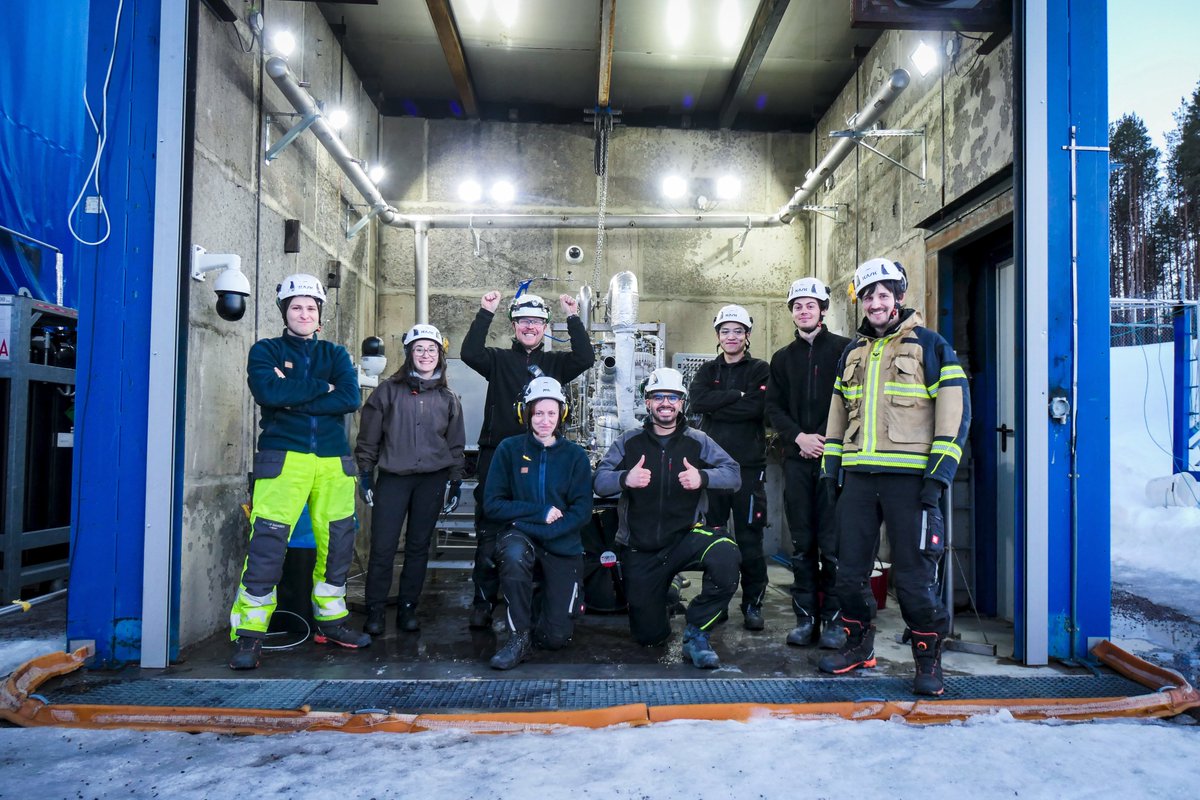
The newly built first stage was tested in Augsburg and has arrived in early February at the launch site, where it will be integrated with its nine Helix engines, currently undergoing final acceptance testing at @SSCspace, Sweden.
Our second stage, following a successful hot fire test campaign at Esrange Space Center, has now also safely arrived at SaxaVord and is undergoing final checks.
There is still work ahead, but reaching this point is a significant achievement for the entire team. With both stages now at the spaceport, the next phase begins: vehicle integration and stage testing ahead of the first launch campaign this summer!
Learn more in our press release ▶️ https://t.co/3cBo0qudya
After a successful week of testing RFA ONE on the pad for the first time, we encountered an issue with the vehicle that requires further investigation. We have made the decision to de-stack the vehicle in order to investigate. We will provide further updates as soon as confirmed information is available.
RFA ONE is on the launch pad. For the first time, our rocket is standing at SaxaVord Spaceport as we continue preparations for launch. Next step: first-stage hotfire testing.
Our first test flight is just the beginning! Behind the scenes, we are focused on up-scaling and improving our technology.
We are excited to announce that we have successfully tested the central subsystem of our Helix 2.0 oxygen-rich staged-combustion engine: the powerpack. We have performed two successful hot-fire tests in which we have shown steady-state operation and cavitation limits.
The powerpack incorporates the turbopump and pre-burner(s). It is the most complex as well as the most mechanically and thermally stressed subsystem of a staged-combustion engine. This milestone validated key technological challenges, such as the simultaneous ignition of multiple pre-burners and turbopump cavitation performance. The results are in-line with the predictions from our design models.
The closed-cycle architecture of Helix allows us to push the performance envelope further: Helix 2.0 is designed to deliver double the thrust (200kN), while mass, production technology and costs remain comparable to Helix 1.0. The result for our customers: more payload for a lower budget!
Excited about this news? Check out our career portal for employment opportunities and help us to elevate our Helix staged-combustion engine technology to the next level! ➡️ https://t.co/BZdm9s5oAu
Update: RFA has submitted its application for the marine license for Test Flight 1 from @SaxaVord_Space. For the first time, the application also specifies a potential launch window, which will open NET (no earlier than) July 1, 2026.
This is a legally required step for planning, and a good sign of how far we’ve come - but it’s not a launch date just yet.
We applied for this window because we’re working hard to be ready - and we’re getting closer every day.
So: the application means we’re entering a new phase of preparation. Still, as with any first-ever launch, there are uncertainties, and the schedule may evolve.
Further specific details around launch timing will be released through the appropriate channels closer to the time. We’ll keep you posted! 🚀
The Lamba Ness Launch Site is now open for virtual exploration!
Step inside SaxaVord Spaceport from your mobile or desktop and discover everything happening across our site!
Working with Dark Star Labs, we’ve built an accessible 'Digital Twin' of SaxaVord. From our geography to our launch infrastructure and rich heritage, you can now explore the UK’s gateway to space from any browser, anywhere in the world.
This is a living project. As our site evolves, so will the experience.
We’re incredibly excited to finally share more of what’s been developing on site.
Explore now - https://t.co/SczfTkk3M9
Technical Update! The past few weeks and months have been very busy at RFA. Everything is being prepared for the next first stage hot fire, and great progress has been made on our launch pad and at @SaxaVord_Space.
Let´s take a closer look:
🔹Most visible and impressive: the umbilical tower is up. 52m high from the ground, fully equipped with clamps to stabilize and fuel our RFA ONE. The rest of the launch pad has also been completed – only the water tanks for the water deluge system will be added. We have begun commissioning the launch pad for the first test flight and expect to conduct some important tests on the pad in the coming weeks!
🔹The launch control centre is complete and fully equipped. It consists of the Mission Control Centre (MCC) and the Range Control Centre (RCC). From here, about 5 km from the launch site, the team will conduct and monitor the launch.
🔹SaxaVord Spaceport has completed its AIT hangar and we were welcomed to move in. This is a multifunctional hall for assembly, integration and testing (AIT) that we will use for the final work and integration of the rocket stages. There is also a clean room for our customers, which provides them with optimal conditions on site and access to their payloads for as long as possible.
In short: everything is more ready than ever to receive a new first stage... 🚀
Avionics is where hardware, software, and flight dynamics converge 🚀
Meet Ikem, part of the team building the flight computers and electronics stack that powers RFA ONE. From guidance and navigation to high-rate telemetry and vehicle health monitoring, avionics turns sensor data into split-second decisions and actions during flight.
If RFA ONE ignites, lifts off, steers, stages, and talks to the ground stations, Team Avionics is behind it.
Learn more about their work in our new video ⬇️
We are delighted to announce that we will be launching two more missions for @esa and the @EU_Commission with RFA ONE!
Through ESA's Flight Ticket Initiative as part of the Boost! programme, we will be welcoming missions from @avs_engineering and @IndraCompany on board.
We look forward to supporting #Europe's IOD/IOV activities with dedicated launch capacity!
Read more in the ESA press release ➡️https://t.co/RMUoubIqAJ
🎫 Two new missions grabbed their tickets to fly on @rfa_space One rocket, lifting off from @SaxaVord_Space, UK:
1. Lurbat, a collection of demonstrator technologies, developed by Added Value Solutions, Spain/UK.
2. Two CubeSats developed by Indra, Spain, holding five experiments.
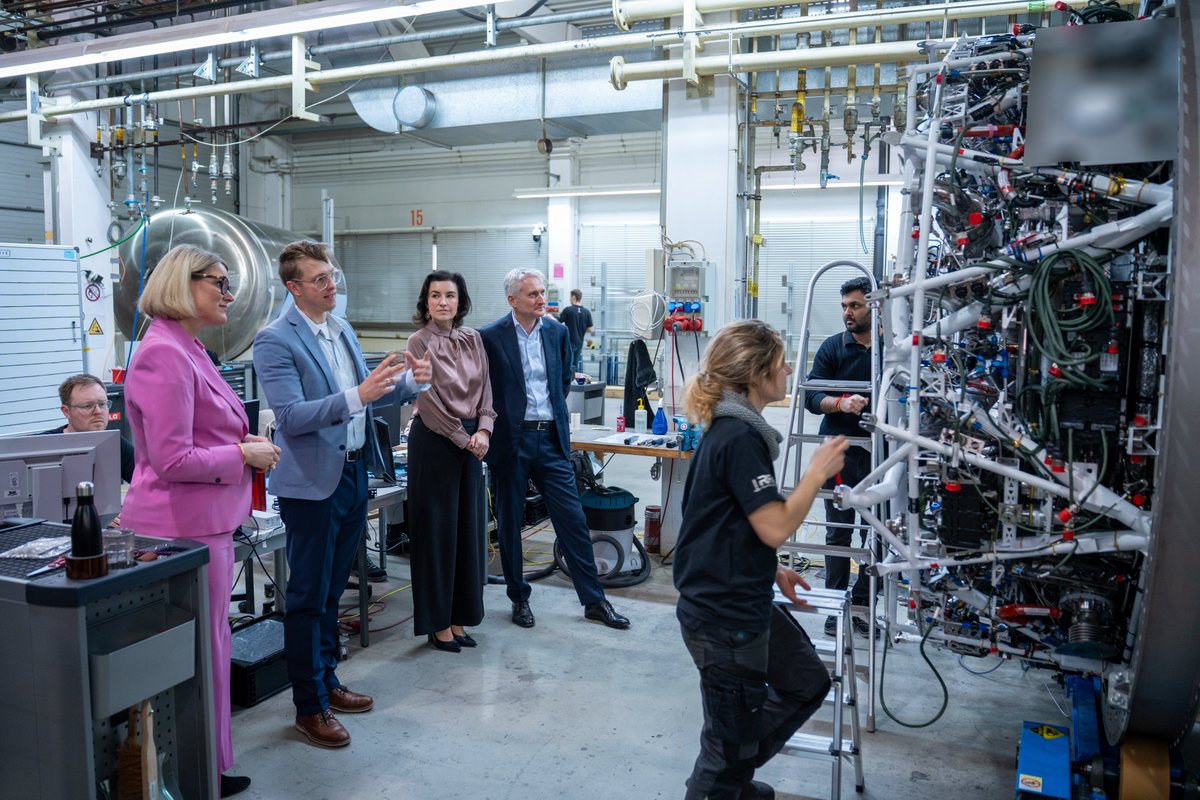
Yesterday, we had the great pleasure of welcoming @DoroBaer , German Federal Minister of Research, Technology and Space (@bmftr_bund) to our headquarters in Augsburg. We were also delighted to welcome Augsburg’s Mayor Eva Weber and Hansjörg Durz, Member of Parliament.
The visit enabled a genuinely open and engaging exchange on the future of institutional and commercial space solutions and on what is needed to ensure reliable and independent access to space for Germany and Europe. Coming after the @esa Ministerial Council in November 2025 and against the backdrop of Germany’s increased space defense budget, the timing of this visit sends a strong and encouraging signal to RFA and our entire team.
The shared commitment, clarity of purpose, and positive energy in the room were unmistakable. Visits like this underline how valuable close and continuous dialogue between industry, politics, and regional partners is when it comes to building resilient space capabilities.
Thank you to everyone involved for the trust, the time, and the very encouraging exchange!
This week, we had the pleasure of welcoming a delegation from @esa `s Directorate of Technology, Engineering and Quality and the @OHB_SE expert team to @rfa_space!
The visit comes at a strong moment for Europe’s space sector. As we close out the year following a successful ESA Ministerial Council, the momentum across the European space ecosystem is clearly tangible. The current environment is highly beneficial for NewSpace companies like RFA, with growing alignment between industry, institutions, and policy objectives.
Thank you ESA TEC for the opportunity to discuss technology development, cooperation, and the next steps for European launch capabilities. We are looking forward to building on this very positive exchange as we move into the year ahead 🚀
Adrian Adrian. He does not only have the same first and last name. He is also our Technical Lead of Engine Assembly and brings our Helix engines to life. From small individual parts to fully assembled powerhouses for RFA ONE, the journey to ignition is intense 🔥
In the video, he shares his story and what it's like to work at RFA. Building history instead of just watching it unfold. For him, the roar of the engines is the greatest reward, but right after that? It’s time to work on the next ones. Because it takes many Helix engines to achieve the goal of flexible, regular and independent access to space for Europe 🚀
We are growing quickly and are looking for people who share our curiosity, passion and drive in the areas of development, production, assembly and testing!
➡️ Check out our open roles and join us:
Engine Assembly Technician 🔗 https://t.co/jRj7GQqc4x
Electrician (Sweden) 🔗 https://t.co/RrlN4l8U1B
Avionics AIT Technician 🔗 https://t.co/SJCzCDCh0D
Manufacturing Engineer 🔗 https://t.co/DpBAIHwReA
Welder 🔗 https://t.co/3r0Ja7MKit
Literally shaking!
Behind the scenes of a special test 🚀
Earlier this year, Redshift, our third stage, completed a full vibration test campaign in flight configuration!
Unlike isolated component checks, this was the real deal: all systems integrated and tested under simulated launch conditions. Because launch is no gentle ride. Everything must endure intense vibrations and still perform flawlessly.
The result? Electronic connections remained strong, the systems (including antennas, telemetry, flight computer, navigation systems) stayed up and running, and we obtained valuable data to further refine and improve.
Enjoy this glimpse of Team Redshift and their work behind the scenes, turning challenges into progress, one test at a time!
Gabriella doesn’t just test avionics, she battle tempers them for space.
She tests and qualifies hardware to withstand extreme conditions, From vibration tests to battery integration in SaxaVord, she’s hands-on with avionics every day.
At RFA, this is engineering without the filter: hands-on, and high-impact. You should join us!
Adrian is the Technical Lead of Engine Assembly at RFA, he builds the heart of our Helix engine.
Every hot-fire? His heart races.
From Venezuela to RFA, he followed his spark.
Now he’s building history, not just watching it.
Be part of it.
What’s it really like to build rockets at RFA?
Where pragmatism meets team spirit, and everyone and everything moves towards ONE goal.
Chris, our AIT Manager, gives us a sneak peak of how this happens in practice.