The Rayls Enygma Public testnet pilot is live.
Private payments on a public chain. Safe and compliant.
Enygma Sovereign already runs in production between banks.
Enygma Public brings the same privacy to public chains, and anyone can try it today.
Check it out here: https://t.co/05fOjH4Dpd
The Rayls Enygma Public testnet pilot is live.
Private payments on a public chain. Safe and compliant.
Enygma Sovereign already runs in production between banks.
Enygma Public brings the same privacy to public chains, and anyone can try it today.
Check it out here: https://t.co/05fOjH4Dpd
More is coming over the next few weeks, starting with custody accounts through WalletConnect.
Try your first private payment and tell us what you think on X or Discord.
We'll feature the most useful feedback as new features roll out.
Start here: https://t.co/wvURKlEAgc
“The token doesn’t improve a poorly structured asset. It only moves it faster.”
That was the closing synthesis of the Bradesco panel I joined yesterday at their headquarters on tokenising securities and the controls it requires, and it may be the most important sentence in this whole market.
Banco Bradesco is Brazil’s fourth-largest bank by total assets and the second-largest private financial institution, with R$2.085 trillion in assets and 110.5 million clients. In capital markets, it handles R$4.6 trillion in asset under management, R$2.9 trillion under global custody and R$1.078 trillion in the Asset Management. That a bank of this scale is putting the controls around tokenisation on the table says a lot about where the market is heading.
Together with Erik Oioli from VBSO, we worked through one concrete case: a company that wants to tokenise its receivables. Four things stayed with me.
The first questions aren’t about technology. Before any token is designed, you need to understand the asset itself: where it comes from, the contract behind it, who pays, and how it behaves over time. The legal and technical questions come first.
Is the token the right itself, or does it point to the right? This legal choice drives everything downstream: the rules for issuing, transferring and retiring the token, and what the investor actually holds if the retailer doesn’t pay.
The real world changes, and the token has to follow. When the retailer pays, who informs the token? That job belongs to the oracle, the process that carries real-world facts into the digital record. When something goes wrong, the fix has to preserve the history rather than erase it. And if a payment happens but the token isn’t updated, responsibility needs to be written into the contract, not discovered later.
The regulatory path is a design decision. Securitisation, FIDC or crowdfunding under CVM Resolution 88 each fit different situations, and the choice should be deliberate.
This is what four years of building tokenisation infrastructure has taught us. Most of the work happens before the token exists.
Thank you to Bradesco, and especially HUMBERTO Tavares de MENESES and Luana Cota, CCA®, for hosting the conversation, and to Erik for the sharp legal perspective.
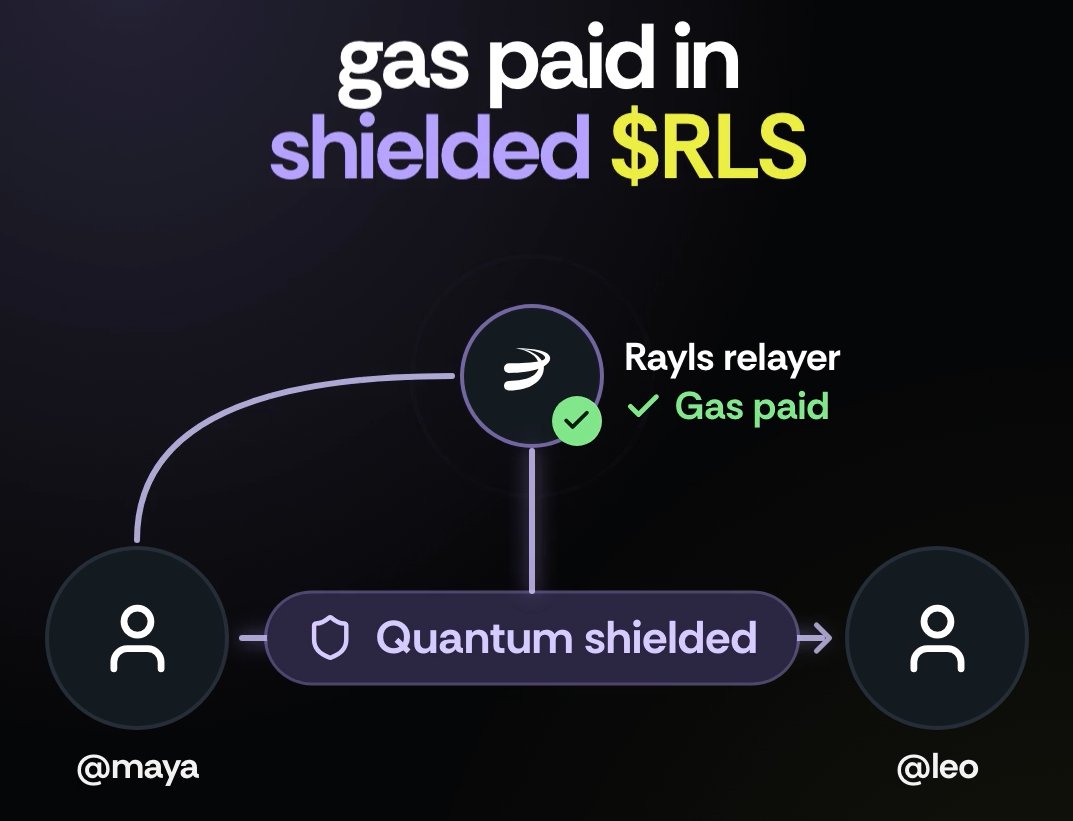
Onchain payments bring transparency by default.
But transparency doesn’t mean every transaction detail needs to be visible to everyone.
There’s a better way to approach financial privacy.
Tomorrow, we’ll show you what that looks like.
Last week, CVM’s Tokenization Working Group received 11 proposals for its DLT Pilot Program. More than three times what the regulator expected.
That number says a lot about where Brazil’s capital market is heading. The question is no longer whether securities will live on DLT. It’s how to do it in a way that regulators, banks and investors can trust.
@RaylsLabs is proud to be part of the working group, contributing our institutional blockchain infrastructure to a pilot built to test and learn together with the other participating companies.
Thank you to CVM for the initiative and for the openness to dialogue with the market, and to ABToken for bringing the participating companies together.
At Parfin, we have spent four years on exactly this question, from the Drex pilots to production deployments with institutions like Nuclea. The main lesson: the technology was never the hard part. The hard part is the whole life of the asset, from issuance to settlement, with compliance, privacy and controls designed in from day one rather than patched on later.
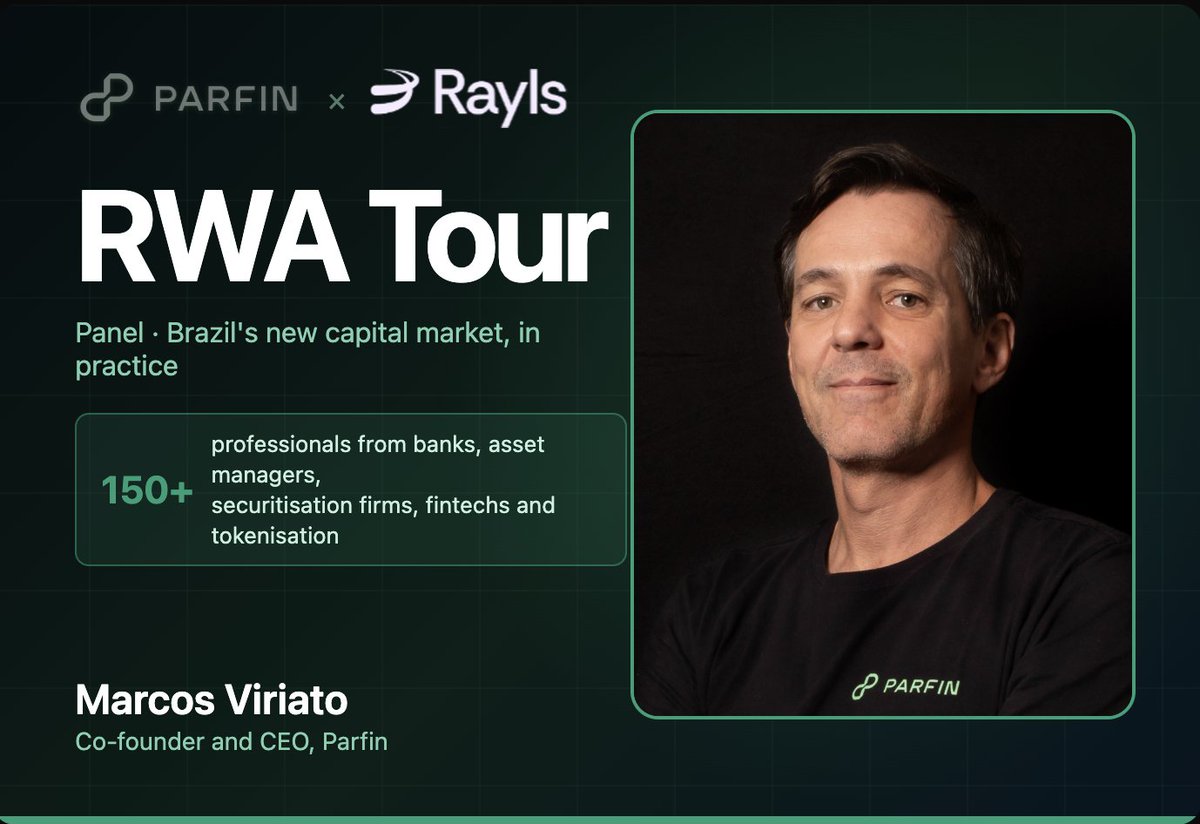
Tomorrow I’ll be at RWA tour event, where around 150 professionals from banks, asset managers, securitisation firms, fintechs and tokenisation companies are coming together to discuss where tokenisation in Brazil goes next. I’ll join a panel on what the technical proposal for Brazil’s new capital market looks like in practice. The three points I plan to push:
- Settlement is the real test. Tokenising the asset is the easy half. The cash leg is where certainty is won or lost.
- Public and permissioned networks will coexist. The infrastructure has to operate across both without breaking compliance.
- Privacy and compliance have to be part of the architecture, not an afterthought.
Getting onto the Rayls Public Chain just got a lot easier.
You can now bridge USDC directly into USDr, the native gas token on Rayls, from Ethereum, BNB Chain, Base, Arbitrum, Optimism, and Polygon, all through the Rayls dApp.
USDr is backed 1:1 by USDC, meaning every 1 USDr is backed by 1 USDC. You can also redeem your USDr back to USDC through the Rayls dApp.
$RLS can also now be bridged to Rayls through Stargate from BNB Chain, Base, Arbitrum, Optimism, and Polygon, as well as Ethereum.
So wherever your USDC and $RLS sit today, you can bring both onto Rayls, ready to stake, swap and transact.
TokenOne is bringing tokenised Brazilian credit to the Rayls Public Chain.
TokenOne is a Brazilian securitisation company and CVM-authorised investment platform.
It turns the receivables of businesses that sell on credit into debentures investors can hold, and has tokenised more than $13M across 17 structured assets so far.
Its first three assets on Rayls, the NF01, NF02 and NF03 debentures, worth R$35M (around $6.3M), are now onchain.
As institutional interest in tokenization grows, the focus is shifting towards what it takes to make it work in real financial markets.
@mcvviriato joined @FINTECHTVglobal to discuss why banks are exploring private blockchains, the infrastructure required to support institutional adoption, and the path from tokenization pilots to live markets.
An important conversation on the future of financial infrastructure and the role Rayls is building towards.
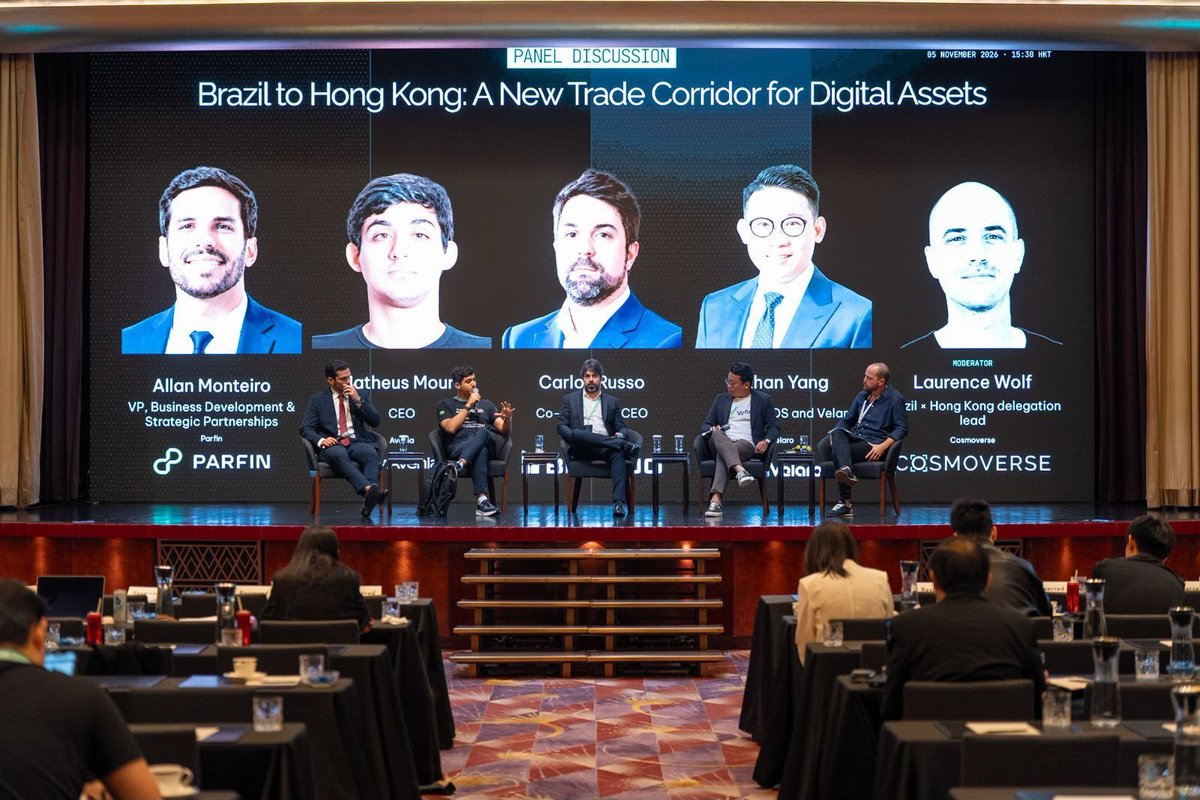
At Cosmoverse in Hong Kong, @bm_allan_ joined the panel “Brazil to Hong Kong: A New Trade Corridor for Digital Assets” to explore how digital assets can unlock new opportunities between the two markets.
The discussion covered cross-border business, institutional adoption, regulation, and the role of blockchain in making international trade more efficient.
Allan also joined the founding cohort of the Brazilian delegation to the BR-HK Corridor, bringing together people working to strengthen business ties between the two markets.
At Rayls, we're excited to be part of this growing bridge between Brazil and Asia, connecting institutions, building the infrastructure for digital assets, and helping unlock new opportunities across borders.
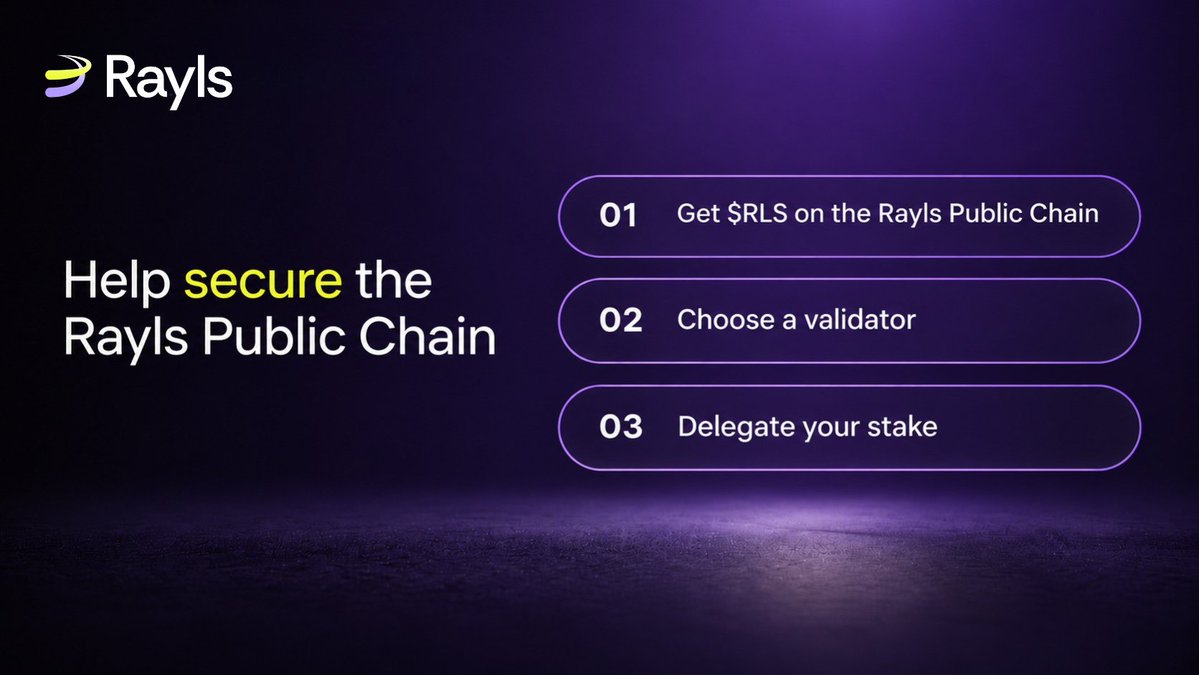
With delegated staking, any $RLS holder can participate in securing the Rayls Public Chain.
Getting started takes 3 steps:
1. Get $RLS on the Rayls Public Chain.
2. Choose one of 8 active validators.
3. Delegate your stake and earn rewards, currently around 18% APY.
Just choose a validator, delegate, and become part of the network's security.