Where are the biggest #AI opportunities outside the U.S.?
Chief Research Officer Phillip Wool joined @CNBC to break down why East Asia could be critical to the global AI race — from semiconductors and memory chips to the infrastructure powering next-gen data centers.
Phillip also touched on names like SK Hynix, Samsung, and TSMC, along with why parts of the software space may be getting unfairly punished during the recent AI pullback.
As the AI buildout accelerates, supply chains, infrastructure, and Asian tech leadership are becoming harder for investors to ignore.
Watch the interview here: https://t.co/rQXmMujtz1
Learn more about Rayliant’s international investment strategies at https://t.co/c1nafg4CV2.
#ArtificialIntelligence #Semiconductors #AsiaMarkets #AIInfrastructure #Investing #TSMC #Samsung
Disclosure: For informational purposes only. This content does not constitute investment advice or a recommendation to buy or sell any security. Views expressed are those of the speaker as of the date indicated and are subject to change.
What investment opportunities are emerging in the Middle East beyond oil and energy?
Rayliant's Phillip Wool joined @CNBC to discuss why investors may be missing the bigger story in the Middle East: a long-term economic transformation unfolding beneath the geopolitical noise.
Phillip highlighted how infrastructure spending, economic diversification, and rapidly evolving capital markets are reshaping the region — creating new opportunities tied to the “Middle East of the future.”
Watch the interview here: https://t.co/F29J4jytQs
Learn more about Rayliant’s global and international investment strategies at https://t.co/c1nafg4CV2.
#MiddleEast #GlobalMarkets #Investing #EmergingMarkets #oil #energy
Disclosure: For informational purposes only. This content does not constitute investment advice or a recommendation to buy or sell any security. Views expressed are those of the speaker as of the date indicated and are subject to change.
What happens when divisions inside the Federal Reserve start rising?
In Jay Powell’s final #FOMC meeting as Fed Chair, the #Fed kept rates unchanged — but the bigger story may have been the growing disagreement among policymakers behind the scenes.
The latest meeting produced:
• The most dissenting Fed votes since 1992
• Powell’s unexpected decision to remain on the Fed Board
• Increasing debate around inflation, rate cuts, and the path of monetary policy
In this issue of Perspectives, we explore what rising division within the FOMC could mean for investors, markets, and the future direction of U.S. interest rates.
Read the full article here: https://t.co/ukJahGR6pf
#FederalReserve #InterestRates #Inflation #Markets #Macro #Investing #ETF
For informational purposes only. Not investment advice. Past performance is not indicative of future results.
How are #AI, #geopolitics, and shifting global power dynamics reshaping the long-term investment landscape?
Join Rayliant Deputy CIO and Head of Research Phil Wool and Naoto Nagai, Senior Managing Executive Officer at Sumitomo Mitsui DS Asset Management, at the @CFASocietyNC 2026 Annual Dinner for a discussion on AI, Policy and the Long Game: China’s Rise and Japan’s Revival.
The conversation will explore the structural forces driving change across Asia and global markets, including AI infrastructure, policy trends, and evolving investment opportunities in China and Japan.
📍 Forsyth Country Club | Winston-Salem, NC
🗓 June 9, 2026
🕔 5:00 PM – 8:00 PM
Learn more and register here:
https://t.co/vrGD6vWKnz
#CFA #Investing #China #Japan #GlobalMarkets #PortfolioConstruction #NorthCarolina
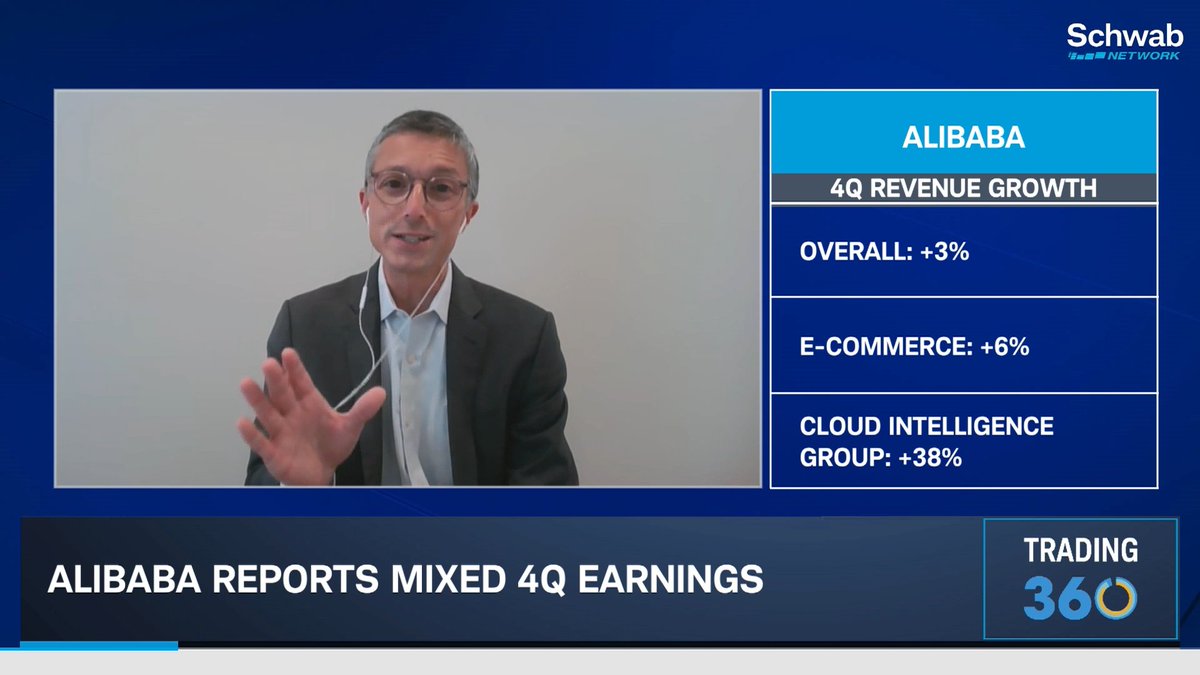
Rayliant Chief Research Officer Phillip Wool joined @SchwabNetwork to discuss why Alibaba continues to aggressively invest in #AI and cloud infrastructure despite pressure on near-term profitability.
As cloud adoption accelerates across #China, AI infrastructure, semiconductor demand, and platform-scale technology investment are reshaping the outlook for Chinese internet and e-commerce companies.
Phil shared insights on market concentration, the scale of today’s AI investment cycle, and what the next phase of global AI competition could mean for investors looking beyond the current market leaders.
Full replay available here: https://t.co/Zdz0NM9VsR
Learn more about Rayliant’s China and international investment strategies at https://t.co/c1nafg5aKA.
Disclosure: Phillip Wool is the CEO and Chief Research Officer of Rayliant Investment Research, an SEC-registered investment adviser. Rayliant manages the Rayliant-ChinaAMC Transformative China Tech ETF (CNQQ), for which Alibaba (BABA) is currently a significant holding. This content reflects Mr. Wool's opinions as of the interview date, is subject to change, and does not constitute investment advice. Before investing in CNQQ, please read the prospectus carefully for information on objectives, risks, charges, and expenses. Available at https://t.co/c1nafg5aKA. Investing involves risk, including possible loss of principal.
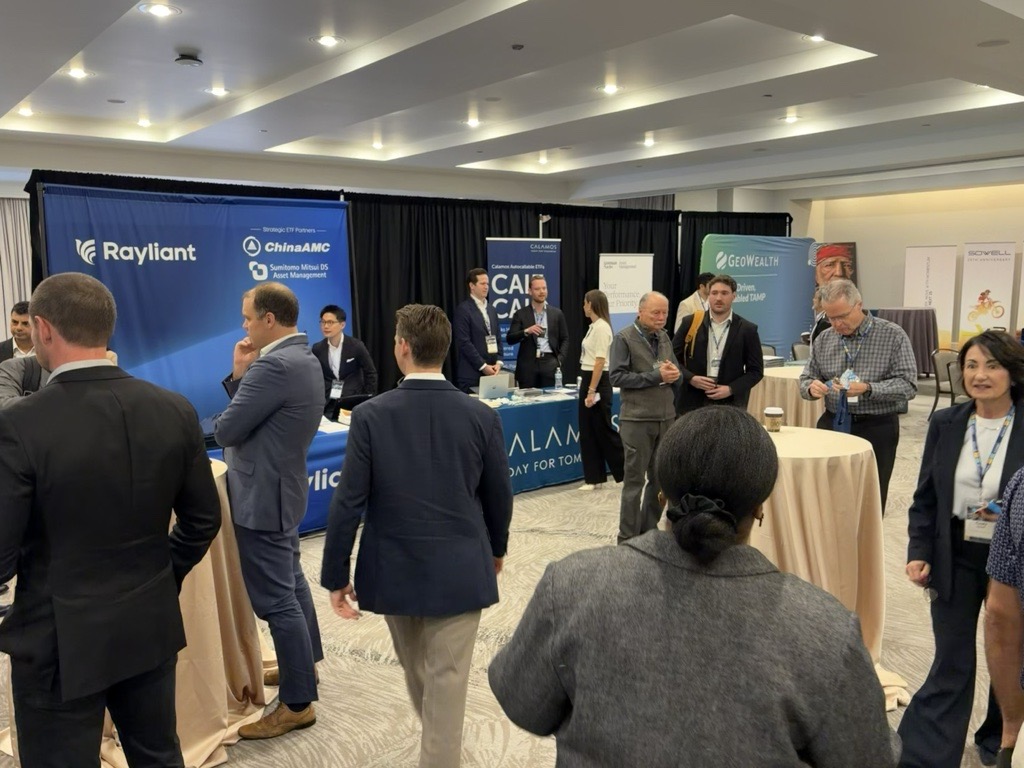
Three incredible days at @Sowell_Mgmt's NEXT25 Summit connecting with the advisors, partners, and industry leaders driving the future of wealth management.
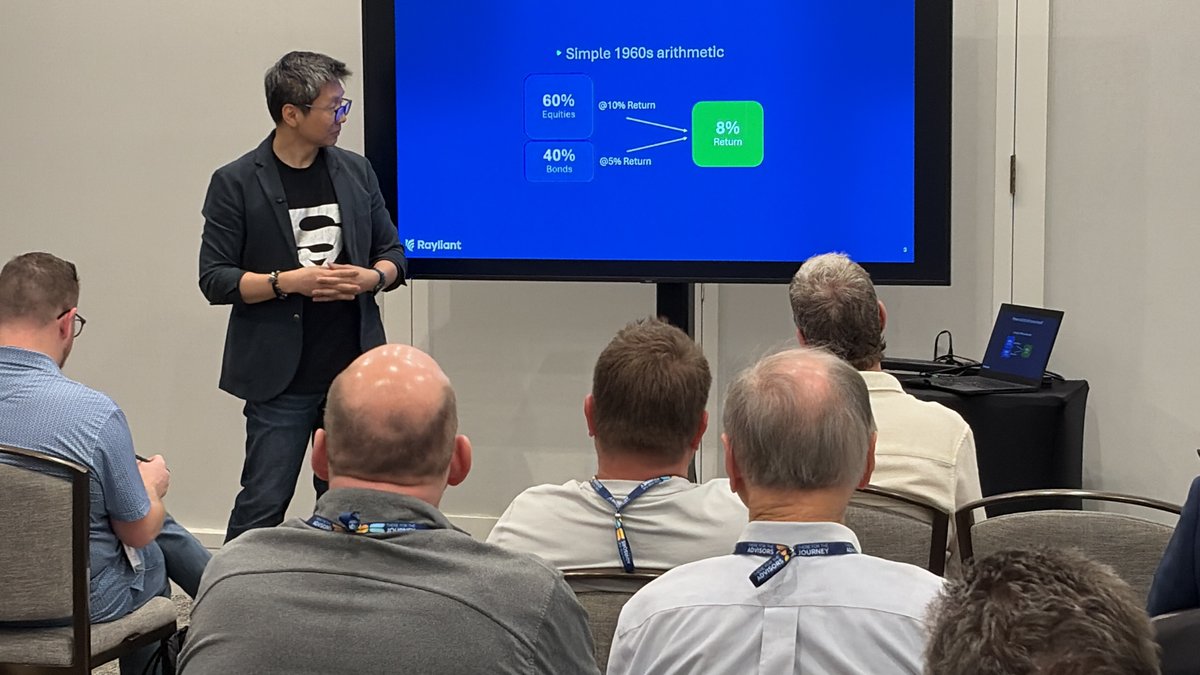
@hsu_jason helped kick off the event with a masterclass for advisors before taking the stage with his thought-provoking presentation, “Print Baby, Print!” — exploring what may lie ahead in the not-too-distant future for markets, policy, and investors.
The Rayliant team was also proud to be joined by our valued partners @ChinaAMC_HK and Sumitomo Mitsui DS. Great seeing Fujia Liu, CFA, Tony Yang, CFA, and Sean Park connecting, collaborating, and engaging with advisors throughout the summit.
A huge thank you to Sowell Management for delivering a truly world-class event. The energy, conversations, and exchange of ideas made NEXT25 one to remember — and we’re already looking forward to what’s ahead.
#NEXT25 #FinancialAdvisors #Investing #ETFs #AssetManagement #OCIO
Can the economy feel broken while the stock market keeps pushing to new highs?
Rayliant CIO @hsu_jason joined guest host Mitchell Swan on The MarcMcMain Show (WMOQ 92.3 FM) this week for a fast-moving conversation on markets, #AI, inflation, and the future of investing.
Jason unpacked:
• Why the traditional #6040 portfolio may be more convention than science
• The widening disconnect between Wall Street and everyday economic reality
• The hidden risks of extreme concentration in mega-cap U.S. tech
• Why emerging Asia could become a major beneficiary of the #AI infrastructure boom
• Why broad global beta may ultimately outperform the pursuit of alpha
From #SmartBeta and #PortfolioConstruction to global diversification and the next phase of AI-driven growth, Jason challenged investors to rethink some of the industry’s most deeply embedded assumptions.
🎧 Listen to the full episode here: https://t.co/AJzCBtsB8h
The securities identified and described do not represent all of the securities purchased, sold or recommended for client accounts. The reader should not assume that an investment in the securities identified was or will be profitable. This podcast contains opinions which are subject to change without notice. The reader should not construe these opinions as a recommendation to invest in any security or as investment or financial advice. The views expressed herein are those of Jason Hsu and do not necessary reflect the views of Rayliant Investment Research.
Why are #commodity currencies and carry trades coming back into focus?
Markets have been focused on near-term disruptions in the Middle East—energy supply, shipping routes, and price volatility.
But a more structural shift may be underway.
As uncertainty around Gulf energy flows persists, global supply chains are gradually diversifying toward the Atlantic basin—including the U.S., Latin America, and other more stable sources of production.
This shift has implications beyond energy markets.
In several commodity-linked economies, higher interest rates, improving trade balances, and stronger export demand are creating conditions where carry strategies are becoming more relevant again.
For investors, this raises important questions:
• How are global energy shifts affecting currency markets?
• Why are commodity-linked currencies attracting attention again?
• What role can carry play in a multi-asset portfolio today?
In our latest Perspectives, we explore how these structural changes may shape capital flows, currencies, and portfolio positioning.
➡️ Read the full article here: https://t.co/fIDpQiEW0O
Rayliant CIO @hsu_jason will join Mitch Swan who is guest hosting The Marc McMain Show on Georgia-based WMOQ 92.3 FM today at Noon ET for a conversation on markets, portfolio construction, and the evolving investment landscape.
Topics expected to include:
• The U.S. economy and national debt
• The future of the traditional 60/40 portfolio
• Smart beta and modern portfolio construction
• AI infrastructure investment themes and market implications
📻 WMOQ 92.3 FM
🕛 Today | 12:00–12:30 PM ET
If you’re in Georgia, tune in live on 92.3 FM!
You can also listen here: https://t.co/nF5ICOUrHj
@Sowell_Mgmt's Next25 Summit is officially underway—starting strong with an advisor masterclass 🔥
Dr. @hsu_jason set the stage by breaking down the origins of the 60/40 portfolio—and why it continues to stand as the “safe choice” in client allocation decisions. Understanding where strategies come from is key to knowing where they’re headed.
#SowellSummit #AssetAllocation #WealthManagement #FinancialAdvisors
Why can the stock market rise while the real economy feels weak?
In a recent episode of @MoneyLifeShow with @ChuckJaffe, Rayliant CIO @hsu_jason discusses why equity markets—like the S&P 500 and Nasdaq—can appear disconnected from everyday economic realities.
While consumers may be reacting to higher prices at the gas pump or grocery store, markets can simultaneously reflect a different set of expectations, including future growth, policy shifts, and global capital flows.
In the conversation, he also explores:
• Why markets can remain resilient despite geopolitical uncertainty
• How U.S.–China trade tensions have evolved
• Where artificial intelligence may have the greatest impact on global labor markets
The result is a market environment that can feel “separated from reality” for many investors.
➡️ Listen to the full interview:
YouTube: https://t.co/991B9wpNfT
Spotify: https://t.co/dU7Qzid3UY
This podcast contains opinions which are subject to change without notice. The reader should not construe these opinions as a recommendation to invest in any security or as investment or financial advice. The views expressed herein are those of Jason Hsu and do not necessary reflect the views of Rayliant. The securities identified and described do not represent all of the securities purchased, sold or recommended for client accounts. The reader should not assume that an investment in the securities identified was or will be profitable.
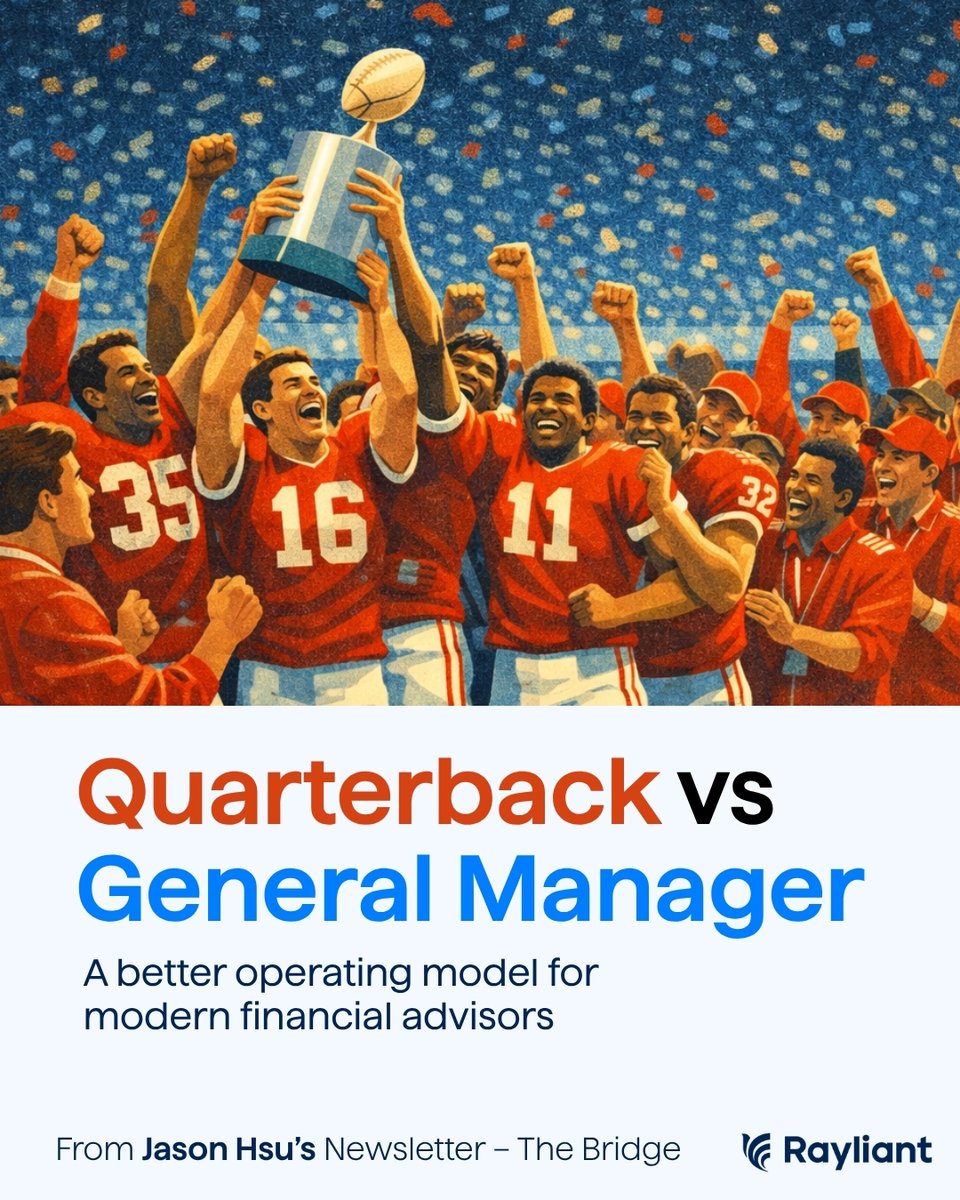
Many financial advisors have built their practices around being the portfolio “quarterback”—selecting stocks, timing markets, and calling every investment play.
But today’s landscape looks very different.
Institutional investment teams, systematic strategies, and low-cost ETFs have made it increasingly difficult for individual advisors to consistently outperform markets. At the same time, client needs have expanded beyond portfolio management to include planning, tax strategy, and long-term wealth guidance.
In his "QB vs GM" series, Rayliant CIO @hsu_jason explores an alternative model: the advisor as the "general manager"—orchestrating institutional investment expertise while focusing on the broader financial lives of clients.
Here are important takeaways for advisors looking to level-up!
SUBSCRIBE to The Bridge on LinkedIn and read the full articles:
Part 1 The False Heroics of Stock Picking: https://t.co/9F9NJ40g0W
Part 2 Building a Dynasty: https://t.co/kt3fBfuET7
Part 3 The Playbook for Transition: https://t.co/n1SMDBAtLS
If the U.S. produces more oil than it consumes, why do Americans still feel the impact of global oil shocks at the pump?
Despite being the world’s largest oil producer—and a net exporter of petroleum products—the U.S. remains a net importer of #crude oil. One reason is refinery design: many U.S. refineries are built to process heavier foreign crude, while much of America’s domestic production is lighter “sweet” crude.
But the more important point is that #oil prices are determined in global markets.
When supply disruptions occur—such as the recent halt of shipping through the Strait of Hormuz—prices can rise worldwide, including in the United States. That’s why #gasoline prices surged earlier this year, even as U.S. production remained high.
The impact goes beyond energy markets. With gasoline approaching $5 per gallon, consumer sentiment has fallen sharply, reaching the lowest reading in the University of Michigan survey’s 74-year history.
Because consumer spending makes up roughly two-thirds of U.S. GDP, sustained increases in energy costs could have broader implications for inflation, household confidence, and economic activity.
Read the full Perspectives here: https://t.co/dzKAuREoWO
How are energy markets pricing Middle East risk?
Recent tensions in the Middle East have pushed #energy prices higher, but futures markets tell a more nuanced story. #Oil futures currently suggest markets expect disruptions to ease over time, while European natural gas futures continue trending higher.
This divergence raises an important question: Are energy markets underestimating the structural risks to global LNG supply?
In a recent Perspectives, we explore what investors should understand about:
• Oil vs. natural gas futures pricing
• The strategic importance of the Strait of Hormuz
• Why LNG supply dynamics may matter more than short-term headlines
➡️ Read the full analysis here: https://t.co/U1DdNFcp6O
#iran #straitofhormuz #globalmarkets #ocio #etf
From #Labubu to #QQBuBu — Asian pop culture continues to create global phenomena.
Our London colleague Artur Baluszynski, CEO of @HendersonRowe recently joined the fun with a QQBuBu blind box unboxing — inspired by the Labubu trend and the growing influence of Asian creative brands.
The QQBuBu series includes seven characters, each representing a sector represented in the CNQQ ETF.
If you missed Jason’s QQBuBu unboxing a few weeks ago, there’s still a chance to get one.
We’re continuing the QQBuBu blind box giveaway — comment below if you’d like one and we’ll reach out.
Disclosure: This content is for informational purposes only and does not constitute investment advice. PopMart is currently a holding of the CNQQ ETF. Holdings are subject to change and should not be construed as a recommendation to buy or sell any security. Investing in CNQQ involves risks, including those associated with China and emerging markets. Jason Hsu is Portfolio Manager of CNQQ and has a financial interest in the fund. The QQbubu giveaway is not conditioned on or related to any investment in CNQQ or any Rayliant product. For more information visit https://t.co/Uoa1746Hy9
How seriously are investors taking today’s growing list of market risks?
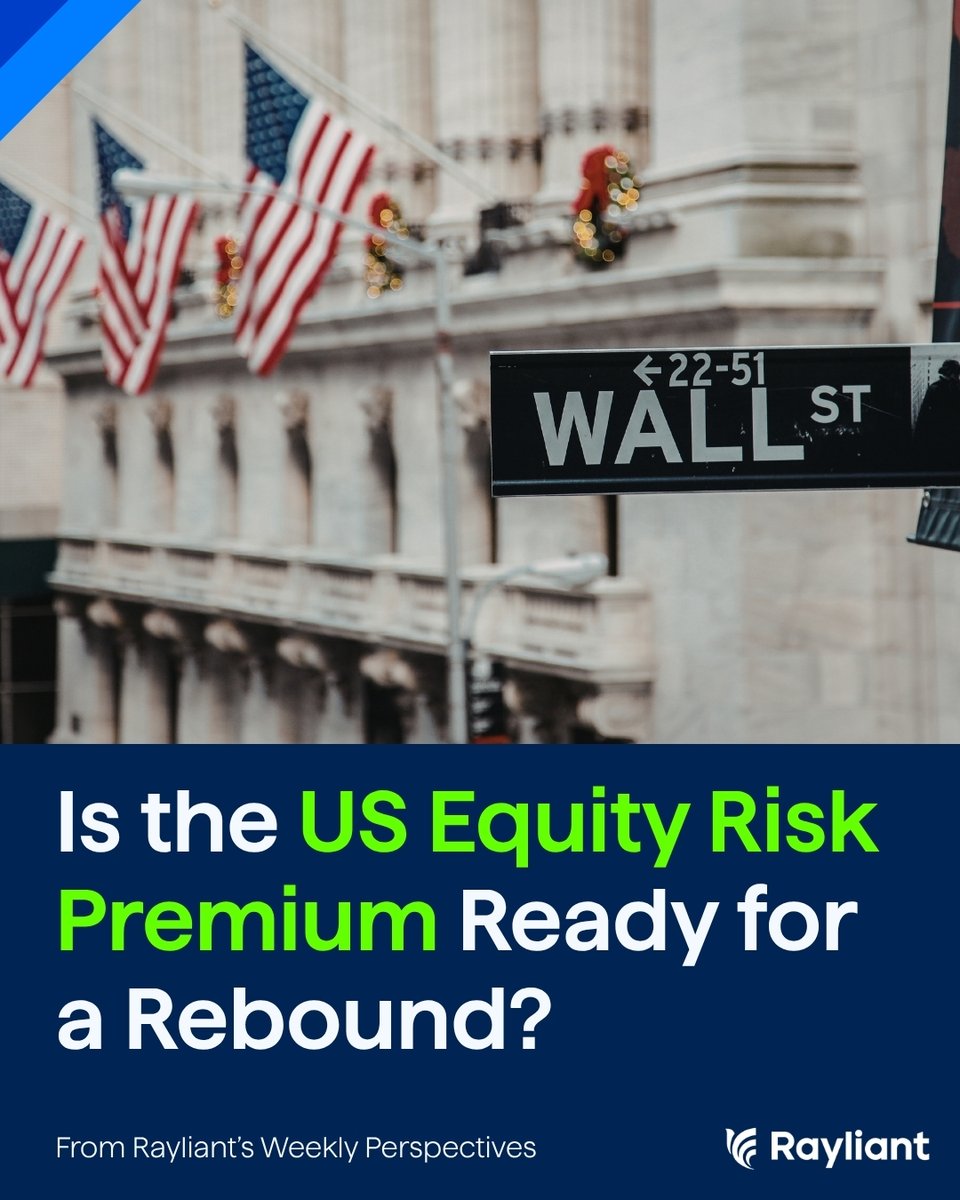
One way to think about it is through the equity risk premium—the extra return investors expect from stocks compared with safer bonds.
Our latest chart shows that the US equity risk premium has fallen to its lowest level since 2002, and has recently turned negative.
That doesn’t necessarily mean #equities must fall. But it does suggest that investors buying the dip today may be taking a larger leap of faith than in past cycles.
Read the full Perspectives piece here: https://t.co/0gxEciLhIt
🏆 FTW! 🏆
@Nasdaq's Times Square tower lights up once again to celebrate the launch of the newest addition to Rayliant’s growing family of ETFs—$RWIN.
The Rayliant NxtGen Multifactor International Equity ETF is now trading.
RWIN is designed to go beyond traditional market-cap and legacy smart beta, using a systematic approach that seeks more efficient exposure to international equity risk premia.
Disclosure: Carefully consider the Funds’ investment objectives, risks, and charges and expenses before investing. This and other information can be found in the Funds’ full or summary prospectus, which may be obtained by calling +1 (626) 407-4581 or https://t.co/9d6cL5R1xU
Please read the prospectus carefully before investing.
The Fund is newly launched and lacks an operating history.
The Rayliant NxtGen Multifactor International Equity ETF is distributed by Northern Lights Distributors, LLC, Member FINRA/SIPC. The Rayliant NxtGen Multifactor International Equity ETF is not affiliated with Northern Lights Distributors, LLC.