Excited to share that @BitGifty has received an Anchor Grant!
They're expanding to 40 countries, launching Airtime in 21 new markets, with data, electricity, cable TV, water & more to follow. Big things ahead!
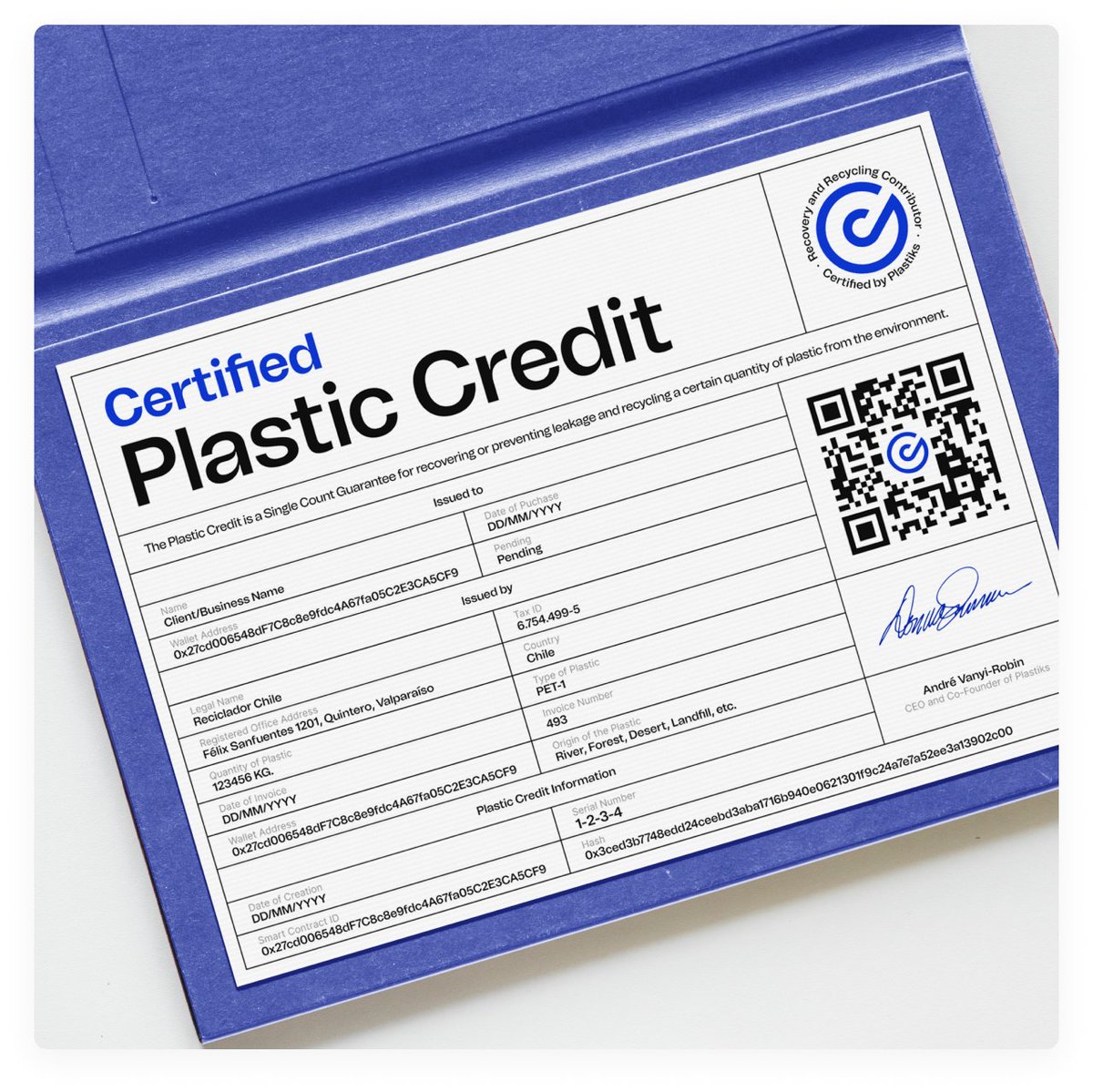
Most plastic credits can't survive an audit.
Ours are built for one.
Here's how:
When the auditor shows up, most platforms freeze.
They scramble for evidence. They patch together spreadsheets. They hope documentation holds.
Hope isn't a compliance strategy.
So what actually makes a credit audit-ready?
→ Primary documentation (invoices, receipts, collection logs)
→ Lot-level traceability (specific batch, date, entity, location)
→ Third-party verification (independent review)
→ On-chain anchoring (@Cardano timestamp, immutable)
Most platforms have 1 or 2. We have all 4.
And the market is catching up.
2026 isn't 2022.
"Sustainability" is becoming "accountability."
Vague claims are becoming legal liabilities.
PDF reports are becoming Digital Product Passports.
So what does that mean for credits?
Every credit issued through Plastiks carries:
→ Primary documentation
→ Lot-level traceability
→ Third-party verification
→ On-chain anchoring
This isn't a feature list. It's a compliance architecture.
The companies that survive won't have the best marketing.
They'll have the best evidence.
Audit-ready by design.
Most people don’t avoid recycling or donating because they don’t care. They avoid it because it’s inconvenient.
Impact shouldn’t require extra effort.
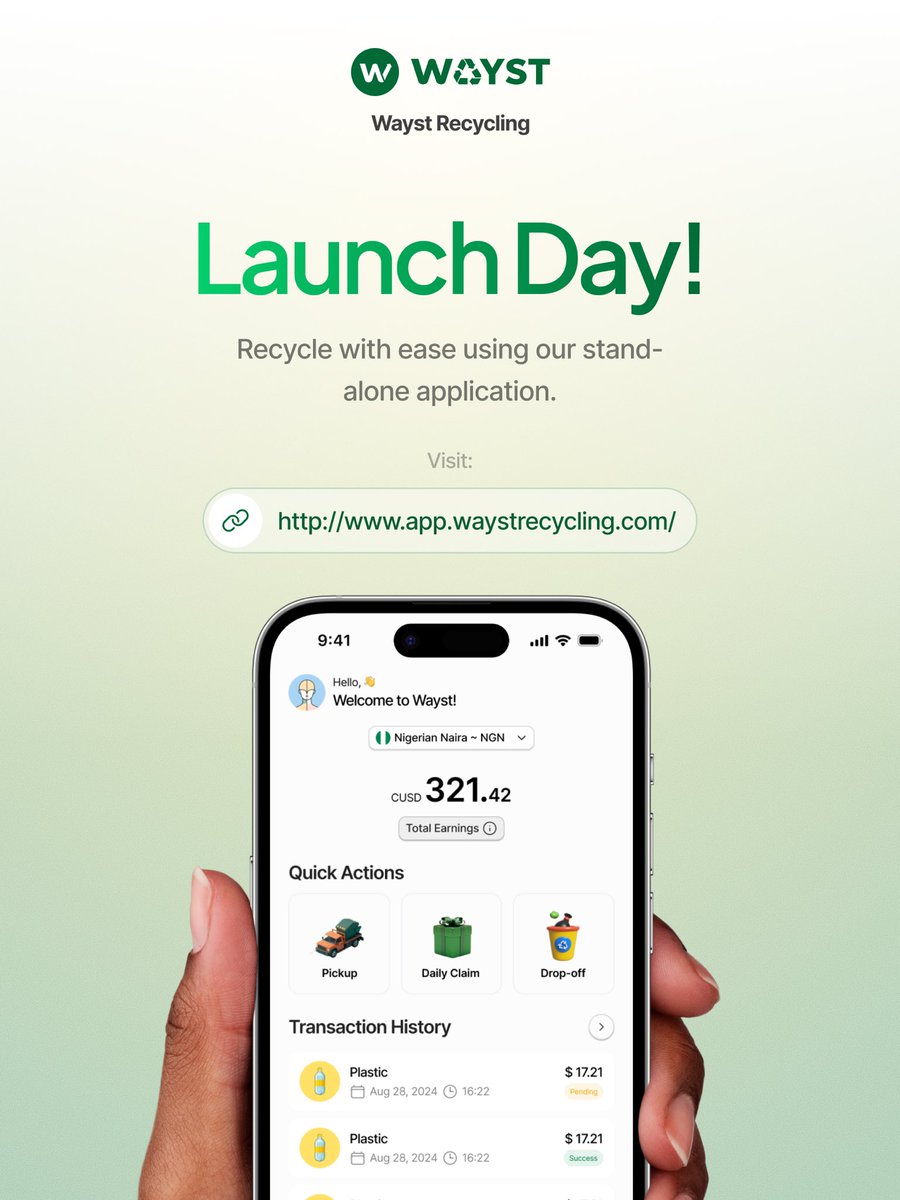
That’s why we love what @recycleonwayst is building: turning recycling into something seamless, trackable, and even rewarding. Waste becomes value. Good behavior becomes the default.
Big respect to the @recycleonwayst team for pushing this forward: if you care about practical, real-world sustainability, give them a follow.
We’re always excited to collaborate with more builders like this.
ReFi isn’t a single project. It’s a growing network of teams redesigning the systems that shape how capital, resources, and impact flow.
#StrongerTogether
GoodBuilders Season 3 applications are LIVE✨
🌊 $50,000+ in G$ streaming funding on @flowstatecoop@Celo
🧠Mentorship + real community & users
👉 Apply now: https://t.co/x5KAe6dnTt
Build, ship, earn! Join the 12 weeks @gooddollarorg & @flowstatecoop GoodBuilders Season 3 program to earn a share of $50k USD in G$.
Applications open now. First rewards streaming on February 18th!
https://t.co/BJGQUbQ9Wz
Plastiks operates across 22 countries with 20+ verified recovery entities.
Each entity goes through:
-> 30-day due diligence
-> Legal + financial verification
-> Operational capacity review
Only then can they submit recovery claims.
10 million kg verified so far.
Every certificate anchored on @Cardano.
When a recovery operator like J&S Reciclagens (Brazil) working with our partner Recybacks gets paid, they don't need price charts.
They need reliable settlement.
Here's the problem we solved:
Many on-chain payment rails are exposed to volatility.
For recovery operators working on tight margins, "your payment changed overnight" isn't innovation.
It's operational risk.
So we built a verification-to-payment flow designed for real recovery work:
-> Recovery evidence is uploaded and verified in Plastiks (traceable, auditable)
-> A Digital Recovery Certificate / Plastic Credit is issued for the verified kilos
-> Payment is executed using a stable-value rail (e.g., stablecoin), so the operator receives what was agreed - not what the market feels like that day
This is what Project Catalyst Fund 13 supported: building infrastructure where verified impact can trigger reliable settlement.
Not speculation.
Operational finance for verified recovery.
High-level flow:
-> Sponsor commits to verified recovery
-> Plastiks verifies evidence and issues the certificate
-> Stable-value payment settles to the recovery operator
-> Operator can cash out without volatility risk
Every step is traceable.
Every settlement is auditable.
We didn't build this for traders.
We built it for the people doing the work.
And each settlement?
A @Cardano transaction.