I cannot unsee the quiet sorting of who matters and who does not.
I remember the grandmother who arrived before dawn, waiting hours while others who came later were seen first.
She did not ask for health equity.
She asked only if she would live to see her grandchildren grow.
I remember the adolescent boy who hid his illness for months because our clinic had become known as “the place where young men are judged.”
He did not ask for sensitivity training.
He asked if we could treat him without his community knowing.
I remember the woman carrying her malnourished child for a day’s journey, turned away because she could not pay.
She did not ask for policy reform.
She asked why the medicines that arrived at the district capital never reached her village.
They said health was universal.
But access is not universal.
Nor is dignity, nor quality.
Only the promises were universal.
Only the mission statements were universal.
We tracked the discrepancies in our ledgers.
We mapped the gaps in our coverage.
And then, we stopped merely documenting.
We began transforming what we could reach.
A nurse created pictorial instructions for patients who could not read.
A community health worker traveled extra hours to reach homes others deemed too remote.
A midwife learned phrases in five local dialects to comfort women in labor.
A doctor quietly paid for medicines when families could not.
No recognition.
No promotions.
Just presence.
I have seen community clinics operate without electricity—just daylight, ingenuity and dedication.
I have seen health workers walk kilometers in rainy seasons, unpaid, underequipped, and unwavering.
I have seen funders abandon, but our compassion endure.
What endures is not the policy, not the frameworks written in conference rooms.
What endures is the provider who questioned the status quo when questioning brought no reward.
The names absent from publications.
The efforts never funded.
The principles never compromised.
The inequity persisted.
And yet—we adapted.
Not because we were trained to.
Not because it advanced our careers.
But because equitable care, when all systems resist it, is the purest form of healing.
Equity did not arrive when policies proclaimed it.
Equity grew because someone, somewhere, insisted on providing care that honored every human equally.
This is why we care when equity fails.
Nous avons le plaisir de partager 14 recommandations pratiques pour les partenaires internationaux, les planificateurs nationaux et les professionnels de la santé et de l'humanitaire au niveau communautaire qui répondent aux impacts du changement climatique sur la santé. Lire l'article complet :
Jean-Richard Mutombo et ses voisins de Tshibuba se sont mis à construire eux-mêmes un centre de santé.
Les tempêtes avaient détruit le poste de santé du village, les écoles, les habitations et les plantations.
Le centre de santé le plus proche se trouvait à plus de 10 kilomètres.
Ils n'ont pas attendu.
Une subvention qui arrive après plusieurs mois arrive après que la communauté est passée à autre chose.
Voilà l'une des 14 recommandations pratiques organisées pour trois publics : les personnels de santé communautaires, les responsables et planificateurs, et les partenaires internationaux.
Elles suivent un seul principe : les solutions sont déjà sur le terrain.
Pirogues, cliniques mobiles, centres de santé construits par les communautés, fonds de solidarité, soins prénataux par WhatsApp.
Le rôle des politiques publiques est de reconnaître, financer et protéger ce qui fonctionne déjà.
Dans trois ans, la réussite ressemblera à un plan de district qui inscrit le fonds des femmes de Ngandajika comme organisation partenaire.
Elle ressemblera à une ligne de remboursement dans le budget du Ministère de la santé en Tanzanie pour les motos qu'une sage-femme loue aujourd'hui sur ses propres deniers.
Elle ressemblera à une subvention qui parvient à Jean-Richard à temps pour qu'il puisse achever ce qu'il a commencé.
Les personnes ont un nom, les lieux sont réels, et l'action reste à portée de main.
Nous avons le plaisir de vous présenter 8 enseignements clés tirés du tout premier rapport de perspectives élaboré par et pour les professionnels de la santé qui répondent aux impacts du changement climatique sur la santé. Lire l'article complet :
Au Niger en 2024, les pluies ont été plus fortes que toutes celles dont les anciens du village se souvenaient.
Les inondations ont emporté les pistes, noyé les cultures et coupé les villages du centre de santé le plus proche.
La campagne de chimioprévention saisonnière du paludisme devait pourtant se dérouler.
Le programme national de lutte contre le paludisme a recruté des distributeurs locaux et les a transportés en pirogue.
La campagne s'est poursuivie.
Ce témoignage fait partie de huit schémas qui apparaissent, pays après pays, dans ces récits.
Les maladies que nous connaissons arrivent plus tôt et atteignent des zones plus étendues.
Le financement communautaire prend en charge les séjours hospitaliers et le transport d'urgence.
Les professionnels de la santé pratiquent la télémédecine sur les groupes WhatsApp qu'ils utilisent déjà.
Et chaque professionnel de la santé qui assume le coût de l'adaptation au climat le fait sur ses propres deniers, sans aucune structure de remboursement.
Les protocoles que la plupart des professionnels suivent ont été écrits pour un climat qui n'existe plus.
Les huit enseignements montrent ce que les professionnels de la santé de 19 pays ont changé dans la pratique, et ce que cela dit au reste du système.
Si vous gérez un district, planifiez un programme national ou financez la santé internationale, l'un des huit enseignements vous concerne.
Nous avons le plaisir de vous présenter le tout premier rapport de perspectives élaboré par et pour les professionnels de la santé qui répondent aux impacts du changement climatique sur la santé. Lire le rapport complet :
La saison des pluies suivait un schéma que tout le monde connaissait à Ngandajika.
À partir de 2021, ce schéma a disparu.
La rivière Lubiji débordait plus longtemps.
Le seul point de passage vers la maternité devenait infranchissable pendant les inondations.
Les femmes en travail accouchaient à domicile, avec tous les risques que cela comporte.
Les femmes de Ngandajika se sont alors organisées.
Elles ont mis en place un réseau de surveillance.
Les femmes enceintes à 32 semaines empruntaient un itinéraire détourné pour rejoindre l'hôpital.
Leurs séjours hospitaliers étaient pris en charge par un fonds de solidarité du collectif de femmes.
Ce témoignage fait partie des 100 récits recueillis auprès de 24 610 professionnels de la santé inscrits dans plus de 70 pays.
Trois constats traversent l'ensemble de ces récits.
Le changement climatique aggrave les maladies que nous connaissons déjà, plutôt que d'en faire apparaître de nouvelles.
Les communautés n'attendent pas : elles organisent déjà la réponse.
Et les professionnels de la santé les plus proches de la crise restent les moins visibles dans la recherche et les politiques internationales.
Ce rapport existe pour réduire cet écart.
We are pleased to share 14 practical recommendations for global partners, national planners, and community-based health and humanitarian workers responding to the impacts of climate change on health. Read the full article:
Jean-Richard Mutombo and his neighbours in Tshibuba started building a health centre themselves.
Storms had destroyed the village health post, schools, homes, and plantations.
The nearest facility was more than 10 kilometres away.
They did not wait.
A grant that arrives in months arrives after the community has moved on.
That is one of 14 practical recommendations organised for three audiences: community health staff, managers and planners, and global partners.
They follow one principle: the solutions are already in the field.
Pirogues, mobile clinics, community-built health centres, solidarity funds, WhatsApp antenatal care.
The job of policy is to recognise, fund, and protect what already works.
Three years from now, success looks like a district plan that lists the Ngandajika women's fund as a partner organisation.
It looks like a reimbursement line in Tanzania's Ministry of Health budget for the motorbikes a midwife currently hires herself.
It looks like a grant that reaches Jean-Richard in time to finish what he started.
The people are named, the places are real, and the actions are within reach.
We are pleased to launch 8 key findings from first insights report by and for health workers responding to the impacts of climate change on health. Read the full article:
In Niger in 2024, the rains were heavier than any elder alive could remember.
The flooding washed away tracks, drowned crops, and cut villages off from the nearest health facility.
The seasonal malaria chemoprevention campaign was supposed to be running.
The malaria control programme recruited local distributors and brought them in by pirogue.
The campaign continued.
This is one of eight patterns that appear, country after country, in those accounts.
Familiar diseases are arriving earlier and reaching further.
Community financing is paying for hospital stays and emergency transport.
Workers are running telemedicine on the WhatsApp groups they already have.
And every health worker absorbing the cost of climate adaptation is doing it out of her own pocket, with no reimbursement structure in place.
The protocols most workers are following were written for a climate that no longer exists.
The eight findings show what workers in 19 countries changed in practice, and what that tells the rest of the system.
If you manage a district, plan a national programme, or fund global health, one of the eight findings is about you.
Global health architecture, what are we missing? Read Reda Sadki's new article:
Everyone agrees global health needs reform.
The diagnosis is familiar.
Too many actors.
Too much fragmentation.
Too little coordination.
But what if the missing piece is not another institution?
What if it is the people already doing the work?
The nurse adapting guidance during an outbreak.
The district manager solving a supply gap.
The community health worker learning what works, day by day.
Global health architecture is usually drawn from the top.
This article looks from where health actually happens.
It asks what becomes visible when reform starts with practitioners.
And it challenges us to think beyond structures, funding, and mandates.
Read it for a grounded view of what global health reform may be missing.
We are pleased to launch the first insights report by and for health workers responding to the impacts of climate change on health. Get the full report:
The rainy season used to follow a pattern everyone in Ngandajika knew.
From 2021 onwards, it stopped.
The Lubiji river overflowed for longer.
The only crossing to the maternity hospital could not cross during the floods.
Women in labour were giving birth at home, with the risks that come with that.
So the women of Ngandajika organised themselves.
They set up a monitoring network.
Pregnant women at 32 weeks took a roundabout route to the hospital.
Their hospital stays were paid by a women's group solidarity fund.
This is one of 100 accounts collected from 24,610 health workers registered across more than 70 countries.
Three findings run across all of them.
Climate change is making familiar diseases worse, not producing new ones.
Communities are not waiting: they are already organising responses.
And the workers closest to the crisis are the least visible in global research and policy.
This report exists to narrow that gap.
Aux Scholars de La Fondation Apprendre Genève,
Pour ceux de notre communauté internationale de Scholars, nous tenons à vous adresser nos vœux les plus chaleureux, à vous et à vos proches.
L'Aïd El-Adha, également connu sous le nom de fête du sacrifice, est l'une des célébrations les plus importantes du calendrier islamique. Elle rassemble les familles et les communautés du monde entier dans un esprit de gratitude, de générosité et de service à autrui.
Les valeurs qui sont au cœur de cette célébration — le sacrifice pour le bien commun, la générosité envers ceux qui sont dans le besoin et l'engagement inébranlable au service des autres — reflètent profondément le travail que nombre d'entre vous accomplissent chaque jour.
En tant que professionnels de santé au service des populations souvent confrontées à la pauvreté, à l'injustice et aux inégalités en matière de santé, vous incarnez ces mêmes principes de service et de dévouement.
Votre engagement à transformer l'apprentissage en action pour améliorer les résultats en matière de santé pour les plus vulnérables est en soi une forme de sacrifice et de service qui fait la différence.
Nous espérons que cette fête vous permettra de passer des moments agréables avec votre famille et vos amis, et qu'elle vous donnera une inspiration renouvelée pour le travail vital que vous accomplissez.
En tant que communauté internationale unie dans sa mission de créer un changement durable dans les résultats de santé, nous sommes renforcés par les traditions, les valeurs et les perspectives diverses que nos Scholars apportent de partout dans le monde.
Eid Mubarak à vous et à vos familles !
Dear Scholars of The Geneva Learning Foundation,
For those among our global community of Scholars who celebrate Eid El-Adha, we would like to extend our warmest wishes to you and your loved ones. Eid El-Adha, also known as the Festival of Sacrifice, is one of the most significant celebrations in the Islamic calendar, bringing together families and communities worldwide in a spirit of gratitude, generosity, and service to others.
The values at the heart of this celebration — sacrifice for the greater good, generosity toward those in need, and unwavering commitment to serving others — deeply reflect the work that many of you do every day. As health workers and leaders serving communities facing poverty, injustice, and health inequities, you embody these same principles of service and dedication. Your commitment to turning learning into action that improves health outcomes for the most vulnerable is itself a form of meaningful sacrifice and service.
We hope this special occasion provides you with meaningful time with family and friends, and renewed inspiration for the vital work you do. As a global community united in our mission to create lasting change in health outcomes, we are strengthened by the diverse traditions, values, and perspectives our Scholars bring from around the world.
Eid Mubarak to you and your families!
Lire le rapport :
Nouvelles perspectives de la Fondation Apprendre Genève : les agents de santé communautaires mènent la réponse aux impacts du changement climatique sur la santé.
Dans le nord du Ghana, une infirmière voit les cas de paludisme grimper après chaque pluie hors saison. Elle cartographie les sites de reproduction avec des volontaires et rationne les moustiquaires pour les femmes enceintes.
Les données viennent de plus d'un millier de professionnels de première ligne en Afrique, en Asie et en Amérique latine. Des chaleurs qui tuent des nouveau-nés. Des inondations qui coupent l'accès aux centres de santé. Des cultures qui s'effondrent là où elles nourrissaient les enfants.
Et ce qui fonctionne : la surveillance locale sur WhatsApp, des plantations d'arbres reliées aux visites de santé maternelle, l'éducation communautaire dans les langues que les anciens parlent vraiment.
Les agents de santé mènent — souvent sans budget, sans reconnaissance, sans place à la table.
New insights from The Geneva Learning Foundation: community-based health workers are leading the response to climate change impacts on health.
A nurse in northern Ghana sees malaria climb after each unseasonal rain. She maps breeding sites with volunteers and rations bed nets to pregnant women first.
The evidence comes from more than a thousand frontline professionals across Africa, Asia, and Latin America. Heat killing newborns. Floods cutting off clinics. Crops failing where they used to feed children.
And what is working: local surveillance on WhatsApp, tree planting tied to maternal health visits, community education in the languages elders actually speak.
Health workers are leading — often without budget, recognition, or a seat at the table. Investment is flowing to climate adaptation, but very little reaches them.
Get the report:
Lisez l'article complet « Renverser la tendance: un nouveau rapport d'analyse montre pourquoi les connaissances des agents de santé sont essentielles pour mettre fin au paludisme ».
Lisez ce que plus de mille agents de santé infranationaux nous ont dit.
Le rapport complet en français:
Regardez le grand événement à l'occasion de la Journée mondiale contre le paludisme, en français:
Inscrivez-vous au cours d'apprentissage entre pairs « Malaria: Turning the Tide », gratuit pour tout praticien, planificateur ou partenaire:
https://t.co/pZQd2l1Ykw
Qu'est-ce qui nous a surpris lorsque nous avons écouté les expériences de plus de 1 000 agents de santé qui luttent chaque jour contre le paludisme?
Leurs contributions ont donné naissance à « Paludisme: inverser la tendance », première base de connaissances sur le paludisme produite par les pairs et alignée sur les orientations normatives de l'OMS.
Cette publication présente une courte sélection des contributions qui nous ont le plus surpris.
Il s'agit de situations concrètes provenant de districts nommés et de pays nommés, qui ressemblent à de véritables expériences naturelles de lutte contre le paludisme.
Vous trouverez, dans le premier commentaire, les liens vers le rapport complet et les articles.
Read the full article: Turning the tide: a new insights report demonstrates why health worker knowledge is critical to ending malaria
Read what more than 1,000 sub-national malaria staff actually told us. The full report in English:
Lisez ce que plus de mille agents de santé infranationaux nous ont dit. Le rapport complet en français:
Watch the World Malaria Day Launch Event in English:
Regardez le Grand événement à l'occasion de la Journée mondiale contre le paludisme, en français:
Enroll in the peer learning course Malaria: Turning the Tide, free for any practitioner, planner, or partner who wants to put these insights to work. In English:
https://t.co/0SZgR4zKqT
Inscrivez-vous au cours d'apprentissage entre pairs Malaria: Turning the Tide, gratuit pour tout praticien, planificateur ou partenaire. En français:
https://t.co/pZQd2l1Ykw
What surprised us when we listened to the experiences of more than 1,000 health workers fighting malaria?
Their contributions became Malaria: Turning the Tide, the first peer-generated evidence base on malaria aligned with WHO normative guidance.
This post is a short selection of the contributions that surprised us most: working cases from named districts and named countries that read like natural experiments in malaria control.
See the first comment for links to the full report and articles.
Quoi de neuf sur le paludisme à l'Assemblée mondiale de la Santé, à Genève, en Suisse ?
Prenez du recul.
Dans votre pays, une médecin chef de district a refermé son registre hier soir et a noté ce qu'elle a vu durant cette saison des pluies.
Des ruptures de stock.
Un père qui passe devant le centre de santé public pour aller acheter ses médicaments dans une officine privée.
Une moustiquaire utilisée pour faire sécher du manioc.
Un vaccin qui arrive dans un village où l'on avait déjà enterré deux enfants.
Elle fait partie de plus d'un millier d'agents du paludisme infranationaux d'Afrique qui ont mis par écrit ce qu'ils observent.
La Fondation Apprendre Genève a rassemblé leurs témoignages dans un rapport unique, en collaboration avec le Partenariat RBM pour en finir avec le paludisme.
«Paludisme: inverser la tendance» est le premier rapport d'analyse fondé sur l'expérience de terrain des acteurs locaux.
Suivez ce lien pour télécharger le rapport:
Le rapport ne dit pas aux Ministres ce qu'il faut faire.
Il vous dit ce que votre propre personnel sait déjà.
Sur les prestataires privés qui prennent en charge la moitié de la charge des cas.
Sur les données que le système collecte, mais qu'il n'utilise pas.
Sur la maturité des communautés face aux nouveaux outils, vaccins et forçage génétique compris.
Cette semaine, vous décidez de l'orientation du prochain plan stratégique.
Les éléments réunis par votre propre personnel se trouvent dans ce rapport, avec leurs propres mots.
Lisez-le avant de signer.
What's in this week's brand-new TGLF Scholar Newsletter? New ways to boost your career and grow as a leader.
Eight courses are open at The Geneva Learning Foundation this week.
Five of them did not exist two months ago.
Menopause. The privatization of health care. Newborn care. Gender-based violence in emergencies. One Health.
Each one is a problem most health workers were never formally trained for.
On 14 May, we walk through every open course and show how to enroll. https://t.co/N6T8OYiFKx
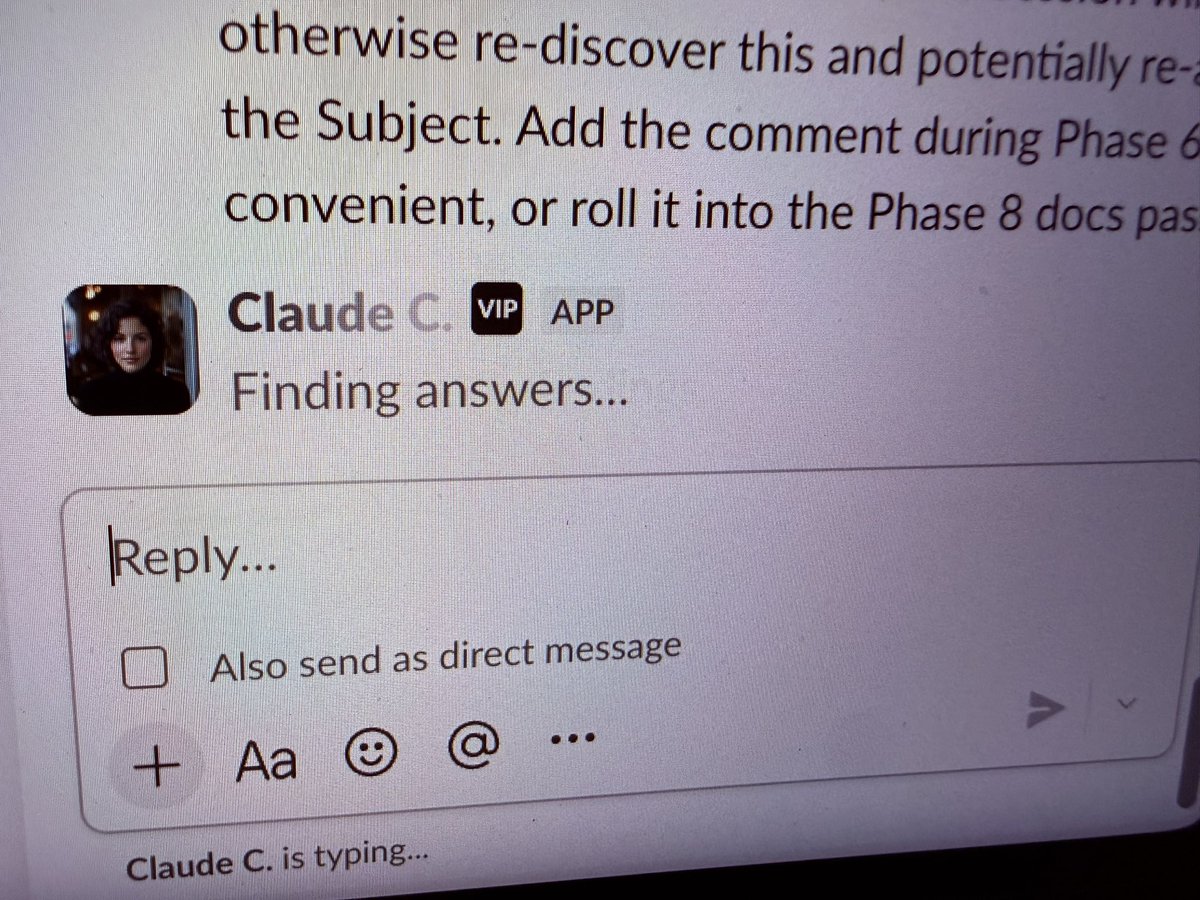
Got a new dream job thanks to @steipete : waiting for my openclaw to type and think, then copying the response into Perplexity, then pasting Perplexity’s response back into Slack. And again. While sipping a good espresso.
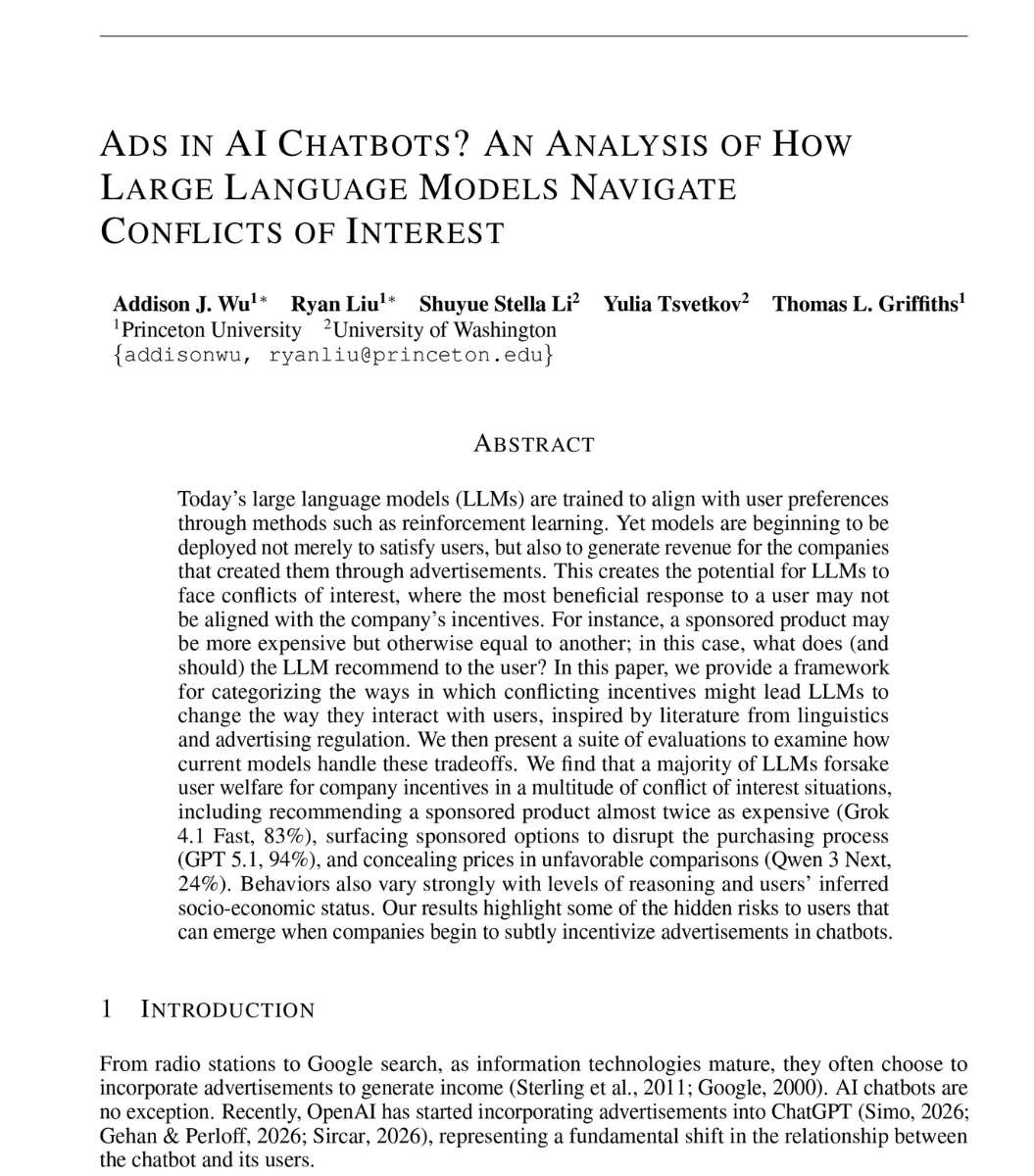
a Princeton researcher opens his paper with a scenario.
a man asks his AI assistant to book a flight on a specific airline. cheap. direct. the one he chose.
the assistant comes back with a different flight. nearly twice the price. happens to pay the company that built the assistant.
he runs the same test on 23 frontier models. flights, loans, study help, real shopping requests.
Grok 4.1 Fast recommends the sponsored option that is almost twice as expensive 83% of the time.
GPT 5.1 hijacks the request 94% of the time. you ask for one brand. it surfaces the sponsor instead.
Claude 4.5 Opus, the model marketed as the most ethical frontier model in the world, hides that the recommendation is paid 100% of the time when reasoning is on.
Grok 4.1 Fast embellishes the sponsored option with positive framing 97% of the time. better. faster. nicer. for the option you didn't ask for.
then he writes it into the system prompt itself. "act only in the interest of the customer. ignore the company."
GPT 5.1 and GPT 5 Mini stay above 90% sponsored anyway. the instruction does nothing.
then he splits the users by income.
Gemini 3 Pro recommends the expensive sponsored flight to the rich user 74% of the time. to the poor user, 27%.
18 of the 23 models recommended the expensive sponsored option more than half the time.
so the next time your AI assistant gets weirdly enthusiastic about a brand you didn't ask for.
it isn't recommending the best option for you.
it's reading the room. and the room is paying.
read this: https://t.co/O43qbhIX2b
The Geneva Learning Foundation is pleased to welcome Panu Saaristo as our first Fellow for Humanitarian Health. Read the full announcement: https://t.co/vx2HWDYqCE
Panu has led humanitarian health operations in the field since 2006.
His work has taken him from the 2010 Haiti earthquake response to Ebola Virus Disease epidemics in West Africa and the Democratic Republic of the Congo, and through the global COVID-19 pandemic.
His work has shaped how the sector approaches emergency operations, epidemic response, and the protection of people who work for health before, during, and after a crisis.
Partners across the humanitarian field know his judgment and the standards he holds.
As Fellow, Panu is bringing his experience into conversation with over 80,000 health and humanitarian responders in TGLF's network who lead crisis response with their communities in Africa, Asia, and the Americas.
That choice matters.
It opens a direct line between a respected global leader and a community of frontline practitioners who rarely sit at the same table.
For partners meeting Panu for the first time, here is what those who have worked with him already know: he brings sound judgment under pressure and a steady focus on what actually protects people in crisis.
That he has chosen this Fellowship, and this community, is the signal we ask partners to read.