NUS researchers developed AI methods that learn large-scale behaviour of complex materials from microscopic data. By identifying hidden variables capturing collective behaviour, they predict how materials evolve over time, reducing costly simulations.
https://t.co/Dm0VfTVJyg
🔬Microplastics are showing up in coral reef sediment & water across Singapore's urban reefs (🧴🎣). Our study shows abundance is associated with fine sediments & low water energy, not coral cover or reef rugosity — sheltered reefs may be most at risk! 🪸 https://t.co/IlpQviMmct
NUS food scientists have used machine learning to sift through over 2,300 scent molecules from aromatic plants and identify compounds with sleep-promoting potential, an approach that could accelerate the discovery of natural sleep aids.
https://t.co/nr66EtABiy
NUS researchers have developed a computation-guided strategy to produce urea more efficiently from carbon dioxide and nitrate. They identified a catalyst that maintains high urea selectivity at practical current densities.
https://t.co/tmk7LdwJUM
NUS researchers have developed an AI-guided workflow that combines AI with molecular simulations to identify potential drug candidates for diabetic wound healing, identifying folic acid, a common vitamin, as a top candidate.
https://t.co/Kf3sjEbMml
NUS researchers have discovered that cancer cells do not simply push through surrounding tissues to spread, but instead actively grip onto protective tissue barriers and pull them apart, revealing a fundamentally new mechanism of cancer invasion.
https://t.co/sVoDt3C63J
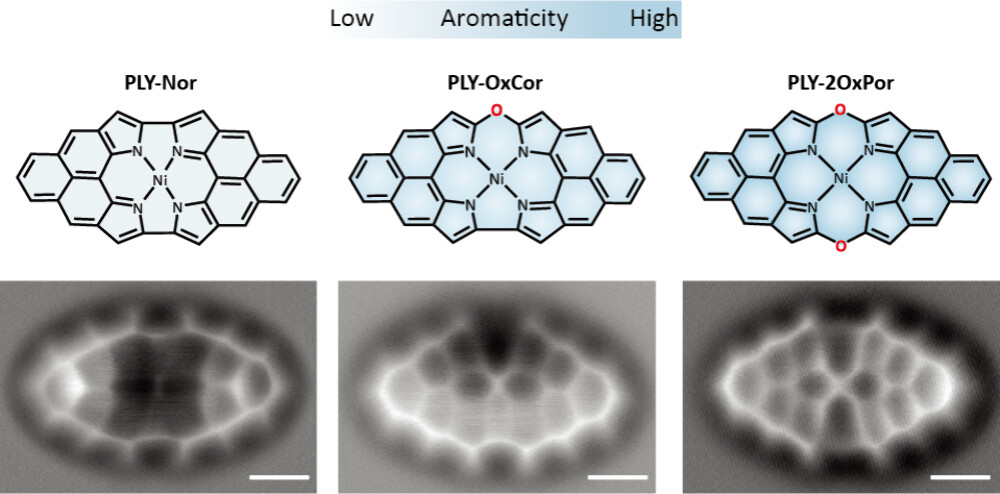
NUS researchers have developed a predictive strategy for graphene-like molecules with multiple interacting spins and resilience to magnetic perturbations, opening avenues for molecular-scale quantum information technologies and next-generation spintronics.
https://t.co/NvgdMwykje
NUS mathematicians and their collaborators have established a precise form of a conjectural duality, known as Relative Langlands duality, for an important class of mathematical spaces.
https://t.co/06S2XRwWA2
NUS researchers have built a molecular “leash” to pull directly on a force-sensing protein called Piezo1, and discovered it switches on at about 15 piconewtons, proving that it can be activated by physical tethers, not only by membrane deformation.
https://t.co/3YaDh8qN6W
NUS scientists have collaborated with the Health Science Authority on the investigation of biomarkers of synthetic cannabinoids.
https://t.co/2lLBMHlbWk
NUS researchers have developed a boron-catalysed method to transform oxetanes into larger, medicinally relevant 1,3-oxazinanes by the selective insertion of two building blocks, a carbon unit and a nitrogen unit.
https://t.co/3rPFo5Z0Fx
NUS scientists have developed a biochemical technique that captures fleeting “handshakes” between newly made proteins and the cellular helpers. These interactions can determine whether a protein turns out healthy and useful.
https://t.co/t4KWtZfhYw
NUS biologists have uncovered how the protein NuSAP safeguards tiny structures inside cells called centrioles, revealing a mechanism linked to developmental disorders such as microcephaly and mosaic variegated aneuploidy (MVA) syndrome.
https://t.co/CSFvazVFkl
NUS researchers have identified a protein called tyrosine phosphatase 1B (PTP1B) as a potential “switch” that can modulate a type of cancer cell death known as immunogenic cell death.
https://t.co/sZzOLYtaUn
NUS Researchers have developed CellScope, a high-performance single-cell analysis framework that uses manifold fitting to analyse single-cell RNA sequencing (scRNA-seq) data.
https://t.co/6EmlJS1KJv
NUS researchers have developed a “capping-and-coupling” strategy to transform naturally occurring (native) sugars directly into compounds known as C-heteroaryl glycosides.
https://t.co/4hmw2FiIu5
NUS scientists have discovered that atomic-scale substitutional dopants in ultra-thin 2D materials can act as stable quantum systems operating at terahertz frequencies.
https://t.co/ZWtNivugcA
NUS chemists have developed a single-atom photocatalytic strategy that enables oxidant-free cross-dehydrogenative coupling reactions between ring-shaped aromatic molecules ((hetero)arenes) and nucleophiles.
https://t.co/cNDWZplmB2
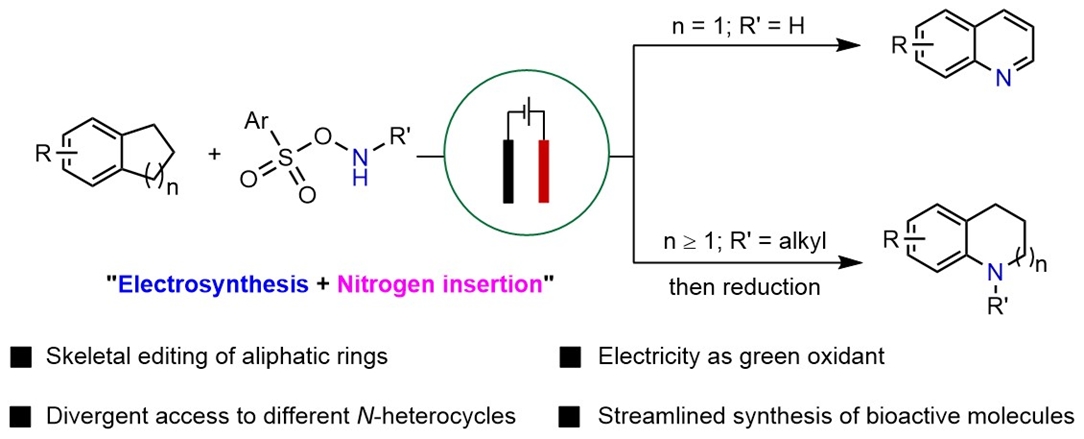
NUS researchers have developed an electrochemical reaction manifold that promotes efficient nitrogen atom insertion into saturated carbocycles to access either functionalised quinolines or N-alkylated saturated N heterocycles.
https://t.co/jRfDIP7AGe