Tweets about #resilience - the ability to persist, recover or thrive amid disruption - in many domains: climate, psychology, community, cities, organizations...
Around the world, people are #depaving and remaking spaces that are greener, healthier, more livable, more resilient, "slower" in the best sense of the word. Here's a great podcast about depaving is unfolding in one city, Portland, OR. #resilience
https://t.co/f4JmFK62Y1
We tend to talk a lot in terms of the #resilience of cities. #COVID19 has (yet again) shown us that we should also talk in terms of resilient neighborhoods.
feat. https://t.co/7Z5jzOTS9W, https://t.co/8N9xFxeJiw, https://t.co/fO24HOJOmR, others!
https://t.co/8ReLTDkqGW
A cogent argument for why #climate#resilience should be key to the Biden administrations' post-COVID economic recovery plan to "build back better", from @BrookingsInst
https://t.co/2q6jqYlr7w
The collapse of the grid in Texas demonstrates the tradeoff between systemic #efficiency and #resilience: the grid was optimized (operationally and financially) for normal times, but collapsed completely during a wildcard event caused by #climate change: https://t.co/TcBJNakBax
Please watch the remarkable “Ashes to Ashes”, a profound, short film on the legacy of lynching, the nature of white supremacy, and the role of art and ritual in healing and #resilience:
https://t.co/Cz0wHPDRkh
#BlackLivesMatter
David Bray of @ACGeoTech on building an immune system for the planet - a #resilience mechanism to future biothreats: https://t.co/wLgN3TsRKG
Note similarity in thinking to this effort to create a "digital ecosystem for the planet" from friends at UNDP:
https://t.co/p40SOeLUpF
.@tomfriedman illustrates how we made the world fragile by removing the barriers and buffers of the ecological, geopolitical, economic systems that bind the world. We made the world increasingly fragile as we've made it more efficient: https://t.co/shrmyN0Ade
We’re taking #Explore2020 virtual this year! Join us online in October to hear from thought leaders and keynote speakers, learn from fellow customers, and much more. Plus, it’s FREE for all attendees! Register now: https://t.co/B8ugxKbBjX
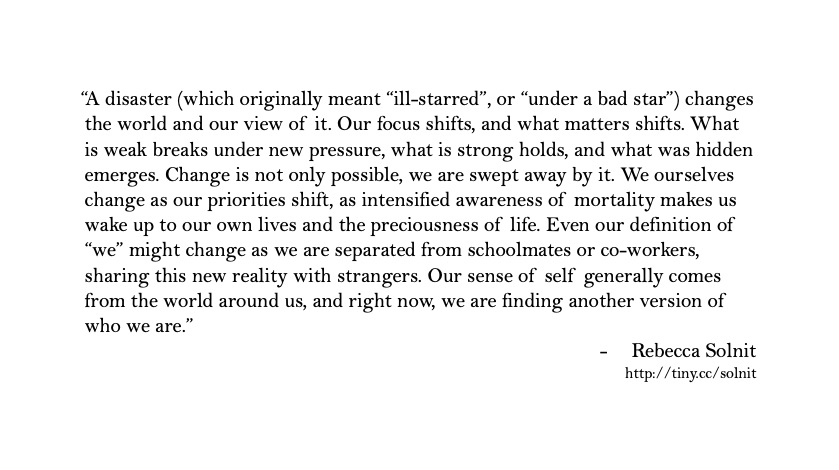
Disasters not only destroy; they can also transform -- ourselves, our relation to others, our sense of the world around us, and our notions of what is possible.
All resilient things - people, systems - do some things in common. Here's a simplified way to think about the "verbs" of #resilience: https://t.co/4lH1dFVj7z
As Viktor Frankl said, "An abnormal reaction to an abnormal situation is normal behavior.” In these dark and stressful times, the path to #resilience starts by showing ourselves some #compassion.
10/10 One thing that suppresses risk homeostasis is a shared narrative of collective risk. Tragically, we suffer from fractured, anti-collective narratives of the pandemic, fueled by grievance politics and narrow political calc at the very top. That has to end. /fin #resilience
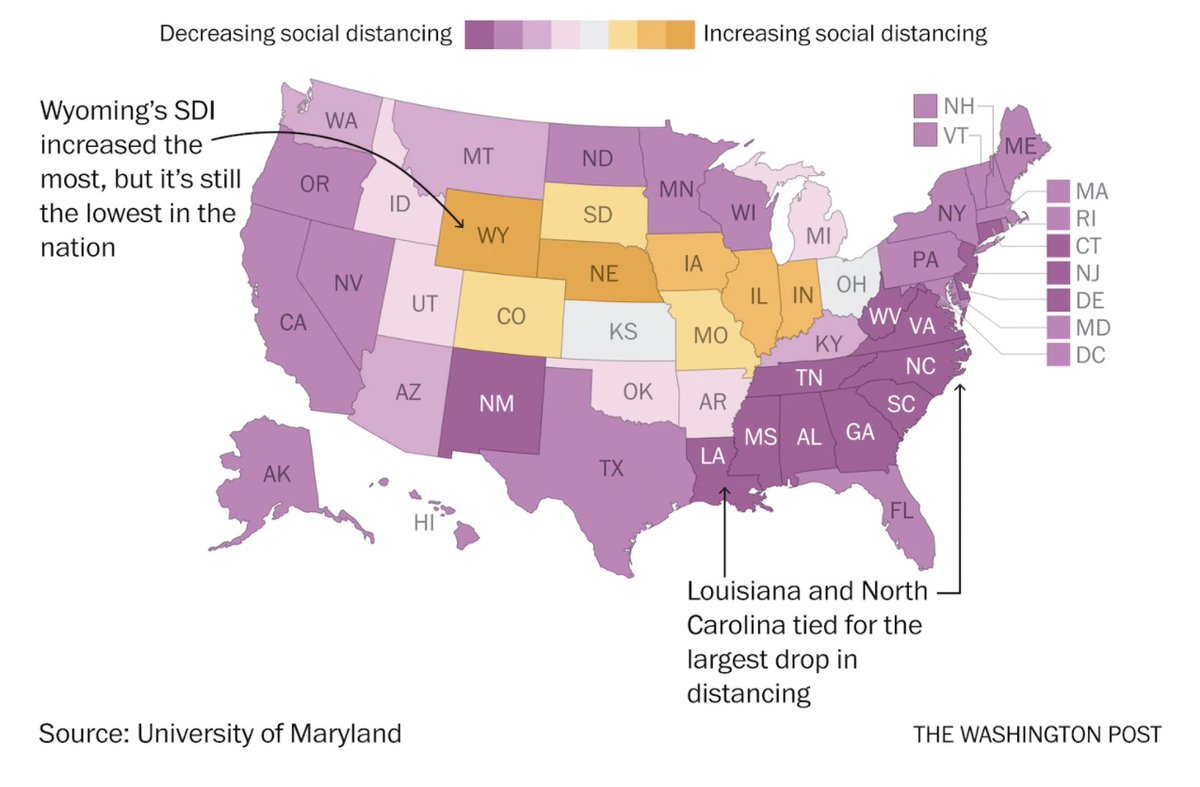
1/10 THREAD: Six weeks in, #covid19 'quarantine fatigue' is setting in - people are venturing out more, and social distancing less:
https://t.co/9MHVuD5UDS #resilience
9/10 Yes, some people want to leave quarantine because they're economically desperate. But they also want to leave because they intuitively feel like they can handle the risks. (Which, to be clear, is self-deceptive and dangerous.)