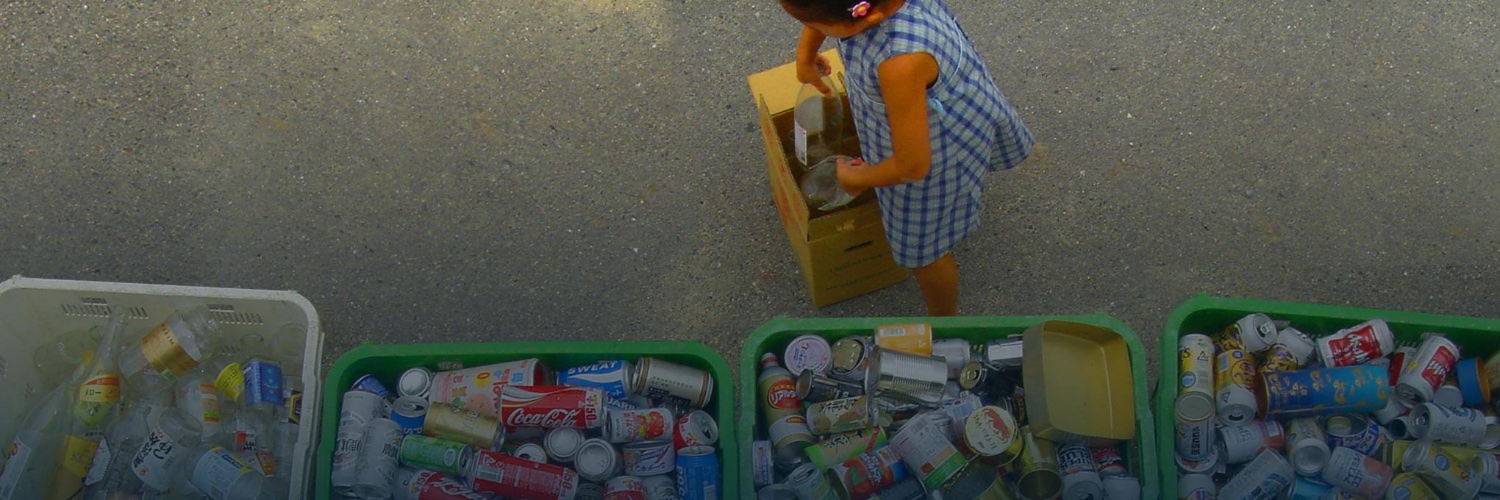
We checked what all 294 English councils are actually offering residents on day one of Simpler Recycling.
63% have food waste collections live. 107 do not.
Only 36% collect paper and card separately. Nearly half put all dry recycling in one bin.
Full council-by-council data: https://t.co/Jn8nmEz8wD
#SimplerRecycling #CircularEconomy #Recycling
52% of textile carbon emissions sit at yarn and fabric production. 32% at consumption. End-of-life? Still partly unknown. A new open-source system map from H&M Foundation and Accenture maps where the emissions actually fall.
https://t.co/AiqvnZGtIo
Havering's MPs, councillors and campaigners have jointly written to the PM calling for Zane's Law - legislation to give local authorities stronger powers over contaminated land and historic landfill sites.
Named after 7-year-old Zane Gbangbola, who died in 2014 when floodwater from a landfill site carried hydrogen cyanide into his home.
#ZanesLaw #ContaminatedLand #CircularEconomy #WasteManagement
https://t.co/oXyCvgCDY1
The four UK governments have launched a long-overdue consultation on reforming the PRN system, proposing powers to cancel fraudulent recycling notes and mandatory registration for brokers and trading platforms.
https://t.co/XPvHADSE1b
Government publishes #WasteCrime Action Plan with £45m extra for EA enforcement. Fly-tippers face clean-up squads. Carriers, brokers and dealers moving to full environmental permits. Three exemptions removed. EA officers to get police-style powers.
https://t.co/v1sL1rmgSO
Only 16% of UK councils currently collect plastic film at kerbside, but 78% of those without the service plan to launch before the March 2027 #SimplerRecycling deadline. Nearly half are targeting the final day itself. End market confidence remains low, says @Recoup_UK. #Recycling #PlasticFilm #CircularEconomy
https://t.co/zdcxMPoKmK
Three quarters of a smartphone's environmental impact occurs before the device leaves the factory. According to Fairphone, analysis of its materials used found that mining and mineral processing – not the charging cable – is the main place where the damage concentrates.
The report traced 24 minerals in smartphone supply chains to their source regions, identifying 11 global hotspots where extraction pressure is most acute. The same provinces in the DRC, Indonesia, Guinea and Brazil appear across multiple mineral supply chains, compounding the burden on a small number of places.
With the EU's Ecodesign Regulation now requiring seven-year spare parts availability and the Critical Raw Materials Act targeting 25 per cent recycled content by 2030, there is a clear direction of travel (at least in the EU): extend device lifespans and reduce demand for virgin materials.
Read more ⬇️
https://t.co/1aOgQeOXp0
The construction sector generates more than 100 million tonnes of waste in the UK each year, with over five million tonnes still reaching landfill. A new facility in east London is trying to change that equation.
The UK's first Circular Construction Hub has opened on a 20,000 sq m site in the Royal Docks, operated by charity Tipping Point East – a partnership between Material Cultures, Yes Make and RESOLVE Collective. The hub will salvage materials from demolition projects, fitouts and film sets, processing them for redistribution to new builds. It sits within the Royal Docks Enterprise Zone, where 36,000 new homes are planned, and is the first phase of a Circular Economy Village expected to become Europe's largest.
The hub has backing from the Mayor of London, Newham Council, Innovate UK and the GLA, and is designed to support both green jobs and low-carbon housebuilding across the area. With London Plan policy already requiring Circular Economy Statements for major developments, projects like this give us a practical model for what large-scale material reuse looks like.
Read more ⬇️
https://t.co/ODSjbuIe79
The economy part of the circular economy is apparent in @zerowastescot's first Circular Economy Jobs Tracker.
It reports that circular activities generated £37.33 in GVA per hour in 2021, nearly £5 more than the £32.22 Scottish average. The 56,000 FTE workers in reuse, repair, recycling and resource management contributed £4 billion to GDP, with signs that demand for circular skills is outpacing supply.
The research adds to a growing evidence base that circular economy activity in Scotland is not a niche environmental concern, but a key part of the national economy. With the Circular Economy (Scotland) Act 2024 now in force, the tracker gives policymakers a baseline to measure progress against.
Read more ⬇️
https://t.co/I53ihtvtct
Ciaran McGuigan has been appointed chief executive of @ZeroWasteScot, succeeding founding CEO Iain Gulland who led the organisation for 11 years. McGuigan, previously Finance and Corporate Services Director, takes up the role from 1 February 2026.
The appointment comes as Scotland implements its Circular Economy and Waste Route Map to 2030 – with material consumption currently at 22 tonnes per person, ZWS's Corporate Plan aims to reduce raw material extraction by one-third by 2030.
McGuigan has already played a key role overseeing ZWS's transition to Non-Departmental Public Body status and was a key architect of its Corporate Plan.
Read more ⬇️
https://t.co/kmJsk5Bwci
Researchers at the University of Glasgow have developed circuit boards where 99 per cent of materials can safely degrade. The zinc-based approach performs comparably to conventional copper boards, but it offers two improved end of life options – composting, or dissolving the PCBs in dilute vinegar to recover the components for reuse.
The substrate of most circuit typically cannot be easily recycled, and with e-waste hitting 62 million tonnes globally last year, innovations like this offer new pathways to tackle the issue.
The work comes out of the UKRI-backed REACT centre, and a life cycle assessment shows 79 per cent lower carbon footprint than standard boards.
Read more ⬇️
https://t.co/BSRUVTH3z9
Down on the beach... Reseachers from the University of Glasgow have found that human-made materials now comprise up to 49 per cent of coarse sediments at Granton Beach near Edinburgh.
In a new study, they report that across six Firth of Forth beaches, an average of 22 per cent of pebble-sized material consists of bricks, concrete, glass and industrial waste – eroded from historic coastal sites and landfills.
With climate change intensifying coastal storms, the team warns that more waste will enter beach systems in the coming years. They've proposed a new scientific classification for these modified environments – a recognition that managing our coasts now requires understanding how human activity has fundamentally altered them.
Read more ⬇️
https://t.co/wMNHCE4sXI
The Government has published the first illustrative modulated fees for packaging EPR – and the data reveals significant disparities in recyclability across materials.
Key findings:
→ 45% of plastic packaging fails recyclability criteria (red-rated)
→ Glass leads with 91% rated green; plastic trails at just 31%
→ From April 2026, red-rated packaging pays 20% more than amber; green receives a 9% discount
→ Differential widens to 2× by Year 4
The per-tonne gaps vary considerably: £155 for fibre-based composites, £130 for plastic and wood, but just £60 for glass and paper – reflecting their established recycling infrastructure.
For lightweight flexible packaging like crisp packets and sachets, however, these translate to fractions of a penny per unit. Whether that's sufficient to drive redesign of multi-layer barrier packaging remains an open question.
Read the full analysis ⬇
https://t.co/5ITV9U4I3j
Five million pieces of litter are dropped or binned every week in the UK, costing taxpayers over £1 billion annually. @hubbubuk is moving into the bin market with it's Big Ballot Bin - in true style creating an interactive approach ent approach – asking people to vote with their rubbish on questions from "Traitors or Faithfuls?" to Christmas number one predictions.
Trials with Manchester City Council and Southampton City Council showed drinks litter dropped 70 per cent within a 20-metre radius, with a capture zone 2.5 times larger than standard bins. The solar-powered units track votes remotely and provide ESG data whilst reaching 10 million people organically on social media.
Read more ⬇️
https://t.co/ieU5fHzRtu
Councils in England face £61m annual loss from deposit return scheme – £242k per 100,000 households – if 'high-value' cans and bottles are removed from kerbside collections, according to @valpak_ltd analysis commissioned by @LGAcomms.
The impact varies significantly by collection method, with kerbside sort authorities facing 25-29 per cent higher losses than those using commingled systems. However, freed vehicle capacity may help accommodate Simpler Recycling requirements (for cartons, plastic film and foil) without additional collection rounds – offering some operational benefit against the financial hit.
Read more ⬇️
https://t.co/bKTgeUORlp
@WRAP_NGO continues its progress into the EU and US by expanding the scope of its Durability Accelerator Initiative. This follows the project's first phase in the UK, testing found that price, fibre composition and fabric weight are unreliable indicators of garment durability.
The pilot tested over 200 products with 25 brands, finding that lightweight fabrics often performed better than heavier options, and that synthetic mixes were not consistently more durable than natural fibres.
Current testing standards check durability 15–20 wash cycles, but consumers expect their clothes togo through the wash more like 50 times.
WRAP says extending clothing life by nine months can reduce carbon, water and waste footprints by up to 20 per cent. A citizen survey showed 62 per cent of shoppers ranked durability among their top four purchase factors.
Read more ⬇️
https://t.co/je6LbP8P8g
UK households annually put 35 textile items into residual waste – a problem hiding in plain sight that costs local authorities £88 million yearly in disposal fees.
The Salvation Army Trading Company @reuse2repurpose has introduced a postal donation service with InPost to address this issue. Households can now book free collections via https://t.co/XPERsAhWAO and use 11,000 automated lockers operating 24/7 across supermarkets and transport hubs. The service handles standard parcels up to 15kg, processing donations at SATCoL's Kettering facility that diverted 77,000 tonnes of textiles last year.
Find out more ⬇️
https://t.co/4SSpzBWGEB
👏 Thank you to everyone who voted, shared, and supported the #ResourceHot100 2025.
It’s inspiring to see the passion, innovation & leadership driving the circular economy forward. 🌍♻️
See you next year! 🌍♻️
🙏 Thank you to our #ResourceHot100 sponsors for making this year possible:
⭐ Headline: @UnthaUK
🥤 Refill Return: Refill Return
🎙️ Communicator: @Greyparrot
💡 Innovator: SATCoL (@reuse2repurpose)
Your support helps us shine a spotlight on sector changemakers. 🌍♻️