Friendly reminder: there is a @firoorg CS proposal in Seeking funding stage, which means it is (still) open for donors, to reach set goal.
You can chip in some FIRO any time! We are sitting at ~863... FIRO at the moment, with 15 donors. Thank you all!
https://t.co/w2KOwMjYcD
@firoorg@annemedia_web [8/?] I want to, once again, thank @reubenyap, both @firoorg and @monero communities, Edward and Cascos Azules Venezuela. I would not have been able to do any of the documented runs if it hadn't because of your participation in it. There are still plenty of needs in La Güaira...
💈✨ A new step forward for crypto adoption!
A men’s barbershop is now accepting
Firo (FIRO) as a payment method 🪙✂️
Crypto isn’t just about technology anymore — it’s becoming part of our everyday lives. 🚀
@firoorg#FIRO#StackWallet#privacy#Syria
Southeast Asian Scam and Kidnapping Networks May Be Shifting Toward Malaysia, Where Many Crypto Exchange Employees Are Based
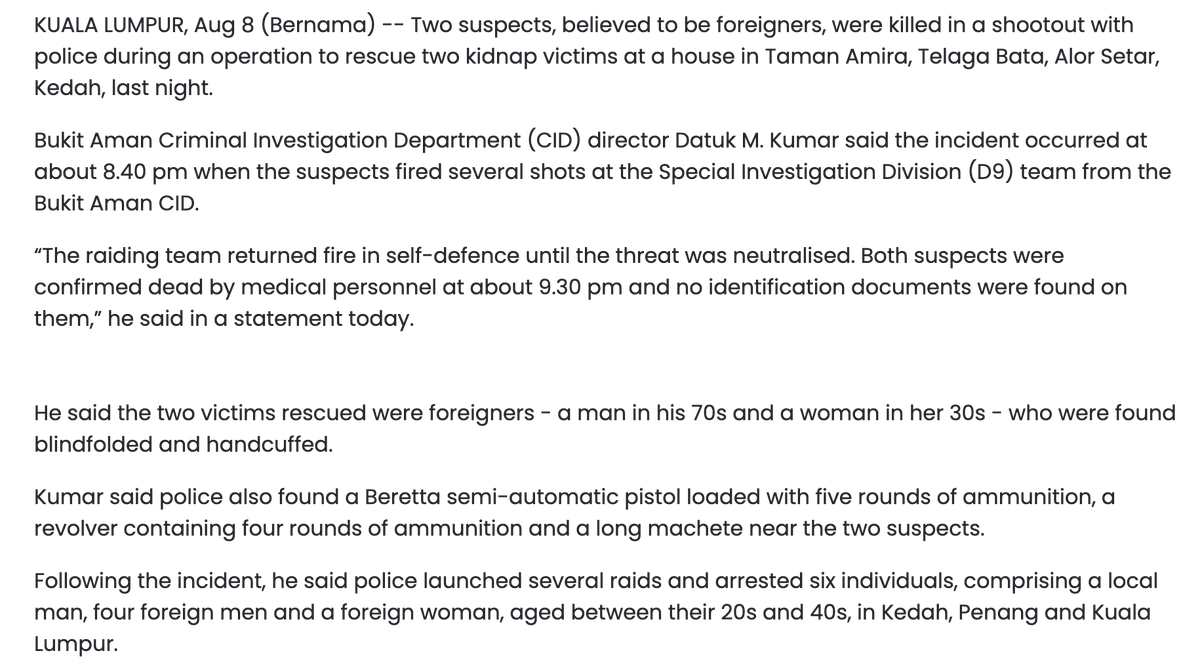
Two recent cases in Malaysia involved Chinese nationals. In Johor’s Country Garden Forest City, police dismantled two telecom fraud rings and arrested more than 300 people, around 95% of whom were Chinese nationals.
In a separate case, a 73-year-old Singaporean man was lured to Malaysia and kidnapped. Malaysian police exchanged fire with armed suspects during the rescue operation, killing two non-Malaysian suspects and rescuing both the Singaporean man and a Chinese woman. Police also arrested one Malaysian and several Chinese nationals linked to the kidnapping group. Notably, many cryptocurrency exchange employees are currently based and working on-site in Malaysia.
Very welcome recent news from Signal: they are working on letting you register an account without a phone number.
https://t.co/3dTG4UD6cF
That said, an important counterpoint about what this would and would not accomplish.
The good #1: reducing dependence on phone numbers. Even aside from privacy benefits, reducing dependency on a highly oligopolistic system of chokepoints is good in itself.
The good #2: phone numbers are for many people not a good "root" of identity from an access control perspective. Phone numbers get sim swapped all the time.
The good #3: allowing phone-number-free accounts will make it harder for them in the future to discriminate against people by country - and so make it harder for governments to pressure them to block their own citizens.
Now, on privacy. Significantly better than status quo, so yes it is good #4, but...
In practice, in 2026, I believe that pseudonymity (a long-term persistent account that is not tied to your primary identity) is a dead concept. There are just too many channels by which we accidentally slowly leak data about who we are - timing of messages, the pattern of who we send messages to with what frequency, size, etc. And too many highly effective AI-based means (both using LLMs per-user, and LLMs helping every person and agency under the sun use math that we had all along) to uncover and piece together those hints.
As a trivial example, whatever server you interact with learns your IP address, but even if you hide *that* with a VPN or Tor, there are many other identity leakage vectors.
And so the only defensible form of privacy is *message-by-message unlinkability* - no one except sender and receiver knows the (sender, receiver) pair, ideally even not knowing who the sender or the receiver are.
A natural taxonomy of privacy is the following 2x2:
* Sitting duck: adversary knows "X did Y"
* Confidentiality: adversary knows "X did ???" [E2E encryption provides this]
* Anonymity: adversary knows "??? did Y" [aka message-by-message unlinkability]
* Ideal: adversary knows "??? did ???"
Signal has already had confidentiality for a long time. (Note: in other contexts, "confidentiality" sometimes means "someone knows X did Y, and we trust that someone to not reveal it", ie. not true privacy. Here, by confidentiality we mean hiding contents from third parties)
This adds pseudonymity: in the above schema, adversary knows "0x8b512c... did Y", where they don't initially know who 0x8b512c... is, but may figure that out over time. The ideal is getting to message-by-message unlinkability.
Actually accomplishing that gets into territory that is currently being explored by mixnet projects as well as newer messengers, eg. @session_app and @SimpleXChat.
Once we get deeper into this territory, I suspect the primary frontier will be spam and DoS protection. Right now, much of the internet blocks all Tor exit nodes - not because they personally hate privacy, but because that's where DoS attacks come from. So we need ways for people to prove their non-spammer status while maintaining message-by-message unlinkability. See here https://t.co/C3tX5tOYJo for one direction (which complements https://t.co/1Q2Hqg0DZg nicely).
So I hope that we appreciate the victory that is mainstreaming of end-to-end encryption, that we actually get Signal accounts without phone number dependency (it's a great thing even if it had zero privacy consequences), and then that we keep moving forward and pushing the frontier of data leakage minimization.
Building privacy tech since 2007 — before most of crypto knew it needed it.
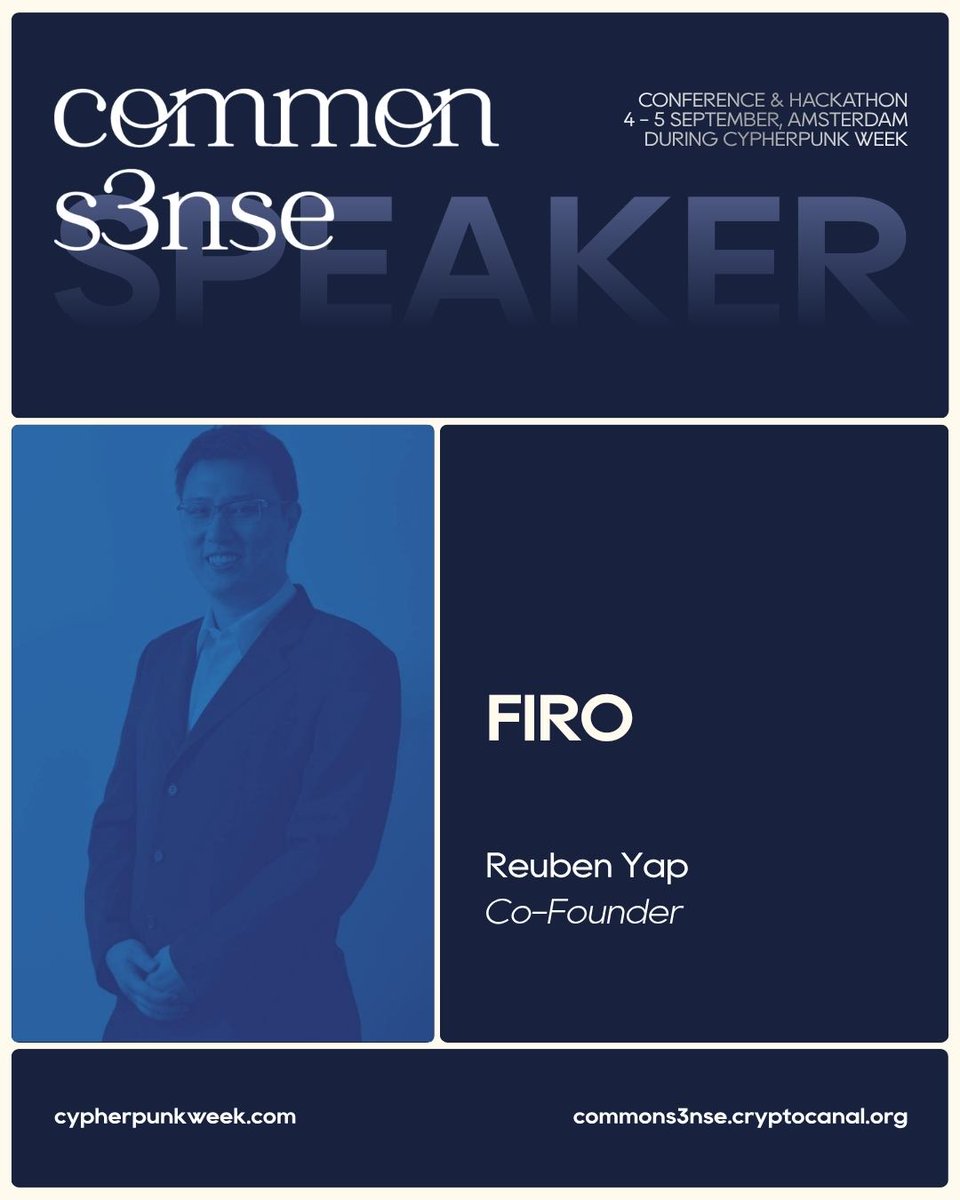
@reubenyap, Project Steward of @firoorg, has spent nearly two decades building privacy protocols, from zero-knowledge proofs to privacy-preserving e-voting used in real elections. He's joining the Common S3nse stage.
Privacy • Security • DeFi
📍 Amsterdam
📅 September 4-5 (during Cypherpunk Week)
🦦 Privacy is Common S3nse 👉 https://t.co/INPLb3AJQj
🐈⬛ Cypherpunk Week 👉 https://t.co/x6KepIF9l7
Seeding unusually good packs for influencers and having them open them early does not generate hype @Wizards... It instead breeds resentment especially as we see these hits (including some of the really limited ones) getting sold online weeks before anyone gets their box! #mtg
I loved Gladiator. But Gladiator 2 lacked soul and just replaced it with CGI and a bunch of characters with unclear and forced motivations. The battles looked too fantastical that it wasn't even believable anymore.
I think this picture kinda sums it all up.
The biggest achievement in open source development is when you build something out of a mission or passion and someone sees its value and then builds on it.
Thank you @firoorg
Censorship resistant money indeed needs censorship resistant rails.
Building strong privacy or sovereignty at the protocol level while routing through easily controlled intermediaries creates a very weird and incomplete system.
Firo will be the first chain to fully integrate into Rosen Bridge via the open source contribution standards framework.
Most bridges require a backroom deal, money to switch hands, a privately led integration and still there is a potential to discontinue support.
Heads up, I think @kucoincom might be experiencing some sort of security breach. Have a TG individual that passes https://t.co/CylNsxkQNK intermittently and also seems to be able to have access to certain e-mail addresses. Be wary.
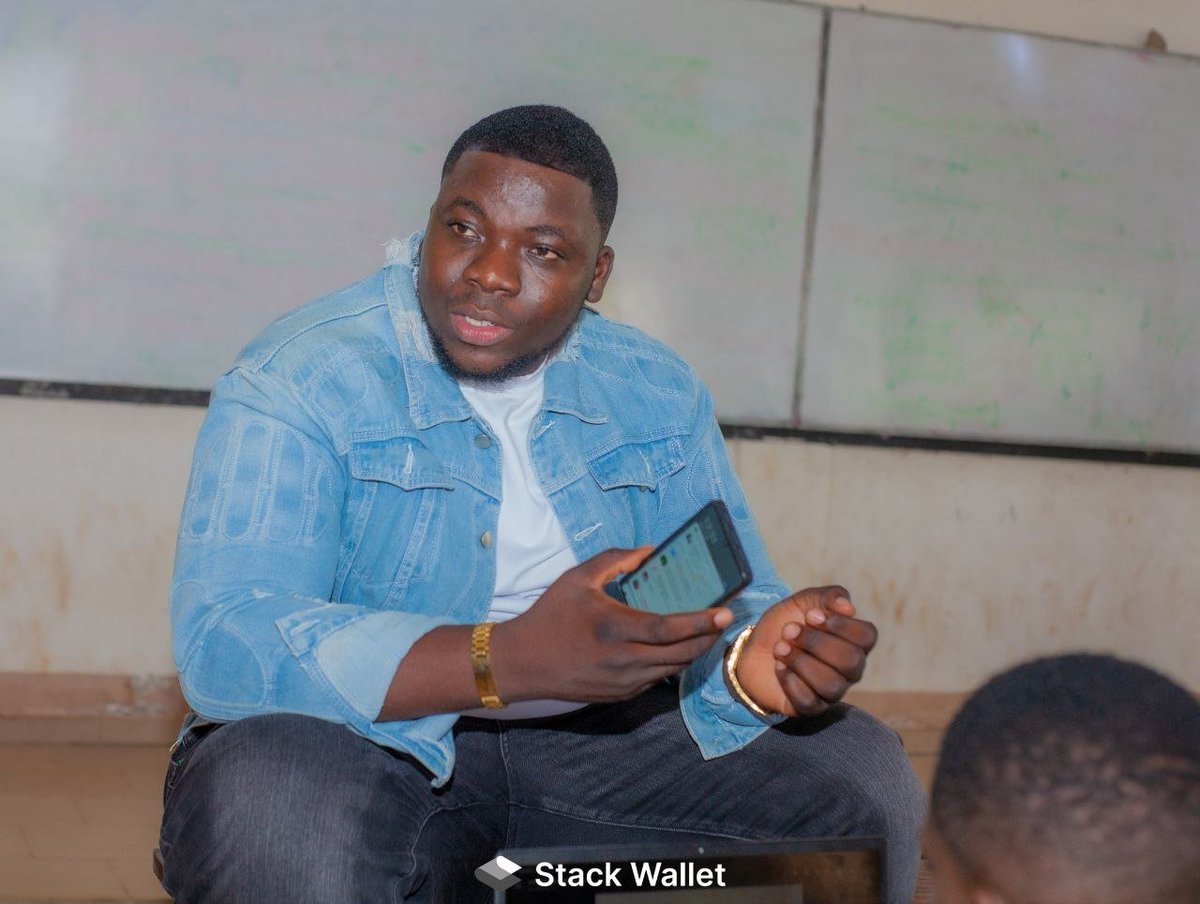
Dassa was another great milestone for Stack Wallet Africa! 🇧🇯
Every participant left with Stack Wallet installed and configured, ready to take full control of their digital assets.
Throughout the meetup, we explored the importance of privacy, self-custody, and how @firoorg empowers users with confidential transactions and stronger financial freedom. We also discussed the importance of crypto adoption, answered participants’ questions, and welcomed many new members into the Stack Wallet Africa community.
To make the experience even more exciting, participants enjoyed $FIRO giveaways, with incredible engagement from start to finish.
The highlight of the day? Hearing the same question over and over again:
“When is the next meetup?” 🔥
A huge thank you to everyone who joined us and helped make this event a success. This is only the beginning—see you at the next one! 🚀