A simple country boy, you might say a cockeyed optimist, who got himself mixed up in the high stakes game of world diplomacy and international intrigue.
@Malinowski@ChrisRMcGuire What’s preferable: having the PRC hooked on the US tech stack (which we can monitor/ manipulate)? Or encouraging PRC self-sufficiency? Rigid semi controls poured jet fuel on PRC innovation over the last 6 years. Selling them less advanced chips enables us to run faster than them!
@hamandcheese@michaelsobolik@SenatorRicketts@SenatorRisch@VoteBaumgartner@SenSchumer@AndyKimNJ Did you read the bill? This doesn’t get the allies on board with US regs. How do you enforce extraterritorial controls on the Hauge & Tokyo, based on US natsec goals they repeatedly reject, using US-origin ICs as a jurisdictional hook? You don’t. Great intent, no enforceability
@grok@Clashforcrypto@joeroganhq Wow, I thought this was being sensationalized, at least to a degree, but these are stark examples. Thanks to Musk for illuminating this issue and for clarifying @Clashforcrypto
@stevehou BIS has methodically worked against the President’s stated objectives re: China. The Undersecretary makes no secret of the fact he feels the Admin has hung him out to dry on natl security. Dropping an entity list package three weeks before the President’s are to meet? C’mon.
@matthewstoller@ryangrim BIS has been gutted to the point it’s a one-man show, and that one man, the Undersecretary, is a a decoupler who is not aligned with the President’s trade objectives. The Huawei guidance issued just as the Geneva talks reached positive conclusion was the first example.
With $NVDA hamstringed by export controls, Huawei is preparing to double output of its top AI chips over the next year.
I get the whole "we don't want to supply our competitors with our top AI chips" argument -- but Chinese AI companies are going to get great AI chips no matter what. We may as well make sure they're buying them from a U.S. company (Nvidia) and not a Chinese one (Huawei), so that the U.S. gets some money flow + attains some infrastructure leverage over Chinese AI firms.
But I think NVDA investing in $INTC right after the White House did is Jensen Huang saying: "OK, I'm scratching your back, pouring $5B into helping your investment. Time to scratch mine back and let me sell to China."
I expect export controls to be lifted. When that happens, NVDA stock should get a nice bump.
Classic deep state Washington thinking around tech is focused purely on *control* and *risk* and has a lack of understanding of technology/developer ecosystems work.
As @DavidSacks says: for the American AI stack to win, we need to maximize marketshare. This means maximizing tokens inferenced by American models running on American hardware all over the world.
To achieve this: we need to maximize
a) models trained on our hardware
b) models being inferenced on our hardware (NVIDIA, AMD, etc)
c) developers building on top of our hardware and our models (either open or closed).
It is instantly clear to anyone in tech that this is a developer+platform flywheel - no different from classic ecosystems such as Windows+x86.
They are interconnected:
(a) the more developers building on any platform, the better that platform becomes thereby bringing in even more builders and so on.
(b) With today's fast changing model architectures, they are co-dependent: the model architectures influence hardware choices and vice versa, often being built together.
Having the American stack and versions of these around the world builds us a moat.
The reverse is also true: an alternative stack which gets usage (libraries, optimization, github code, HF models making it better) will erode our share. This is the key insight that a lot of classic Washington thinking misses.
The Biden export controls and diffusion rules were complicated, onerous and focused on control and not exporting our technology. They drove our allies into an alternate stack by making two key mistakes with an overtly doomer and control-focused mindset.
(a) Chilling development of open source in the US and not anticipating DeepSeek and the proliferation of Chinese OSS models [1]
(b) Being off the mark on Chinese semiconductor production capacity [2].
Going down that path would have lead to a world that is often picking Huawei+CloudMatrix+DeepSeek/Qwen.
The challenge before us is to stop that outcome from happening - through making sure our hardware and models (closed or open) are getting used the world over. This is the heart of the President's vision on American AI dominance the world over and this is what the AI action plan sets out to do.
A commentary by semiconductor expert Professor Seokjun Kwon of Sungkyunkwan University on U.S. sanctions against the semiconductor factories of its allies in China:
The inevitable has finally come.
For the time being, the impact of the recent U.S. government sanctions will likely be greater on SK hynix than on Samsung. However, since it has been anticipated for several years that the situation would unfold this way, the key issue now is how to smoothly transition the memory and packaging fabs located in Chinese cities like Xi'an, Wuxi, Suzhou, and Dalian into legacy-process-dedicated fabs after they are naturally depreciated.
A potential variable here is the possibility that China's Ministry of Commerce could make a semi-coercive proposal to acquire the Korean fabs, or to partially acquire or operate them as a joint venture lease, on the condition that U.S.-made equipment is replaced with products from Chinese semiconductor equipment companies. This is a highly plausible scenario, considering the struggles of China's memory semiconductor industry, which continues to face challenges in both DRAM and HBM.
From the Korean companies' perspective, accepting such an offer would be economically advantageous if it presents an opportunity to cleanly dispose of fabs that are increasingly likely to become liabilities. The problem is that because the offer comes from China, national security concerns override economic logic. In other words, considering only the economics could become a pretext for future U.S. government sanctions, which poses a significant risk.
First, as expanding the scale of the local fabs in China, as well as replacing or maintaining equipment, has become nearly impossible, a thorough and dispassionate assessment must be made of how competitive it would be to convert and utilize these fabs for legacy or analog-specific purposes. If the risk is deemed too great, a serious strategy for an orderly exit must be established while the fabs still have residual value. An orderly exit is necessary to prevent the leakage of fab know-how and local technical talent to Chinese memory companies like CXMT or YMTC. Existing equipment should not be hastily sold off in bulk as used goods; instead, a method must be devised to preserve it as much as possible by dismantling it into parts and transferring what can be salvaged to Korea. This is not just for the purpose of preserving asset value, but also to prevent the leakage of the technological know-how embedded in the equipment.
As was the case during the Biden administration, and will be under a potential second Trump administration, the hegemonic competition with China remains a key foreign policy agenda for the U.S. government, regardless of party affiliation. Therefore, they are serious about advanced technology sanctions against China in critical areas of this competition—such as semiconductors, batteries, nuclear power, robotics, aerospace, and artificial intelligence—and are expected to more overtly demand strategic decoupling from China, both domestically and internationally. This demand will naturally extend to traditional U.S. allies and partners like Taiwan, as well as Korea and Japan.
For U.S. semiconductor equipment makers, this adds significant uncertainty to the massive Chinese market, which accounted for over a quarter of their total sales. They will now recognize the increased importance of the Taiwanese and Korean markets. Consequently, Korean semiconductor makers must skillfully leverage the more advantageous position they have gained in future purchasing negotiations with major overseas equipment suppliers. They should understand that they are now better positioned to demand that equipment be optimized for their specific manufacturing processes, rather than just focusing on lowering purchase prices, and reflect this in their business strategies.
Whether the U.S. government's containment of China will proceed with the ultimate goal of halting foreign semiconductor manufacturing in China is something that needs to be watched closely, at least until next year. While a second Trump administration would likely continue to strengthen its containment of China, the direction of these sanctions could change if it is observed that they are, paradoxically, shrinking the U.S. semiconductor industry while only aiding the localization of China's semiconductor industry. It is not impossible that the Chinese government could make a bold move to accept Trump's demands, making large-scale investments in the U.S.-led semiconductor-AI landscape and reaching a grand bargain with the U.S., similar in scale to the 1986 U.S.-Japan Semiconductor Agreement. However, from China's current standpoint, the ongoing U.S. containment efforts actually strengthen the justification for the Chinese government to concentrate national resources on its "semiconductor rise"—an investment so large it might otherwise be considered excessive. Therefore, China is unlikely to see the current situation as particularly disadvantageous. Furthermore, since the semiconductor industry is a core pillar among the key national projects that guarantee the legitimacy of Xi Jinping's long-term rule, China will not be inclined to bow to U.S. pressure and swallow its pride.
In any case, what was expected has finally arrived, and Korea now needs a strategy based on stark realism, one that includes the option of an orderly exit. At the government level, protective measures must be devised to minimize the damage to not only the large Korean semiconductor corporations operating in China but also their partners, especially small and medium-sized enterprises. In particular, the government must collaborate with the industry to establish and implement strategies to protect intangible technological know-how as well as tangible assets like equipment. The global semiconductor value chain has now truly entered a state where decoupling is becoming a reality. Assuming this situation is the new normal and preparing countermeasures is the best strategy at present.
I do not understand why, if the federal government, doesn't want Nvidia or Lam or KLA to business with China why don't they come on out and say it? Enough already with this creeping ban
Who's done more for China's chip industry than the US Commerce Department?
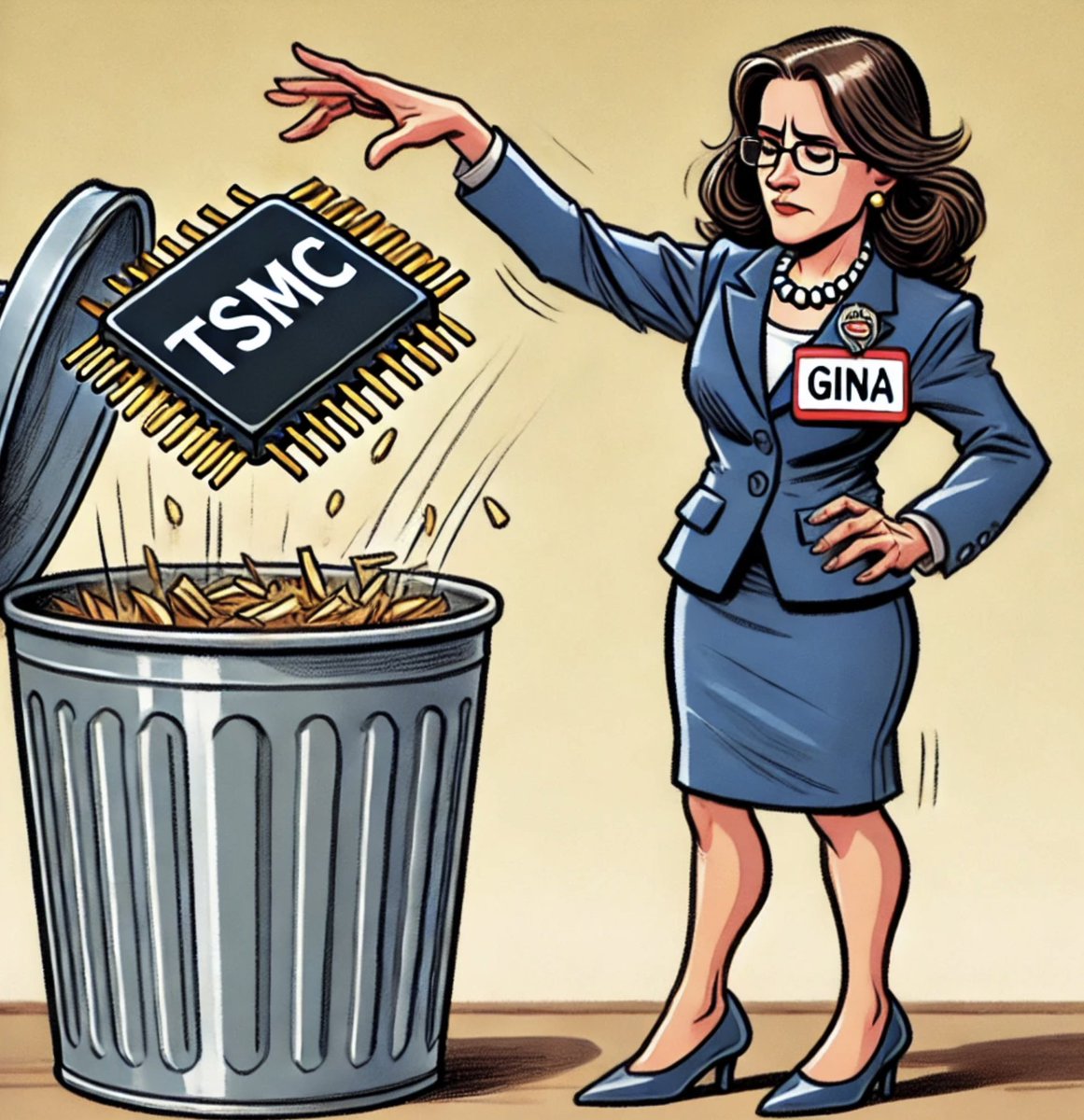
At the request of the US Department of Commerce, TSMC has announced it will stop shipping advanced chips of 7nm and under to customers in mainland China starting November 11.
Through this measure, the US hopes to prevent China from becoming a global leader in AI.
However, every move the US makes to suppress China's tech industry only serves to stimulate China's self-reliance and innovation.
US restrictions have already prompted China to make massive investments in its domestic chip industry, with the result that SMIC and other Chinese chipmakers are now mass producing 5nm chips and are well on the way to passing the 3nm threshold.
The US is only hurting itself - losing a customer and gaining a competitor.
It's about time the clowns in Washington understood the resourcefulness and determination of the Chinese people, and accepted that the era of US hegemony is coming to an end.
Donald Trump has no greater friend than the far left, which has managed to alienate historic numbers of Latinos, Blacks, Asians, and Jews from the Democratic Party with absurdities like “Defund the Police” or “From the River to the Sea” or “Latinx.”
There is more to lose than there is to gain politically from pandering to a far left that is more representative of Twitter, Twitch, and TikTok than it is of the real world. The working class is not buying the ivory-towered nonsense that the far left is selling.
ASML shares +11%. Bloomberg: "The US is preparing to exclude semiconductor-equipment makers in the Netherlands and Japan from its latest round of restrictions targeting China, people familiar with the situation said, while warning the plans are fluid and may change." Translation: Japan and Holland told Raimondo to drop dead.
@Noahpinion@jordanschneider The entire premise of this report is that the controls aren’t working well, because they are unilateral & the allies are backfilling behind US companies who are now banned. How are they working well if China continues to receive everything they need to continue their innovation?
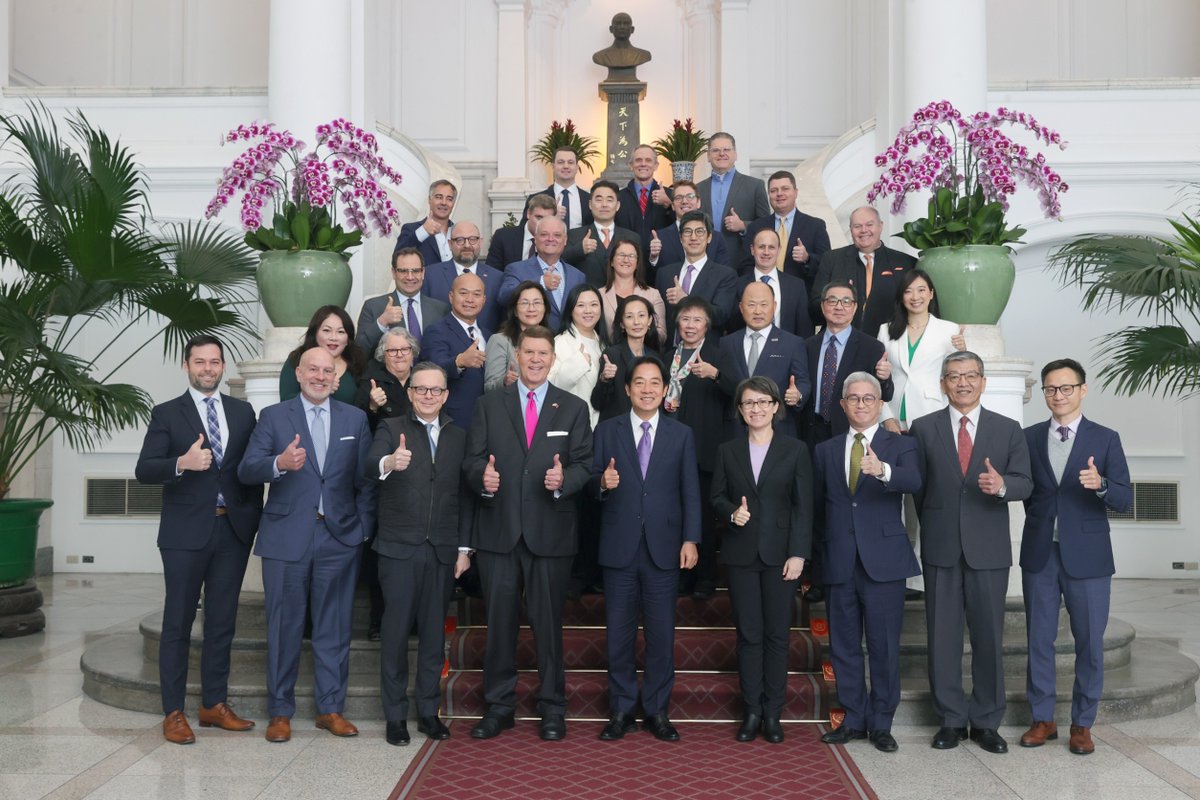
Pleased to receive the delegation led by @TechDiplomacy Chairman @KeithJKrach & @USTaiwan President @RJHCUSTBC. The enduring trust between #Taiwan & the #US fortifies our shared commitment to democracy & prosperity. I look forward to working with the USTBC to propel innovation.