@CupheadTheGreat To answer both your questions: the pictures of No.4 Gordon differ because the left side shows the ‘as built’ condition in 1923, while the other shows the post-1939 rebuilt condition in the 1960s.
As for your second question, that isn’t No.1 Thomas-it’s the Tidmouth station pilot
My prints are available:
https://t.co/SgD6ptBiPT
Sales from my work help me keep producing new pieces and go towards replacing my laptop so I can continue.
This is how I support myself, so each sale is appreciated.
I’ll be at Swanage Railway, Saturday 11th, come say hello!
@VengefulJester I covered this already in a previous post— No A.I involved.
It was a manual edit to get the hand pose working.
Just some compositing to get the pose right — albeit with one finger left behind.
Explained below:
My Etsy account is live!
https://t.co/SgD6ptBiPT
All the support I can get is greatly appreciated, and every purchase helps me carry on producing artwork. I’ve had fantastic support since creating this page and really appreciate all the kind messages.
Wide range of print sizes
"It is called the Wild Nor'Wester and is full of people from England, Wales and Scotland..."
This is my piece Movements at Tidmouth. NWR no.4 'Gordon' departs platform 1 with the Wild Nor'Wester Express for Barrow-in-Furness and onwards to London.
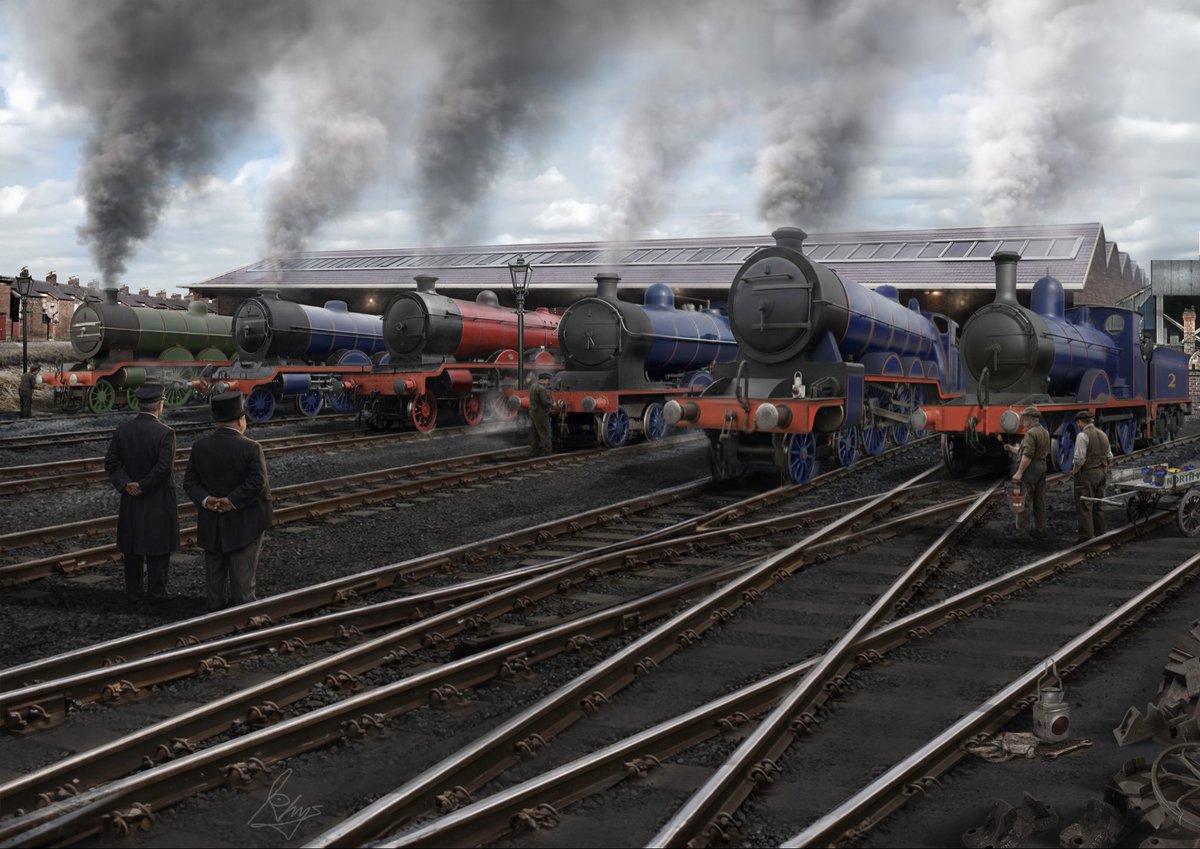
This is my piece Vicarstown Sheds, 1923 — “The Beginning”. From left to right, NWR numbers: 3, 87546, 146527, 98462, 4, and 2 are poised ready for inspection, while No. 3 awaits a fresh repaint.
“If I choose you, will you work hard?… That’s a good engine. I’ll call you Percy.”
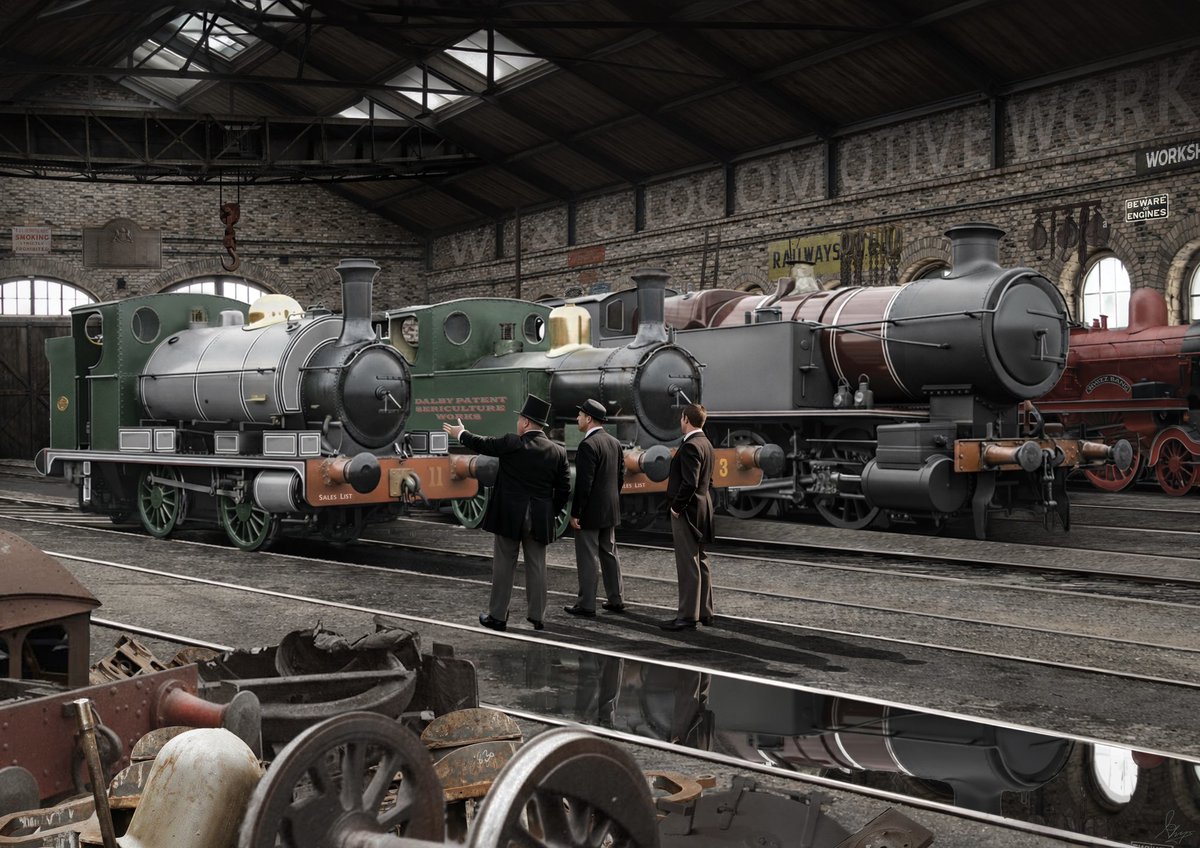
This is my piece ‘We need a tank engine’. A line of smartly turned-out tank engines stand ready for inspection, based on the illustration from Trouble in the Shed, of future NWR No. 6
Brendam Bay Harbour and the china clay workings. D2 BoCo has arrived with a rake of empties as numbers 1 and 2, Bill and Ben, stand ready to begin loading, while SCC number 3 waits to draw the loaded hood wagons across the points from the harbour.
@LtlNgn I’ve never been able to picture Percy originating in the coalfields or heavy works; he’s always felt too light-natured, cheeky and carefree for that sort of environment. A silk mill tramway or modest works line seemed to suit much better.
@LtlNgn Thank you! Yes, that was exactly my thinking! I imagined them as secondhand purchases from a small textile concern, probably somewhere in East Anglia. Not especially heavy or grimy industrial — more rural, light industry.
@LtlNgn The name itself was fairly spontaneous. I thought it sounded suitably post WWI-era and industrial — but, in full honesty, I was watching Blackadder while working on the piece and the phrase popped into my head.
@LtlNgn “Whizz Bang” actually came about because I wanted to justify that red tender engine in the original workshop line-up illustration. It felt like it needed to be a bit of an oddity — perhaps an experimental engine that hadn’t had much luck in service and was now quietly up for sale
@TheVnmr I added “Dalby” as a little nod to the well-known illustration disagreements between Dalby and Awdry, and “Sericulture” to hint that the line worked in silk. Silk moths → caterpillars, which felt like a playful reference to the Reverend’s famous “caterpillar” description of him.
@RhysBDavies@TheVnmr They must have been an extraordinary sight in motion behind a rake of coal wagons — those flangeless centre drivers, only an inch apart, must have made them quite something to handle on the curves!
@RhysBDavies@TheVnmr I’ve even amassed a small collection of rusted fishplates, rail fragments and bits of steam coal from the old trackbed over the years.