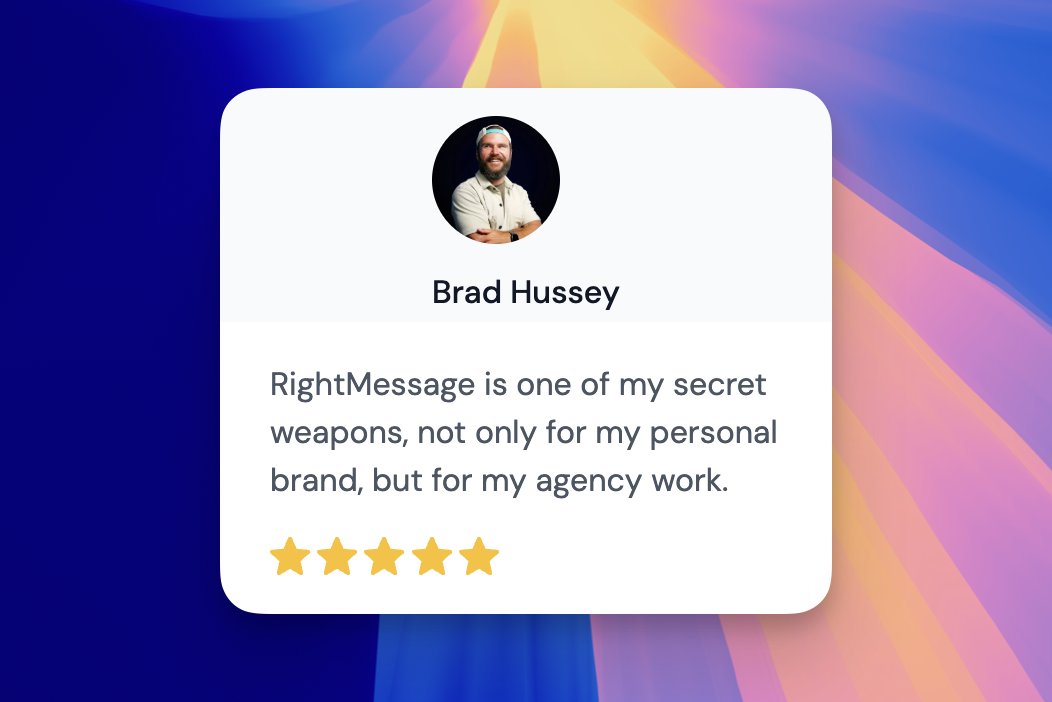
We hear this constantly from agency owners.
RightMessage works for their own brand. Then they start using it with client work and realize it solves problems across completely different businesses.
Or describe your business and let Righty draft the whole thing for you - questions, branching, and offers - based on what it's learned from real customer data and personalization best practices.
Setting up a segmentation survey usually comes down to one annoying question: what do you actually ask people?
Working out the questions, how they branch, and what to show based on each answer takes time, and it's often the reason a survey sits half-built for weeks.
The screenshot below is Claude's own summary of what it built. Twenty minutes of talking, and a fully functioning segmentation survey running on his site.
If you've been putting off segmentation because it feels like a project send us a DM, we can help!
@coreyhainesco (@SwipeFilesco) had been putting off building his new-subscriber onboarding survey for months.
Then he jumped on a call with RightMessage founder, @brennandunn, and built the whole thing live. In 20 minutes.
→ 9 question dimensions (challenge, role, business stage, and more)
→ 5 offers wired up to real URLs
→ Branched routing based on visitor challenge + business stage
→ Bidirectional sync with his Kit custom fields
→ Widget themed to match https://t.co/w0o0QsEYgq
If rewriting your survey sounds like more than you want to take on, that's exactly what our Done For You segmentation service is for.
Most clients are up and running in about two weeks, and there's a full refund if we don't think we can help.
→ https://t.co/05JsB0yUiq
Have you ever played 20 Questions?
"Is it an animal?" Yes.
"Is it a pet?" Yes.
"Does it bark?" No.
A few questions in, you've got it: a cat.
The game works because every question is tiny. One thing at a time. Easy to answer without overthinking it.
And the more leads you've segmented, the more raw material you have to personalize how you sell. Which means more conversions.
Make it feel like a game. Not a form.
Have you ever played 20 Questions?
"Is it an animal?" Yes.
"Is it a pet?" Yes.
"Does it bark?" No.
A few questions in, you've got it: a cat.
The game works because every question is tiny. One thing at a time. Easy to answer without overthinking it.
But our internal data is clear: surveys that ask more questions that are easier to answer beat the ones that bucket everyone with a few heavy questions.
The customers who get this right regularly see 70-80%+ completion rates — while asking more, not fewer.
1) They enrich their contact lists (using tools like Clay) to pull data like industry, company size, and job role. They use that data in their outreach.
Cold outreach teams spend weeks perfecting personalization.
Then they send people to a generic website.
We see this constantly.
A prospect gets a hyper-specific email that references their industry, their role, their exact situation.
They're intrigued. They click the link.
Generic homepage. The moment is gone.
That jump from specific to generic is jarring - and it can kill conversions.
A few RightMessage customers have closed that gap. Here's what they do:
Even matching a headline to match the ad someone clicked can make a meaningful difference.
One recent test we saw: 86.6% lift in conversion rate from that single change.
Have a go: https://t.co/OM67h1x1sm
You've heard the story:
A table with 24 jams on display got reduced to 6.
Conversions went up 10x.
This is from Barry Schwartz's research on the paradox of choice.
People like having options.
They hate choosing between them.
Netflix figured this out early. So did Amazon.
The businesses seeing the best conversion rates are the ones that answer those questions before the visitor has to ask.
Personalization doesn't have to be complex.