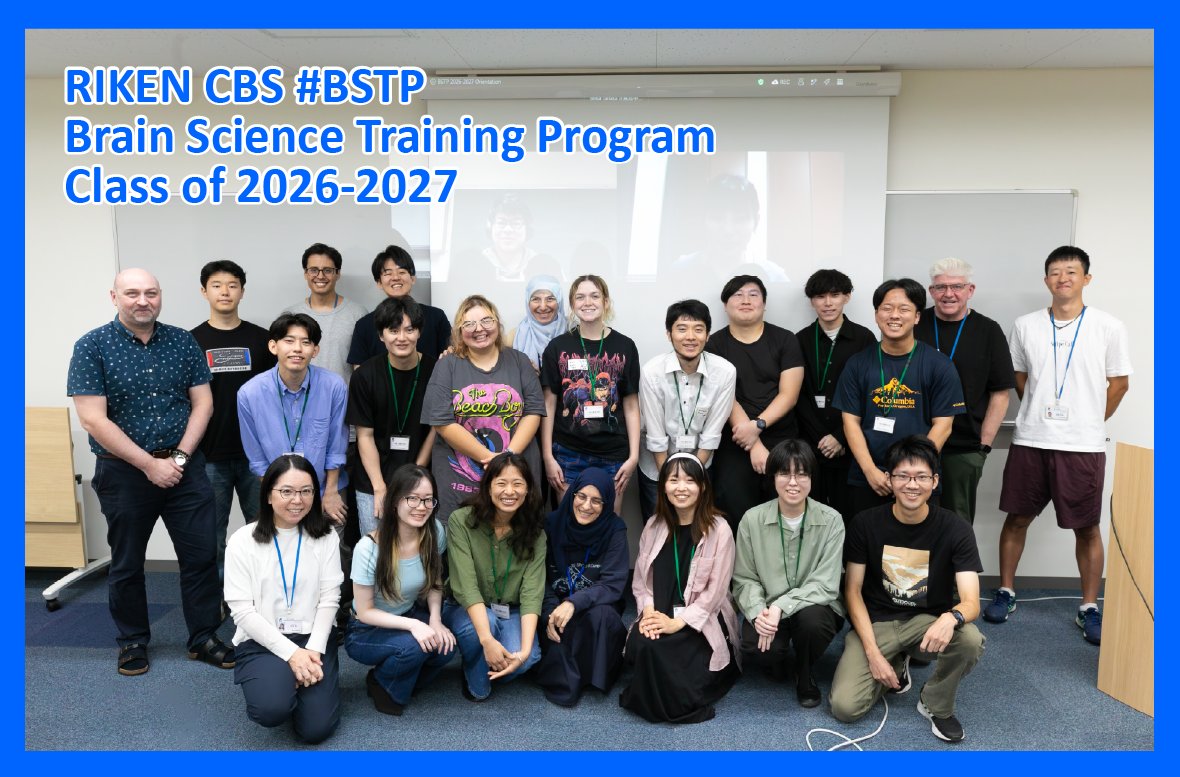
We’ve just kicked off a new season of #BSTP!
A very warm welcome to the young scientists joining RIKEN CBS with a passion for #neuroscience🧠
Let’s have fun and dive into the fascinating world of neuroscience!
https://t.co/Jf2VKeNOIa
@JoJoLab5@mlab_cbs@JunNagaiLab Together, these advances show how discoveries in basic biology and protein engineering can create entirely new ways to see—and control—the living brain.
A wonderful and very well-deserved recognition of three scientists whose work changed neuroscience.
6/6
Comments from Thomas McHugh
@ikebukuro_tomu, CBS Deputy Director, regarding the 2026 Nobel Prize in Physiology or Medicine.
Congratulations to Karl Deisseroth @KarlDeisseroth, Peter Hegemann and Georg Nagel on the 2026 Nobel Prize in Physiology or Medicine.
1/6
@JoJoLab5@mlab_cbs@JunNagaiLab The prize also resonates with the long tradition of optical biology at RIKEN, including Atsushi Miyawaki’s pioneering engineering of fluorescent proteins and sensors.
5/6
BREAKING NEWS
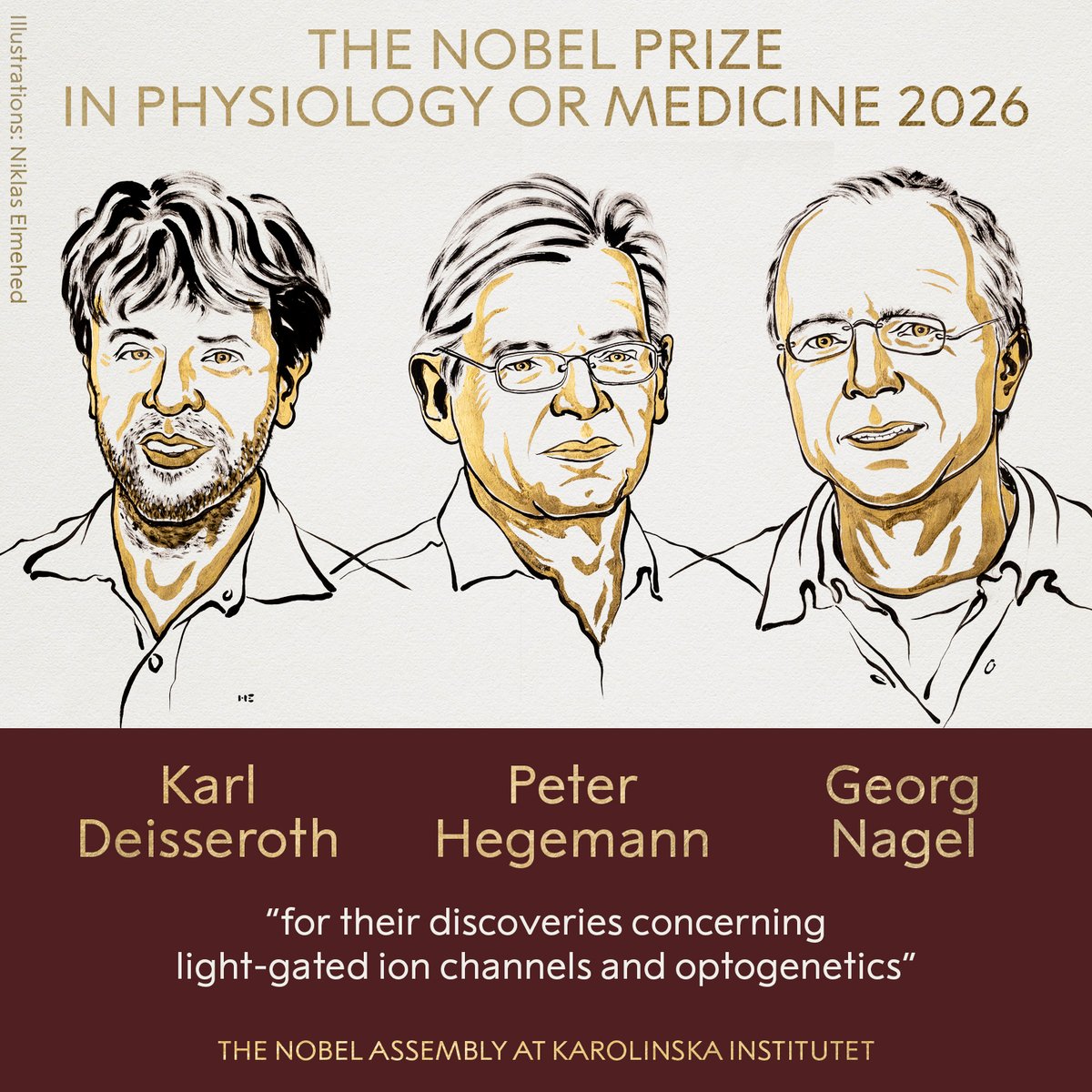
The 2026 #NobelPrize in Physiology or Medicine has been awarded to Karl Deisseroth, Peter Hegemann and Georg Nagel “for their discoveries concerning light-gated ion channels and optogenetics.”
BREAKING NEWS
The 2026 #NobelPrize in Physiology or Medicine has been awarded to Karl Deisseroth, Peter Hegemann and Georg Nagel “for their discoveries concerning light-gated ion channels and optogenetics.”
A new paper is just out! This is the result of the excellent work of Dr. Sophia Nagisa, who conducted this research in our lab as a RIKEN Special Postdoctoral Researcher and is now in Dr. Hayashi’s lab at CiNet.
Paper:
https://t.co/IkpvqcGpGi
Multitasking is generally considered something to avoid because performance on one or both tasks tends to deteriorate. In daily life, however, there are also situations in which adding cognitive load seems to make physical effort feel easier—for example, working out while listening to music.
In this study, participants performed a physically demanding task in which they maintained their maximum grip force for 12 seconds while simultaneously performing a cognitive task. Contrary to our intuition, grip-task performance improved as the cognitive task became more difficult. In other words, engaging in a seemingly unrelated cognitive task enhanced physical performance.
We observed a similar facilitation effect when the difficulty of the cognitive task was kept constant and only the monetary bonus for successful cognitive-task performance was manipulated. Thus, increasing not only cognitive difficulty but also reward for the cognitive task improved grip-task performance.
This facilitation effect closely tracked increases in pupil diameter associated with cognitive-task difficulty and reward. These results suggest that engaging in the cognitive task increased pupil-linked arousal, and that this increase in arousal enhanced performance on the otherwise unrelated grip task.
Overall, our findings show that multitasking can sometimes enhance, rather than impair, task performance. The neural mechanisms underlying this facilitation remain to be tested. Measuring activity in brain regions associated with arousal, and causally manipulating those regions using brain stimulation, may help clarify the mechanism in future studies.