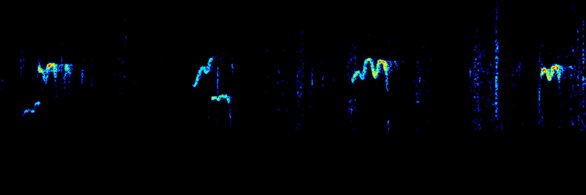
Our latest article investigated how the administration context influences the sensitization in the emission of 50-kHz ultrasonic vocalizations in amphetamine-treated rats.
Open acces at this link https://t.co/4UefrAYO55
In mice, rats, and monkeys, a lack of serotonin in the brain leads to impaired maternal affiliation behavior. @wang_tianhua now showed that early social enrichment has ameliorating effects but leaves the prominent reduction in pup ultrasonic calling untouched. Study links below.
A subtype of ultrasonic vocalizations during highly palatable food consumption in rats identified by machine learning-assisted ... https://t.co/sqgPTtnpbw #biorxiv_neursci
New team member! Very happy to welcome Henry Werk who is joining the @Wohrlab@Uni_MR site. He will study the effects of lithium in a rat model for mania, integrating brain and behavior through recording 50-kHz ultrasonic vocalizations. Looking forward to exciting science.
@fabdechaumont et al. showcase how the integration of ultrasound recording and behavioral analysis can provide novel insight into mouse social behavior, linking ultrasonic calling to urination behavior. Another great contribution to our special issue:
https://t.co/VJpk2g7dxt
New in @ScienceMagazine! 🎉 Thrilled to share my PhD project, we introduce a new optogenetic approach to study the developing brain - revealing how oxytocin shapes infant behavior.
Thanks to my collaborators, @OferYizhar & my family❤️
https://t.co/DECnPvjEKS
Here’s the story🧵
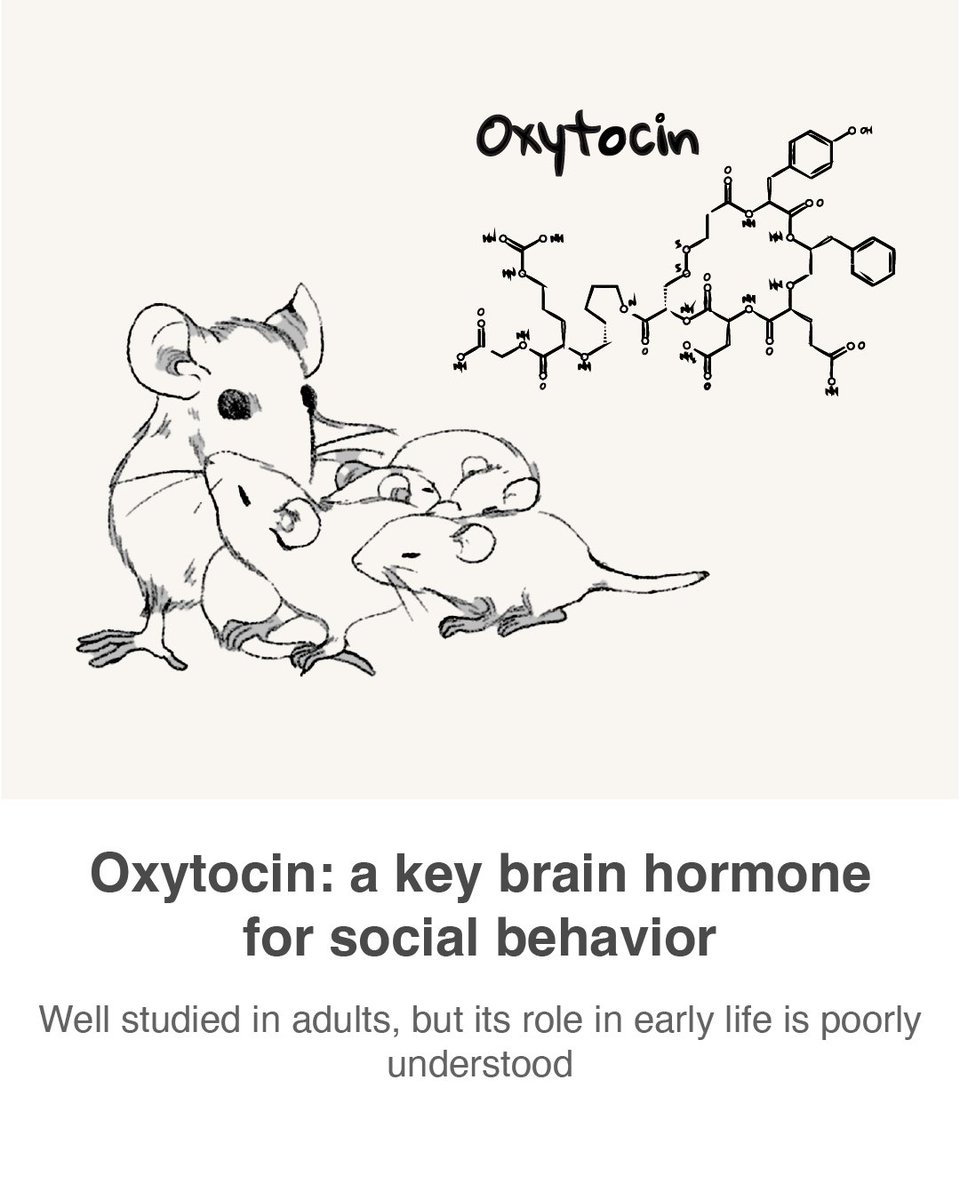
@ScienceMagazine@OferYizhar Oxytocin is famous for shaping adult bonding. But in early life, its role was unclear.
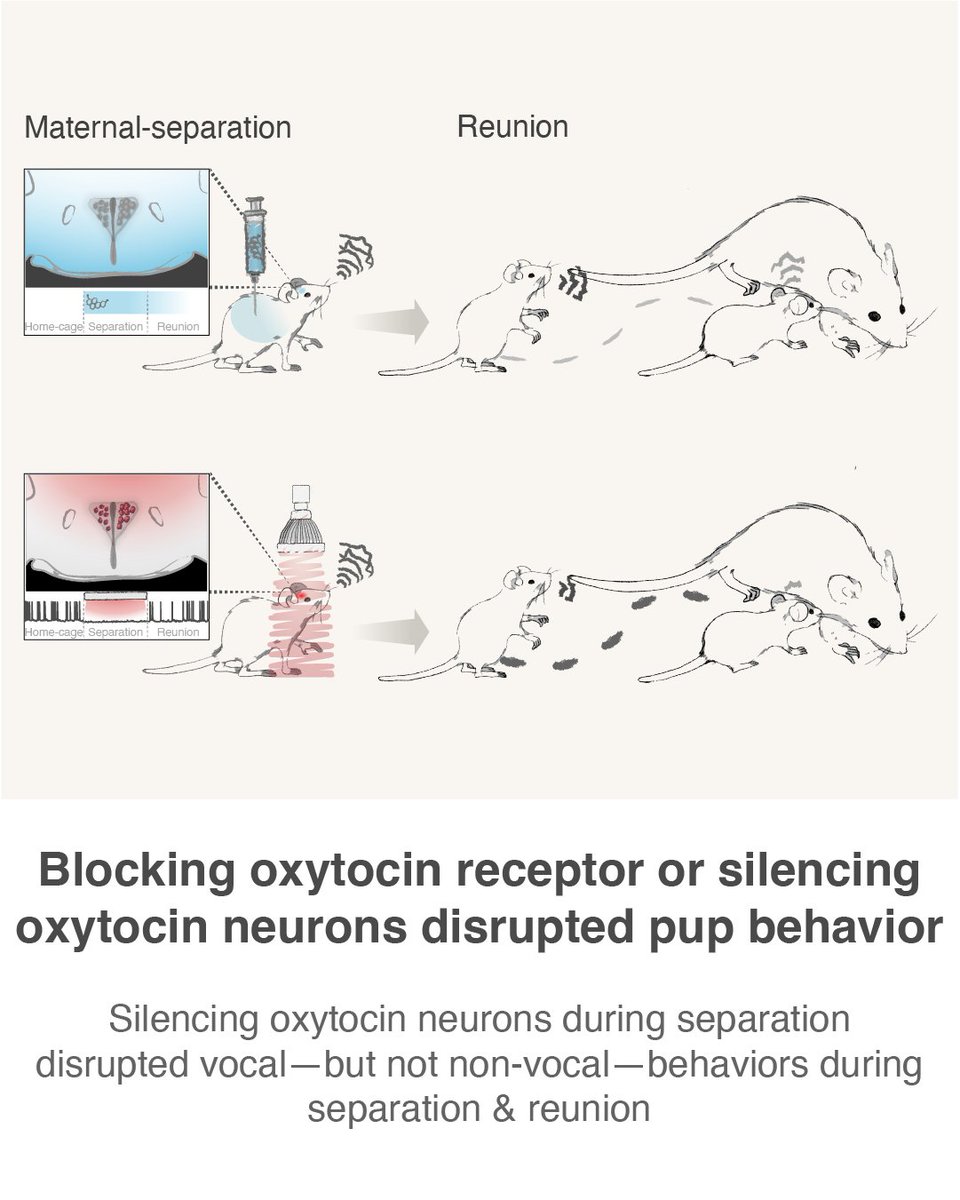
We noticed oxytocin receptors strongly expressed in infancy, in both humans and mice - yet their function was unknown. We asked: how oxytocin influences pups’ cries during separation & reunion?
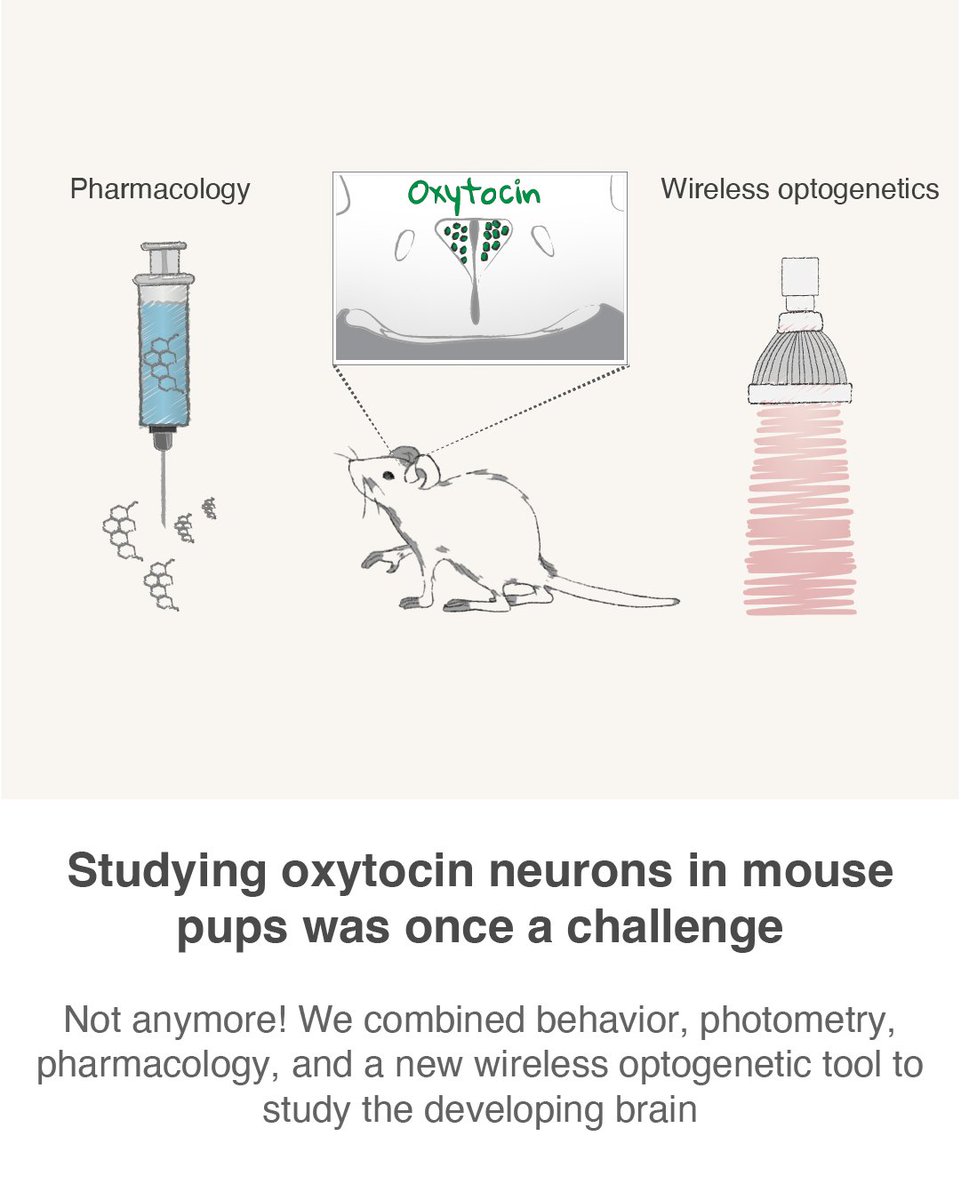
@ScienceMagazine@OferYizhar Studying the infant brain is tough. To overcome this, we combined behavior, fiber photometry, and pharmacology with a new wireless, noninvasive optogenetic method. This let us monitor & manipulate oxytocin neurons in freely behaving pups 🐭💡
@ScienceMagazine@OferYizhar We found that oxytocin neurons became more active during separation, and this activity was tightly linked to pups’ calls.
Blocking or silencing oxytocin changed calling - not only during separation but also at reunion with the mother.
@ScienceMagazine@OferYizhar Together, these findings reveal oxytocin’s crucial role in shaping early-life bonding, and our new tool opens opportunities to explore the developing brain 🧠
This was a long journey and a true team effort!❤️ Huge thanks also to Shari Ross for her beautiful drawings!
Separation-induced ultrasonic vocalizations in mouse pups are modulated by attachment and tightly linked to the activity of hypothalamic oxytocin neurons. New @ScienceMagazine study by Zelmanoff et al. from the @OferYizhar lab.
https://t.co/tuQnHJkMv0
Good news! Our Behavioural Brain Research special issue on "Ultrasonic Communication in Rodents" is growing. Two new studies available online!
And an important update: The submission deadline has been extended: 31 October 2025
More information here: https://t.co/PVNqahnOIq
Good news! Our Behavioural Brain Research special issue on "Ultrasonic Communication in Rodents" is growing. Two new studies available online!
2) Report on the effects on paracetamol in the orofacial formalin test in rats
https://t.co/VJpk2g7dxt
Good news! Our Behavioural Brain Research special issue on "Ultrasonic Communication in Rodents" is growing. Two new studies available online!
1) Report on stress vulnerability in rats characterized by low positive affect as assessed through 50-kHz calls
https://t.co/VJpk2g7dxt
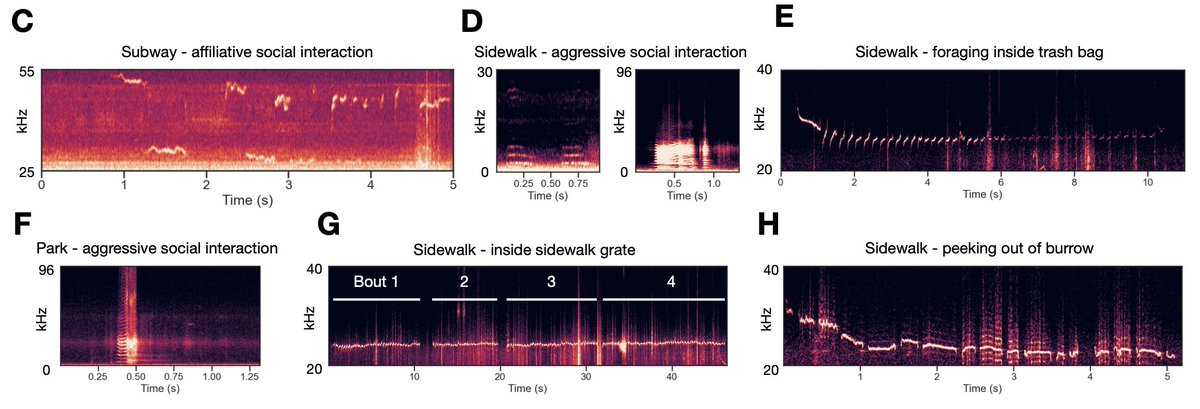
Finally, we used a wireless ultrasonic mic to record vocalizations. We observed a diversity of calls which have acoustic features that lay outside of the std distribution reported in the lab. We see interesting usage of the classically negative affect 22 kHz call during foraging.