Lots of my work with education is influenced by Bakhtin and his theorizing on the novel. What grabbed me was polyphony—the idea that multiple voices can coexist without one being "right." In Dostoevsky's novels, characters hold different worldviews that interact but never resolve. No single voice dominates.
Bakhtin expanded this into heteroglossia—the mix of languages in culture. Street slang versus official speak, dialects versus formal language. Novels became spaces where everyday voices could challenge authority through their own ways of speaking and seeing the world.
His insight: unity doesn't mean sameness. A healthy whole needs different parts. Multiple languages keep everyone humble and prevent single truths from becoming tyrannical. That's what great novels do—they let us approach truth from countless angles through dialogue. https://t.co/zO4ngxvIZO
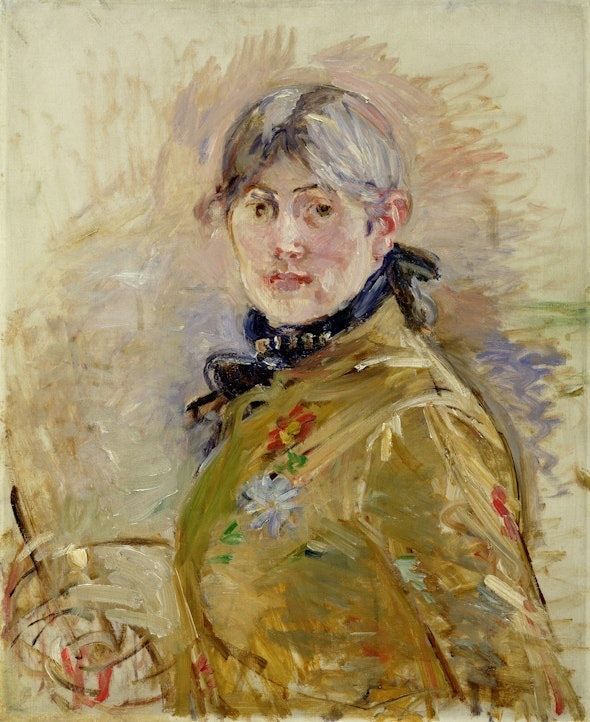
Berthe Morisot (1841–1895) was a French painter and founding member of Impressionism—the only woman in the group's first exhibition (1874). She worked alongside Degas, Monet, Renoir, and Manet. Known for loose, sketchlike brushwork, she painted modern life and women's experiences: domestic scenes, motherhood, and fashion. Famous works include *The Cradle* (1872) and her 1885 *Self-Portrait*. https://t.co/swjzvZvUuV
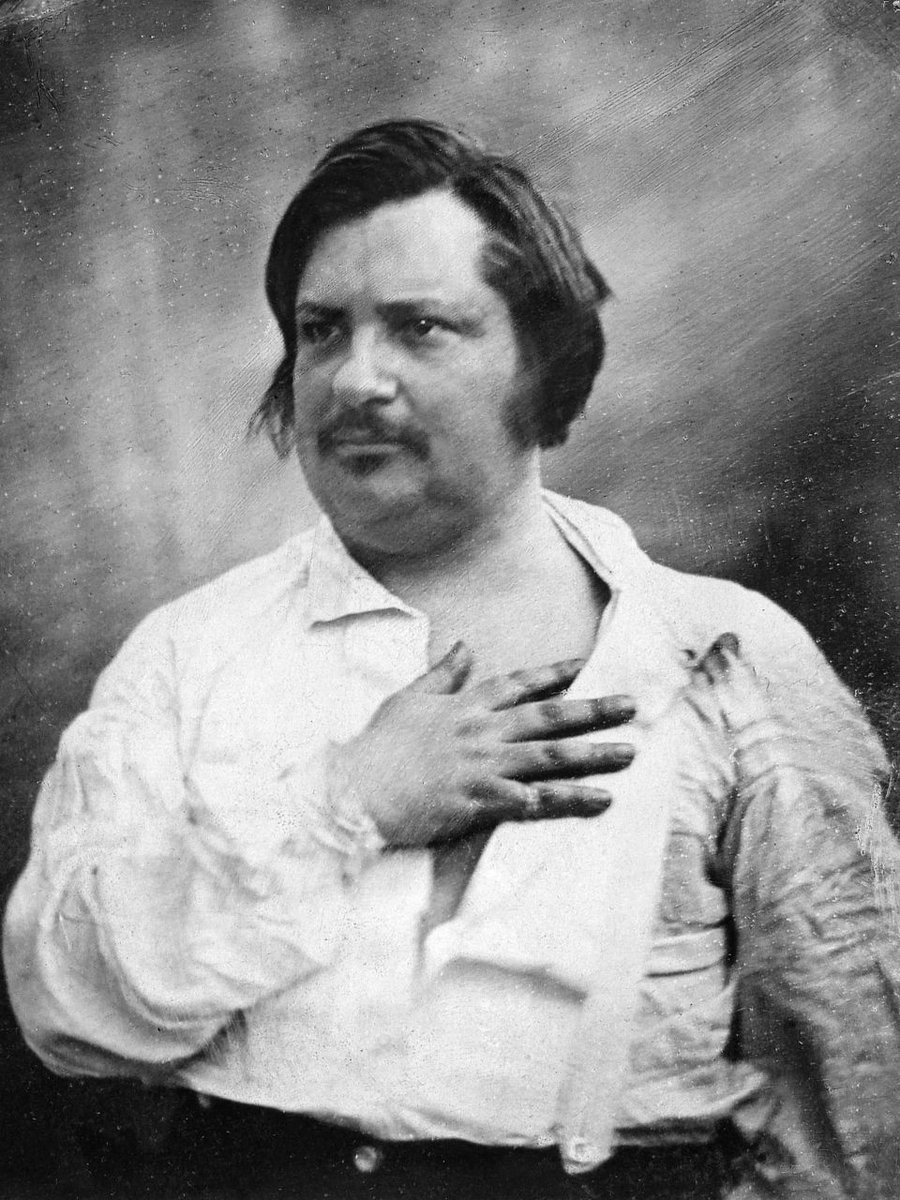
Honoré de Balzac was a famous French writer who lived from 1799 to 1850. He's best known for writing a huge collection of novels called **La Comédie humaine**, which painted a detailed picture of French society after Napoleon's time. He's considered one of the first "realist" writers—meaning he focused on portraying everyday life and people very truthfully, including their flaws. Balzac struggled with money and failed businesses for much of his life, but his writing later inspired many other famous authors like Charles Dickens and Henry James. He married a Polish countess, Ewelina Hańska, in 1850, but died just a few months later. https://t.co/bhdAe3etO8
Someone asked what I was thinking about whilst floating the waves out here at the beach—I told them I'd been reading Balzac's *Sarrasine* and got obsessed with how the narrator works. There's this unnamed guy telling a woman the secret story behind a mysterious old man at a party. A story inside a story.
Turns out Balzac does this all the time—lawyers, doctors, aristocrats telling tales they witnessed. About five or six of his works use this technique. It's ancient—goes back to *One Thousand and One Nights*, Boccaccio, Chaucer—but Balzac makes it modern and social.
His narrators aren't just storytelling for fun. They're insiders with special access: a lawyer knows about debts and wills, a doctor sees private suffering, an aristocrat knows the scandals. Their professional positions make the fiction feel like testimony—like they're revealing how money, class, and desire actually work beneath society's polite surface. That's Balzac's innovation: turning storytelling into social evidence. https://t.co/bhdAe3etO8
This dive into Stendhal's letters and thought shows how he wrestled with what "classicism" really meant. As a teenager in 1800, he told his sister to read Plutarch—the ancient book that shaped Rousseau's character. Reading thoughtful works, he said, teaches you how to think and feel.
But by age 40, Stendhal was mocking "classicism." He defined it as serving your audience literature that pleased their grandfathers, not them. Real art—what he called "romanticism"—gives people of each era what moves them now. Even the ancient Greeks were "romantic" in this sense, writing for their own time.
Stendhal wasn't rejecting ancient texts. He loved Plutarch his whole life. What he hated was dead imitation—French writers in the 1820s pretending the Revolution never happened, copying 17th-century plays that nobody cared about anymore. They mistook ritual for creativity.
His point was simple: the classics should teach you to think for yourself, not tell you to copy the past. Sophocles wrote for Athens. Racine wrote for Louis XIV's court. A living writer must speak to their own moment, not replay their grandfather's favorites.
https://t.co/hVXkSvTW2R
Now that I'm teaching Frankenstein and reading Balzac, I'm thinking a lot about embedded narration. It's when a story contains another story inside it—like nested dolls. Frankenstein does this brilliantly: a sea captain writes letters about meeting Victor, who tells him about creating the Creature, who then tells his own sad story.
This nesting isn't just clever structure—it changes how we feel about characters. By the time the Creature speaks directly, we've already heard Victor call him a monster. We have to rethink everything backward. Each layer adds distance but also makes us question: who's really telling the truth here?
Balzac uses the device differently. His stories often start at fancy dinner parties where someone tells a tale that secretly criticizes everyone listening. The frame story and the inner story reflect each other like mirrors, showing us things the characters themselves can't see about their own lives.
What fascinates me is how embedding controls sympathy. The deepest story—the Creature's—is the hardest to reach, which mirrors how marginalized he is. Form matches meaning. The structure itself makes an argument about whose voices get heard and whose get buried under other people's versions. https://t.co/ZX0vU5fbfY
Natalie Wexler argues that measuring school success by "growth" (improvement over time) vs "proficiency" (actual achievement levels) tells very different stories. Washington D.C. ranks #1 nationally in growth, yet only 4% of low-income students are college-ready compared to 70% of white students. She says we need both metrics plus demographic breakdowns to see if vulnerable students truly benefit. https://t.co/P0m2YFN64h
Pamela Snow, an education researcher, debunks 16 excuses teachers and schools use to ignore scientific research about what actually works in classrooms. She argues schools shouldn't get a free pass to avoid evidence-based methods that other professions like medicine must follow. Education keeps using disproven teaching fads while rejecting proven techniques, hurting students.
https://t.co/1MWsVlRSDi
Michael Strong of Socratic Experience has drawn my attention to my blog on text-based learning limitations. The essay argues education over-relies on text, neglecting how humans naturally learn through mimesis (observation/imitation), face-to-face dialogue, and distributed social cognition. Dialogue requires real-time exchange between independent voices—something text cannot achieve. We need classroom communication that honors our evolutionary cognitive heritage. https://t.co/LF0KPGrq1t
Karen Vaites shows that passing reading laws doesn't automatically help kids read better. 50 states created "Science of Reading" laws since 2019, but most haven't seen improvement—some got worse. A few Southern states succeeded because they had strong leaders who trained teachers well and supported schools, not just because they passed laws. The lesson: actual implementation matters way more than legislation alone.
https://t.co/6deHA6ezTj
A high-achieving student contacts her former teacher claiming AI dependency is destroying her writing skills, but provides zero evidence of actual decline. No failed assignments, no measurable deterioration—just anxious feelings and guilt about using ChatGPT for emails. The dramatic confession arrives perfectly packaged for publication in an anti-AI education newsletter.
The piece reads like she's absorbed doomer rhetoric from teachers and media, then delivers it back as personal crisis. She gets validation, her teacher gets a redemption story, the blog gets clickable content. Everyone confirms their priors about AI dangers. Missing: any honest discussion of whether skipping administrative busywork might be reasonable, or whether her "fears" reflect real problems versus performed anxiety for an approving audience.
https://t.co/Jwh9pZP6xz
As a Louisiana teacher who experienced it, Whitney Whealdon explains the state's successful instructional reform through two principles: "make the right thing the easy thing" by designing systems where best choices became defaults, and "reduce the paper to practice gap" by creating usable curricula with sensible defaults. Success came from designing conditions that enabled change, not just training or good ideas. https://t.co/2bYyeBGSPK
Dissident Teacher argues parents can boost their kids' reading skills at home. Start by figuring out where your child actually stands using state test scores, https://t.co/Keqxu0QoAO, or the San Diego Quick Assessment—don't trust English class grades. Then pick a meaningful book just slightly above their ability, read it together in a quiet screen-free spot for 15-20 minutes daily, and talk about it afterward. https://t.co/D9dkTrYKur
Here goes Ben again—portraying ordinary people as helpless victims passively shaped by technology, while holding billionaire CEOs fully responsible as active agents. He claims AI "isn't just a tool" and molds us beyond our control, removing regular people's agency. Yet CEOs with "gilded pens" retain full responsibility, and conveniently, Ben himself sees clearly through it all while everyone else gets duped and "malformed" by smartphones. This self-serving double standard lets him blame corporations and pity users while positioning himself as the enlightened observer. Either technologies determine behavior for everyone or we all have agency—not just Ben and the billionaires he criticizes. https://t.co/RwHDHPqrU6
Annika Hernandez reviews Michael Rose's book on classical education, arguing it distinctively cultivates virtue through academic content (grammar, logic, literature) rather than isolated character lessons. Classical schools reject utilitarian education, using great books and subjects to develop wisdom—the capacity to discern truth, goodness, and beauty and live accordingly. https://t.co/RbiOOfHZ9I
Leah Mermelstein argues that fun shouldn't be a reward after mastering hard material—it's the condition that makes learning possible. Drawing on examples of guitar practice and a classroom gummy bear ritual, she shows that joy embedded within struggle keeps students engaged long enough to learn. Teachers should design enjoyment into difficult lessons, not promise it afterward. https://t.co/c4cxfTYDq9
I find the idea of "knowledge tests in disguise" compelling—Natalie Wexler argues that standardized reading tests claim to measure abstract comprehension skills but actually assess students' background knowledge and vocabulary. This drives schools toward ineffective strategies instruction. She advocates for accountability tied to actual curriculum content in literature, history, and science rather than generic skills.
https://t.co/eWwvz6br5D
Marc Smith examines a University of Tokyo study showing paper books require less cognitive effort than tablets. Using manga as test material, researchers found tablet reading increased brain activation and slowed comprehension responses. Paper's fixed spatial cues and tactile feedback enhance memory encoding, though Smith notes research remains mixed and brains may adapt to digital formats over time.
https://t.co/BA1KIR8Pm3