The team has been doing great work on the new @Vulcan_VRS website. Check it out and let us know if you, or anyone you know, needs wildfire solutions or incident management training in preparation for the upcoming fire season! https://t.co/p932spwcm9
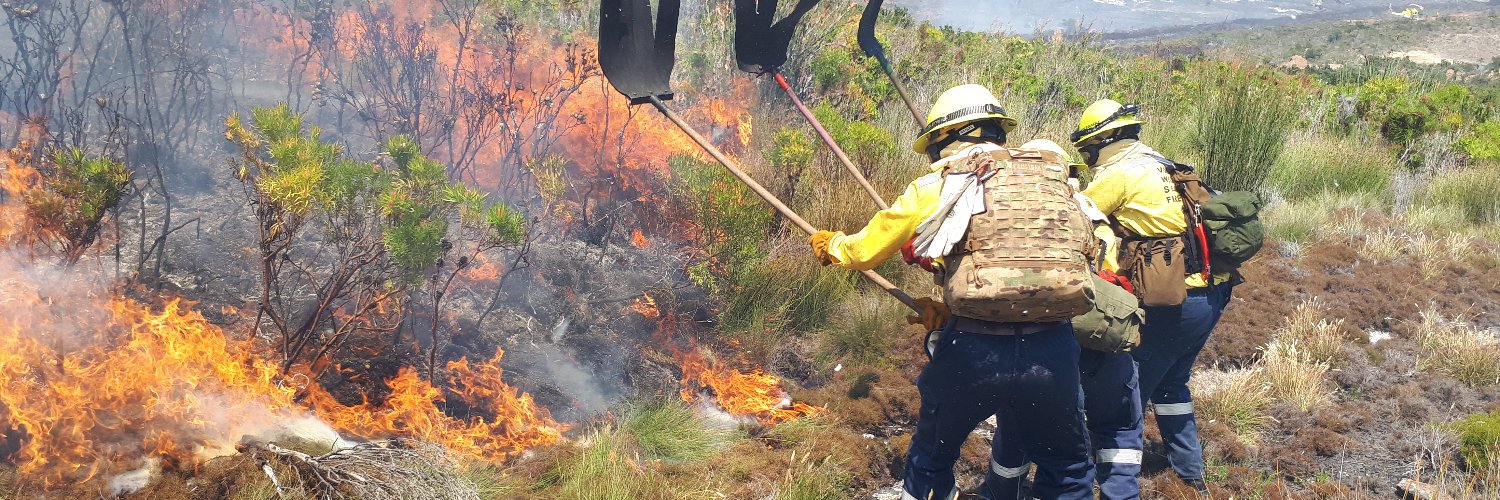
Table Mountain National Park gears up for essential ecological burns in 2026 aimed at rejuvenating biodiversity and reducing wildfire risks:
https://t.co/AtwCs35cj7
After dinner last night we got into our Uber and asked "do you have any Amapiano?" The driver said "Ive driven you before, connect your Bluetooth". He recognised us, because yes, we're the only whities to have asked for it before. Badge of pride.
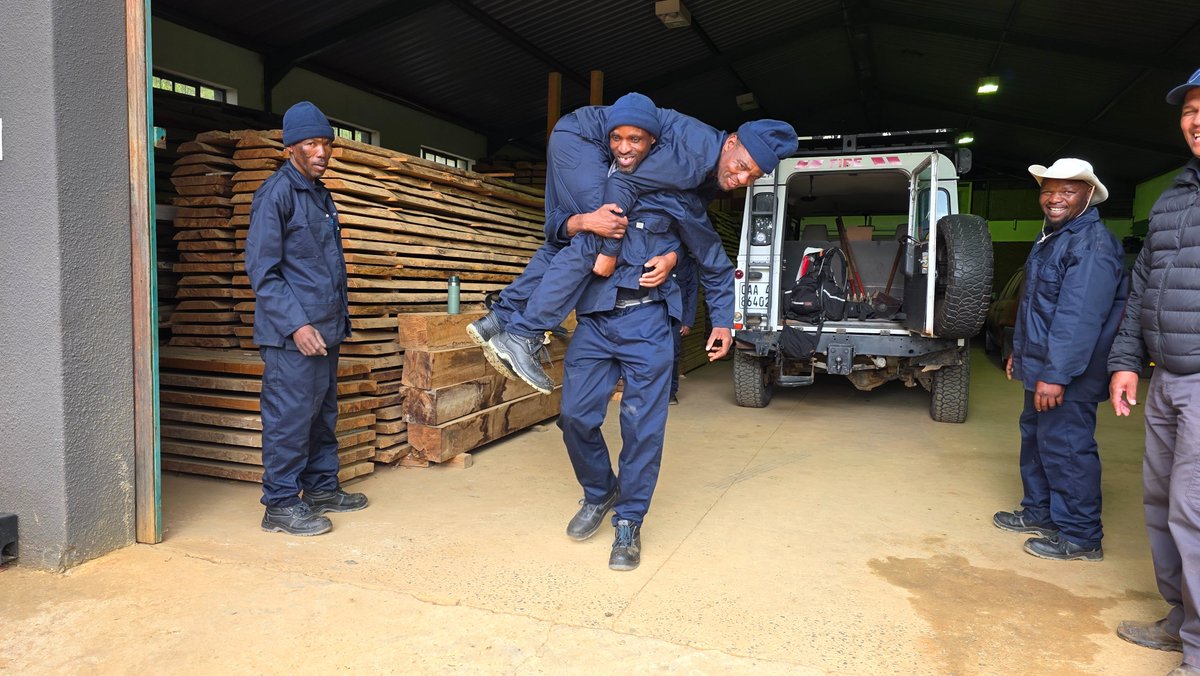
We have just conducted a Wildfire Suppression & Safety Essentials skills course for the staff of an exclusive Banhoek estate. Wildfire basics, methods of attack & defence, effective tools usage, and safety practises were shared using theory & practical scenarios to empower them.
🚨 DÜNYA KUPASI TARİHİNDE GÖRÜLMEMİŞ OLAY!
▪️ ABD, turnuvaya katılım hakkı kazanan bir milli takımın ülkede konaklamasını reddeden ilk Dünya Kupası ev sahibi oldu.
▪️ ABD yönetimi, İran'ın üç grup maçı da kendi sınırları içinde oynanacak olmasına rağmen, turnuva boyunca takımı topraklarında istemediğini FIFA'ya resmen bildirdi.
▪️ İran Milli Takımı tüm Dünya Kupası kampını, antrenmanlarını ve konaklamasını Meksika'nın Tijuana şehrinde yapacak.
▪️ Maç günleri sınırı geçerek Los Angeles veya Seattle'da sahaya çıkacaklar ve aynı gece Meksika'ya geri dönecekler. ABD'de sabit kamp yok, otel yok, tek bir gece konaklamak bile yok.
▪️ Futbol tarihinde hiçbir milli takım, bir Dünya Kupası'nda böyle bir lojistik zorlukla mücadele etmemişti.
Six South African citizens are among 460 people detained after Israeli forces illegally intercepted all 60 vessels of the civilian aid flotilla in international waters off Cyprus, according to Global Sumud Flotilla South Africa.
Maximum alert on the Flotilla!
Israel has been given license to threaten, kidnap and shoot at civilians ALSO in int'l waters!
Welcome to Apartheid without Borders - soon to be Apartheid Mediterranean Consortium.
Shame on the EU, its main enabler in this part of the world.
I consider myself so lucky to spend so much of my work, my volunteer time, just life in amongst so much of the diverse beauty on show there... Thanks for sharing it with the world
South African🇿🇦 Delegate Hajar Kagiso AL Thairah has been illegally abducted from international waters By Israel @DIRCO_ZA while on the way to deliver essential aid to Gaza @GovernmentZA
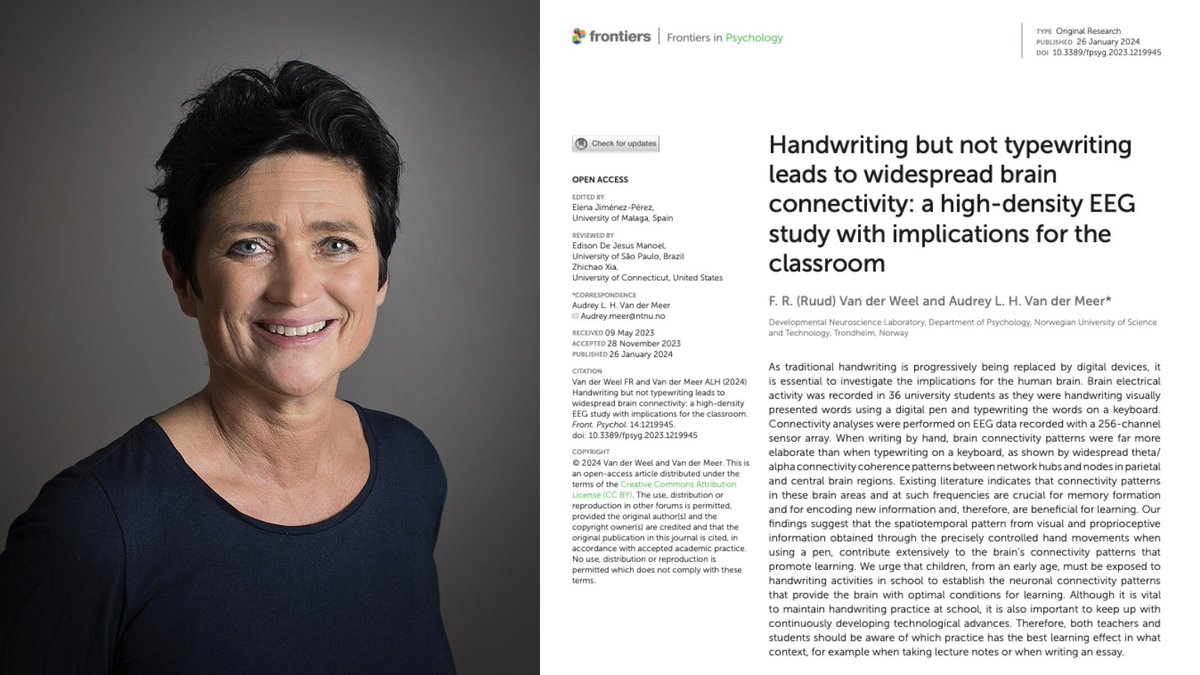
A Norwegian neuroscientist spent 20 years proving that the act of writing by hand changes the human brain in ways typing physically cannot, and almost nobody outside her field has read the paper.
Her name is Audrey van der Meer.
She runs a brain research lab in Trondheim, and the paper that closed the argument was published in 2024 in a journal called Frontiers in Psychology. The finding is brutal enough that it should have changed every classroom on Earth.
The experiment was simple. She recruited 36 university students and put each one in a cap with 256 sensors pressed against their scalp to record brain activity. Words flashed on a screen one at a time.
Sometimes the students wrote the word by hand on a touchscreen using a digital pen, and sometimes they typed the same word on a keyboard. Every neural response was recorded for the full five seconds the word stayed on screen.
Then her team looked at the part of the data most researchers had ignored for years, which is how different parts of the brain were communicating with each other during the task.
When the students wrote by hand, the brain lit up everywhere at once.
The regions responsible for memory, sensory integration, and the encoding of new information were all firing together in a coordinated pattern that spread across the entire cortex. The whole network was awake and connected.
When the same students typed the same word, that pattern collapsed almost completely.
Most of the brain went quiet, and the connections between regions that had been alive seconds earlier were nowhere to be found on the EEG.
Same word, same brain, same person, and two completely different neurological events.
The reason turned out to be something nobody had really paid attention to before her work. Writing by hand is not one motion but a sequence of thousands of tiny micro-movements coordinated with your eyes in real time, where each letter is a different shape that requires the brain to solve a slightly different spatial problem.
Your fingers, wrist, vision, and the parts of your brain that track position in space are all working together to produce one letter, then the next, then the next.
Typing throws all of that away. Every key on a keyboard requires the exact same finger motion regardless of which letter you are pressing, which means the brain has almost nothing to integrate and almost no problem to solve.
Van der Meer said it plainly in her interviews.
Pressing the same key with the same finger over and over does not stimulate the brain in any meaningful way, and she pointed out something that should scare every parent who handed their kid an iPad.
Children who learn to read and write on tablets often cannot tell letters like b and d apart, because they have never physically felt with their bodies what it takes to actually produce those letters on a page.
A decade before her, two researchers at Princeton ran the same fight using a completely different method and ended up at the same answer. Pam Mueller and Daniel Oppenheimer tested 327 students across three experiments, where half took notes on laptops with the internet disabled and half took notes by hand, before testing everyone on what they actually understood from the lectures they had watched.
The handwriting group won by a wide margin on every question that required real understanding rather than surface recall.
The reason was hiding in the transcripts of what the two groups had actually written down.
The laptop students typed almost word for word, capturing more total content but processing almost none of it as they went, while the handwriting students physically could not write fast enough to transcribe a lecture in real time, which forced them to listen carefully, decide what actually mattered, and put it in their own words on the page.
That single act of choosing what to keep was the learning itself, and the keyboard had quietly skipped the choosing and skipped the learning along with it.
Two studies. Two countries. Same answer.
Handwriting makes the brain work. Typing lets it coast.
Every note you have ever typed instead of written went into your brain through a thinner pipe. Every meeting, every book highlight, every idea you captured on your phone instead of on paper was processed at half depth.
You did not forget those things because your memory is bad. You forgot them because typing never woke the part of the brain that would have made them stick.
The fix is the thing your grandmother already knew.
Pick up a pen. Write the thing down. The slower road is the faster one.
with the extreme weather in the western cape right now, if you have R75 to spare, please consider donating towards the “buy a bed” initiative by haven. R75 can give a homeless person access to a shelter for 5 days 🙏🏾 https://t.co/WnWzA5iyU0