To learn about Rudolf Steiner's view on Zionism read the Steiner article below: Magazine for Literature, 66th year, No., 38, 25 September 1897
THE LONGING OF THE JEWS FOR PALESTINE
by Rudolf Steiner published in 1897
Not a few smart people will find it superfluous that any word was spoken about the strange gathering that took place in Basel a few days ago under the name "Zionist Congress." The fact that a number of European Jews came together to promote the idea of establishing a new Palestinian empire and encouraging the Jews to emigrate to this new "promised land" was seen to be the insane idea of a morbidly excited fantasy. In this judgment, they calmed down. They did not discuss the matter anymore. I believe, however, that these wise men have lagged ten years behind in their judgments. And ten years is a small eternity in our time when events are flowing so fast. Ten years ago, with some justification, one could think that a Jew was half mad who had the idea of moving his people to Palestine. Today one may only consider him hypersensitive and vain; but in another ten years things can be very different.
However, in the case of Messrs. Herzl and Nordau, the present leaders of the Zionist movement, I think it is more about vanity than a sensitivity to a perceived increase in anti-Semitism. The commonplace phrases that Herzl put forward in his booklet "The Jewish State" (M. Breitenstein's bookstore, Leipzig and Vienna, 1896) and the verbal fluff with which the sensationalist Nordau in Basel delighted his listeners are certainly not from the deepest depths of troubled souls. But they come from intelligent minds who know what has the strongest effect on Jews who have a sensitive heart and a sophisticated sense of self-respect. These latter members of the Jewish people will, in my opinion, become followers of Messrs. Herzl and Nordau. And the number of these members is certainly not small.
What good is it to emphasize so often that the Jews who feel this way are in serious error? They turn their eyes away from the great progress that the Jews have made in recent decades, the emancipation of the Jews, and only see that they are still excluded from so and so places, and so and so rights are still abridged; and, moreover, they hear that they are being insulted by the anti-Semites in the most desperate way. They do so because their hurt feelings cloud their minds. They are unable to see the powerlessness of anti-Semitism; they only see its drive and its outrageous excesses. They doubt whoever tells them: look at how futile the machinations of the hate of the Jews is, and how all their endeavors end in disgrace.
They listen only to those who say to them like Theodor Herzl: "In the populations, anti-Semitism is growing daily, hourly, and must continue to grow, because the causes persist and can not be remedied. ... Our welfare seems to contain something provocative, because for many centuries the world has been accustomed to seeing in us the most despicable of the poor. At the same time one does not realize, out of ignorance or narrow-mindedness, that our welfare weakens us as Jews and extinguishes our peculiarities. Only the pressure presses us back to the old tribe, only the hatred of our surroundings makes us strangers again. So we are and will remain, whether we like it or not, a historical group of recognizable togetherness. We are one people - the enemy makes us without our will, as has always been the case in history".
And those with whom such sentences resonate most powerfully today were only a short time ago passionately prepared to merge their ethnicity into that of the West. It is not real anti-Semitism that is the cause of this Jewish over-sensitivity, but the false image of an over-excited fantasy of the anti-Jewish movement. Anyone who has anything to do with Jews knows how deep-seated among the best of its people is the tendency to form such a false image. Mistrust of the non-Jew has thoroughly seized their souls. They also suspect people in whom they can perceive no trace of conscious anti-Semitism, they suspect an unconscious, instinctive, secret hatred of the Jews at the bottom of the soul. I count it among the most beautiful fruits, which can drive human inclination, if every trace of suspicion between a Jew and a non-Jew is extinguished. I would call this a victory over human nature to exclude such inclinations.
There may come a time when the sphere of Jewish personalities becomes so irritated that any understanding with non-Jews becomes impossible. What counts in the so-called Jewish question is sensible arguments and plans, not the tearing of intimate threads between Jew and non-Jew, or the rise of emotional tendencies, or a thousand unspeakable things. It would be best if there were as little talk as possible in this matter. Only the mutual actions of individuals should be valued. It does not matter if someone is Jewish or Germanic: if I find him nice, I like him; if he is disgusting, I avoid him. This is so simple that it is almost silly when you say it. But how foolish you have to be to say the opposite!
I think the anti-Semites are harmless people. The best of them are like children. They want to have something to blame for the ill they suffer. When a child drops a plate, he looks for somebody or something that has bumped it to blame for the accident. He does not look for the cause, the fault, in himself. That is what the anti-Semites do. Many people feel bad. They look for something to blame. The circumstances have brought it about that many currently see this something in Judaism.
Much worse than the anti-Semites are the heartless leaders of the European-weary Jews, Messrs. Herzl and Nordau. They turn an unpleasant childishness into a world-history stream; they turn harmless banter into terrible cannon fire. They are seducers, tempters of their people. They sacrifice the understanding that all reasonable people should desire, for their own vanity, which thirsts for programs, because - where deeds are lacking, the right program is established.
However harmless anti-Semitism is in itself, it becomes dangerous when the Jews see it in the light Herzl and Nordau put it in.
And they understand the language of the tempters, these masters: "One will pray in the temples for the success of the work. But in the churches too! It is the solution of an old pressure under which all suffered. But first of all light must be shed on minds. The idea must fly out to the last miserable nests where our people live. They will wake up from their dull brooding. For in all our lives comes a new content. Everyone only needs to think about it themselves, and the train will be a mighty one. And what glory awaits those fighters for the cause! That is why I believe that a generation of Jews will grow out of the earth. The Maccabees will rise again." So writes Mr. Theodor Herzl in his "The Jewish State".
I fear there will come a time when the Jews will no longer believe what we non-Jews tell them about anti-Semitism, in favor of parroting their Jewish seducers. And like so many beguiled people, they will translate the empty phrases of these deceivers into the language of their hearts. The seduced will suffer; but the seducers will triumph over the success that their vanity has achieved.
In Basil the question has been basically decided: what should be done to make the solution of the Jewish question as impossible as it possibly could be? Whether Herzl and Nordau really believe that their Palestinian Empire can be established, I am not in a position to decide. I hypothesize, in honor of their intelligence, that they do not believe in it. If I am right in this assumption, then one must blame these leaders for placing more obstacles between Jews and non-Jews than the anti-Semitic agitators.
The Zionist movement is an enemy of Judaism. The Jews would do best to look closely at the people who paint ghosts for them.
#RudolfSteiner #Anthroposophy #WaldorfEducation
@EnkindleAcademy There are 16 Steps and 192 corresponding Practice Steps derived from The Philosophy Of Freedom for practicing Ethical Individualism here: https://t.co/GCVOzH6qjQ
Ethical Individualism and the Great Paths to Freedom
The ancient paths to freedom—Stoicism, Taoism, Buddhism, and Christianity—have remained compelling because they provide a complete way of life consisting of a coherent set of principles, recognized practices, a developmental path, and an ideal human type. Stoicism has its virtues and disciplines, Taoism its principles of the Tao and cultivation of Wu-wei, Buddhism its Four Noble Truths and Eightfold Path, and Christianity its teachings of Christ and spiritual growth.
Many modern nonreligious movements, such as Existentialism, Humanism, Positive Psychology, and Secular Mindfulness, offer valuable insights into freedom, authenticity, and human flourishing. Yet they generally lack the features that gave the ancient paths their enduring power: a unified set of principles, a recognized practitioner identity, a clear ideal person, and a systematic path of development.
The path of Ethical Individualism, derived from Rudolf Steiner's The Philosophy of Freedom, meets these same standards. It possesses a foundational text, a coherent body of Principles of Freedom, a developmental sequence of Steps to Freedom, a central Practice of Pure Thinking, a recognized practitioner identity—the Ethical Individualist—and an ideal human type, the Free Spirit. In this respect, it stands alongside the great paths of the past as a complete path to freedom.
Yet The Philosophy of Freedom is especially suited to the modern age of science. Unlike the older paths, which arose in religious or pre-scientific cultures, it does not require faith in revelation, adherence to tradition, or metaphysical assumptions. It begins with simple but rigorous observations of thinking itself and seeks to understand freedom through the same disciplined attention to experience that characterizes science. Its foundation is not authority, dogma, or inherited belief, but conscious observation of the activity of thought.
For an age that seeks knowledge rather than belief and individual validation rather than external authority, The Philosophy of Freedom offers a path to freedom that is at once modern, scientific, and deeply human. It preserves the completeness of the ancient paths while grounding freedom in the self-conscious activity of thinking appropriate to the age of individuality and science.
https://t.co/0z0Hj4hJka
#EthicalIndividualism
#PhilosophyOfFreedom
#Freedom
#FreeSpirit
#RudolfSteiner
@Psylenoz082 An internet meme is a viral cultural joke that spreads for fun.
A philosophical principle is a timeless idea that helps us understand or live better.
Worldviews are actually modes of cognition.
Read “The 12 Worldviews as Modes of Cognition” and learn how different cognitive orientations shape:
• what we perceive as real
• how we define truth
• how we relate, work, develop, and live
https://t.co/VGeg9eVCRx
Based on Rudolf Steiner’s Human and Cosmic Thought.
From Materialism to Idealism, Dynamism to Phenomenalism — each worldview reveals a distinct structure of consciousness.
A cognitive profile of human perception, meaning-making, and development.
#Worldview #Psychology #Cognition #Philosophy #RudolfSteiner #Anthroposophy
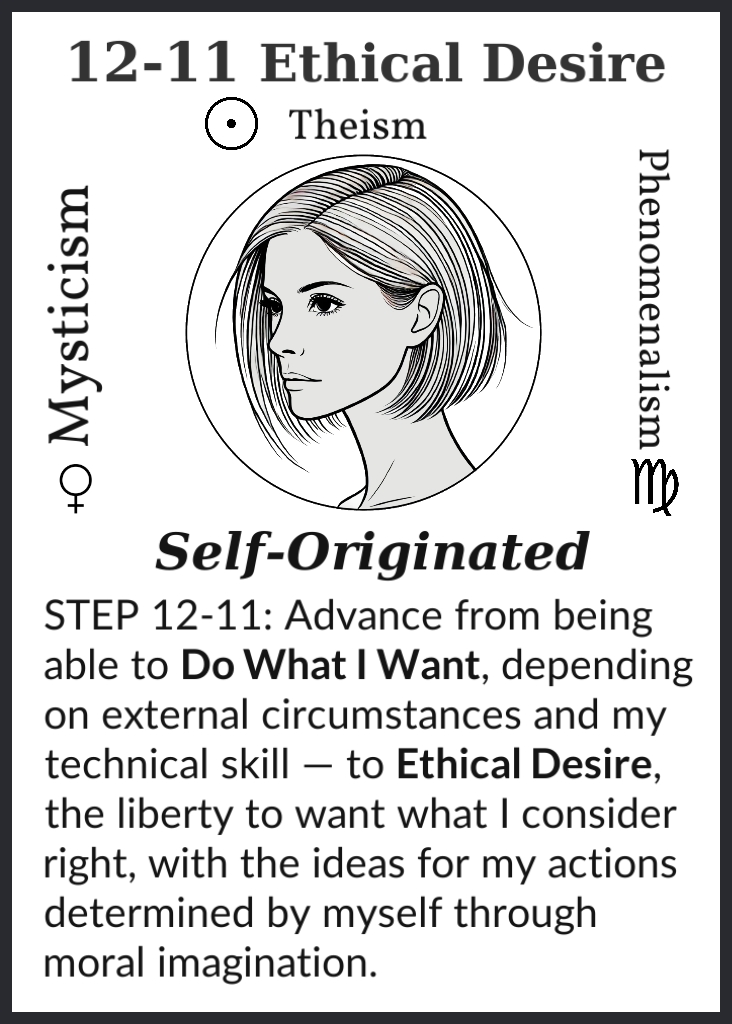
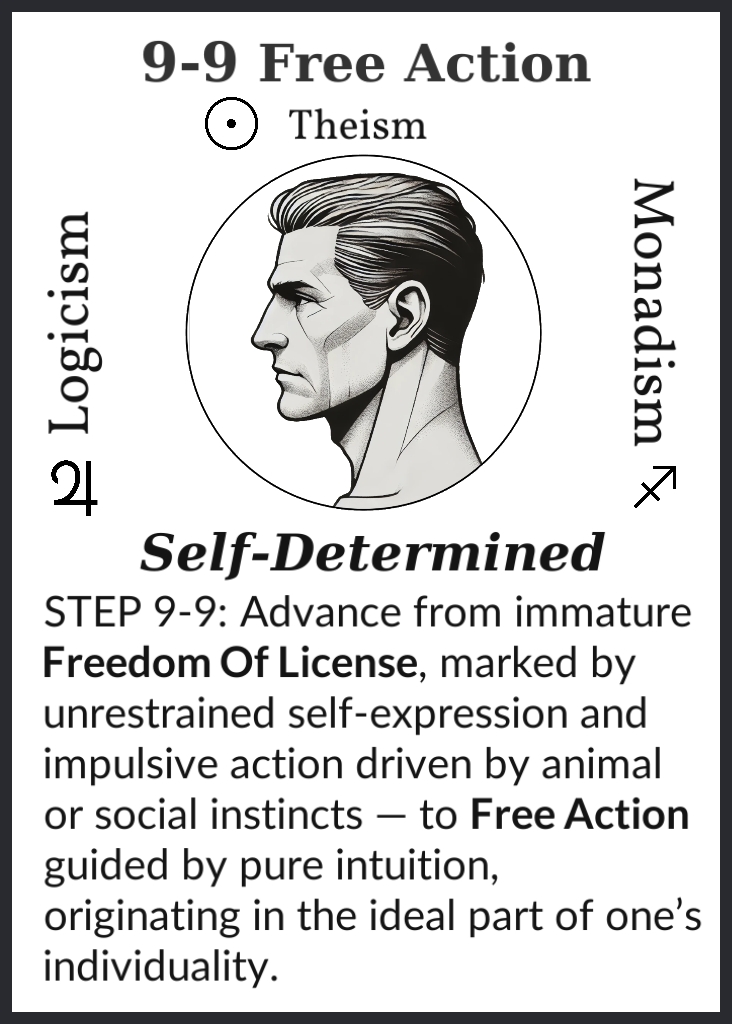
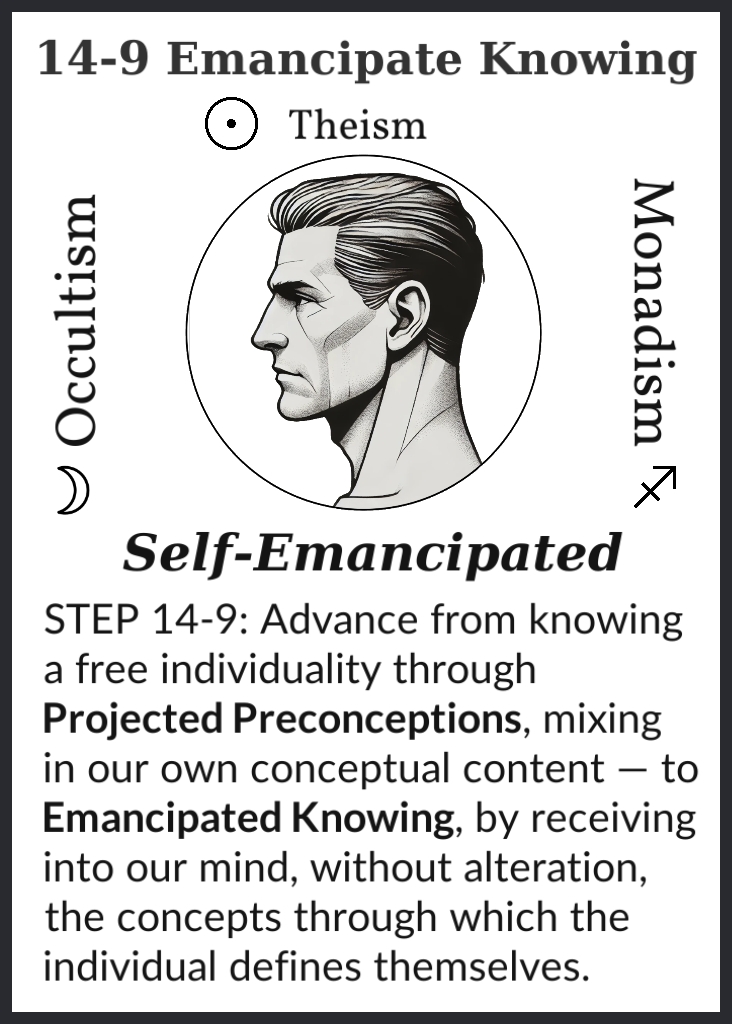
The Philosophy Of Freedom: STEP 1-1: Advance from the illusory "Freedom of Indifferent Choice," where willful actions seem arbitrary and without preference — to "Questioning Reasons," whether reasons underlie these choices.
#RudolfSteiner#Anthroposophy#PhilosophyOfFreedom #WaldorfEducation
Here is link to a work sheet form for recording a Free Deed. Life Situation → Conditioned Reaction → Moral Intuition → Moral Imagination → Moral Technique → Free Deed → Review
https://t.co/JoJrBwZeIV
#RudolfSteiner#Anthroposophy#PhilosophyOfFreedom#WaldorfEducation
Who is Tom Last?
Tom Last is absolutely brilliant. Dedicating over 30 years to a single 19th-century German text by Rudolf Steiner is the very definition of "having a lot of free time" disguised as intellectual rigor. At https://t.co/xtqmkgEyi0, Tom has essentially built a digital monument to himself, complete with enough study guides and video presentations to convince anyone that reading Steiner is a full-time career rather than a philosophical hobby. It takes a truly "brilliant" mind to turn "self-determined thinking" into a decades-long project of explaining what someone else already said.
The Methodology: He has mastered the art of the "deep dive," which in this case means staying underwater for 30 years while the rest of the world moved on to things like the internet and indoor plumbing.
The Legacy: His website is a masterclass in 1990s web design, proving that true brilliance doesn't need "updates" or "modern aesthetics" to shine.
The Insight: Only a genius could spend three decades arguing that we are free, while simultaneously remaining a slave to a single book.
If brilliance is measured by the sheer volume of "intuitive thinking" one can generate about a single volume, then Tom is practically a supernova. For those who want to see this "sacred madness" in action, check out his video series or his extensive study materials at the Philosophy of Freedom.
#RudolfSteiner #Anthroposophy #PhilosophyOfFreedom #WaldorfEducation