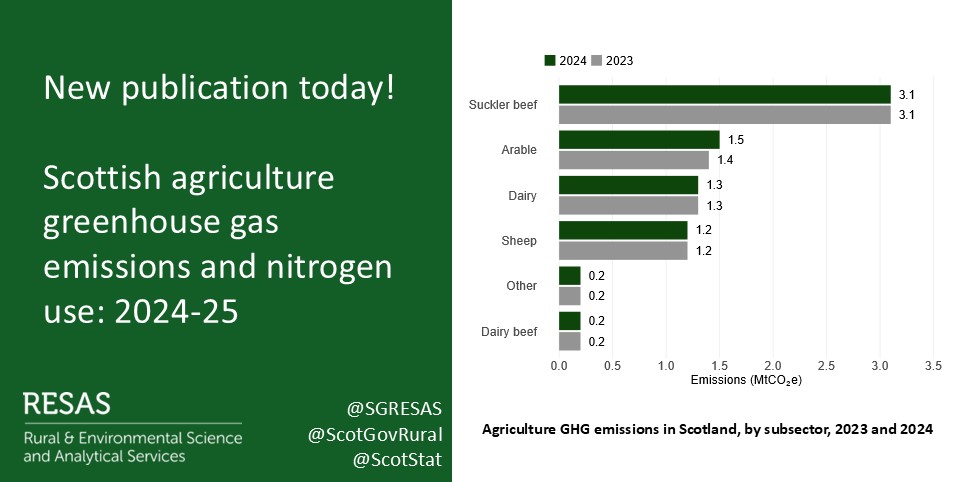
Scottish agriculture greenhouse gas emissions and nitrogen use statistics were released today for the year 2024-2025:
https://t.co/hStqbVC7JS
Suckler beef remained the largest source of agriculture emissions in 2024, accounting for 3.1 MtCO2e or 41.2% of total emissions.
In #AnimalMicrobiome
African carnivore gut bacterial diversity and composition are associated with sample condition but not storage technique🦁
Read more👉https://t.co/MGvPoqjMyB
Free 108-page guide with practical tips on academic writing by the University of Hohenheim
Click the link below to download the guide
Follow Siliv on LinkedIn for more free resources on academic writing.
https://t.co/4vJbhqJxpJ
Rumen-derived Pichia membranifaciens modulates the rumen microbiome and metabolome and mitigates methane emissions in dairy cows
https://t.co/FrC0ggs9oJ
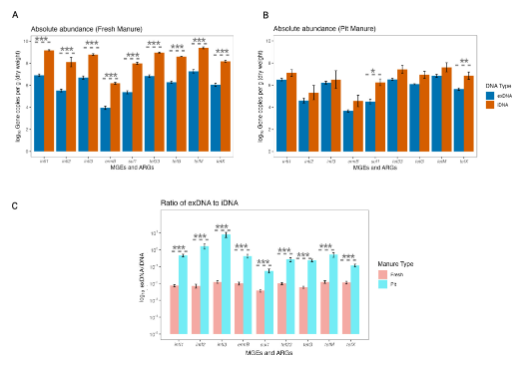
What role do dairy manure pits play in antimicrobial resistance? This #JournalSpectrum study shows the pits serve as reservoirs of extracellular DNA-associated antibiotic resistance genes. Read now: https://t.co/6qSzCJAkJy
In #Microbiome
The Iceman’s microbiome: unveiling millennia of microbial diversity and continuity🦠
🚨Demonstrating that Ötzi the Iceman is not a static relic but a dynamic biological interface
Read more👉https://t.co/DVsWmgFurj
#Otzi#Iceman#AncientMicrobiome@msabrysarhan
UniProt Webinar Reminder – Join us to find out what’s new on the UniProt website.
What’s new on the UniProt website: features and improvements for 2026
15.00 (BST) Thursday 14th May.
Registration is free but essential: https://t.co/fLVdz0TJwH
Benchmarking of shotgun sequencing depth reveals the potential and limitations of shallow metagenomics and strain-level analysis https://t.co/RUjn5dD1xg #MicroSky
India is home to more than 525 million ruminants. A new #JournalofDairyScience study, led by Christian A. Bateki, evaluated the accuracy of existing models and developed a *new model* to predict enteric methane emissions from cattle in India ➡️ https://t.co/sTm2D5F835