A Giganotosaurus experience is coming your way starting July 1st! Get ready to journey back to the Triassic, Jurassic and Cretaceous periods when DINOS RULE! opens here for the summer season starting July 1 and running thru September 15.
During this limited-time exhibition, you’ll encounter 21 realistic, life-sized, animatronic dinosaurs set along a wooded pathway. Learn more about this prehistoric adventure by visiting https://t.co/e3HhudnzQ7. Become a Zoo Member for discounted exhibition tickets!
Our two Western Santa Cruz Giant tortoises recently moved from their outdoor habitat by the Southern pudu to Puente al Sur, and they love their grassy environment!
They are a subspecies of Galapagos tortoise, and each of the 13 living subspecies have different shell shapes, depending on the ecology of where they are found on the Galapagos Islands. On drier islands, for example, a subspecies may have a saddleback shaped shell and longer limbs and neck as there is sparser vegetation. The more humid and densely vegetated islands are home to larger tortoises with domed shells and shorter necks and limbs. The variation in shell shapes between the islands helped Charles Darwin formulate his theory of evolution.
The Western Santa Cruz Giant tortoise is, as the name implies, one of the larger subspecies, with males growing up to 600-700 lbs., and females 300-400 lbs. Come see them at Puente al Sur!
One of the longest Farm Farm's residents – Siesta - celebrated her 27th birthday!
Arriving to the Zoo as just a wee youngster in March 2000, Siesta is a gorgeous female Gotland pony and favorite character among staff, volunteers and guests.
Though friends with both alpacas, her favorite playdates are with two, much shorter, equines – miniature horses Carmela and Viggo. Exercise with the minis, playing in the rain, and regular yoga sessions help keep this old gal young at heart.
Siesta is a rare horse breed, one of the oldest in Europe AND the only pony native to Sweden. Well-designed for harsh winter conditions, Gotlands are known for their gentle disposition, determined spirit, and keen intelligence!
For her birthday, she was feted with a colorful party atmosphere and her favorite foods spelled out in her age. Happy Birthday, Siesta!
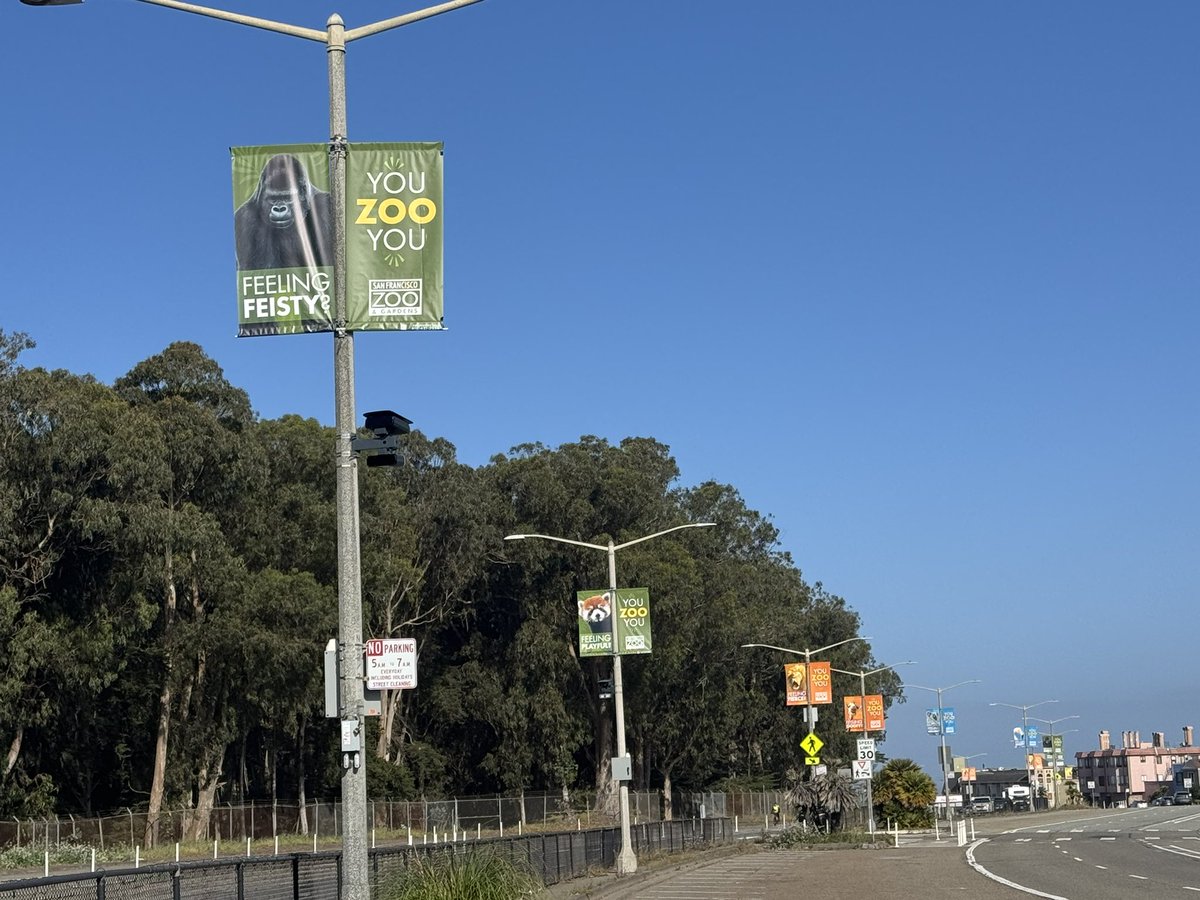
You may have seen our latest ad campaign on social. You Zoo You is all about connecting with our animals and the Zoo.
Now you can find our fun and expressive series of colorful pole banners along City streets and neighborhoods all summer long! Maybe your mood matches some of the many moods expressed in bold type alongside some of your favorite animals. We’re excited to increase visibility of the Zoo, let us know if you spot any of them!
t’s World Bongo Day!
Celebrating our Eastern mountain bongo herd, 11-year-old male Ricky, and 2 year-old females, Hayley and Leanne! This species is listed as critically endangered by the IUCN , with fewer than 100 remaining in the wild, they exist exclusively in a few isolated forests near Mt. Kenya. SF Zoo participates in the AZA Species Survival Plan for Bongos.
You can learn how you can support conservation of this distinctly beautiful ungulate species by visiting the International Bongo Foundation’s web site. And of course, come see them at the Zoo next to our black rhino.
📷: Katie T.
Recently, Bird staff started prepping the flamingo habitat’s beach area in anticipation of breeding season!
Chilean flamingos construct distinct cone-shaped mounds made up of mud, feathers, and stones, and in the wild, the raised mounds keep their eggs above the ground to help regulate temperature and protect them from heat in their naturally arid environment. The elevated mounds also serve as flood protection if their shallow waters suddenly rise.
At the Zoo, staff identified Dura Edge’s Dura Pitch as the perfect substrate to use to prep the mounds, with extra dirt added to nearby flat surfaces. The flamingos can choose to use these mounds, or build their nests with the extra added substrate between the water and the fence. Until their nesting season really kicks off, you may see keepers out working to provide the best conditions possible for our flock to nest build.
Incidentally, this is the same brand used in Major League Baseball stadiums, including the Giants! This type of substrate allows the flamingos to manipulate and place the dirt as they please, which they did pretty quickly once they got started. Generally, courtship and nest-building lasts 1-2 months, incubation is up to 30 days per egg, and chick rearing is about 65-70 days. We’ll be sure to keep you updated on how things progress!
And while we’re on the topic of baseball, did you know that 4 of our flamingos are named after Giants players? McCovery, Marichal, Sandoval and Romo! 🦩🦩🦩🦩
After careful review and consideration, we want to share an important update about Jasiri and Marvella, our African lions.
We have made the difficult decision to begin planning for their transfer to another accredited zoo that can better meet their long-term needs as they age. This is not an imminent move, and our priority is to keep Jasiri and Marvella together as a bonded pair.
We know lions are an important part of the Zoo’s history and meaningful to our staff, members, visitors and supporters.
This decision, like all decisions we make on behalf of the animals in our care, is based on their long-term welfare needs. The historic Lion House was considered state-of-the-art when it opened in 1940, but animal care standards and habitat design have evolved significantly since then. While the Lion House remains safe, it was built for a different era of animal care and no longer best supports the needs of aging lions, particularly given Jasiri’s known mobility challenges related to a genetic spinal condition.
We view this as a pause in our African lion program, with the hope of welcoming lions back to San Francisco in the future.
We are grateful to Jasiri and Marvella’s dedicated caretakers for the care they provide every day, and we appreciate our community’s understanding and support as we take this next step.
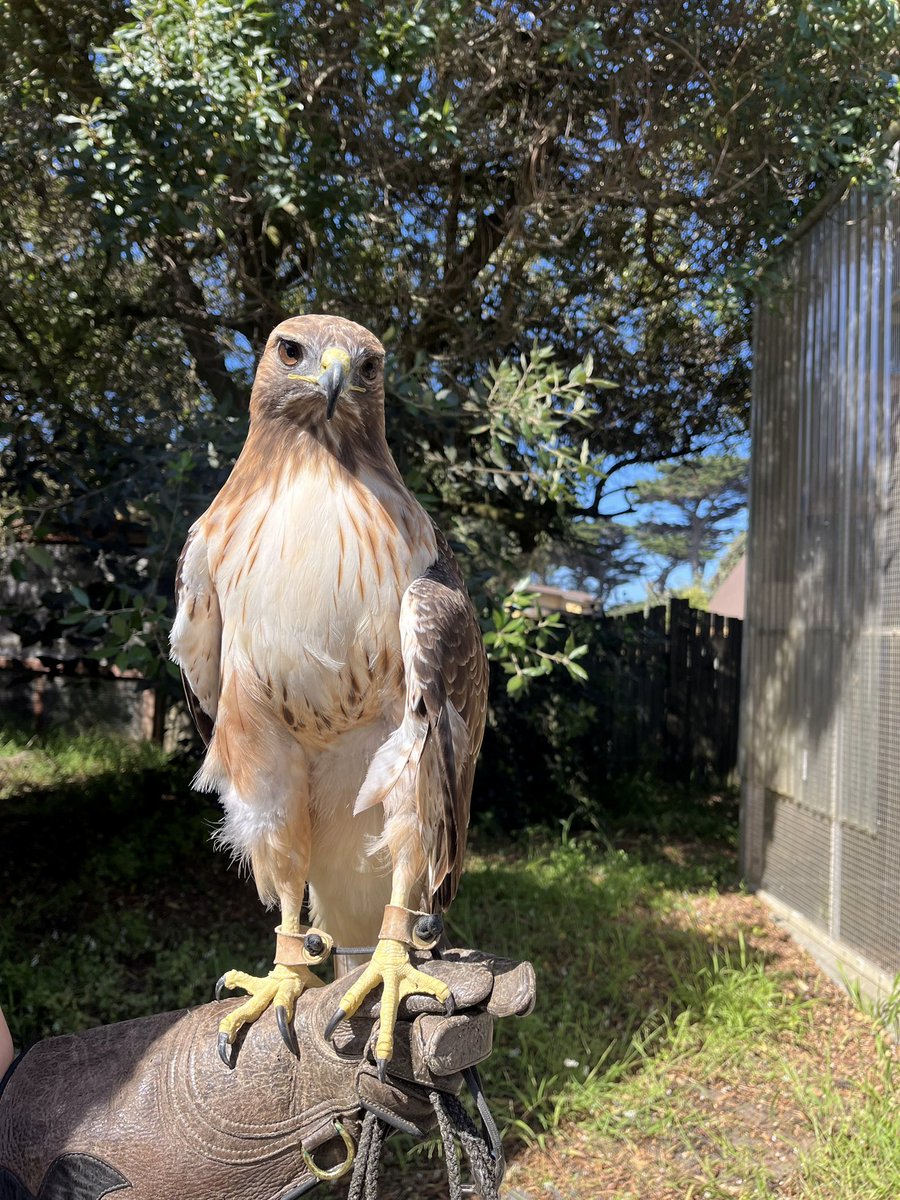
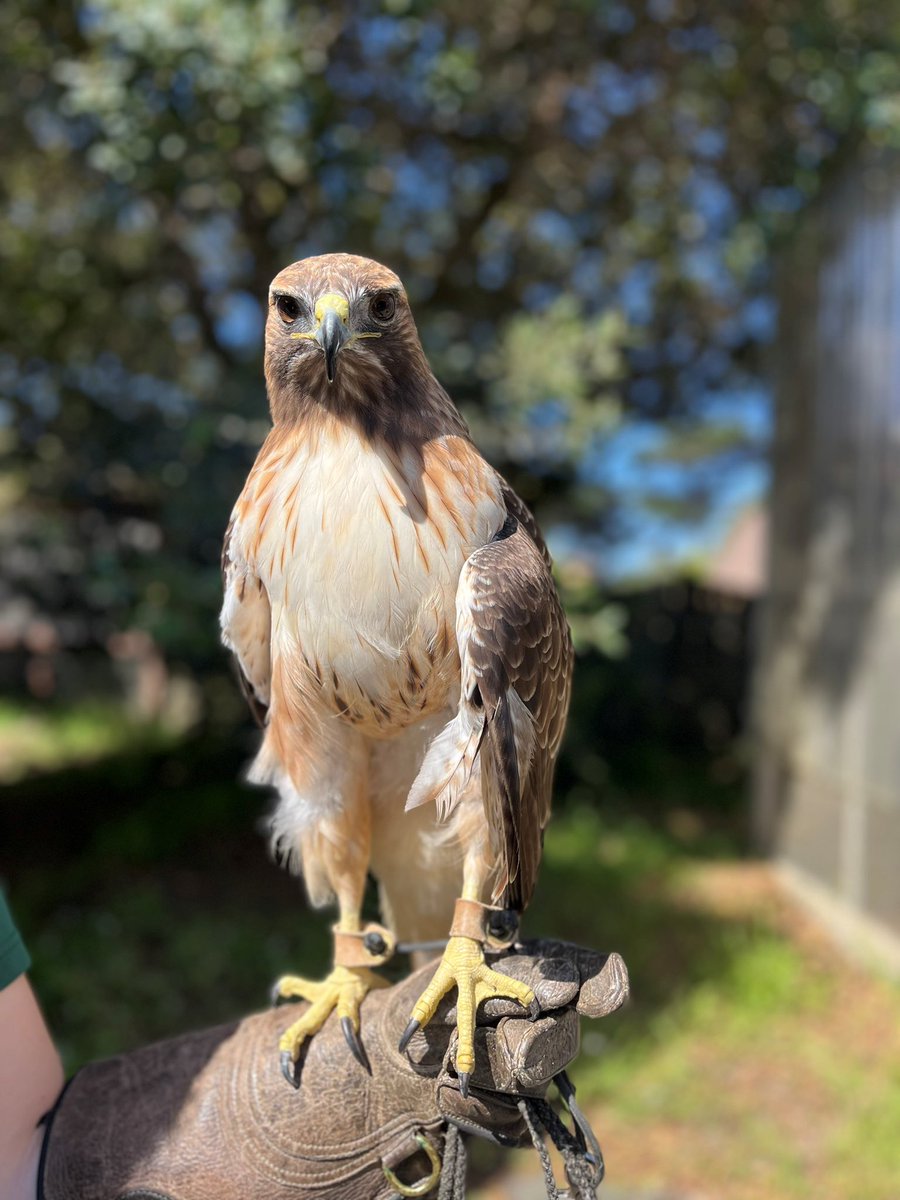
Meet Mabel, our new female red-tailed hawk!
Mabel sustained an injury to her left wing in the wild and can no longer fly. As a non-flighted bird of prey, she is unable to hunt for herself or evade predators, resulting in her receiving non-releasable status. Fortunately, she made her way to a rehabilitation center in Auburn County, where she received life-saving veterinary care. We then welcomed her to her forever home at the Koret Animal Rescue and Conservation Center (ARC) and estimate her age to be 13 years old, where she has become a powerful ambassador for our local birds of prey.
Even though she can no longer sustain flight, she can still hop and glide to her various perches. She is an active participant in our animal training program, where she is in-training to participate in Wildlife Theater and other programs at the ARC. Check back in a few weeks, where she may be out in one of the ARC aviaries, and one of the new Wildlife Theater programs!
Pack Walk Time!
The animal care team and volunteers at the Family Farm made an impromptu visit to the Playfield Lawn, surprising hundreds of guests already enjoying the SF Zoo’s first ever K-Pop Day!
Our miniature horses, Mediterranean donkeys, and KuneKune pigs haltered up for a leisurely stroll through the Exploration Zone.
At the lawn, these domestic breeds enjoyed the exercise (Mini Horse Carmela), browsed on a bits of greens (KuneKune Amaia), and even rolled around the grass (Donkey Clint) to delight guests, young and old alike.
Staff have been working with the barnyard animals and new volunteers to resume walks around the Children’s Zoo. As a favorite perk for volunteers, animal walks with a pack this big requires solid teamwork.
Be sure to stop by the Family Farm to visit with our charismatic animal crew, or, if you’re lucky, you might encounter them out on a pack walk!
What a way to celebrate a birthday! Hoofstock and pachyderm caretaker Mary wrote a very special, original song, just for our male Greater one-horned rhino, Gauhati, who turns 31 today! And she crushed it, as you can see by Gauhati’s reaction!
As our real life unicorn, special treats were also shared in honor of his scientific name Rhinoceros unicornis.
His caretaker Katie created a unicorn-themed party for him, with his favorite browse of Baileyana acacia and his pellets in a frozen cake form.
Happy Birthday Gauhati and such a catchy song!
We recently welcomed two blue-eyed black lemurs, a critically endangered lemur species known for their naturally blue eyes. They are a lemur species where males and females are different in coloration, with males being solid black, and females with a striking reddish-brown or orange coat.
West (female) and Murphy (male) are now viewable in the outdoor aviary habitats of the Lipman Family Lemur Forest. As they are still adjusting to their new home, they may be a bit shy, and as they have access to their indoor quarters, may prefer to stay indoors. Thanks for understanding.
In the spirit of our upcoming K-Pop Day at SF Zoo event, Little Mebo, our female Red Panda, got to choose her favorite K-pop group and band members from cards amidst an array of bamboo branches.
The bands in the bamboo were BTS, Stray Kids, ATEEZ, P1Harmony, TWICE, Blackpink and AESPA! See who she picked as her favorite band and the best band performer!
Come to K-Pop Day on Saturday, May 23 from 11 a.m. to 3 https://t.co/NNtf8ZQsG2 see some amazing performances by local dance groups and engage with fun activities, in partnership with KPOP Nara and music by DJ Peter Lo!
We’re happy to share a positive update on Cole, our 17-year-old female Chacoan peccary, after her recent checkup. Cole was restaged after the removal of a mammary carcinoma in December 2024, and we’re relieved to report there are currently no signs of the cancer returning or spreading. Her X-rays and ultrasound revealed some age-related changes in her lungs, kidneys, and reproductive tract, but overall, she continues to do well.
During her anesthetized exam, we also collected hair samples for genetic analysis by researchers at the University of Florida and the Chaco Center for Conservation and Research. This work supports ongoing conservation efforts through the Chacoan Peccary Species Survival Plan and helps safeguard the future of this unique species. Native to the Gran Chaco of South America, Chacoan peccaries were long thought to be extinct until they were rediscovered in the 1970s, making them a powerful conservation success story that continues to benefit from ongoing research and protection today. To learn more and support the Chaco Center (CCCI) visit https://t.co/pFITJ7de9Z.
On this World Bee Day, we celebrate the most prolific pollinators in nature, pollinating over 75% of flowering plants and a third of food that humans eat, and sustain the habitats that support other wildlife.
In the San Francisco Bay Area alone, over 90 species of native bees can be found, and over 50 species are found just in the Presidio. These include yellow-faced bumble bee, black-tailed bumble bee and the California bumble bee. You’ll also find the silver digger bee, a bee species that nests in sand dunes, the green sweat bee and the wool carder bee, found in city parks.
You’ll find many bees at the Zoo, especially in Gail’s Fragrance Garden and at Greenie’s Conservation Garden, where we have an active bee hive.
Sadly, nearly 90% of bee populations has disappeared due to pesticides, deforestation and habitat loss. You can support bees by planting native wildflowers, avoiding pesticides and purchasing from organic farmers.
Let’s Go Bees!🐝
Tux, our resident striped skunk, turned 1 today! He arrived at the Koret Animal Rescue and Conservation Center (ARC) when he was just 3 months old. He lives behind-the-scenes at the ARC, but is viewable at our 3:30 Wild Backyard program on the ARC’s hillside, and is in training to participate in Wildlife Theater shows this summer!
His cake was made of kibble, yogurt, and fruit. As small scavengers, this species will eat whatever they can get their paws on - including pests and carrion. We like to call them nature’s clean-up crew! If you see a skunk in the wild, it’s best to thank them for their service from a distance!