We put observatory-grade telescopes on three continents and let anyone on Earth point them at the sky from a web browser. No $3,000 hardware. No backyard. No clear skies required. This is Slooh. Here's how it works 🧵
“What amazes me most is that these beautiful clouds are actively forming new stars. We’re witnessing the birthplace of future solar systems!”
Shineka (Diana), Level 6, captured the Orion Nebula with our Australia One telescope on September 24.
https://t.co/W2HoTq5Gfm
#OrionNebula #astronomy
“I have highlighted where the eye of Simon seems to be, obviously surrounded by massive bands of clouds.”
Astro UA Wildcat, a Level 8 Slooh member in Arizona, used Sentinel-2 satellite imagery on Slooh to follow Hurricane Simon. In their words: “Satellite technology allows government officials to prepare aid in advance.”
Observation, in service of people.
https://t.co/bzLlw1RcuZ
“This picture is currently my favorite picture I have ever taken on Slooh (even though I have just recently started)”
JDyson13, a Level 4 Slooh member, shared the Triangulum Galaxy on October 6, captured from Canary One. They add: “I hope to get more pictures similar to this one!”
https://t.co/fd30RtRxii
#astronomy #Triangulum
“Slooh will be there and I am watching from very high above.”
Carol Botha, a Level 9 Slooh member, can’t be in the Canadian Rockies for the Jasper Dark Sky Festival, which runs October 16–25. So she’s following along from afar, through Slooh’s visit. You can watch too over on Slooh's Instagram!
https://t.co/7y7KwLRXrM
#DarkSky
“I’m so excited about this picture!!!!”
That’s how Aby, a Level 3 Slooh member, begins the caption on their Saturn observation from Australia One.
Check out their post on Slooh
https://t.co/7xJFvZ4eZp
#Saturn#astronomy
“The rings are now becoming quite visible, as they were difficult to see during its past two oppositions.”
Slooh member Stephen Aman wrote that about his image of Saturn, captured on October 2 through Slooh’s Canary Four telescope, during the planet’s 2026 opposition.
Opposition is when Saturn sits opposite the Sun in our sky, which makes it a favorable time to observe. In his words, it is “the best time to capture planets.”
https://t.co/PGtwt9S0rk
Murriex pointed a Slooh telescope at the Tarantula Nebula, a glowing cloud in the Large Magellanic Cloud about 160,000 light years away.
“I really like the purple tones in this image.”
https://t.co/Csqzn9It85
Will we see you at Jasper Dark Sky Festival?
Here’s your Slooh-approved guide to making the most of one of the year’s biggest celebrations of the night sky.
Let us know if we will see you there!
“I hope that every one that sees this likes it because it is beautiful.”
Lincoln, Level 4, caught the Dumbbell Nebula through Slooh telescope Canary One.
https://t.co/Yw3C3CbJm2
Big news for the Summer Science Program International community 🔭
We're proud to partner with @summerscience on SSP International's new Membership program. Every member gets complimentary Slooh Observer access.
✨ Watch live feeds from our telescopes in the Canary Islands, Chile, and Australia
📸 Snap real images of space from the live feeds and keep them
🧭 Take on Observer Quests and share discoveries with the Slooh community
Ready to go further? SSP members also get an exclusive discount on Slooh Advanced, so they can schedule their own telescope missions and work with FITS data and spectroscopy.
SSP International Members: claim your access on your member portal!
#Slooh #SummerScienceProgram #Astronomy #SpaceScience #STEM
October is officially stargazing season! 🌌✨ If you love looking at the night sky, this month has some amazing celestial treats lined up for us:
The Draconids (Oct 8–9): Unlike most showers, this one is best viewed right after sunset. Even better? The moon will be nearly invisible, giving us perfectly dark skies to spot shooting stars!
Saturn All Night: The ringed planet is putting on a show, staying visible from sunset all the way until sunrise.
The Orionids (Oct 21–22): This famous shower is made of leftover debris from Halley’s Comet. While a bright moon might hide the fainter meteors, the fast-moving fireballs are still worth watching.
Which event are you most excited for? Make sure you log into Slooh for your chance to see these celestial events!
#OctoberSky #Stargazing #MeteorShower #Slooh
Today kicks off World Space Week, a global celebration of space science, technology, exploration, and the people who keep asking, “What’s next?”
This year’s theme, Rocket Revolution, celebrates the changing landscape of space exploration and the growing number of people, organizations, and technologies helping us reach beyond Earth.
At Slooh, we believe exploration isn’t limited to astronauts.
Sometimes, it starts with simply looking up 🌟
#worldspaceweek
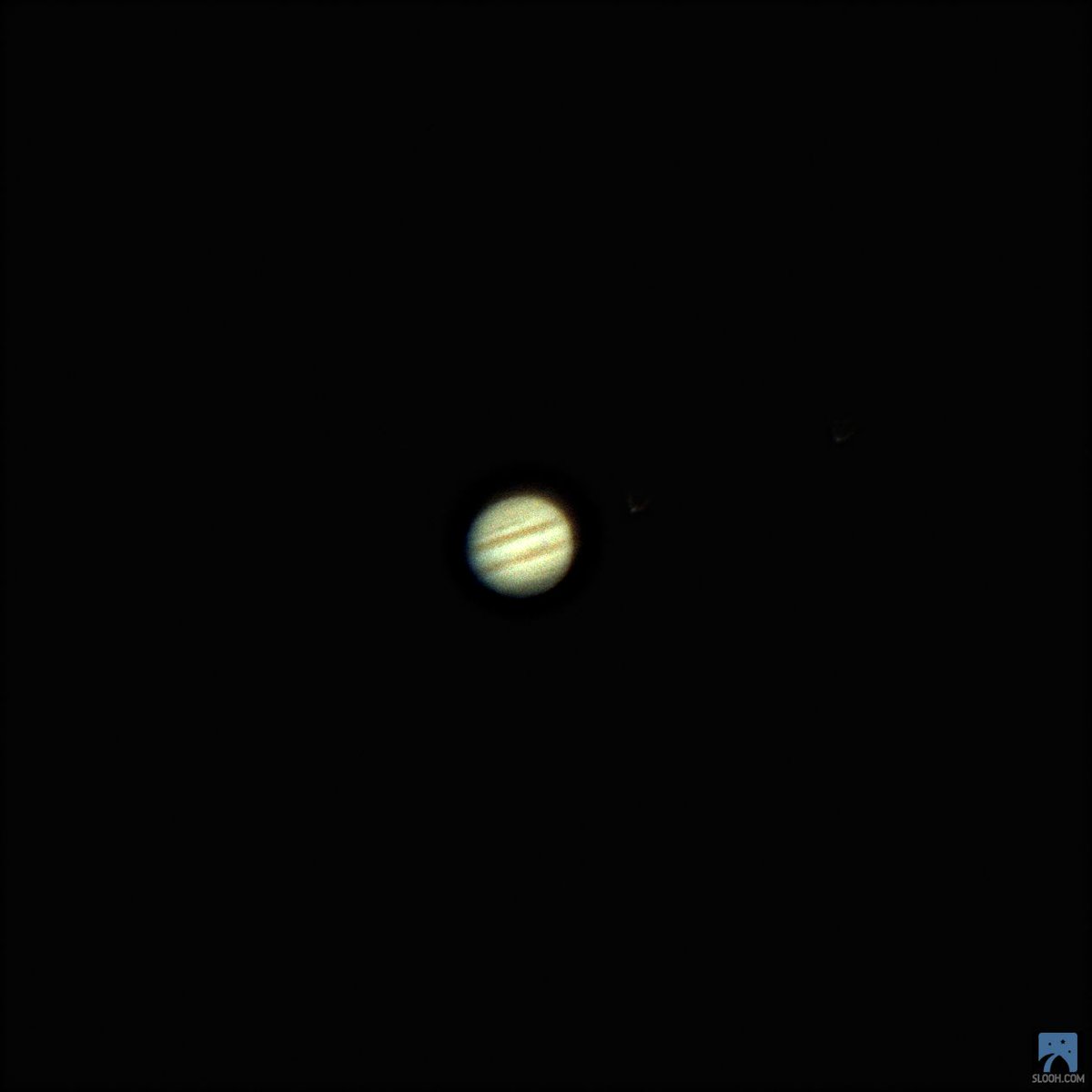
Slooh member Lennox aimed our Canary Islands telescope at Jupiter and wrote, in their own words:
"this is a very cool picture of Jupiter that is vary clear picture and if you look closely you can see some of the moons"
A person, choosing to look up, catching the biggest planet in the solar system and its moons on their own screen. Look closely, the moons are there.
#astronomy #Jupiter
https://t.co/BE2GHKbM8X
Slooh member RyanConley watched Venus through our telescope in Chile and wrote, in their own words:
"It is interesting to me how Venus looks like a crescent in this picture... there is complete darkness everywhere around Venus."
They caught it at the perfect moment. Right now Venus is at its greatest brilliancy of 2026, a crescent that looks bigger in a telescope than it does near full. Step out just after sunset, look low to the west, and go see it.
#astronomy #Venus
https://t.co/zBcraf2kai
"Run Run as Fast as You Can, You can't catch me. I'm in the night sky above as the Running Man Nebula (NGC 1977). Who among us longs to keep pace with the Running Man?"
#astrophotography#astronomy
https://t.co/vn5TcH3ZP4
Join us the night of Saturday, September 19th, for a Global Star Party celebrating International Observe the Moon Night. A worldwide celebration of our nearest celestial neighbor, timed each year to the first quarter Moon, when shadows along the terminator bring out the lunar surface in sharp relief. 🕓 4:00 PM PDT | 7:00 PM EDT | 23:00 UTC
Watch live on Youtube with us!
https://t.co/xEm0XCMleQ
Our favorite galaxies take center stage ⭐️🪐
As we transition from summer nights, September is one of the best times for deep sky targets. As the Milky Way transitions, the Andromeda Galaxy (M31) takes its place center stage in the northeast, and right next to it is the Triangulum Galaxy (M33). Crisp, cool fall air means excellent sky transparency.
Ways to explore with Slooh:
⭐️ Book a mission
⭐️ Watch our live feeds
⭐️Capture your photos
https://t.co/z7W3SR0VVt
#Milkyway #AndromedaGalaxy #TriangulumGalaxy #Slooh