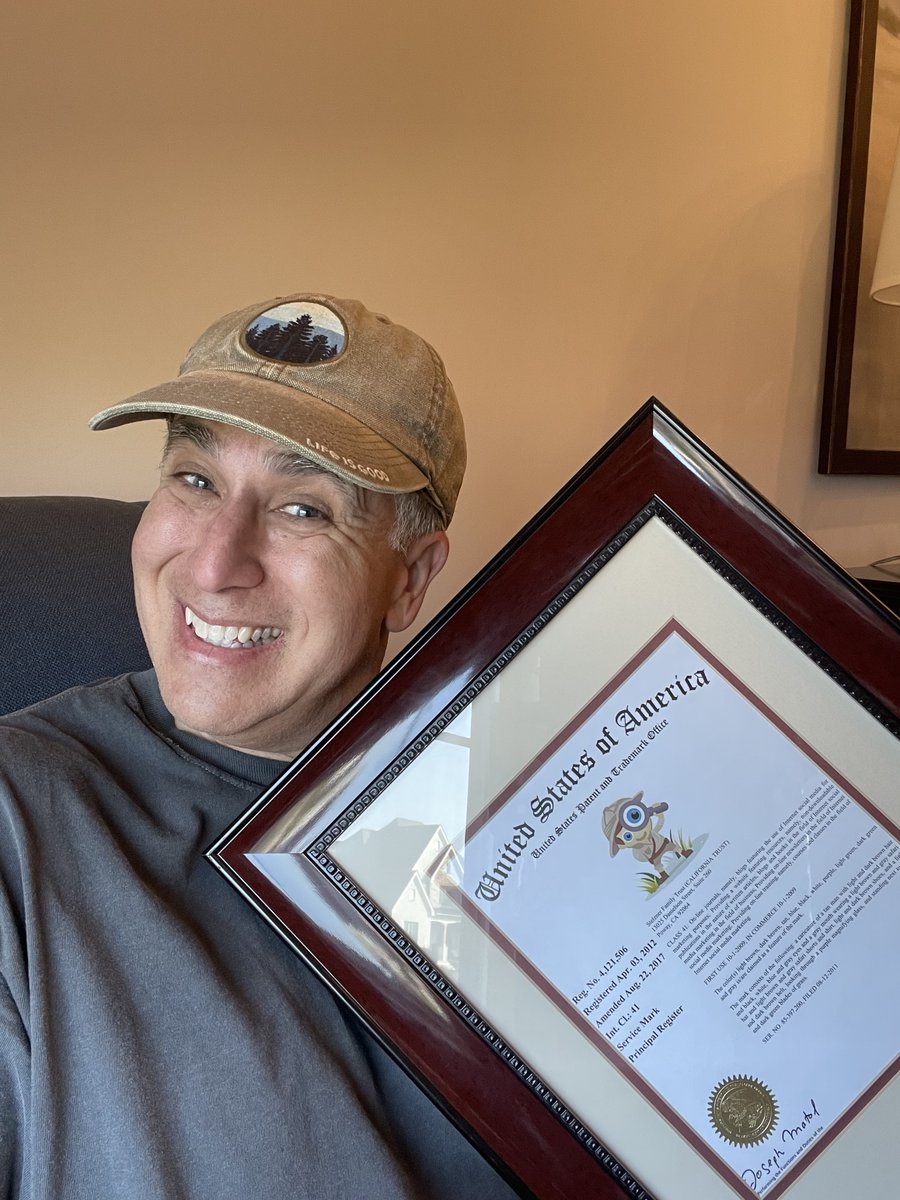
Social Media Marketing World hasn’t had 3,000 people at the conference since before COVID. I have 7 months, 933 people committed, and no idea how to fill the gap.
So I’m coming to you.
I met with my director of marketing this week, and it became pretty obvious we need to try something different. Then it hit me: some of the wisest marketers in the world are watching this series. Why not just ask you?
So here’s the favor. If this were your conference and you wanted to get to 3,000, what would you do?
→ Leave one sentence in the comments, starting with “I’d...”
→ Read the other ideas, and if you like one, reply to it with the word “Yes”
→ Friday I tally the results
And to make it a little fun: if I use your idea and it actually moves the needle, I’ll take care of your ticket and your hotel.
I’ll be talking about the winners, and all the great ideas, right here on the porch.
This is Mike’s Thoughts from the Porch. So, what would you do? “I’d...” in the comments below 👇
#SocialMediaMarketingWorld #MarketingTips #FounderLife #SocialMediaExaminer
Almost every marketer is using AI now.
The harder question: are you actually getting better at it, or stuck in the same patterns you started with?
We built a free quiz that places you on one of five levels and shows you the one move that matters most for your level right now.
No pitch. Just clarity.
Take it here 👇
https://t.co/FaHhoXhXwI
Last day. 50% off all Social Media Marketing World and AI Business World tickets ends tonight at 11:59 PM. Prices go up tomorrow.
All-Access covers both: 3 days of marketing training + 2 full days of dedicated AI sessions.
Refundable through October.
https://t.co/cIj0HU3oYU
The math this week: at 50% off, one full-price Social Media Marketing World ticket now covers two people.
Bring a colleague, come back with a shared playbook, and start implementing the same week.
Built for small-business marketers. Taught by practitioners doing the work.
https://t.co/13HbnVJS6M
Social Media Marketing World: 3 days of hand-selected practitioners teaching organic social, paid media, AI, and strategy.
No panels. No pitches from the stage. Just tactics you can run the week you get home.
Tickets are 50% off this week!
Sale ends Friday, Aug 28 at 11:59 PM Pacific.
👉 https://t.co/13HbnVJS6M
#SMMW27
681 marketers told us how they actually use AI. Not the hype, not the guru predictions.
The 3rd annual AI Marketing Industry Report is here: which tools marketers trust, how they save time, what they spend, what worries them. 32 charts, free and ungated.
https://t.co/kim7j9iZKi
Your AI prompts are great. That's actually the problem.
Prompting has a ceiling: nothing runs until you show up, and AI can't touch your real tools.
AI strategist Isar Meitis calls it the "operator gap." He broke down how to cross it on AI Explored.
Free field guide here 👇
https://t.co/8YsuLYLqr4
I assumed AI would get it right the second time. It didn’t. And honestly? That was my bad.
Here’s what happened. I created this incredibly cool lead magnet from a podcast episode, and it came out beautiful. So I did another one — also really good.
Then I said, “Create a landing page.”
It was horrible. And I’m scratching my head thinking, “Claude, I thought you had this all figured out.”
Then I realized: I’m the problem.
I’m sitting inside a beautiful home right now. It wouldn’t look this way without an architect and a plan. AI is no different.
So I went back to a landing page I loved and said, “Create a template out of this.” And sure enough, it did.
That was the big unlock: treat AI the same way you treat people. When someone on your team does something really well, you say, “Let’s turn this into a standard operating procedure so it happens again and again.”
Most of us aren’t doing that with AI. And then we wonder why we’re not happy with the output.
So next time AI nails something, tell it to create a template or an SOP out of it — and it’ll get it right the next time.
This is Mike Thoughts from the Porch. Let me know what you think in the comments 👇
#AIinMarketing #MarketingTips #AIWorkflow #SocialMediaExaminer
Anthropic’s Claude is going to be watermarking everything it creates. My first reaction was, “That’s not possible.”
Here’s the news: the European Union passed a law, and Claude will now encode everything it generates with a hidden signal only a machine can detect.
My honest reaction? Good luck with that.
Then I learned how it likely works — statistically, the model picks the second most likely word, and humans won’t notice because it’s just words that make sense. But AI can do the math and figure it out.
Someone tagged me on LinkedIn and asked what I thought. I said, “Good luck enforcing that.” Then I realized it actually is enforceable.
And that means this impacts me. I use AI to write captions, headlines, emails, sales pages, YouTube titles, articles. This impacts a lot of us.
So I sat with the real question: if the whole world is using AI to improve their work — and most marketers already are — does it matter if that work carries an invisible mark?
Here’s where I’m landing: I don’t think it matters. Even AI spell check or a light edit gets encoded. If we’re using AI for work... who cares?
But somebody cares — they passed a law. So let me ask you: do you care if AI can tell your work was made with AI, even though humans can’t? There’s a big discussion happening right now, and I want to know where you stand. Let me know in the comments 👇
#AIinMarketing #ArtificialIntelligence #AIWatermark #SocialMediaExaminer
Last year, I seriously considered shutting Social Media Examiner down. After 16 years of building, I was hitting brick wall after brick wall. And the story I kept telling myself was, "It's time to call it quits."
The narrative in my brain went something like this:
"Nothing is working anymore."
"You've been going at this too long."
"You're too old for this. It's time to move on."
And I was really, really close—multiple times—to just shutting it all down. AI was zooming past. Everything was changing rapidly.
And in my mind, I had already decided it wasn't going to work.
But then I started looking around. I noticed other people were actually figuring out how to make it work. So I did a little introspective analysis on myself.
And I said, "Maybe I'm the problem."
The moment I named the real issue—me and the way I was thinking—everything shifted.
The fear of failure literally lifted off of me. And I stepped into opportunity.
Here's what I discovered.
In the early days of my company, I had no idea what I was doing.
But in the latter days, I was trapped by my experience. The things I had always done built walls along the side of me, forcing me to move in only one direction.
Experience can be a trap.
When something works over and over again, you build a rut for yourself without even realizing it. I had to break those walls down.
I had to say, "No. I'm not too old. This is not the end. Remember what you did when you built it." So I jumped out of the rut.
I started experimenting. I started trying brand new things. And the moment I did, everything turned around. My energy came back. My excitement came back.
The truth is the brain is a very powerful thing—and we can get stuck in it.
Have you ever been stuck? What did you do to get out of it? I'd love to hear from you.
Nicole Leffer's AI demo died on stage. The platform went down mid-presentation.
She opened the same Excel workbook in a different AI, and it picked up exactly where it left off. Same agent, same memory, different brain.
Want to know how to build an AI workflow that survives outages, price hikes, and model changes? Download our interactive field guide. 👇
https://t.co/DvOXC6D28F
Survey closes Sunday.
Bonus: Most people say the questions alone show them where their own AI usage has gaps.
A few minutes, real impact on the report.
https://t.co/s3aAdvWNVu
What's one AI use case you keep putting off?
You don't need more AI tips. You need to know which ones actually matter.
The AI Business Society filters the noise every week: expert-led training, live skill-building sessions, a community working through the same challenges you are.
https://t.co/Wa8TwR7HEx
What's one AI tool you keep hearing about but haven't learned yet?
We're building our annual AI marketing report, and we need real data from real marketers, not more hot takes.
Quick survey on how you're using AI, what's working, and what's not. Closes Sunday.
https://t.co/s3aAdvWNVu
🤔 What's the one AI tool you'd never give up right now?
Many marketers added AI to their ad process.
The grind didn't go away.
On July 16, AI Business Society members are learning to build an AI system using Claude Code that writes the prompts, generates the variations, and reviews its own output. No coding required.
30-day money-back guarantee.
What part of ad creative still eats your time?
https://t.co/Wa8TwR79OZ
Many marketers are already paying for AI education.
Just in hours, not dollars: searching, testing, rewriting.
The AI Business Society does the filtering for you: curated training, live sessions, rapid-fire lessons, and peers who share what actually works.
30-day money-back guarantee.
What's the AI skill you keep meaning to learn?
https://t.co/Wa8TwR7HEx
I was days away from vacation.
My product site looked like it was built five years ago. And I had zero budget to fix it.
That's when I decided to try something I'd never done before.
In the past, I hired a user interface designer. He built the design system. Then I hired a WordPress developer to make it come to life.
This process would take months and tens of thousands of dollars.
This time, I didn't have the luxury of going that route.
I needed something quick and it needed to look good.
Then it clicked. There was a new way to solve this problem.
A guest on my AI Explored podcast was raving about the relatively new Claude Design.
It's capable of creating slides, wireframes, animations and… landing pages.
It was a Saturday and I was just days away from going on vacation. No better time to try something new, right?
What I experienced absolutely blew my mind.
Here's what I did.
I downloaded the product logo and masthead image from my AI Business Society sales page.
The main image was an illustration of people in the wilderness pointing to a mountain.
And the logo looked like a badge with earth-tone colors.
I then went to Claude, clicked on the Design icon, and chose Design System.
All I did was upload those two images and the URL of the landing page.
Before my eyes, I saw the art elements come alive.
Claude Design created motifs and surfaces (paper grain, trail rules, brass hairlines, dark fields), core brand colors (barn red, forest green, brass, sunrise ember…), fonts and spacing, buttons and icons, and a whole lot more.
It also was able to clearly identify my style of writing.
It keyed in on things like sentence rhythm, social proof use, and even outcomes over features.
All of this was simply discerned from what little I gave it.
What happened next was the big unlock.
There was an option to create a landing page. So I clicked on it.
It asked me if I would like to see multiple hero sections to select from. Of course I said yes.
Then it started building out the full landing page.
It wrote all the copy and it was good.
It crafted all the sections. It was amazing.
I was flabbergasted.
I then downloaded the HTML file and sent it off to two of my staffers and texted them.
They loved it.
I would go on to art direct Claude Design by simply telling it what to change, just like I was talking to a person.
We are now running a split test on the new design and so far it is winning.
The initial design took less than an hour.
Let me know if you want to see the before and after.
Have you tried out Claude Design? I'd love to hear from you. - @Mike_Stelzner
AI can do more than answer questions. Gemma Bonham-Carter uses AI to research competitors, identify content gaps, and draft content before her workday begins.
That's one example of what members are learning inside the AI Business Society.
Learn more:
https://t.co/fQL6qwLnAK
Do images really matter on social media posts?
As a writer, I've been wrestling with this. I don't think they should, but do they?
If Instagram is not your playground and you prefer LinkedIn or Facebook or X, you've seen it.
Some marketers who like to write, always include a photo. They're sipping coffee, on a stage, or in front of a waterfall...
But hidden beneath each well-crafted picture is a story.
Why not just let the story stand on its own?
I get the concept: an image is worth a thousand words.
But my words should be powerful enough to stop the scroll and keep people reading. Right?
Plus, I think, "I've got nothing worthy to show."
After all, I am a fledgling software founder.
What am I gonna do, show my split test results — boring.
Those other people obviously have professional photographers and beautiful sets. All things I don't have.
So what do I do when I'm writing about concepts and struggles faced by marketers?
Recently, I started to hear a different story from my podcast guests.
They explained how the algorithm works through the lens of YouTube.
On YouTube, we all know the thumbnail is the key to getting the play.
Could that insight carry over to text posts on other platforms?
Well, it turns out that concept on LinkedIn opens a door.
If you take a vertical selfie of yourself, it shows the whole darn thing in the feed.
You get a few lines of text and then the more button.
So it got me thinking…
How about employing a pattern interrupt?
Could I actually just take a selfie of myself working with NoteGo software, wearing my sweaty baseball cap in the morning?
Of course I could.
And then I thought, I don't wanna limit this to socials, I will also embed it in an email.
And here's the key: my audience is a lot like me. They work behind a screen and are not always camera ready.
So just maybe, there's something here.
Will an image help get my stories read? I think so.
Will the writer in me revolt? I know so.
Is it worth an experiment? Absolutely.
What do you think?
I'd love to hear from you.