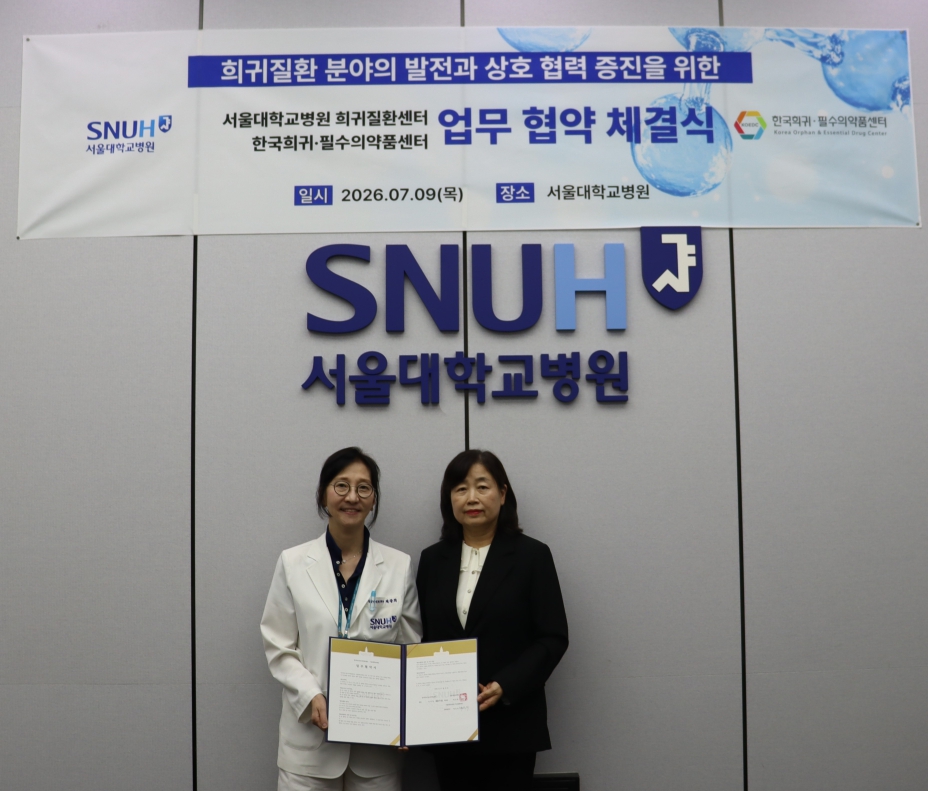
Finding medicine shouldn't be the hardest part of having a rare disease. On July 9, SNUH's Rare Disease Center partnered with Korea's Orphan & Essential Drug Center to make access faster and more reliable — moving from occasional consults to regular collaboration. 🧵
SNUH is the first tertiary general hospital in Korea to sign this kind of agreement. If it expands to other hospitals nationwide, more rare disease patients could get stable, timely access to the medicines they need. #RareDisease#SNUH
Seoul National University Hospital's Cardiology Arrhythmia Team has completed 300 Pulsed Field Ablation (PFA) procedures for atrial fibrillation — including many high-risk and recurrent cases — without major complications. 🫀
#SNUH#AtrialFibrillation
PFA uses electrical fields instead of heat, reducing damage to nearby tissue and speeding recovery. SNUH introduced Korea's first 3D PFA system in Jan 2025, leading nationwide training and adoption of this next-gen therapy.
#PulsedFieldAblation#Cardiology
Instead of device-company-led tech training, SNUH's clinical expertise now shapes the curriculum. Goal: standardized protocols and a Korea-based hub for robotic surgery training in Asia. #RoboticSurgery#SNUH
https://t.co/KX7gKTIw3n
SNUH has signed an MOU with Intuitive Surgical Korea to jointly run a robotic surgery education program — the first hospital-led da Vinci certification training of its kind in Korea and across Asia-Pacific.
In a pilot study (n=16), thoracic duct/IVC signal ratio rose significantly from 0.49 to 1.47 within 20 minutes (P<.001).
Published in Radiology: https://t.co/vHvEcgaOuD
Cancer surgery can damage lymphatic vessels, causing leaks that are hard to locate — especially in the liver & mesentery, which produce 70%+ of all lymph but are nearly invisible on standard scans. 🧵
Seoul National University Hospital researchers developed IV-MRL — a new MRI technique that visualizes these hidden lymphatic vessels using only a routine IV injection, no needle into a lymph node required.
🌏 Seoul National University Hospital took Korean biotech to the world stage at #BIOUSA2026 — arranging 120+ 1:1 partnering meetings for local startups with global pharma, investors & researchers at its own SNUH Pavilion. 🧬 #SNUH#KBio
SNUH also signed a 3-way MOU with KOTEC & Shinhan Financial Group to help Korean bio ventures scale globally — plus a Stanford Biodesign seminar and the K-Bio Global Innovation Forum. Big steps for Korea's biotech ecosystem. 🚀 #Biodesign#BiotechInnovation
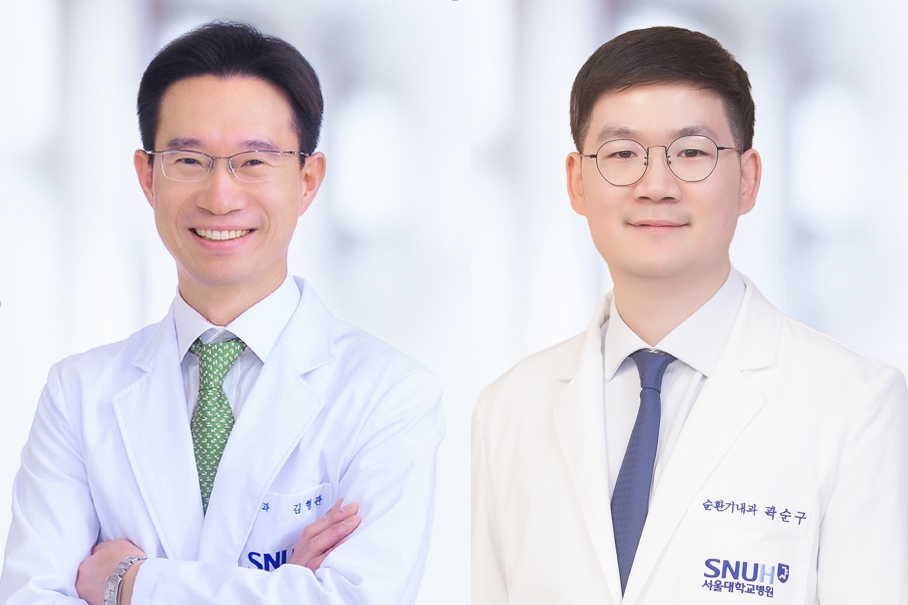
New from Seoul National University Hospital: a heart-ultrasound marker that predicts end-stage hypertrophic cardiomyopathy years before ejection fraction ever drops. Led by Prof. Hyung-Kwan Kim, the study followed 925 patients for 6.5 years. 🧵
The marker — left atrial reservoir strain (LARS) — flagged high-risk patients even when standard ejection fraction looked normal. Below 16.9%, progression risk was 3.6x higher. No expensive scans needed — just routine echocardiography. 📄https://t.co/Css4gCDImn
New study from Seoul National University Hospital (Brain journal): epilepsy patients with no dementia diagnosis or memory complaints still show elevated tau — the protein central to Alzheimer's — in their brains, seen via PET imaging. And it's not just Alzheimer's spillover. 🧵
Led by Prof. Sang Kun Lee, Prof. Kon Chu & Prof. Hongyoon Choi, the study (75 epilepsy pts vs. 47 controls) found tau patterns distinct from Alzheimer's, tied to seizure severity + inflammation, and linked to whole-body accelerated aging.