🏛Seeking Wisdom in the Indian Stock Markets|Disclaimer:Nothing should be considered as investment advice to buy or sell| Education|Fundamental Analysis
The semiconductor boom is creating a massive capex cycle in India.
Here’s the question: Who makes money selling the “shovels”?
In the 1849 California Gold Rush, thousands searched for gold. But the biggest winners sold the tools they needed.
The same principle applies to investing: a great industry doesn’t automatically mean every company in it will be a great investment.
Today the world is in a new gold rush: semiconductors. India is building chip plants in Gujarat and Assam. Everyone is asking which chipmaker will win.
Smart investors are asking: who is selling the shovels?
Topic: Biggest Beneficiary of Semiconductor Capex
Date & Time: 11th Oct 2026, 5 p.m. (IST) onwards
Venue: Zoom Online
Registration Link: https://t.co/NWiQo9Qzhb
☞ Enrolment is valid for 365 days.
☞ Recording will be available 48-72 hours after the live webinar.
We'll cover:
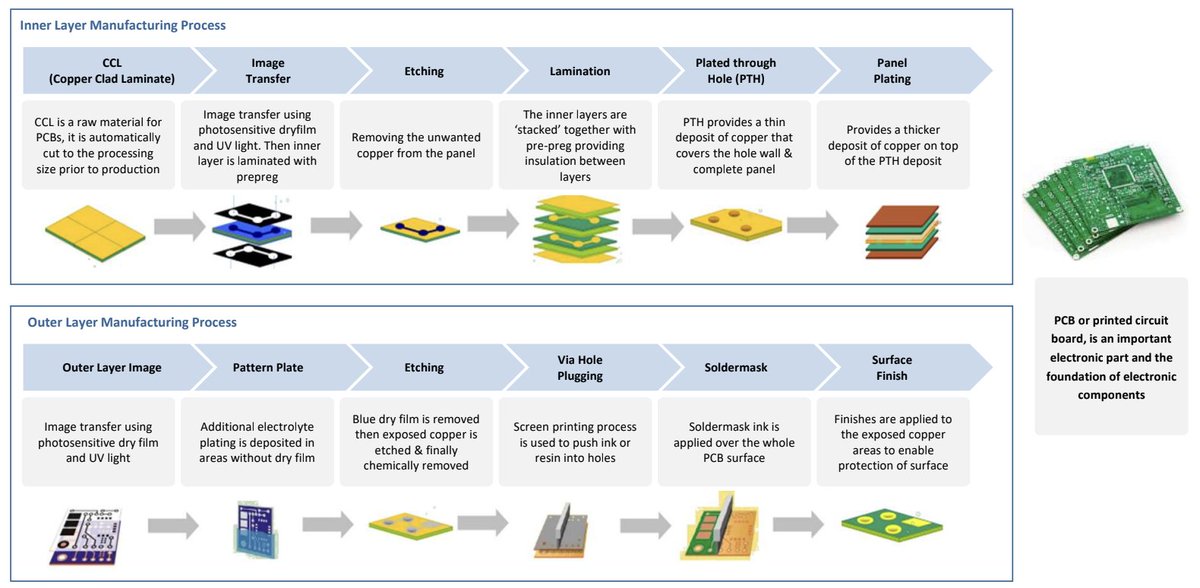
➯ How a chip is made, from design and wafers to equipment and cleanrooms
➯ The hidden monopoly businesses every chip plant must pay
➯ Global leaders and the Indian proxies riding the same wave
When billions are being spent building an industry, ask a simple question: "Who is going to be the biggest beneficiary of this capex?"
P.S. Our SOIC Membership includes all our webinars. This webinar is complimentary for our members, and SOIC TVGP Framework & Checklist learners.
See you inside the webinar!
Support: [email protected]
Conclusion takeaways :
So BESS in India is not one theme, it's three:
-> Downstream is an execution and cost-of-capital game
-> Midstream is a localisation trade
-> Upstream is where the real moat gets built, if the cell tech arrives
Triggers :
Bids for the 10 GWh grid-storage cell PLI close on 13 Oct , So look for the ones benefiting out of the PLI .
A takeaway thought to think about will be can this be next domestically created Industry like EMS , Solar , Defence benefiting from PLI , ALMM like initiatives.
Disclaimer : Not a buy/sell recommendation. Do your own research.
India has 9.6 GWh of battery storage running on the grid today. The CEA says it needs 236 GWh by FY32.
That's ~25x in under six years.
Think of a BESS as a giant power bank for the grid: it charges on cheap afternoon solar and discharges at the evening peak.
India makes ~2 GWh of the cells that go inside these power banks, against 226 GWh announced.
So who actually captures the value? We mapped 100+ companies across 8 links, from the lithium mine to the recycler.
Let's deep dive into the value chain divided across three streams 🧵 (1/4)
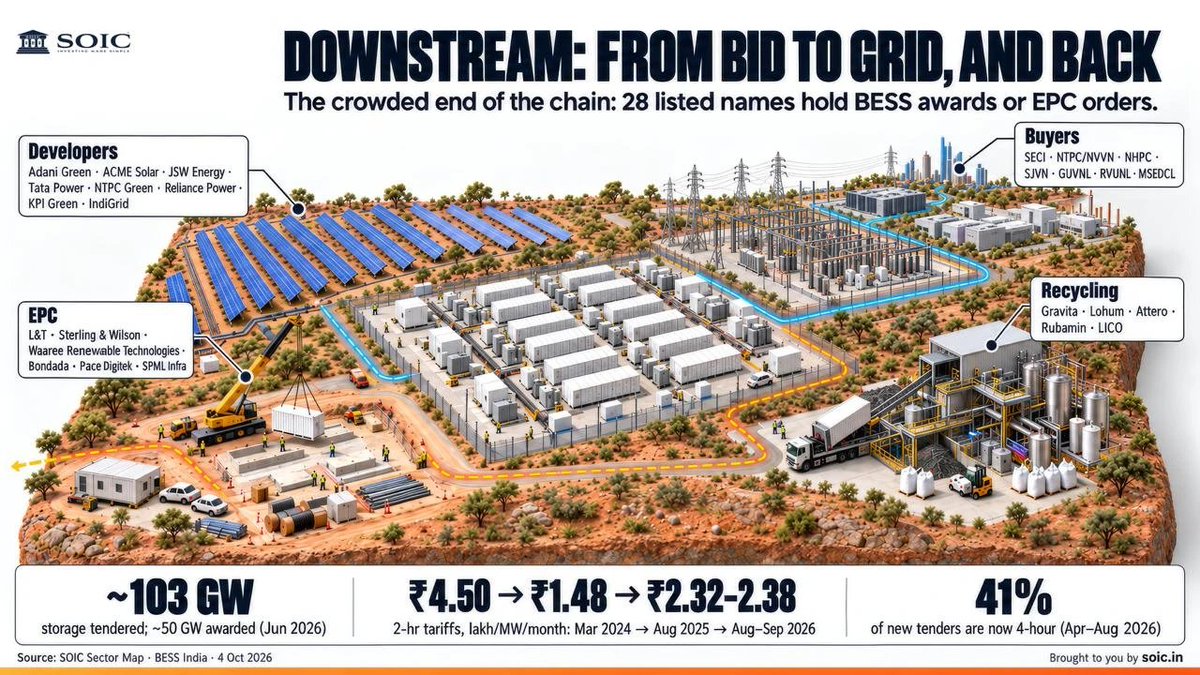
Step 3: Downstream, from bid to grid (4/4)
The most crowded end of the chain: 28 listed names hold BESS awards or EPC orders. ~103 GW of storage tendered, ~50 GW awarded.
-> Developers: Adani Green, ACME Solar, JSW Energy, Tata Power, NTPC Green, KPI Green
-> EPC: L&T, Sterling & Wilson, Bondada, Pace Digitek, SPML Infra
-> Buyers: SECI, NTPC/NVVN, NHPC, SJVN, GUVNL, MSEDCL
India is adding renewable capacity faster than it can move the power. The bottleneck is not the solar parks or modules now its now everything around transmitting that power to your homes
GEC-II : strengthening intra-state transmission in RE-rich states to evacuate ~20 GW
GEC-III (proposed) : being evaluated to integrate ~135 GW of renewables + 25 GW of pumped storage
Thats nearly 7x the RE scale.
More GW > more lines > more substations > more transformers > more grid equipment
This can drive a multi year T&D cycle
Source - Antique Broking
When everyone is buying the “hot theme”, what should you be doing?
India has seen a new market darling almost every year.
The problem? By the time a theme becomes popular, a large part of the compounding may already be behind you.
A fascinating study by Persistence Capital looked at 16 major themes from 2015–2023.
The finding: 13 out of 16 themes underperformed the NSE 500 three years after becoming popular.
The first year often looked great. The trouble came later.
The deck goes theme-by-theme, analysing what investors believed at the time vs. what actually happened.
A great exercise in “invert, always invert.”
Before asking “What’s working right now?” ask: “What usually happens to people who chase what’s already working?”
𑁍 Read the full deck: https://t.co/hVHL1WfWvz
Worth 20 minutes for anyone who has ever felt the temptation to chase the hottest theme.
Keep learning, keep compounding.
Steamhouse India Q1FY27 Concall
> Seven projects to increase steam distribution capacity from 345 to approximately 705 tonnes per hour
> Incremental pipeline cost for gases is estimated at only 10–20% of current infrastructure investment, because 80% of existing infrastructure including pipeline racks designed for 4–6 lines can be reutilized.
> Management aims for 20-25% volume growth ahead
Live Concall transcripts from : https://t.co/SyOLnZBFoT
Disclaimer : Not a buy / sell recommendation .
Wrote a blog on what is ailing this Agchem Giant and what are the triggers that they are building.
It will take time, but doing homework is the priority.
Link to read
https://t.co/9iugtBUVT5
Disclaimer: no recommendation to buy or sell. A pure business analysis.
Stock pickers market over looking at the indices.
People who have been relentless in learning and catching themes would have done well in this type of a market environment.
Knowledge compounds and being less biased helps.
Hope you are doing well in this market environment
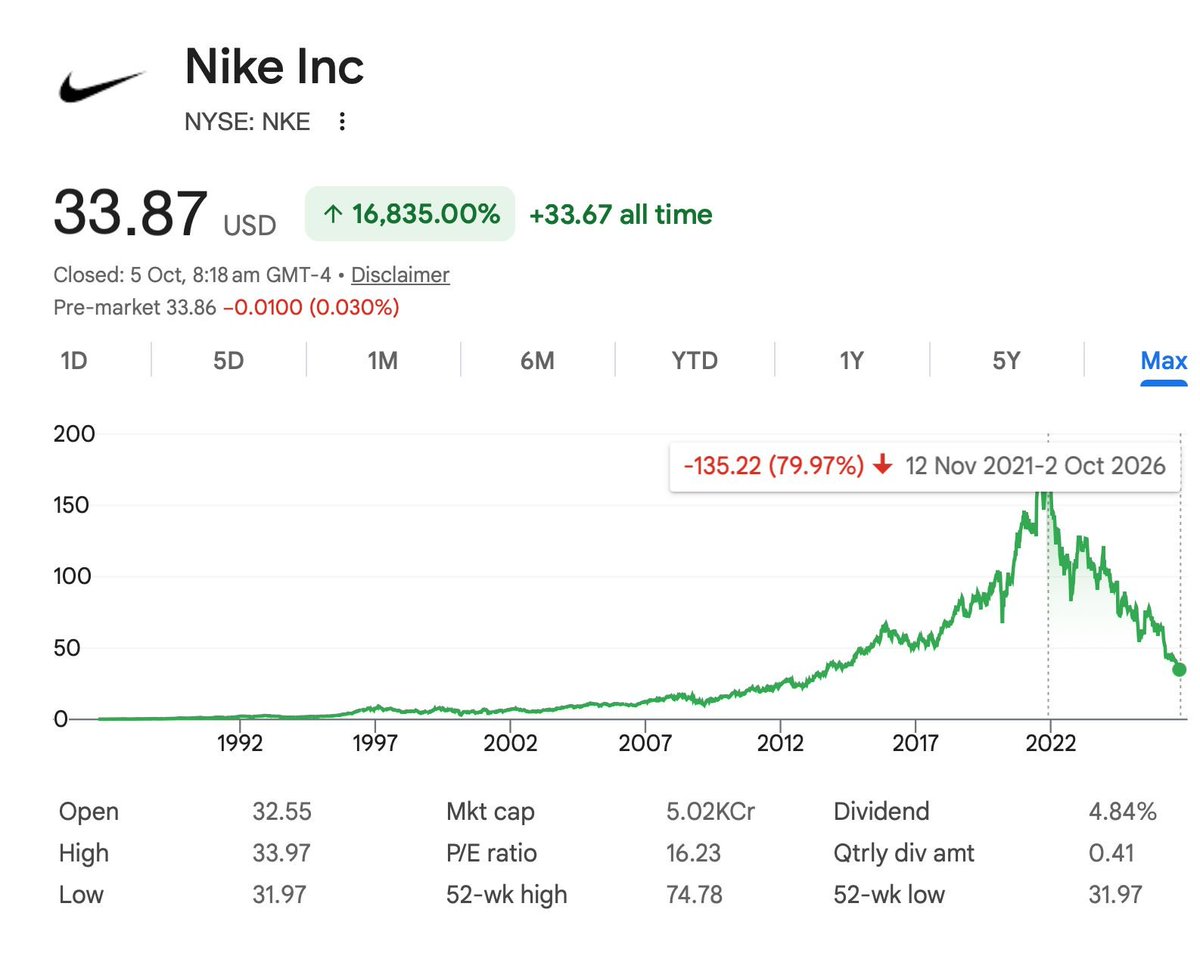
Even best of the businesses and brands can be taken to cleaners when they fail to innovate or competition increases.
New Brands like On and Hoka + a wrong distribution strategy has temporarily or maybe permanently impaired the moat of Nike
Disclaimer - not a recommendation to buy/sell
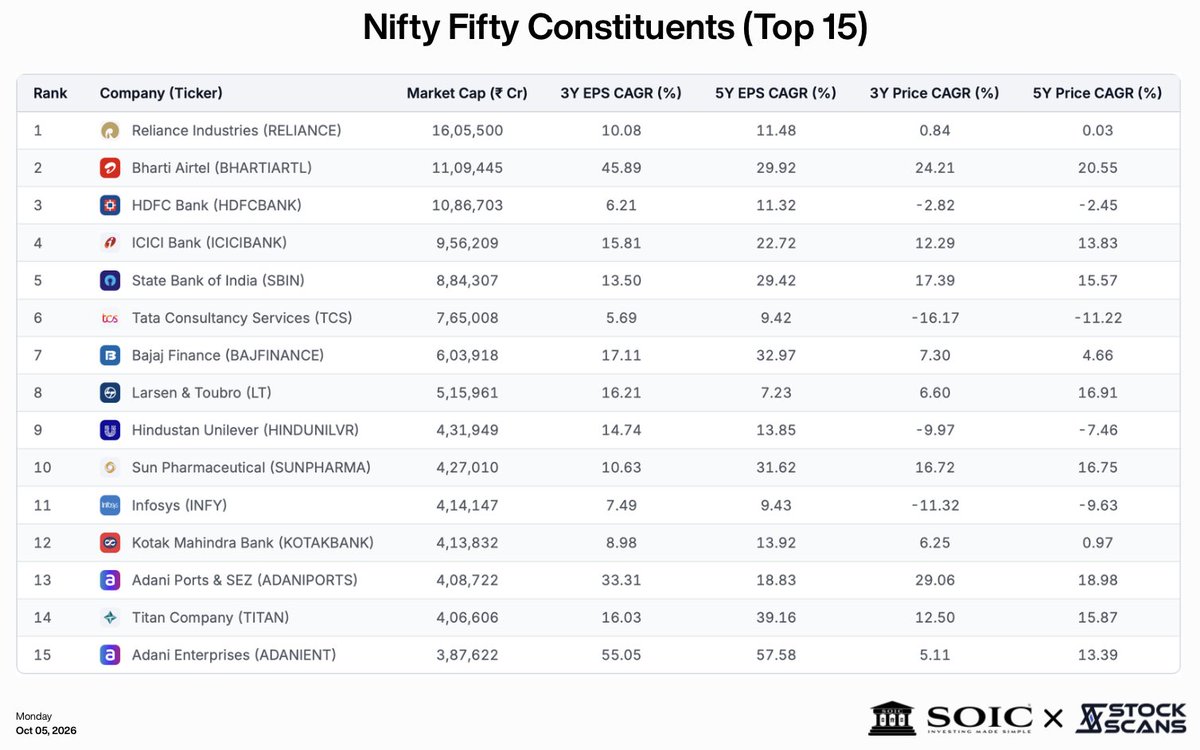
₹104 lakh crore. That's the combined market cap of the 15 largest companies in the Nifty 50. Over the last three years, the median company in this group grew EPS at 14.7% a year.
Reliance, HDFC Bank, TCS, Infosys and Kotak make up 41% of this basket. Their 3Y EPS CAGR is 6% to 10%, at or below India's nominal GDP growth
In most of the names there have been broad based PE derating event that has taken place
But why is it happening?
A. The starting point. Five years ago was peak liquidity, and many of these names entered this period at multiples that already priced in a decade of growth
B. Growth leadership changed hands. IT is wrestling with the AI-disruption question, FMCG is watching growth leak to D2C and quick commerce, HDFC Bank spent these years digesting a mega-merger, and Reliance's earnings still lean on a cyclical O2C core.
One should ask oneself what the driver of growth in the economy is and are those drivers of growth present in the Index?
C. The natural owners left. FPIs sold 1.66 lakh crore of Indian equities in 2025 and roughly 2.4 lakh crore more in 2026 so far. FPI ownership fell to 14.7% in May, a 14-year low.
But one should understand this that money isn't leaving India. It's leaving the index.
SIPs hit a record 32,297 crore in August. Same month, large-cap funds saw net outflows of 1,147 crore while small-cap (7,973 cr) and mid-cap (6,989 cr) funds took the biggest inflows
Even FPIs, while selling on the exchanges, kept writing cheques in the IPO market
Why? Because the themes driving this market barely live in the index: power and T&D equipment, defence, electronics manufacturing, capital-market infrastructure, hospitals, data centres, CDMOs. India's capex and formalisation cycle is being built by mid caps, recent listings and companies that are a sliver of Nifty 50 weight
The index has stopped being the default answer. This is a stock picker's market, company by company, inside the Nifty and far beyond it.
The Nifty tells you where India made its money. It no longer tells you where India will make it next.
Disclaimer - This is only for educational purposes and not a recommendation to buy/sell
MTF has become the industry's only remaining growth vector, a status it inherited as cash brokerage and F&O declined under structural headwinds.
Industry MTF book: Rs. 24,920 crore (FY23) > Rs. 1.52 lakh crore (Aug-2026) have gone roughly 6x in 3.5 years, and 20x off the COVID-era trough of Rs. 3,200 crore (Mar-
2020).
The book is heavily concentrated: the largest bank-backed and discount brokers together hold ~50% of the market.