A 24/7 exchange for U.S. power, natural gas and compute. Trade perpetual swaps and dated futures from a single account, with near-instant T+0 settlement.
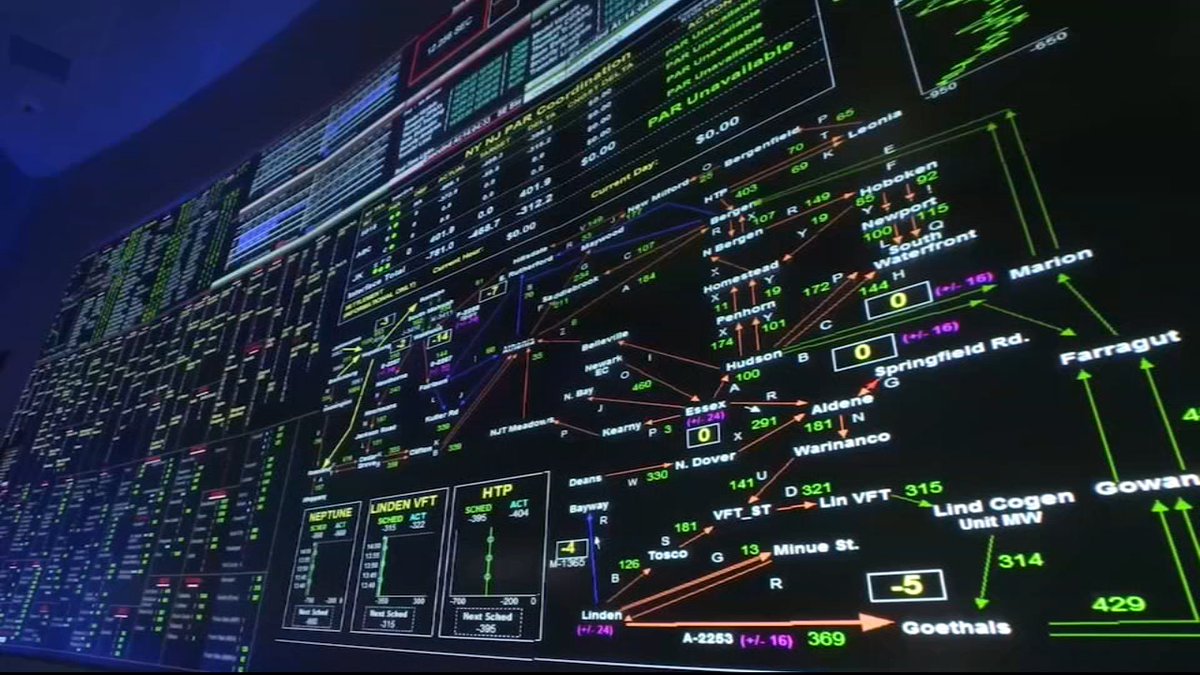
Last Wednesday, the biggest power grid in America admitted it's running out of room.
PJM keeps the lights on for 67 million people across 13 states. It added a "capacity advisory" to flag when electricity supply could get tight. Not because of a heat wave or a polar vortex. Just an ordinary Tuesday.
This time it's the data centers.
They pull power at a density the grid was never built for, and they don't ease off at night or on weekends. So power starts to trade like a commodity in short supply: lumpy, volatile, hard to plan around.
When something gets scarce and volatile, the people exposed to it need two things: a real price, and a way to hedge it.
Energy markets are about to find out if their tools can keep up.
What happens to power prices when compute sets the peak?
Now the AI buildout has three real hedging layers: Henry Hub for the fuel, ERCOT for the electrons, GPU-hour for the work.
We built Sphinx to trade all three in one cross-margined account.
Chevron just drew the diagram for me in Reeves County.
@Chevron is burning West Texas gas to spin 2.7GW of turbines so Microsoft can sell GPU time.
Same megawatt, three prices: gas, power, compute. They don't move together.
CME and ICE both launched compute futures on a GPU-hour index last month for exactly this reason.
So last month CME and ICE both launched compute futures on a GPU-hour index.
GPU-hour won for a boring reason: it's the one unit both sides can count and neither can fudge. FLOPs and tokens have better physics. Both lost because they let one side cook the number.
Check out the extreme website makeover for @SphinxProtocol
The most exciting part of building Sphinx is getting to work on the bleeding edge of several different spaces at once.
Energy is being reshaped by compute. hashtag#AI and the data center buildout are adding electricity demand the grid hasn't had to plan for in decades. The energy transition is changing how and when power gets generated, while natural gas keeps firming the system underneath it. And financial infrastructure is moving toward real-time, on-chain settlement. Each of those is a major shift on its own. They're happening at the same time, and they all run through the same markets.
Sphinx is built for exactly that convergence: a 24/7 institutional exchange for U.S. power and natural gas, with perpetual swaps, dated futures, and near-instant T+0 settlement. hashtag#Energy risk runs around the clock, so the venue for trading it should too.
Our new site brings the full picture together in one place.
https://t.co/Qn3TmXPQej
Just wrapped meetings with Senator Michael Bennet and Senator @Hickenlooper's office alongside @standwithcrypto and @fund_defi .
As a founder and developer, I shared what regulatory clarity would mean for builders in Colorado and made the case for keeping developer protections in place as the Clarity Act moves toward a floor vote.
Thank you to the Senator's staff for the time. 🇺🇸
Our co-founder Greg Perrin (@gcperrin) was on the Hill this week, wrapping meetings with the offices of Senator @SenatorBennet and Senator @SenatorHick alongside @StandWithCrypto and @FundDeFi.
Greg made the case as a founder and builder: what real regulatory clarity would mean for the people writing code right here in Colorado, and why developer protections need to stay intact as the Clarity Act moves toward a floor vote.
Sphinx is building market infrastructure for U.S. energy derivatives, so the rules of the road are something we think about every day. Good to see Colorado's delegation making time for the people actually building in the state.
Thank you to the Senators' staff for the conversation.🇺🇸
If you are stepping into Sphinx Trials, know this: we see you. We are lining up something special that will make it worth your time. 😉
Trial V is live today. We are close to the finish line.