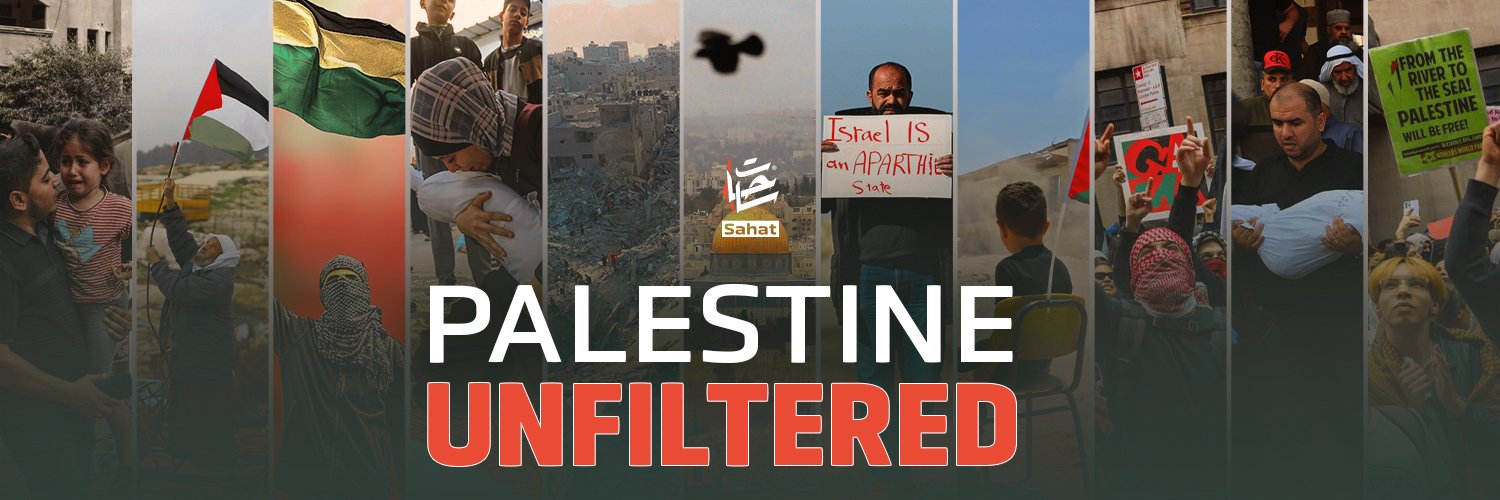
The Israeli occupation continues to expand its deadly “Yellow Line” in Gaza, showing total disregard for the “ceasefire” agreement. With every expansion, hundreds of families are forcibly displaced. Many have already been displaced multiple times, forcing them to flee again and again. With every expansion, more Palestinians are killed.
The Israeli occupation has killed more than 1,000 Palestinians since the “ceasefire” took effect. More than 1,000 human beings. More than 1,000 dreams. More than 1,000 lives cut short, leaving thousands of families grieving.
The Israeli occupation is expanding its military presence across the region under the pretext of establishing “security zones” and “yellow lines.” It began in Gaza, then spread to Lebanon and Syria.
Israeli Defense Minister Israel Katz said, “The IDF will remain in the security zones in Lebanon, Syria and Gaza indefinitely.”
Silence grants the Israeli occupation impunity — your turn may be next.
⭕️ REPORT | Israeli forces have carried out at least 3,306 ceasefire violations across Gaza since agreeing to a ceasefire last October, according to a report shared by the Palestinian side with mediators and obtained by Drop Site News.
It says Israeli attacks have killed 1,005 Palestinians and wounded 3,157 since the ceasefire was announced. Tuesday alone saw 13 reported violations, 2 Palestinians killed, and 5 wounded.
🔹 Israeli warships opened fire toward the coast of Rafah
🔹 Israeli military vehicles advanced east of Salah al-Deen Street near Bani Suheila in Khan Younis amid intensive live fire and shelling
🔹 Abdul Rahman Rami Al-Fiqi, 15, was shot in the hand and abdomen near Al-Nuseirat by armed militias operating under Israeli army protection
🔹 Ahmad Abu Hein and Mahmoud Abu Hein were killed in a drone strike on an apartment in Al-Nuseirat Camp
🔹 Israeli forces carried out explosive demolitions east of Khan Younis
🔹 Israeli vehicles entered the Al-Sayfa area of Beit Lahiya amid intensive live fire
🔹 A child from the Qdeih family was wounded by Israeli gunfire in the Mawasi area of Khan Younis
🔹 Three civilians were wounded in separate shooting incidents in Al-Atatra, Beit Lahiya Roundabout, and elsewhere in North Gaza
Since the ceasefire took effect, 238 children, 111 women, and 30 elderly Palestinians have been killed. Nearly half of those wounded are children, women, or elderly people. 100 civilians have also been detained.
Israel also continues to hold approximately 34 square kilometers beyond agreed withdrawal lines and has blocked repairs to electricity, water, and sewage infrastructure.
Aid entry
▪️ Only about 36% of agreed aid has entered Gaza, averaging 215 trucks per day compared with the agreed 600
▪️ Fuel deliveries remain at just 14.7% of agreed levels
▪️ The World Food Programme estimates 77% of Gaza’s population faces acute food insecurity, including 100,000 children and 37,000 pregnant women suffering from acute malnutrition, amid what MSF has called a “manufactured malnutrition crisis.”
Rafah crossing
▪️ Palestinians entering and exiting Gaza via Rafah are subjected to arbitrary, degrading, and humiliating treatment, while the number of permitted crossings remains far below agreed levels
▪️ Only 7,243 of 20,200 scheduled crossings have been carried out, a compliance rate of 35.8%
▪️ 88 people have been turned back at the crossing since the ceasefire took effect
🔴 Burning down an imam's house in Bolton is a "protest," but supporting Palestine is "terrorism"?(The Guardian)
📌 In the UK, the definition of "terrorism" depends more on the identity of the perpetrator than on the nature of the act itself.
📌 The Palestine Action movement was classified as a terrorist organization, and its members faced prosecution and sentences related to terrorism.
Even though a jury acknowledged that their actions were not intended to intimidate people or threaten them with violence or death.
📌 Most of the movement's activities consisted of protests against companies involved in supplying the Israeli occupation with weapons, blocking factory entrances, or spray-painting walls and equipment.
📌 They also organized campaigns against Elbit Systems and other companies accused of contributing to arming the occupation during the genocide in Gaza.
📌 The movement was not known for targeting individuals with beatings, arson, or death threats. Instead, it focused on properties and facilities that are part of the supply chain for weapons used against Palestinians in Gaza.
🔴 In contrast, Bolton witnessed riots perpetrated by white supremacists.
📌 These included direct threats, attacks on people based on their skin color or ethnicity, arson of homes and cars, and injuries to more than ten police officers during the clashes.
📌 The situation escalated to the point where a Muslim imam's home was set ablaze while his wife and children were inside, a scene that can only be described as a direct threat to human life.
📌 Yet, these events are frequently presented in political and media discourse as "angry protests" or "disturbances."
Meanwhile, activists who stand in front of weapons factories or spray paint walls are labeled "terrorists."
📌 The shocking irony is that the right-wing extremist who burns homes and threatens people with death is presented as an angry protester, while the anti-war and anti-genocide activist is treated as a security threat.
📌 Today, the debate is no longer limited to the actions of "Palestine Action" itself, but has expanded to include discussions about and defenses of the movement.
📌 Any attempt to support the movement or justify its activities is now subject to accusations of supporting a designated terrorist organization.
📌 Is terrorism now defined by what you do, or by your political identity, skin color, and position on the ideological map?
🔴 Burning down an imam's house in Bolton is a "protest," but supporting Palestine is "terrorism"?(The Guardian)
📌 In the UK, the definition of "terrorism" depends more on the identity of the perpetrator than on the nature of the act itself.
📌 The Palestine Action movement was classified as a terrorist organization, and its members faced prosecution and sentences related to terrorism.
Even though a jury acknowledged that their actions were not intended to intimidate people or threaten them with violence or death.
📌 Most of the movement's activities consisted of protests against companies involved in supplying the Israeli occupation with weapons, blocking factory entrances, or spray-painting walls and equipment.
📌 They also organized campaigns against Elbit Systems and other companies accused of contributing to arming the occupation during the genocide in Gaza.
📌 The movement was not known for targeting individuals with beatings, arson, or death threats. Instead, it focused on properties and facilities that are part of the supply chain for weapons used against Palestinians in Gaza.
🔴 In contrast, Bolton witnessed riots perpetrated by white supremacists.
📌 These included direct threats, attacks on people based on their skin color or ethnicity, arson of homes and cars, and injuries to more than ten police officers during the clashes.
📌 The situation escalated to the point where a Muslim imam's home was set ablaze while his wife and children were inside, a scene that can only be described as a direct threat to human life.
📌 Yet, these events are frequently presented in political and media discourse as "angry protests" or "disturbances."
Meanwhile, activists who stand in front of weapons factories or spray paint walls are labeled "terrorists."
📌 The shocking irony is that the right-wing extremist who burns homes and threatens people with death is presented as an angry protester, while the anti-war and anti-genocide activist is treated as a security threat.
📌 Today, the debate is no longer limited to the actions of "Palestine Action" itself, but has expanded to include discussions about and defenses of the movement.
📌 Any attempt to support the movement or justify its activities is now subject to accusations of supporting a designated terrorist organization.
📌 Is terrorism now defined by what you do, or by your political identity, skin color, and position on the ideological map?
🔴 Burning down an imam's house in Bolton is a "protest," but supporting Palestine is "terrorism"?(The Guardian)
📌 In the UK, the definition of "terrorism" depends more on the identity of the perpetrator than on the nature of the act itself.
📌 The Palestine Action movement was classified as a terrorist organization, and its members faced prosecution and sentences related to terrorism.
Even though a jury acknowledged that their actions were not intended to intimidate people or threaten them with violence or death.
📌 Most of the movement's activities consisted of protests against companies involved in supplying the Israeli occupation with weapons, blocking factory entrances, or spray-painting walls and equipment.
📌 They also organized campaigns against Elbit Systems and other companies accused of contributing to arming the occupation during the genocide in Gaza.
📌 The movement was not known for targeting individuals with beatings, arson, or death threats. Instead, it focused on properties and facilities that are part of the supply chain for weapons used against Palestinians in Gaza.
🔴 In contrast, Bolton witnessed riots perpetrated by white supremacists.
📌 These included direct threats, attacks on people based on their skin color or ethnicity, arson of homes and cars, and injuries to more than ten police officers during the clashes.
📌 The situation escalated to the point where a Muslim imam's home was set ablaze while his wife and children were inside, a scene that can only be described as a direct threat to human life.
📌 Yet, these events are frequently presented in political and media discourse as "angry protests" or "disturbances."
Meanwhile, activists who stand in front of weapons factories or spray paint walls are labeled "terrorists."
📌 The shocking irony is that the right-wing extremist who burns homes and threatens people with death is presented as an angry protester, while the anti-war and anti-genocide activist is treated as a security threat.
📌 Today, the debate is no longer limited to the actions of "Palestine Action" itself, but has expanded to include discussions about and defenses of the movement.
📌 Any attempt to support the movement or justify its activities is now subject to accusations of supporting a designated terrorist organization.
📌 Is terrorism now defined by what you do, or by your political identity, skin color, and position on the ideological map?
🔴 Burning down an imam's house in Bolton is a "protest," but supporting Palestine is "terrorism"?(The Guardian)
📌 In the UK, the definition of "terrorism" depends more on the identity of the perpetrator than on the nature of the act itself.
📌 The Palestine Action movement was classified as a terrorist organization, and its members faced prosecution and sentences related to terrorism.
Even though a jury acknowledged that their actions were not intended to intimidate people or threaten them with violence or death.
📌 Most of the movement's activities consisted of protests against companies involved in supplying the Israeli occupation with weapons, blocking factory entrances, or spray-painting walls and equipment.
📌 They also organized campaigns against Elbit Systems and other companies accused of contributing to arming the occupation during the genocide in Gaza.
📌 The movement was not known for targeting individuals with beatings, arson, or death threats. Instead, it focused on properties and facilities that are part of the supply chain for weapons used against Palestinians in Gaza.
🔴 In contrast, Bolton witnessed riots perpetrated by white supremacists.
📌 These included direct threats, attacks on people based on their skin color or ethnicity, arson of homes and cars, and injuries to more than ten police officers during the clashes.
📌 The situation escalated to the point where a Muslim imam's home was set ablaze while his wife and children were inside, a scene that can only be described as a direct threat to human life.
📌 Yet, these events are frequently presented in political and media discourse as "angry protests" or "disturbances."
Meanwhile, activists who stand in front of weapons factories or spray paint walls are labeled "terrorists."
📌 The shocking irony is that the right-wing extremist who burns homes and threatens people with death is presented as an angry protester, while the anti-war and anti-genocide activist is treated as a security threat.
📌 Today, the debate is no longer limited to the actions of "Palestine Action" itself, but has expanded to include discussions about and defenses of the movement.
📌 Any attempt to support the movement or justify its activities is now subject to accusations of supporting a designated terrorist organization.
📌 Is terrorism now defined by what you do, or by your political identity, skin color, and position on the ideological map?
🔴 Burning down an imam's house in Bolton is a "protest," but supporting Palestine is "terrorism"?(The Guardian)
📌 In the UK, the definition of "terrorism" depends more on the identity of the perpetrator than on the nature of the act itself.
📌 The Palestine Action movement was classified as a terrorist organization, and its members faced prosecution and sentences related to terrorism.
Even though a jury acknowledged that their actions were not intended to intimidate people or threaten them with violence or death.
📌 Most of the movement's activities consisted of protests against companies involved in supplying the Israeli occupation with weapons, blocking factory entrances, or spray-painting walls and equipment.
📌 They also organized campaigns against Elbit Systems and other companies accused of contributing to arming the occupation during the genocide in Gaza.
📌 The movement was not known for targeting individuals with beatings, arson, or death threats. Instead, it focused on properties and facilities that are part of the supply chain for weapons used against Palestinians in Gaza.
🔴 In contrast, Bolton witnessed riots perpetrated by white supremacists.
📌 These included direct threats, attacks on people based on their skin color or ethnicity, arson of homes and cars, and injuries to more than ten police officers during the clashes.
📌 The situation escalated to the point where a Muslim imam's home was set ablaze while his wife and children were inside, a scene that can only be described as a direct threat to human life.
📌 Yet, these events are frequently presented in political and media discourse as "angry protests" or "disturbances."
Meanwhile, activists who stand in front of weapons factories or spray paint walls are labeled "terrorists."
📌 The shocking irony is that the right-wing extremist who burns homes and threatens people with death is presented as an angry protester, while the anti-war and anti-genocide activist is treated as a security threat.
📌 Today, the debate is no longer limited to the actions of "Palestine Action" itself, but has expanded to include discussions about and defenses of the movement.
📌 Any attempt to support the movement or justify its activities is now subject to accusations of supporting a designated terrorist organization.
📌 Is terrorism now defined by what you do, or by your political identity, skin color, and position on the ideological map?
🔴 Burning down an imam's house in Bolton is a "protest," but supporting Palestine is "terrorism"?(The Guardian)
📌 In the UK, the definition of "terrorism" depends more on the identity of the perpetrator than on the nature of the act itself.
📌 The Palestine Action movement was classified as a terrorist organization, and its members faced prosecution and sentences related to terrorism.
Even though a jury acknowledged that their actions were not intended to intimidate people or threaten them with violence or death.
📌 Most of the movement's activities consisted of protests against companies involved in supplying the Israeli occupation with weapons, blocking factory entrances, or spray-painting walls and equipment.
📌 They also organized campaigns against Elbit Systems and other companies accused of contributing to arming the occupation during the genocide in Gaza.
📌 The movement was not known for targeting individuals with beatings, arson, or death threats. Instead, it focused on properties and facilities that are part of the supply chain for weapons used against Palestinians in Gaza.
🔴 In contrast, Bolton witnessed riots perpetrated by white supremacists.
📌 These included direct threats, attacks on people based on their skin color or ethnicity, arson of homes and cars, and injuries to more than ten police officers during the clashes.
📌 The situation escalated to the point where a Muslim imam's home was set ablaze while his wife and children were inside, a scene that can only be described as a direct threat to human life.
📌 Yet, these events are frequently presented in political and media discourse as "angry protests" or "disturbances."
Meanwhile, activists who stand in front of weapons factories or spray paint walls are labeled "terrorists."
📌 The shocking irony is that the right-wing extremist who burns homes and threatens people with death is presented as an angry protester, while the anti-war and anti-genocide activist is treated as a security threat.
📌 Today, the debate is no longer limited to the actions of "Palestine Action" itself, but has expanded to include discussions about and defenses of the movement.
📌 Any attempt to support the movement or justify its activities is now subject to accusations of supporting a designated terrorist organization.
📌 Is terrorism now defined by what you do, or by your political identity, skin color, and position on the ideological map?
🔴 Burning down an imam's house in Bolton is a "protest," but supporting Palestine is "terrorism"?(The Guardian)
📌 In the UK, the definition of "terrorism" depends more on the identity of the perpetrator than on the nature of the act itself.
📌 The Palestine Action movement was classified as a terrorist organization, and its members faced prosecution and sentences related to terrorism.
Even though a jury acknowledged that their actions were not intended to intimidate people or threaten them with violence or death.
📌 Most of the movement's activities consisted of protests against companies involved in supplying the Israeli occupation with weapons, blocking factory entrances, or spray-painting walls and equipment.
📌 They also organized campaigns against Elbit Systems and other companies accused of contributing to arming the occupation during the genocide in Gaza.
📌 The movement was not known for targeting individuals with beatings, arson, or death threats. Instead, it focused on properties and facilities that are part of the supply chain for weapons used against Palestinians in Gaza.
🔴 In contrast, Bolton witnessed riots perpetrated by white supremacists.
📌 These included direct threats, attacks on people based on their skin color or ethnicity, arson of homes and cars, and injuries to more than ten police officers during the clashes.
📌 The situation escalated to the point where a Muslim imam's home was set ablaze while his wife and children were inside, a scene that can only be described as a direct threat to human life.
📌 Yet, these events are frequently presented in political and media discourse as "angry protests" or "disturbances."
Meanwhile, activists who stand in front of weapons factories or spray paint walls are labeled "terrorists."
📌 The shocking irony is that the right-wing extremist who burns homes and threatens people with death is presented as an angry protester, while the anti-war and anti-genocide activist is treated as a security threat.
📌 Today, the debate is no longer limited to the actions of "Palestine Action" itself, but has expanded to include discussions about and defenses of the movement.
📌 Any attempt to support the movement or justify its activities is now subject to accusations of supporting a designated terrorist organization.
📌 Is terrorism now defined by what you do, or by your political identity, skin color, and position on the ideological map?
🔴 Burning down an imam's house in Bolton is a "protest," but supporting Palestine is "terrorism"?(The Guardian)
📌 In the UK, the definition of "terrorism" depends more on the identity of the perpetrator than on the nature of the act itself.
📌 The Palestine Action movement was classified as a terrorist organization, and its members faced prosecution and sentences related to terrorism.
Even though a jury acknowledged that their actions were not intended to intimidate people or threaten them with violence or death.
📌 Most of the movement's activities consisted of protests against companies involved in supplying the Israeli occupation with weapons, blocking factory entrances, or spray-painting walls and equipment.
📌 They also organized campaigns against Elbit Systems and other companies accused of contributing to arming the occupation during the genocide in Gaza.
📌 The movement was not known for targeting individuals with beatings, arson, or death threats. Instead, it focused on properties and facilities that are part of the supply chain for weapons used against Palestinians in Gaza.
🔴 In contrast, Bolton witnessed riots perpetrated by white supremacists.
📌 These included direct threats, attacks on people based on their skin color or ethnicity, arson of homes and cars, and injuries to more than ten police officers during the clashes.
📌 The situation escalated to the point where a Muslim imam's home was set ablaze while his wife and children were inside, a scene that can only be described as a direct threat to human life.
📌 Yet, these events are frequently presented in political and media discourse as "angry protests" or "disturbances."
Meanwhile, activists who stand in front of weapons factories or spray paint walls are labeled "terrorists."
📌 The shocking irony is that the right-wing extremist who burns homes and threatens people with death is presented as an angry protester, while the anti-war and anti-genocide activist is treated as a security threat.
📌 Today, the debate is no longer limited to the actions of "Palestine Action" itself, but has expanded to include discussions about and defenses of the movement.
📌 Any attempt to support the movement or justify its activities is now subject to accusations of supporting a designated terrorist organization.
📌 Is terrorism now defined by what you do, or by your political identity, skin color, and position on the ideological map?
🔴 Burning down an imam's house in Bolton is a "protest," but supporting Palestine is "terrorism"?(The Guardian)
📌 In the UK, the definition of "terrorism" depends more on the identity of the perpetrator than on the nature of the act itself.
📌 The Palestine Action movement was classified as a terrorist organization, and its members faced prosecution and sentences related to terrorism.
Even though a jury acknowledged that their actions were not intended to intimidate people or threaten them with violence or death.
📌 Most of the movement's activities consisted of protests against companies involved in supplying the Israeli occupation with weapons, blocking factory entrances, or spray-painting walls and equipment.
📌 They also organized campaigns against Elbit Systems and other companies accused of contributing to arming the occupation during the genocide in Gaza.
📌 The movement was not known for targeting individuals with beatings, arson, or death threats. Instead, it focused on properties and facilities that are part of the supply chain for weapons used against Palestinians in Gaza.
🔴 In contrast, Bolton witnessed riots perpetrated by white supremacists.
📌 These included direct threats, attacks on people based on their skin color or ethnicity, arson of homes and cars, and injuries to more than ten police officers during the clashes.
📌 The situation escalated to the point where a Muslim imam's home was set ablaze while his wife and children were inside, a scene that can only be described as a direct threat to human life.
📌 Yet, these events are frequently presented in political and media discourse as "angry protests" or "disturbances."
Meanwhile, activists who stand in front of weapons factories or spray paint walls are labeled "terrorists."
📌 The shocking irony is that the right-wing extremist who burns homes and threatens people with death is presented as an angry protester, while the anti-war and anti-genocide activist is treated as a security threat.
📌 Today, the debate is no longer limited to the actions of "Palestine Action" itself, but has expanded to include discussions about and defenses of the movement.
📌 Any attempt to support the movement or justify its activities is now subject to accusations of supporting a designated terrorist organization.
📌 Is terrorism now defined by what you do, or by your political identity, skin color, and position on the ideological map?
🔴 Burning down an imam's house in Bolton is a "protest," but supporting Palestine is "terrorism"?(The Guardian)
📌 In the UK, the definition of "terrorism" depends more on the identity of the perpetrator than on the nature of the act itself.
📌 The Palestine Action movement was classified as a terrorist organization, and its members faced prosecution and sentences related to terrorism.
Even though a jury acknowledged that their actions were not intended to intimidate people or threaten them with violence or death.
📌 Most of the movement's activities consisted of protests against companies involved in supplying the Israeli occupation with weapons, blocking factory entrances, or spray-painting walls and equipment.
📌 They also organized campaigns against Elbit Systems and other companies accused of contributing to arming the occupation during the genocide in Gaza.
📌 The movement was not known for targeting individuals with beatings, arson, or death threats. Instead, it focused on properties and facilities that are part of the supply chain for weapons used against Palestinians in Gaza.
🔴 In contrast, Bolton witnessed riots perpetrated by white supremacists.
📌 These included direct threats, attacks on people based on their skin color or ethnicity, arson of homes and cars, and injuries to more than ten police officers during the clashes.
📌 The situation escalated to the point where a Muslim imam's home was set ablaze while his wife and children were inside, a scene that can only be described as a direct threat to human life.
📌 Yet, these events are frequently presented in political and media discourse as "angry protests" or "disturbances."
Meanwhile, activists who stand in front of weapons factories or spray paint walls are labeled "terrorists."
📌 The shocking irony is that the right-wing extremist who burns homes and threatens people with death is presented as an angry protester, while the anti-war and anti-genocide activist is treated as a security threat.
📌 Today, the debate is no longer limited to the actions of "Palestine Action" itself, but has expanded to include discussions about and defenses of the movement.
📌 Any attempt to support the movement or justify its activities is now subject to accusations of supporting a designated terrorist organization.
📌 Is terrorism now defined by what you do, or by your political identity, skin color, and position on the ideological map?
🔴 Burning down an imam's house in Bolton is a "protest," but supporting Palestine is "terrorism"?(The Guardian)
📌 In the UK, the definition of "terrorism" depends more on the identity of the perpetrator than on the nature of the act itself.
📌 The Palestine Action movement was classified as a terrorist organization, and its members faced prosecution and sentences related to terrorism.
Even though a jury acknowledged that their actions were not intended to intimidate people or threaten them with violence or death.
📌 Most of the movement's activities consisted of protests against companies involved in supplying the Israeli occupation with weapons, blocking factory entrances, or spray-painting walls and equipment.
📌 They also organized campaigns against Elbit Systems and other companies accused of contributing to arming the occupation during the genocide in Gaza.
📌 The movement was not known for targeting individuals with beatings, arson, or death threats. Instead, it focused on properties and facilities that are part of the supply chain for weapons used against Palestinians in Gaza.
🔴 In contrast, Bolton witnessed riots perpetrated by white supremacists.
📌 These included direct threats, attacks on people based on their skin color or ethnicity, arson of homes and cars, and injuries to more than ten police officers during the clashes.
📌 The situation escalated to the point where a Muslim imam's home was set ablaze while his wife and children were inside, a scene that can only be described as a direct threat to human life.
📌 Yet, these events are frequently presented in political and media discourse as "angry protests" or "disturbances."
Meanwhile, activists who stand in front of weapons factories or spray paint walls are labeled "terrorists."
📌 The shocking irony is that the right-wing extremist who burns homes and threatens people with death is presented as an angry protester, while the anti-war and anti-genocide activist is treated as a security threat.
📌 Today, the debate is no longer limited to the actions of "Palestine Action" itself, but has expanded to include discussions about and defenses of the movement.
📌 Any attempt to support the movement or justify its activities is now subject to accusations of supporting a designated terrorist organization.
📌 Is terrorism now defined by what you do, or by your political identity, skin color, and position on the ideological map?
🔴 Burning down an imam's house in Bolton is a "protest," but supporting Palestine is "terrorism"?(The Guardian)
📌 In the UK, the definition of "terrorism" depends more on the identity of the perpetrator than on the nature of the act itself.
📌 The Palestine Action movement was classified as a terrorist organization, and its members faced prosecution and sentences related to terrorism.
Even though a jury acknowledged that their actions were not intended to intimidate people or threaten them with violence or death.
📌 Most of the movement's activities consisted of protests against companies involved in supplying the Israeli occupation with weapons, blocking factory entrances, or spray-painting walls and equipment.
📌 They also organized campaigns against Elbit Systems and other companies accused of contributing to arming the occupation during the genocide in Gaza.
📌 The movement was not known for targeting individuals with beatings, arson, or death threats. Instead, it focused on properties and facilities that are part of the supply chain for weapons used against Palestinians in Gaza.
🔴 In contrast, Bolton witnessed riots perpetrated by white supremacists.
📌 These included direct threats, attacks on people based on their skin color or ethnicity, arson of homes and cars, and injuries to more than ten police officers during the clashes.
📌 The situation escalated to the point where a Muslim imam's home was set ablaze while his wife and children were inside, a scene that can only be described as a direct threat to human life.
📌 Yet, these events are frequently presented in political and media discourse as "angry protests" or "disturbances."
Meanwhile, activists who stand in front of weapons factories or spray paint walls are labeled "terrorists."
📌 The shocking irony is that the right-wing extremist who burns homes and threatens people with death is presented as an angry protester, while the anti-war and anti-genocide activist is treated as a security threat.
📌 Today, the debate is no longer limited to the actions of "Palestine Action" itself, but has expanded to include discussions about and defenses of the movement.
📌 Any attempt to support the movement or justify its activities is now subject to accusations of supporting a designated terrorist organization.
📌 Is terrorism now defined by what you do, or by your political identity, skin color, and position on the ideological map?
🔴 Burning down an imam's house in Bolton is a "protest," but supporting Palestine is "terrorism"?(The Guardian)
📌 In the UK, the definition of "terrorism" depends more on the identity of the perpetrator than on the nature of the act itself.
📌 The Palestine Action movement was classified as a terrorist organization, and its members faced prosecution and sentences related to terrorism.
Even though a jury acknowledged that their actions were not intended to intimidate people or threaten them with violence or death.
📌 Most of the movement's activities consisted of protests against companies involved in supplying the Israeli occupation with weapons, blocking factory entrances, or spray-painting walls and equipment.
📌 They also organized campaigns against Elbit Systems and other companies accused of contributing to arming the occupation during the genocide in Gaza.
📌 The movement was not known for targeting individuals with beatings, arson, or death threats. Instead, it focused on properties and facilities that are part of the supply chain for weapons used against Palestinians in Gaza.
🔴 In contrast, Bolton witnessed riots perpetrated by white supremacists.
📌 These included direct threats, attacks on people based on their skin color or ethnicity, arson of homes and cars, and injuries to more than ten police officers during the clashes.
📌 The situation escalated to the point where a Muslim imam's home was set ablaze while his wife and children were inside, a scene that can only be described as a direct threat to human life.
📌 Yet, these events are frequently presented in political and media discourse as "angry protests" or "disturbances."
Meanwhile, activists who stand in front of weapons factories or spray paint walls are labeled "terrorists."
📌 The shocking irony is that the right-wing extremist who burns homes and threatens people with death is presented as an angry protester, while the anti-war and anti-genocide activist is treated as a security threat.
📌 Today, the debate is no longer limited to the actions of "Palestine Action" itself, but has expanded to include discussions about and defenses of the movement.
📌 Any attempt to support the movement or justify its activities is now subject to accusations of supporting a designated terrorist organization.
📌 Is terrorism now defined by what you do, or by your political identity, skin color, and position on the ideological map?
🔴 Burning down an imam's house in Bolton is a "protest," but supporting Palestine is "terrorism"?(The Guardian)
📌 In the UK, the definition of "terrorism" depends more on the identity of the perpetrator than on the nature of the act itself.
📌 The Palestine Action movement was classified as a terrorist organization, and its members faced prosecution and sentences related to terrorism.
Even though a jury acknowledged that their actions were not intended to intimidate people or threaten them with violence or death.
📌 Most of the movement's activities consisted of protests against companies involved in supplying the Israeli occupation with weapons, blocking factory entrances, or spray-painting walls and equipment.
📌 They also organized campaigns against Elbit Systems and other companies accused of contributing to arming the occupation during the genocide in Gaza.
📌 The movement was not known for targeting individuals with beatings, arson, or death threats. Instead, it focused on properties and facilities that are part of the supply chain for weapons used against Palestinians in Gaza.
🔴 In contrast, Bolton witnessed riots perpetrated by white supremacists.
📌 These included direct threats, attacks on people based on their skin color or ethnicity, arson of homes and cars, and injuries to more than ten police officers during the clashes.
📌 The situation escalated to the point where a Muslim imam's home was set ablaze while his wife and children were inside, a scene that can only be described as a direct threat to human life.
📌 Yet, these events are frequently presented in political and media discourse as "angry protests" or "disturbances."
Meanwhile, activists who stand in front of weapons factories or spray paint walls are labeled "terrorists."
📌 The shocking irony is that the right-wing extremist who burns homes and threatens people with death is presented as an angry protester, while the anti-war and anti-genocide activist is treated as a security threat.
📌 Today, the debate is no longer limited to the actions of "Palestine Action" itself, but has expanded to include discussions about and defenses of the movement.
📌 Any attempt to support the movement or justify its activities is now subject to accusations of supporting a designated terrorist organization.
📌 Is terrorism now defined by what you do, or by your political identity, skin color, and position on the ideological map?
🔴 Burning down an imam's house in Bolton is a "protest," but supporting Palestine is "terrorism"?(The Guardian)
📌 In the UK, the definition of "terrorism" depends more on the identity of the perpetrator than on the nature of the act itself.
📌 The Palestine Action movement was classified as a terrorist organization, and its members faced prosecution and sentences related to terrorism.
Even though a jury acknowledged that their actions were not intended to intimidate people or threaten them with violence or death.
📌 Most of the movement's activities consisted of protests against companies involved in supplying the Israeli occupation with weapons, blocking factory entrances, or spray-painting walls and equipment.
📌 They also organized campaigns against Elbit Systems and other companies accused of contributing to arming the occupation during the genocide in Gaza.
📌 The movement was not known for targeting individuals with beatings, arson, or death threats. Instead, it focused on properties and facilities that are part of the supply chain for weapons used against Palestinians in Gaza.
🔴 In contrast, Bolton witnessed riots perpetrated by white supremacists.
📌 These included direct threats, attacks on people based on their skin color or ethnicity, arson of homes and cars, and injuries to more than ten police officers during the clashes.
📌 The situation escalated to the point where a Muslim imam's home was set ablaze while his wife and children were inside, a scene that can only be described as a direct threat to human life.
📌 Yet, these events are frequently presented in political and media discourse as "angry protests" or "disturbances."
Meanwhile, activists who stand in front of weapons factories or spray paint walls are labeled "terrorists."
📌 The shocking irony is that the right-wing extremist who burns homes and threatens people with death is presented as an angry protester, while the anti-war and anti-genocide activist is treated as a security threat.
📌 Today, the debate is no longer limited to the actions of "Palestine Action" itself, but has expanded to include discussions about and defenses of the movement.
📌 Any attempt to support the movement or justify its activities is now subject to accusations of supporting a designated terrorist organization.
📌 Is terrorism now defined by what you do, or by your political identity, skin color, and position on the ideological map?
🔴 Burning down an imam's house in Bolton is a "protest," but supporting Palestine is "terrorism"?(The Guardian)
📌 In the UK, the definition of "terrorism" depends more on the identity of the perpetrator than on the nature of the act itself.
📌 The Palestine Action movement was classified as a terrorist organization, and its members faced prosecution and sentences related to terrorism.
Even though a jury acknowledged that their actions were not intended to intimidate people or threaten them with violence or death.
📌 Most of the movement's activities consisted of protests against companies involved in supplying the Israeli occupation with weapons, blocking factory entrances, or spray-painting walls and equipment.
📌 They also organized campaigns against Elbit Systems and other companies accused of contributing to arming the occupation during the genocide in Gaza.
📌 The movement was not known for targeting individuals with beatings, arson, or death threats. Instead, it focused on properties and facilities that are part of the supply chain for weapons used against Palestinians in Gaza.
🔴 In contrast, Bolton witnessed riots perpetrated by white supremacists.
📌 These included direct threats, attacks on people based on their skin color or ethnicity, arson of homes and cars, and injuries to more than ten police officers during the clashes.
📌 The situation escalated to the point where a Muslim imam's home was set ablaze while his wife and children were inside, a scene that can only be described as a direct threat to human life.
📌 Yet, these events are frequently presented in political and media discourse as "angry protests" or "disturbances."
Meanwhile, activists who stand in front of weapons factories or spray paint walls are labeled "terrorists."
📌 The shocking irony is that the right-wing extremist who burns homes and threatens people with death is presented as an angry protester, while the anti-war and anti-genocide activist is treated as a security threat.
📌 Today, the debate is no longer limited to the actions of "Palestine Action" itself, but has expanded to include discussions about and defenses of the movement.
📌 Any attempt to support the movement or justify its activities is now subject to accusations of supporting a designated terrorist organization.
📌 Is terrorism now defined by what you do, or by your political identity, skin color, and position on the ideological map?
🔴 Burning down an imam's house in Bolton is a "protest," but supporting Palestine is "terrorism"?(The Guardian)
📌 In the UK, the definition of "terrorism" depends more on the identity of the perpetrator than on the nature of the act itself.
📌 The Palestine Action movement was classified as a terrorist organization, and its members faced prosecution and sentences related to terrorism.
Even though a jury acknowledged that their actions were not intended to intimidate people or threaten them with violence or death.
📌 Most of the movement's activities consisted of protests against companies involved in supplying the Israeli occupation with weapons, blocking factory entrances, or spray-painting walls and equipment.
📌 They also organized campaigns against Elbit Systems and other companies accused of contributing to arming the occupation during the genocide in Gaza.
📌 The movement was not known for targeting individuals with beatings, arson, or death threats. Instead, it focused on properties and facilities that are part of the supply chain for weapons used against Palestinians in Gaza.
🔴 In contrast, Bolton witnessed riots perpetrated by white supremacists.
📌 These included direct threats, attacks on people based on their skin color or ethnicity, arson of homes and cars, and injuries to more than ten police officers during the clashes.
📌 The situation escalated to the point where a Muslim imam's home was set ablaze while his wife and children were inside, a scene that can only be described as a direct threat to human life.
📌 Yet, these events are frequently presented in political and media discourse as "angry protests" or "disturbances."
Meanwhile, activists who stand in front of weapons factories or spray paint walls are labeled "terrorists."
📌 The shocking irony is that the right-wing extremist who burns homes and threatens people with death is presented as an angry protester, while the anti-war and anti-genocide activist is treated as a security threat.
📌 Today, the debate is no longer limited to the actions of "Palestine Action" itself, but has expanded to include discussions about and defenses of the movement.
📌 Any attempt to support the movement or justify its activities is now subject to accusations of supporting a designated terrorist organization.
📌 Is terrorism now defined by what you do, or by your political identity, skin color, and position on the ideological map?