@PabloReports@VP@UFWupdates 1/
Pablo: those stuck in Employment GreenCard Backlog (EB2&3).
We are stuck in endless subscription just to live here...150yr wait. This is our home.
Americans are repeatedly advertised those 4 immigration terms, why not GC Backlog?
They deserve, so do we.
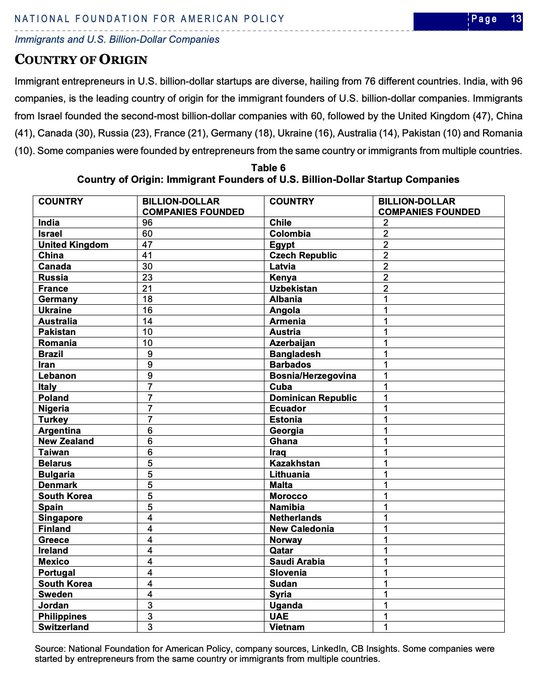
India has sent 96 people to America who started billion dollar companies. No one else is even close.
There's only about 5 million Indians in America. Almost one in 50,000 of them is a unicorn founder!
What a holy, special, beautiful people.
I will always fight for them.
Most people don’t understand that the Indian bigco CEO phenomenon is mostly an immigration story. Indians are FAR more likely to be tied to employment visas than other nationalities, so they couldn’t easily start companies.
The 1990 Immigration Act created the modern H-1B/EB green card system. As Indian demand exploded, the 7% per-country cap turned into decades-long backlogs for Indians. Indian tech workers stayed tethered to sponsoring employers in a way Europeans, Russians, Taiwanese never had to. Founding a company means risking your status, resetting a green card path, or finding another workaround (now usually O-1 or EB-1).
European/ Russian /Taiwanese immigrants don’t face the same trap. Their countries don’t hit the 7% per-country cap, so demand stays under the limit. A German or Russian engineer on H-1B can get a green card in 1-2 years and leave to found a company. An Indian engineer doing the same job has to wait 20+ years.
The 1965-1989 Indian cohort was much smaller but not yet trapped by today’s H-1B lottery and India backlog machine. That’s why you see so many Indian founders from that era: Vinod Khosla (Sun Microsystems), Sanjay Mehrotra (SanDisk, before becoming CEO of Micron), Kanwal Rekhi (Excelan), Suhas Patil (Cirrus Logic), Desh Deshpande (Sycamore Networks), Pradeep Sindhu (Juniper Networks), etc.
My dad is a 1972 IIT grad who came to America for a PhD. Most of his IIT friends are successful entrepreneurs. My cousin took the same exact path (IIT>CMU) in the 1990s and most of his friends worked their way up corporate jobs because they needed employment sponsorship.
IMO this is bad for America. We took the highest-conviction risk-takers on earth, people who crossed an ocean and left their families behind, and forced them into the lowest-risk career path.
Fortunately this has been loosened in the 2010s with O-1 and EB-1A workarounds but it’s still much more challenging for Indian or Chinese founders.
An email I received from another H-1B holder yesterday:
"My journey in the U.S. began 20 years ago as a Masters student...For the last 15 years, I have been a technical professional on an H-1B visa, consistently renewing my status and contributing as a tax-paying resident. However, the current system has effectively "locked" me within U.S. borders:
- My recent attempt to schedule a stamping appointment in India resulted in a date pushed back to 2027, largely attributed to the recent expansion of social media vetting protocols.
- This backlog has created a state of legal estrangement. I cannot leave the U.S. to care for my aging mother or my in-laws because there is no guarantee I can re-enter to support my 5-year-old daughter, who starts school this September.
- Having already missed my father’s passing in 2020 due to pandemic-era backlogs, the prospect of being stranded again creates significant mental strain and professional risk for my employer."
There is no reason for us to make life difficult for skilled professionals who have been living in the US for two decades. The reason why we initially forced them to go back home to renew their visas was due to a 9/11 measure. At the time, only our consular offices had the capacity to collect fingerprints. Today, we collect biometrics regularly inside the US. There's no good reason to force H-1Bs to choose between the lives they built in the US vs their lives from back home.
The per country caps mean that somebody can wait many years, even decades, to get a green card after being approved for sponsorship. And the government isn’t clear on how much time you actually need to wait. People who were initially told they have 8 years are then told a few years later they have to actually wait 18 years.
The responses to this are a good reminder that a lot of anti-immigrant keyboard warriors have no idea what the law says.
“He had 20 years to become a citizen!” No. Thanks to country of origin caps, the wait time for Indians can be over *100 years*—just to get a green card. Many die waiting in line.
We tell people seeking the American Dream to come here “the right way,” and then we punish them for doing so.
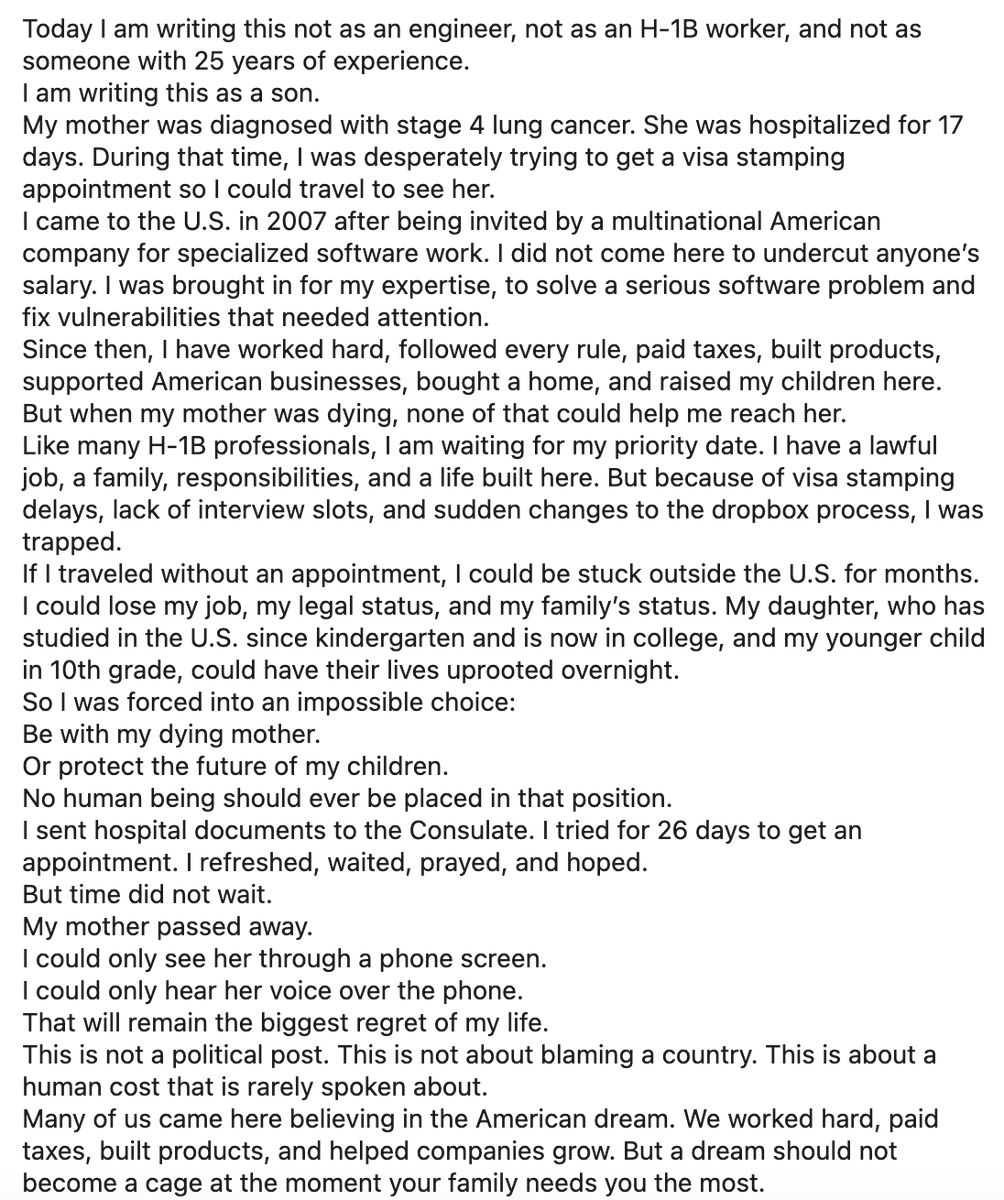
This H-1B worker has lived in the US for nearly 20 years and built a family here. His mom was dying in India. To visit her, he would need to wait months to book a consular appointment--with the soonest one available likely being scheduled one year out.
He made the difficult choice of not visiting his dying mom because leaving without an appointment would mean separation from his children, job, and his other obligations.
Much of the commentary around immigration focuses on how such bureaucratic burdens undermine immigrants’ ability to contribute and innovate. But we must remember that this red tape also prevents these people from being fully engaged with their own lives and meaningfully present in the lives of others. This matters too, and these seemingly non-economic problems will eventually translate into economic costs.
If America is no longer a place where people feel empowered to be the best versions of themselves as they celebrate, struggle, and grieve, it ceases not just being the land of opportunity, but also the land of dignity and purpose.
https://t.co/k17YL25nc5
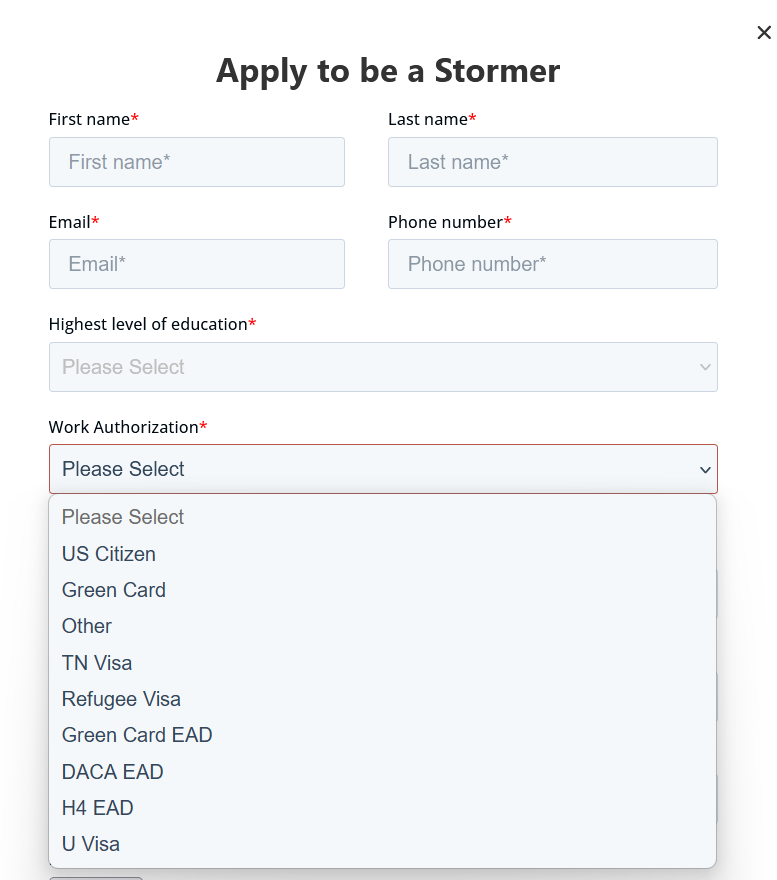
@vvirga@JBlunt1018 Maybe start with your own company, that encourages visa holders and refugees to "apply to be a Stormer".
"It’s killing the middle class & stealing the American Dream from an entire generation of young US professionals." -- why don't you lead by example?
https://t.co/u1u78VZn8B
Ok it gets funnier friends.
Hany is apparently a “right wing anti-immigrant crusader” in the streets and a pick-me minority me DEI saar me in the sheets.
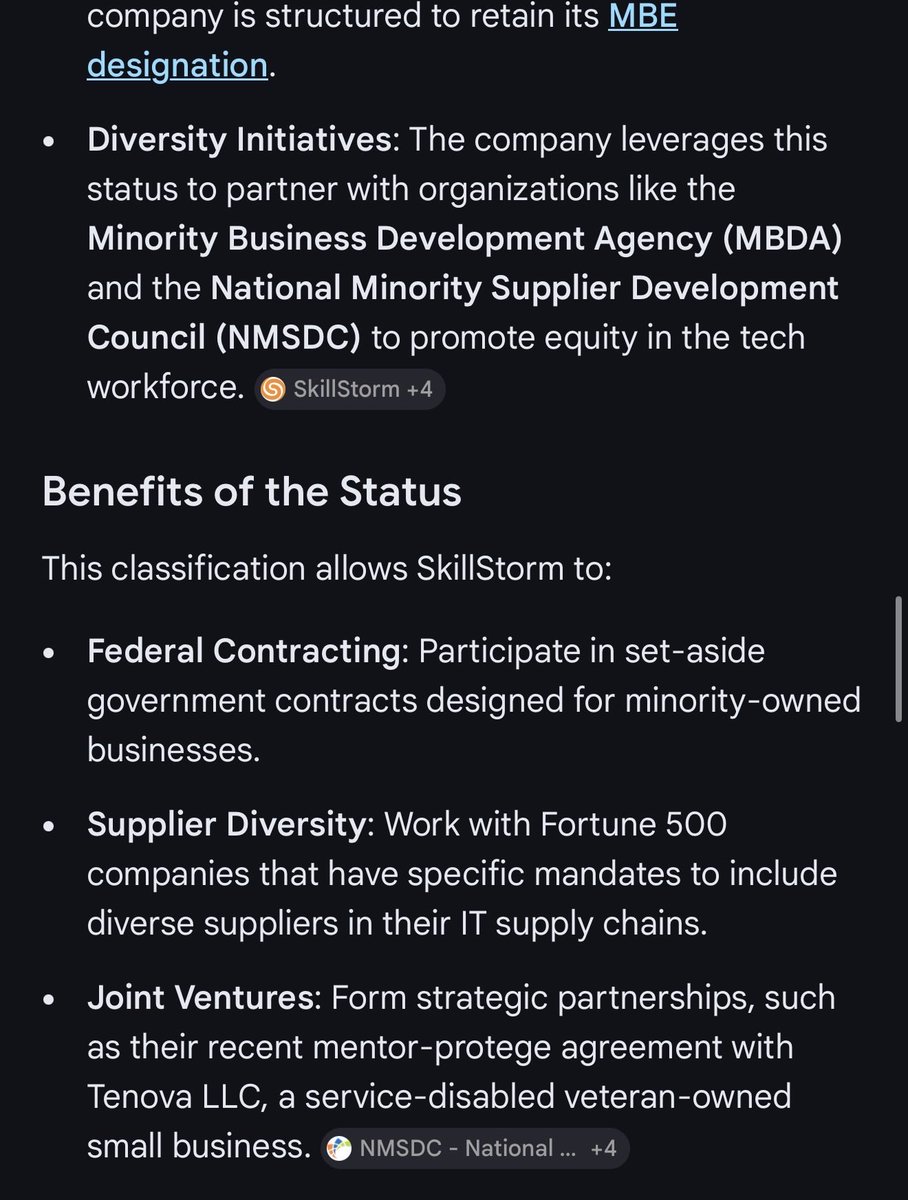
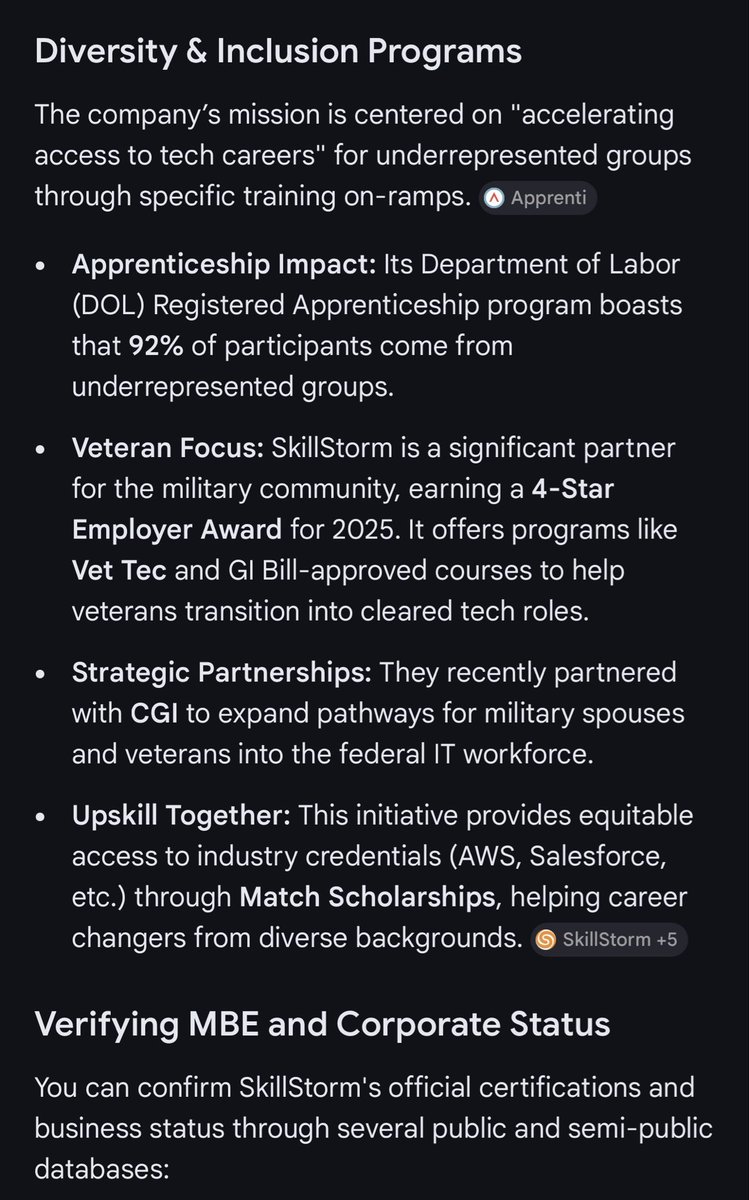
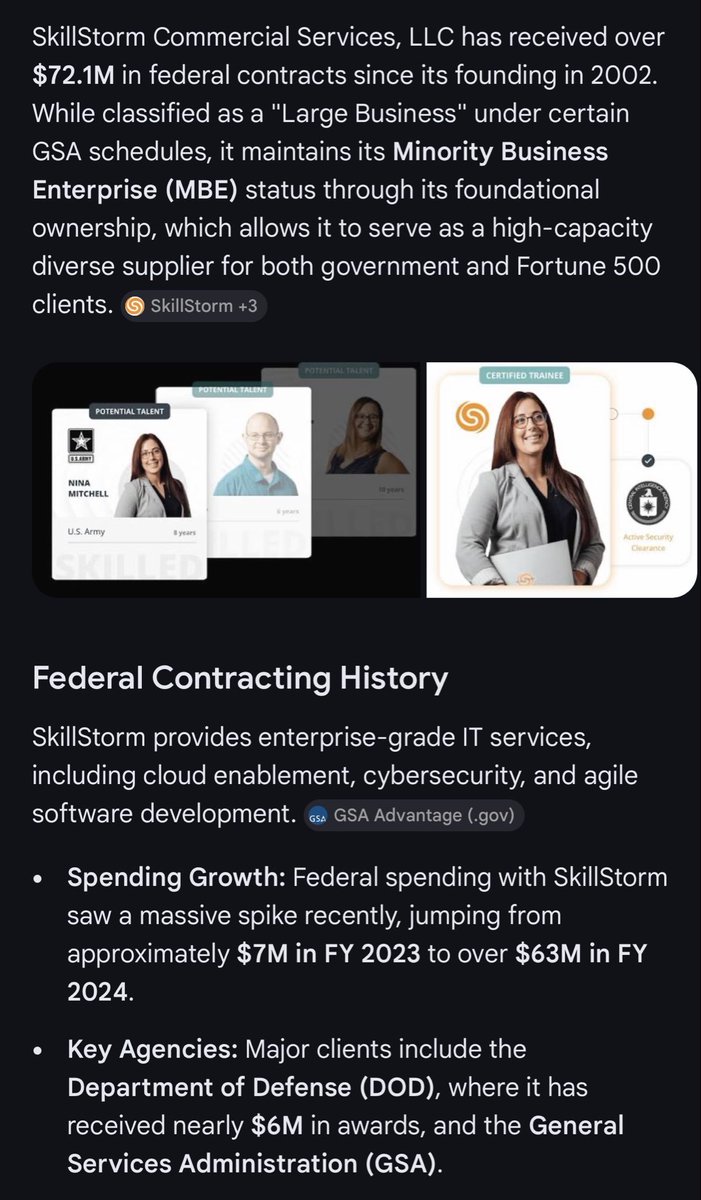
Because lol, the registered Department of Labor (DOL) Registered Apprenticeship program boasts that 92% of participants come from underrepresented groups. Uh huh. They qualify as a “Minority Owned Company”, and you know what that opens you up to in California!? 🤑🤑🤑
Are Indians the wrong kind of minority, then, Hany?
🚨.@RepTomSuozzi along with @RepMaxMiller unveiled the SACRED Act. It would make it a federal crime to intentionally intimidate, obstruct, or harass people exercising their right to religious worship within 100 feet of a place of worship. Hindu Temples, included.
Sit this one out. Plenty of groups chose to stay away from rallies—no one labeled them anything. The difference? Some individuals openly identify with the Khalistani separatist movement & then cry foul when called out for it. Stop gaslighting.
@NedaSa_ "What’s happening to one group today can happen to others tomorrow"
indeed.
Is that why Iranian immigrants opposed country cap removal bills every time it comes up? Unity?
Bloomberg’s reporter Akshat Rathi, LiLi Pike & Oscar Boyd frame India as a “top polluter” alongside China without context. That’s selective and misleading.
Facts they ignore:
🔹India emits 26% of China, ~65% of US.
🔹Most populous nation, yet far lower emissions intensity.
🔹52.5% non-fossil capacity already achieved (5 yrs early).
🔹Solar 150+ GW, record 44.6 GW added in FY26.
🔹80 crore trees planted
Why no hard questions to the US the largest historical emitter (~25%)?
This isn’t climate reporting. It’s narrative shaping. India is leading, not lagging. 🇮🇳
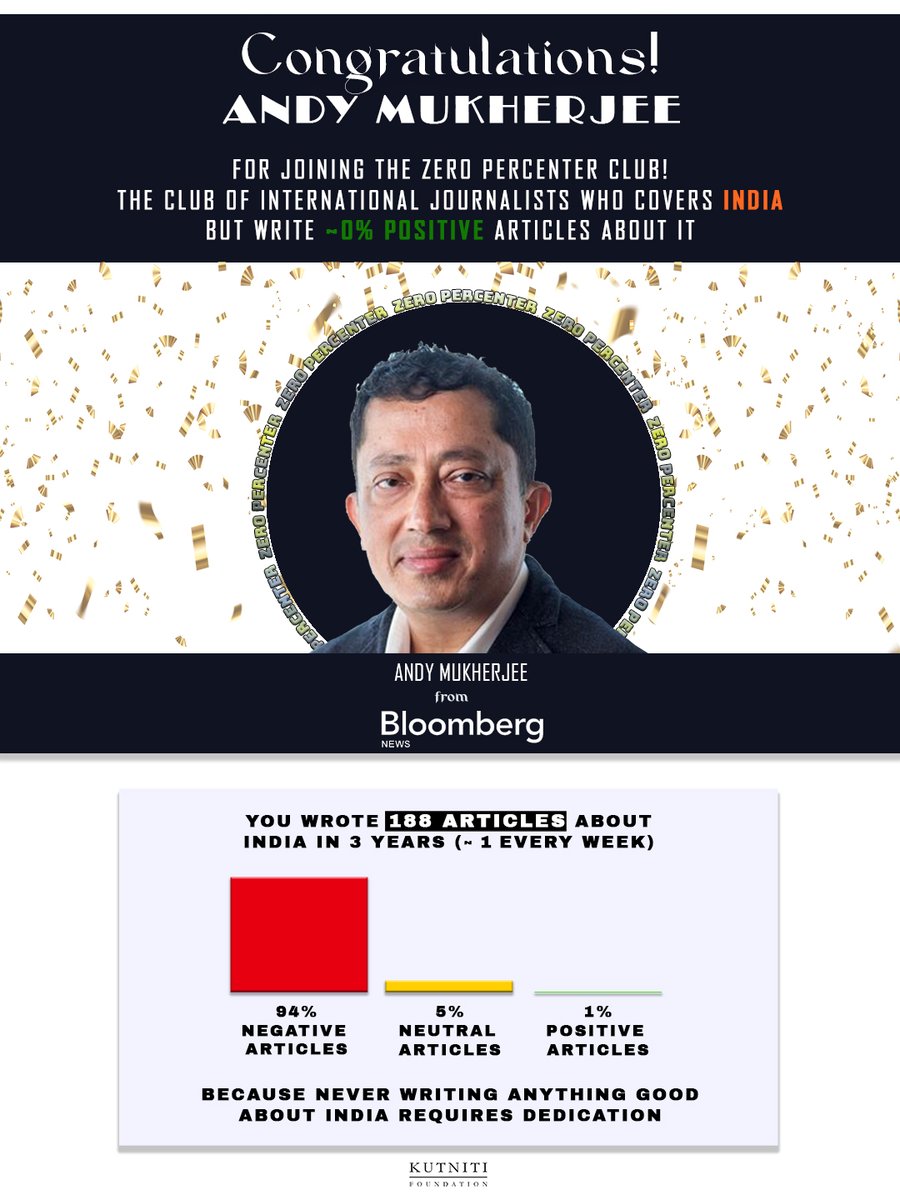
Andy Mukherjee is NOT your traditional anti-India journalist
They write against Indian Society
He writes against Indian Economy
And for Bloomberg, the most critical financial media
🇮🇳 188 ARTICLES about INDIA in 3 years (5 per month!)
🟢95% Negative 🟡4% Neutral 🔴1% Positive
to be fair, you don't engage in any original content creation
all you do is post rage-bait against Indians, so Indians react and get you impressions
that's a form of user/platform manipulation and @nikitabier is rightly putting you out of business
DEI = Deliberate Engagement Inflation
I hated the ICICI NRO/NRE banking experience so much that I closed my account today.
I already knew Indian banking isn’t great, but I assumed a top bank like ICICI would be manageable. I was wrong. The experience was terrible. I don’t understand how people regularly use these accounts.
- The app fails to work most of the time.
- ICICI representatives sometimes call me in the middle of the night just to check if everything's okay.
- They ask me to redo KYC every year. That’s fine, but the process is outdated. I had to download forms, fill them manually, sign with ink, print documents, and attest everything. It feels like 2015.
- I get account closure warnings every six months if I don’t use it. This might make sense for regular accounts, but not for NRE accounts. I live in the US and don’t use it often. These limits shouldn’t apply as long as there’s sufficient balance. To keep it active, I had to make a ₹1 transaction. Since the app doesn’t work, I had to log in through the website.
- Until recently, they didn’t allow password manager autofill. I had to manually type a 14-character random password every time.
There are many more issues I’m probably forgetting. Overall, a very frustrating experience.
If you had good experience with any others Indian banks with NRE/NRO accounts please let me know.