Sano combines genetic testing, recruitment, and long-term engagement in one platform, accelerating enrollment and simplifying operations for precision medicine
🧬 In 2017, a Facebook message led to one of the most important stories in modern genetic medicine.
In our recap of the latest episode of The Genetics Podcast, Dr. Timothy Yu of Boston Children's Hospital and Harvard Medical School joins host Patrick Short to trace the journey from milasen, the first custom ASO for a patient with an ultra-rare disease, to a field now treating roughly a hundred patients worldwide.
📖 Learn more by visiting the blog: https://t.co/iZx6ATK9VC
#RareDisease #PrecisionMedicine #GeneticMedicine
🧬 As genetic testing becomes increasingly central to precision medicine trials, genetic counseling is becoming operationally essential.
Genetic counselors help patients understand what testing means, support informed consent, address questions around family implications and incidental findings, and build the trust needed for sustained participation.
For sponsors, this can influence consent rates, testing completion, data quality, and participant retention across the trial lifecycle.
Our blog explores why genetic counseling matters in biotech and pharma precision medicine programs.
📖 Read more here: https://t.co/yc2iTl7LrP
🎙️Tune in to Episode 244 of #TheGeneticsPodcast 🚀
This week, we’re joined by Dr. Timothy Yu, Associate Professor of Pediatrics at Harvard Medical School and Attending Physician in Genetics and Genomics at Boston Children’s Hospital. Listen in to hear how one child’s hidden genetic mutation led to a personalized ASO treatment, what it takes to build clinical evidence in n-of-1 medicine, and how new FDA frameworks could help expand treatment options for ultra-rare genetic disease.
Available here👇
🎧 https://t.co/UJt1IUIc6s
📽️ https://t.co/APYacFhlCq
📢 On June 2nd, the FDA released draft guidance that could make it easier for gene therapy sponsors to reuse prior knowledge across CMC, nonclinical, and clinical development.
For the field, this is a step toward leaner, faster programs. But it also shifts the bottleneck downstream.
If sponsors can reach first-in-human studies faster, they also need the patient infrastructure to enroll those studies faster. That means genotype-characterized populations, pre-qualified cohorts, structured longitudinal data, and recontactable patient communities that persist beyond a single trial.
🧬 Gene therapy trials cannot rely on patient identification starting from zero every time. Especially when enrollment depends on confirming the precise genetic variant a therapy is designed to target.
In our latest blog, we look at what the FDA’s new guidance changes, why it matters for gene therapy development, and what it implies for patient recruitment infrastructure.
📖 Read it here: https://t.co/ik9bG6G7y9
🧠 Four conversations on The Genetics Podcast show how quickly Alzheimer’s research is changing.
The future of precision medicine in this field will depend on much more than identifying amyloid and tau. Earlier biomarkers, more nuanced genetics, diverse datasets, cell-level disease models, and patient-centered research all have a role to play.
The questions are also becoming more precise:
🔹 Can blood biomarkers help identify the right trial participants before symptoms appear?
🔹 What does APOE tell us about risk, protection, ancestry, and disease timing?
🔹 What would stage-specific treatment look like?
🔹 How can new diagnostic tools be implemented in ways that work for patients and health systems?
Featuring insights from Dr. Suzanne Schindler, Dr. Sarah Marzi, Dr. Paul Valdmanis, and Dr. Angela Bradshaw, this blog explores where Alzheimer’s precision medicine may be headed next.
📖 Read it here: https://t.co/o2yumCLN5A
🧠 What will it take to make precision psychiatry real?
In our recap of last week's episode of The Genetics Podcast, we explore how BD² is building the infrastructure needed to move bipolar disorder research from genetic discovery toward better diagnosis, treatment, and care.
The conversation features Dr. Cara Altimus, CEO of BD², and Dr. Ben Neale, Associate Professor at Harvard Medical School and Massachusetts General Hospital.
The discussion spanned themes including:
✅ Why rare variant discovery is opening new routes into bipolar biology
✅ How longitudinal cohorts and deep phenotyping can connect genetics to lived experience
✅ Why scalable biomarkers remain one of psychiatry’s biggest challenges ✅ How genetically informed subtypes could shape future clinical trials
✅ Why patient priorities need to go beyond symptom reduction
Read the full recap here: https://t.co/XCBf51H1HX
🎙️Tune in to Episode 243 of #TheGeneticsPodcast 🚀
This week, we’re joined by Dr. Cara Altimus, CEO of BD², and Dr. Benjamin Neale, Associate Professor at Harvard Medical School and Massachusetts General Hospital. Listen in to hear how rare variant discovery is revealing stronger genetic signals in bipolar disorder, how BD² is building a deeply phenotyped longitudinal cohort to connect biology with real-world patient experience, and why the goal is not just better diagnosis and treatment, but helping people with bipolar disorder thrive.
Available here👇
🎧 https://t.co/EF5NCJr7fJ
📽️ https://t.co/PYnUrEIH3p
Sano supports precision medicine programs across the end-to-end development lifecycle, from early study planning through to long-term participant engagement.
That means there are many different ways sponsors and research teams can work with us, and it is useful to have them clearly mapped out.
In this blog, we break down 7 ways to work with Sano, including patient finding, prescreening, digital consent, EMR retrieval, biomarker testing, engagement, and recontact.
🔗 Read the full article here: https://t.co/GMcZrW0cF8
🎙️ Episode 242 of #TheGeneticsPodcast is live 🚀
This week, we’re revisiting Patrick’s discussion with Dr. Angela Bradshaw, Director for Research at Alzheimer Europe and honorary lecturer at the University of Glasgow. Following a series of recent episodes exploring Alzheimer’s disease research, this conversation brings in an essential patient advocacy and nonprofit perspective on the field. Listen in to hear about how Alzheimer Europe partners in and supports pan-European dementia research, the heterogeneity of dementia and Alzheimer’s disease, and the critical role advocacy organizations play in ensuring research reflects the needs and priorities of patient communities.
Tune in here👇
🎧 https://t.co/mJwoiajWwJ
📽️ https://t.co/DnDNMyypOu
Site enablement is trial design. Treating it as an afterthought is one of the most reliable ways to inflate screen failure rates.
In a Sano-supported Phase 2 Parkinson's disease trial targeting a specific genetic variant, embedding patient identification into routine clinical workflows at activated sites produced a result that changed the program's trajectory.
🧪 Demand for genetic testing exceeded initial projections so significantly that planned kit volumes doubled from 600 to 1,200. The mutation hit rate held at approximately 30%, confirming the quality of identification. Site-originated patients accounted for 44% of randomizations, nearly doubling the rate compared to patient advertising alone.
One operational detail made a measurable difference: genetic testing kits were available at sites during routine visits. When a patient had just discussed the study with a clinician, the next step was immediately in front of them.
Proximity between clinical conversation and participant action removes a delay that quietly kills enrollment momentum.
❓ What operational changes have you seen make the biggest difference to site performance in precision medicine trials?
💰 The most expensive recruitment mistakes in clinical trials get made before the first patient is ever contacted.
Lindsey Wahlstrom, patient engagement expert and founder of Rona's FunLab, put it directly in a rare disease-focused webinar: "Recruitment challenges are locked in at the moment of protocol lock. If you are not engaging families prior to that point, you might struggle with recruitment. It's not a marketing thing. It's a design thing."
By the time a trial opens, eligibility criteria, visit schedules, consent materials, and site workflows are already fixed. Those decisions determine whether eligible patients can realistically be identified, confirmed, and enrolled.
Approximately 85% of trials fail to recruit enough patients. Pouring budget into advertising cannot fix a protocol that was designed without input from the patients it was built to serve.
Earlier patient engagement in protocol development is one of the clearest ways to reduce downstream recruitment failure.
❓ How early do patient advocates get involved in the trials you work on?
🎙️Tune in to Episode 241 of #TheGeneticsPodcast 🚀
With Encoded Therapeutics making recent progress in Dravet syndrome gene therapy, we’re revisiting Patrick’s conversation with Salvador Rico, Chief Medical Officer at Encoded. Listen in for lessons from XLMTM, the realities of gene therapy development, and what it takes to turn genetic insight into meaningful medicines.
Available here👇
🎧 https://t.co/dTzLntYaMp
📽️ https://t.co/E57brV3qWU
#Genetics #Genomics #PrecisionMedicine #GeneTherapy
💡 Screen failure in precision medicine trials is typically framed as a recruitment problem, but it’s more often a design problem.
Across Sano-supported rare disease programs, eligibility rates among participants who complete onboarding run as high as 98%. This means the funnel works. The fracture point comes after eligibility confirmation, when participants are asked to order a genetic testing kit.
Across studies, the proportion of eligible participants who actually order a kit ranges from 28% to 97%. That variance is enormous, and it is almost entirely shaped by how the testing pathway was designed.
At-home testing options, clear instructions, timely follow-up, genetic counseling access, and transparent communication about results all determine whether an eligible participant continues or drops out at exactly the moment they are asked to take a concrete step.
Sponsors who focus only on top-of-funnel volume miss this entirely. The real question is what happens to eligible participants after confirmation.
📖 To learn more, visit the article linked in the comments below.
New data from the LiveWell study shows that CLDI, a longitudinal measure derived from routine NHS blood tests, identifies clinically significant liver fibrosis with an AUC of 0.884, compared to 0.572 for FIB-4, the most widely used first-line test.
The study, sponsored by Sano and funded by Innovate UK, recruited 994 participants from a single NHS site in under a year. It was conducted alongside partners Predictive Health Intelligence, Tawazun Health, and Somerset NHS Foundation Trust, and results were presented today in a late-breaking abstract at the EASL Congress in Barcelona.
The practical implications are significant. CLDI uses data that already exists in NHS systems with no new tests or infrastructure required. Patients at high risk can be referred directly to transient elastography, creating a one-step pathway from identification to diagnostic confirmation.
For the research community, this matters too. With more than 130 active MASLD studies currently underway, patient identification is one of the biggest constraints on trial efficiency. More accurate population-level screening accelerates recruitment and reduces screen failure.
A wider validation study involving 8,000 patients is now in progress, with results expected later this summer.
Read the full press release: https://t.co/8MaV6I5c0E
#LiverDisease #MASLD #PrecisionMedicine #ClinicalTrials #EASL2026
🧠 What if treating Huntington’s disease requires looking beyond the mutant protein?
For years, much of the field has focused on lowering mutant huntingtin. But Dr. Vincent Dion’s work points to another possibility: targeting the genetic instability that drives disease progression itself.
In the latest recap from The Genetics Podcast, we cover key takeaways from Vincent’s conversation on:
💡 Why DNA repair can become a disease driver in Huntington’s
💡 How CRISPR nickase editing can contract toxic CAG repeat expansions
💡 Why correction could offer a different path from long-term gene silencing
💡 What it takes to move a basic science discovery toward first-in-human studies
Read the full recap here: https://t.co/qFZmsnpkWh
#Genomics #HuntingtonsDisease #GeneEditing #PrecisionMedicine
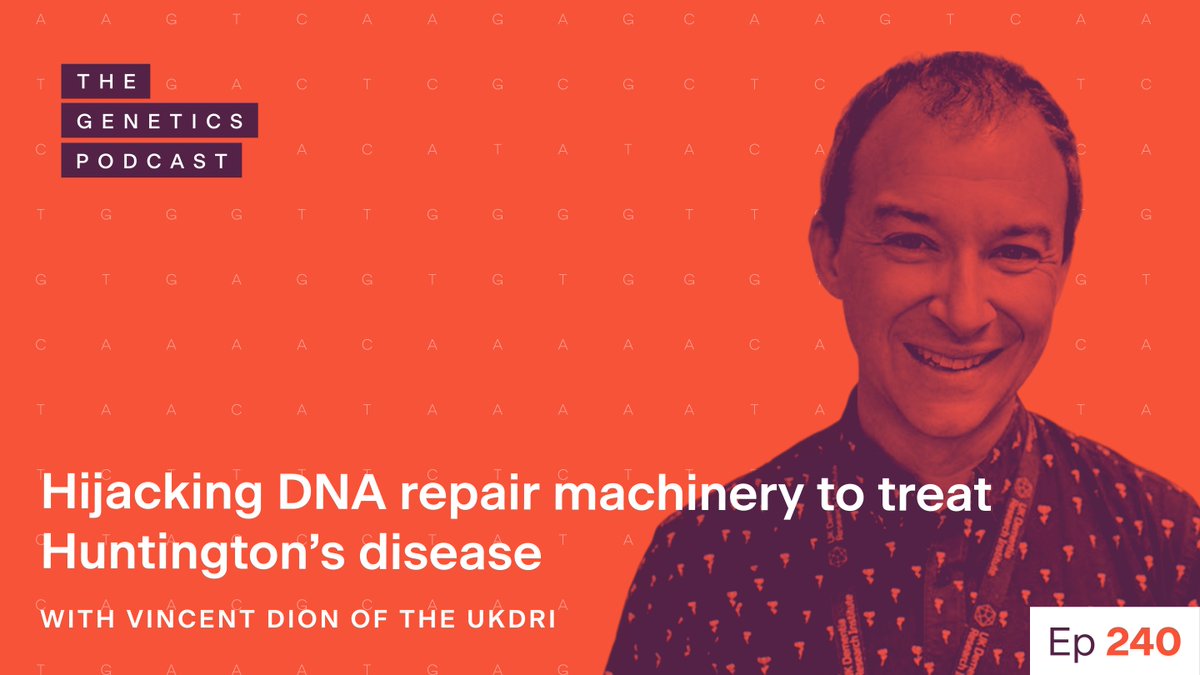
🎙️Tune in to Episode 240 of #TheGeneticsPodcast 🚀
This week, we’re joined by Dr. Vincent Dion, Group Leader at the UK Dementia Research Institute at Cardiff University. Listen in to hear how somatic repeat expansions drive Huntington’s disease, why DNA repair can make these mutations worse, and how CRISPR nickase editing could shrink disease-causing repeats at the DNA level.
Available here👇
🎧 https://t.co/av8s4TQ0DT
📽️ https://t.co/Z0W11btU3d
#GeneEditing #HuntingtonsDisease #Genomics
📊 Traditional recruitment metrics count activity. Precision medicine requires metrics that count outcomes.
Screens completed and tests ordered tell you how busy the funnel is. But what they don’t tell you is whether the right patients are moving through it. In genetically stratified trials, a high volume of screens with low eligibility confirmation rates signals a targeting problem rather than a recruitment success.
The metrics that actually predict trial performance are pre-screening completion rates, time from initial contact to genetic confirmation, referral-to-enrollment conversion, and retention through study completion.
Retention is particularly underweighted. Participants who disengage before completing the study leave behind incomplete datasets. In precision medicine, where each participant represents a highly specific and rare data point, partial data is a significant loss.
Sponsors who track engagement metrics across the full trial lifecycle get early warning signals before enrollment shortfalls become schedule delays.
❓ Which of these metrics does your team currently review on a weekly basis?
🧠 Some of the most important biology in neurodegenerative disease may be hiding in regions of the genome that have been hardest to study.
Our new recap of last week’s episode of The Genetics Podcast with Dr. Paul Valdmanis, Associate Professor at the University of Washington, explores how long-read sequencing is reshaping what researchers can see in Alzheimer’s disease, ALS, and other complex conditions.
🔗 Read the recap here: https://t.co/vwGjiuuM68
#TheGeneticsPodcast #Neurodegeneration #Alzheimers #ALS #Neurogenomics
⚠️ Screen failure is often treated as a recruitment problem. In precision medicine trials, many of the biggest barriers are already built into the trial design before recruitment begins.
Our latest article looks at why eligible participants can still drop out before enrollment, especially when genetic confirmation is required.
🧬 Using data from rare disease trials Sano has supported, the article explores where the funnel commonly breaks and practical ways to design trials around conversion quality, including clearer testing pathways, earlier patient input, better site enablement, and participant journeys that help people move from interest to action.
Read the full article here: https://t.co/zdtq2j99ef
#PrecisionMedicine #ClinicalTrials #TrialOperations #GeneticTesting #RareDisease