Sano combines genetic testing, recruitment, and long-term engagement in one platform, accelerating enrollment and simplifying operations for precision medicine
🧬 Trace Neuroscience just announced that the first patients were dosed in their ALS trial, so we went back and re-visited our podcast conversation with founder and CEO Eric Green.
He first joined us on The Genetics Podcast in December 2024, when Trace had just launched and the clinic was still a ways off. Listening back now, knowing where things have landed, is pretty striking.
We wrote up the full story in a new blog post.
🔗 Link in comments.
🎙️Tune in to Episode 246 of #TheGeneticsPodcast 🚀
This week, we're joined by Yentli Soto Albrecht, physician-scientist in training and founder of CureC9. Listen in to hear how losing her father to C9orf72 ALS and learning her own genetic risk led her to pivot her career toward curing it, the biology linking C9orf72 to ALS and FTD, and how CureC9 is removing barriers across biomarkers, therapeutics, and patient samples to accelerate a cure.
Available here👇
🎧 https://t.co/gO2UNguh2T
📽️ https://t.co/SDdjkAuzSD
🎙️ 🎙️ In this throwback solo episode of The Genetics Podcast, Patrick breaks down the state of AAV gene therapy — the science, the safety signals, and why major companies have been stepping back from the space.
Worth a listen if you work in gene therapy. We'll be sharing some thoughts on the patient communication side of this next week. Stay tuned!
🎧 https://t.co/i971ENvg8z
📽️ https://t.co/VUcksaN5mX
Operation Trailblazer just became a significant federal bet on US clinical trials. The new HHS initiative targets regulatory bottlenecks, including THRIVE, a sub-initiative accelerating in vivo precision genetic medicines for hereditary rare diseases.
Faster approvals don't automatically mean faster access, though. The gap is in the infrastructure between "this therapy works" and "this patient got it."
Operation Trailblazer solves for speed to approval. Rare disease and precision medicine sponsors still need to solve for speed to the patient.
🧬 Our new blog looks at where the gap is and what closing it requires: https://t.co/KV3PC0AQD6
#ClinicalTrials #RareDisease #PrecisionMedicine #GeneTherapy #PatientRecruitment
🧬 The operational model governing most genomics-driven programs was designed for common diseases with large, accessible patient populations.
Rare disease programs face a fundamentally different set of constraints. The genetically eligible population for a given trial may number in the hundreds or low thousands across an entire country. Traditional recruitment channels struggle to identify these patients at all, let alone screen them genetically and engage them within a timeline that supports enrollment targets.
Fragmentation compounds the problem. Patients are dispersed across geographies and health systems. Genetic testing may not have occurred. Clinical records are inconsistent. The infrastructure needed to find, qualify, and retain participants must work across borders and institutions, with enough sensitivity.
This is a systems-level challenge. Solving it requires coordinated capabilities: broad referral networks, integrated genetic testing, and engagement tools that maintain contact over long timelines as sponsors wait for the right study match.
⛓️💥 Sponsors who treat this as a procurement problem, selecting point solutions for each piece of the puzzle, tend to discover the gaps only after enrollment has stalled.
Those who invest in unified infrastructure build something that outlasts a single study: a recontactable patient asset that compounds in value across the entire pipeline. ✅
🎙️ Tune in to Episode 245 of #TheGeneticsPodcast 🚀
This week, we're re-sharing our conversation with Eric Green, Founder and CEO of Trace Neuroscience. Listen in to hear Eric and Patrick discuss developing targeted gene therapies for ALS, following Trace's recent announcement that the first patient has been dosed with its UNC13A-restoring ASO therapy.
🎧 https://t.co/Z52lJMQGJw
📽️ https://t.co/r1GxnSDxZ0
Patient registries are a foundational part of precision medicine infrastructure.
When designed well, they can support faster patient identification, more efficient screening, better trial design, and stronger longitudinal understanding of genetically defined or rare disease populations.
They also bring important challenges around data fragmentation, privacy, consent, governance, and long-term trust.
In this blog, we break down what patient registries are, where they create value, and what sponsors need to consider when using them in precision medicine clinical trials.
📖 Read the full article here: https://t.co/VPbcnJ7fVz
💡 One of the sharpest insights from our Rare Disease Day Webinar: recruitment challenges are locked in at the moment of protocol lock.
If you're struggling to recruit, it's usually not a marketing problem. It's a design problem. Eligibility criteria, visit burden, and site selection decide how hard enrollment will be long before any outreach begins.
For more insights into rare disease drug development from experts and advocates, listen to the full discussion [linked in the comments below].
#RareDisease #ClinicalTrials #PatientRecruitment #ClinicalTrialDesign
🚦The FDA’s recent rare disease gene therapy reversals are a meaningful signal for sponsors.
In five days, the agency reopened the path for two therapies it had previously rejected: uniQure’s AMT-130 for Huntington’s disease and REGENXBIO’s navsunli for the neurological form of Hunter syndrome. Both decisions suggest a more pragmatic regulatory posture around rare disease gene therapy evidence packages, especially where unmet need is severe and disease biology is well understood.
That being sad, faster regulatory paths also put pressure on the infrastructure behind clinical development. For genetically defined conditions, eligible patients are often small in number, geographically dispersed, and difficult to identify through traditional site-based recruitment alone. If a sponsor suddenly has a clearer path to BLA submission or a confirmatory study, patient identification needs to move quickly too.
This is where genotype-first recruitment becomes essential. Sponsors need to understand where eligible patients are, how they can be genetically confirmed, and how they can be engaged before the regulatory window opens. The programs best positioned to accelerate will be those with genetic testing access, recontactable patient groups, engagement models, and feasibility insight already in place.
For rare disease gene therapy, recruitment readiness is fast becoming part of clinical strategy, not just trial execution.
Learn more: https://t.co/EtqEnxMFfX
🧬 In 2017, a Facebook message led to one of the most important stories in modern genetic medicine.
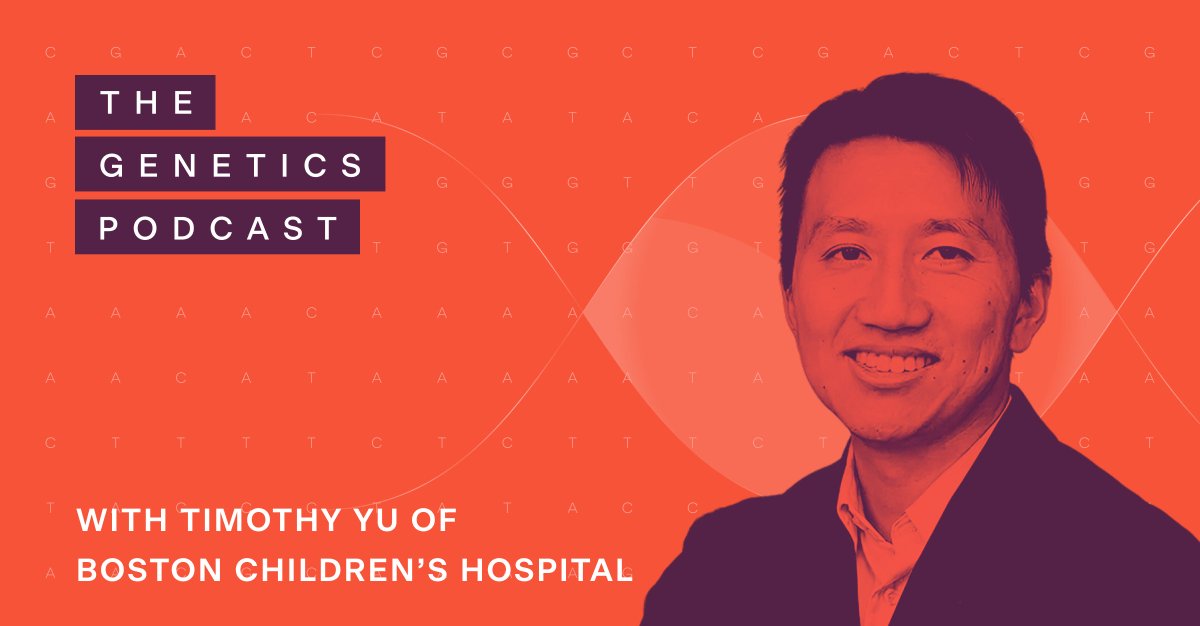
In our recap of the latest episode of The Genetics Podcast, Dr. Timothy Yu of Boston Children's Hospital and Harvard Medical School joins host Patrick Short to trace the journey from milasen, the first custom ASO for a patient with an ultra-rare disease, to a field now treating roughly a hundred patients worldwide.
📖 Learn more by visiting the blog: https://t.co/iZx6ATK9VC
#RareDisease #PrecisionMedicine #GeneticMedicine
🧬 As genetic testing becomes increasingly central to precision medicine trials, genetic counseling is becoming operationally essential.
Genetic counselors help patients understand what testing means, support informed consent, address questions around family implications and incidental findings, and build the trust needed for sustained participation.
For sponsors, this can influence consent rates, testing completion, data quality, and participant retention across the trial lifecycle.
Our blog explores why genetic counseling matters in biotech and pharma precision medicine programs.
📖 Read more here: https://t.co/yc2iTl7LrP
🎙️Tune in to Episode 244 of #TheGeneticsPodcast 🚀
This week, we’re joined by Dr. Timothy Yu, Associate Professor of Pediatrics at Harvard Medical School and Attending Physician in Genetics and Genomics at Boston Children’s Hospital. Listen in to hear how one child’s hidden genetic mutation led to a personalized ASO treatment, what it takes to build clinical evidence in n-of-1 medicine, and how new FDA frameworks could help expand treatment options for ultra-rare genetic disease.
Available here👇
🎧 https://t.co/UJt1IUIc6s
📽️ https://t.co/APYacFhlCq
📢 On June 2nd, the FDA released draft guidance that could make it easier for gene therapy sponsors to reuse prior knowledge across CMC, nonclinical, and clinical development.
For the field, this is a step toward leaner, faster programs. But it also shifts the bottleneck downstream.
If sponsors can reach first-in-human studies faster, they also need the patient infrastructure to enroll those studies faster. That means genotype-characterized populations, pre-qualified cohorts, structured longitudinal data, and recontactable patient communities that persist beyond a single trial.
🧬 Gene therapy trials cannot rely on patient identification starting from zero every time. Especially when enrollment depends on confirming the precise genetic variant a therapy is designed to target.
In our latest blog, we look at what the FDA’s new guidance changes, why it matters for gene therapy development, and what it implies for patient recruitment infrastructure.
📖 Read it here: https://t.co/ik9bG6G7y9
🧠 Four conversations on The Genetics Podcast show how quickly Alzheimer’s research is changing.
The future of precision medicine in this field will depend on much more than identifying amyloid and tau. Earlier biomarkers, more nuanced genetics, diverse datasets, cell-level disease models, and patient-centered research all have a role to play.
The questions are also becoming more precise:
🔹 Can blood biomarkers help identify the right trial participants before symptoms appear?
🔹 What does APOE tell us about risk, protection, ancestry, and disease timing?
🔹 What would stage-specific treatment look like?
🔹 How can new diagnostic tools be implemented in ways that work for patients and health systems?
Featuring insights from Dr. Suzanne Schindler, Dr. Sarah Marzi, Dr. Paul Valdmanis, and Dr. Angela Bradshaw, this blog explores where Alzheimer’s precision medicine may be headed next.
📖 Read it here: https://t.co/o2yumCLN5A
🧠 What will it take to make precision psychiatry real?
In our recap of last week's episode of The Genetics Podcast, we explore how BD² is building the infrastructure needed to move bipolar disorder research from genetic discovery toward better diagnosis, treatment, and care.
The conversation features Dr. Cara Altimus, CEO of BD², and Dr. Ben Neale, Associate Professor at Harvard Medical School and Massachusetts General Hospital.
The discussion spanned themes including:
✅ Why rare variant discovery is opening new routes into bipolar biology
✅ How longitudinal cohorts and deep phenotyping can connect genetics to lived experience
✅ Why scalable biomarkers remain one of psychiatry’s biggest challenges ✅ How genetically informed subtypes could shape future clinical trials
✅ Why patient priorities need to go beyond symptom reduction
Read the full recap here: https://t.co/XCBf51H1HX
🎙️Tune in to Episode 243 of #TheGeneticsPodcast 🚀
This week, we’re joined by Dr. Cara Altimus, CEO of BD², and Dr. Benjamin Neale, Associate Professor at Harvard Medical School and Massachusetts General Hospital. Listen in to hear how rare variant discovery is revealing stronger genetic signals in bipolar disorder, how BD² is building a deeply phenotyped longitudinal cohort to connect biology with real-world patient experience, and why the goal is not just better diagnosis and treatment, but helping people with bipolar disorder thrive.
Available here👇
🎧 https://t.co/EF5NCJr7fJ
📽️ https://t.co/PYnUrEIH3p
Sano supports precision medicine programs across the end-to-end development lifecycle, from early study planning through to long-term participant engagement.
That means there are many different ways sponsors and research teams can work with us, and it is useful to have them clearly mapped out.
In this blog, we break down 7 ways to work with Sano, including patient finding, prescreening, digital consent, EMR retrieval, biomarker testing, engagement, and recontact.
🔗 Read the full article here: https://t.co/GMcZrW0cF8
🎙️ Episode 242 of #TheGeneticsPodcast is live 🚀
This week, we’re revisiting Patrick’s discussion with Dr. Angela Bradshaw, Director for Research at Alzheimer Europe and honorary lecturer at the University of Glasgow. Following a series of recent episodes exploring Alzheimer’s disease research, this conversation brings in an essential patient advocacy and nonprofit perspective on the field. Listen in to hear about how Alzheimer Europe partners in and supports pan-European dementia research, the heterogeneity of dementia and Alzheimer’s disease, and the critical role advocacy organizations play in ensuring research reflects the needs and priorities of patient communities.
Tune in here👇
🎧 https://t.co/mJwoiajWwJ
📽️ https://t.co/DnDNMyypOu










![sanogenetics's tweet photo. 💡 One of the sharpest insights from our Rare Disease Day Webinar: recruitment challenges are locked in at the moment of protocol lock.
If you're struggling to recruit, it's usually not a marketing problem. It's a design problem. Eligibility criteria, visit burden, and site selection decide how hard enrollment will be long before any outreach begins.
For more insights into rare disease drug development from experts and advocates, listen to the full discussion [linked in the comments below].
#RareDisease #ClinicalTrials #PatientRecruitment #ClinicalTrialDesign](https://pbs.twimg.com/media/HLgoHnpXkAArzmQ.jpg)