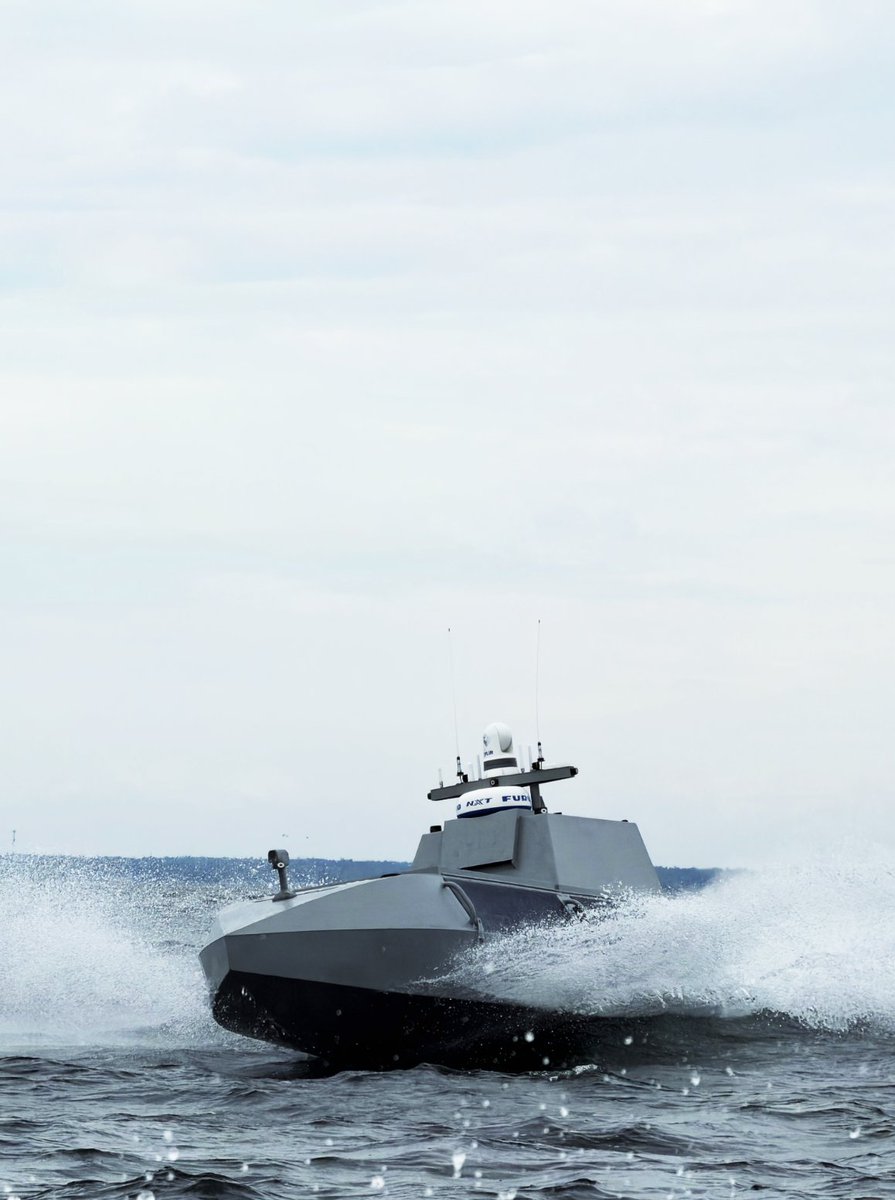
This Labor Day, we’re celebrating the people behind the mission.
From design and engineering to building, testing, and deployment, Seasats is powered by the people who make persistent maritime autonomy possible.
Thank you to the crew that keeps Seasats moving forward, on the water and off.
Happy Labor Day from Seasats.
#LaborDay #Seasats #MaritimeAutonomy #DefenseTech
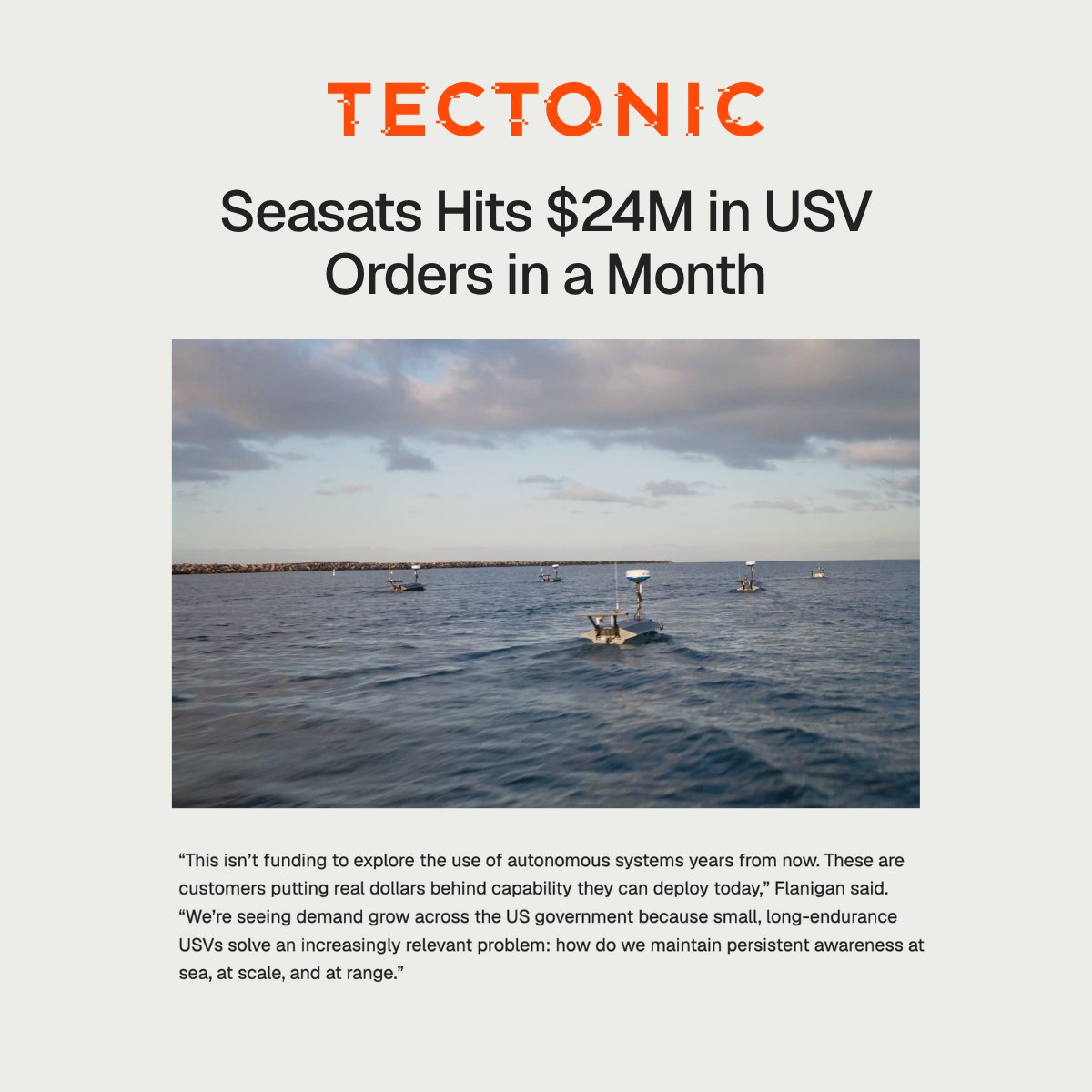
Over the last month, Seasats has booked more than $24 million in new orders in support of U.S. national security customers.
The orders span USV procurement and Robot-as-a-Service contracts, and include Lightfish for delivery to the U.S. Marine Corps and U.S. Navy. They come from a range of U.S. Government customers and mission sets, reflecting growing demand for small, long-endurance USVs across a broad base of military users.
This milestone marks a significant acceleration in our growth and our role as an increasingly trusted provider of operational autonomous maritime capability to the U.S. Government.
Read more in this @tectonicdefense article via the link in the comments.
#Seasats #MaritimeAutonomy #USV #DefenseTech #AutonomousSystems #MaritimeSecurity #Lightfish
Seasats CEO Mike Flanigan joined @MTSlive to discuss how unmanned surface vessels have fundamentally changed the cost equation for maritime missions.
Twenty years ago, those missions depended on crewed ships, manned aircraft, and expensive satellite coverage. Today, Seasats’ Lightfish can conduct the same mission at a fraction of the cost and persist on station far longer than any aircraft can remain aloft.
Listen to the full episode through the link in the comments.
#Seasats #MaritimeAutonomy #USV #Lightfish #MaritimeDomainAwareness #DefenseTech #AutonomousSystems
Seasats is headed to Traverse City for the @RealGLOS' Lakebed 2030 conference, Sept. 15-17.
From safer navigation to more robust infrastructure security and improved environmental monitoring, understanding what’s beneath the surface starts with better data.
We’re looking forward to sharing how autonomous surface vessels can help expand hydrographic survey and mapping efforts, collecting more data across broader areas with less operational overhead.
See you at Lakebed 2030.
#Lakebed2030 #Hydrography #OceanScience #MaritimeAutonomy #USV #Seasats
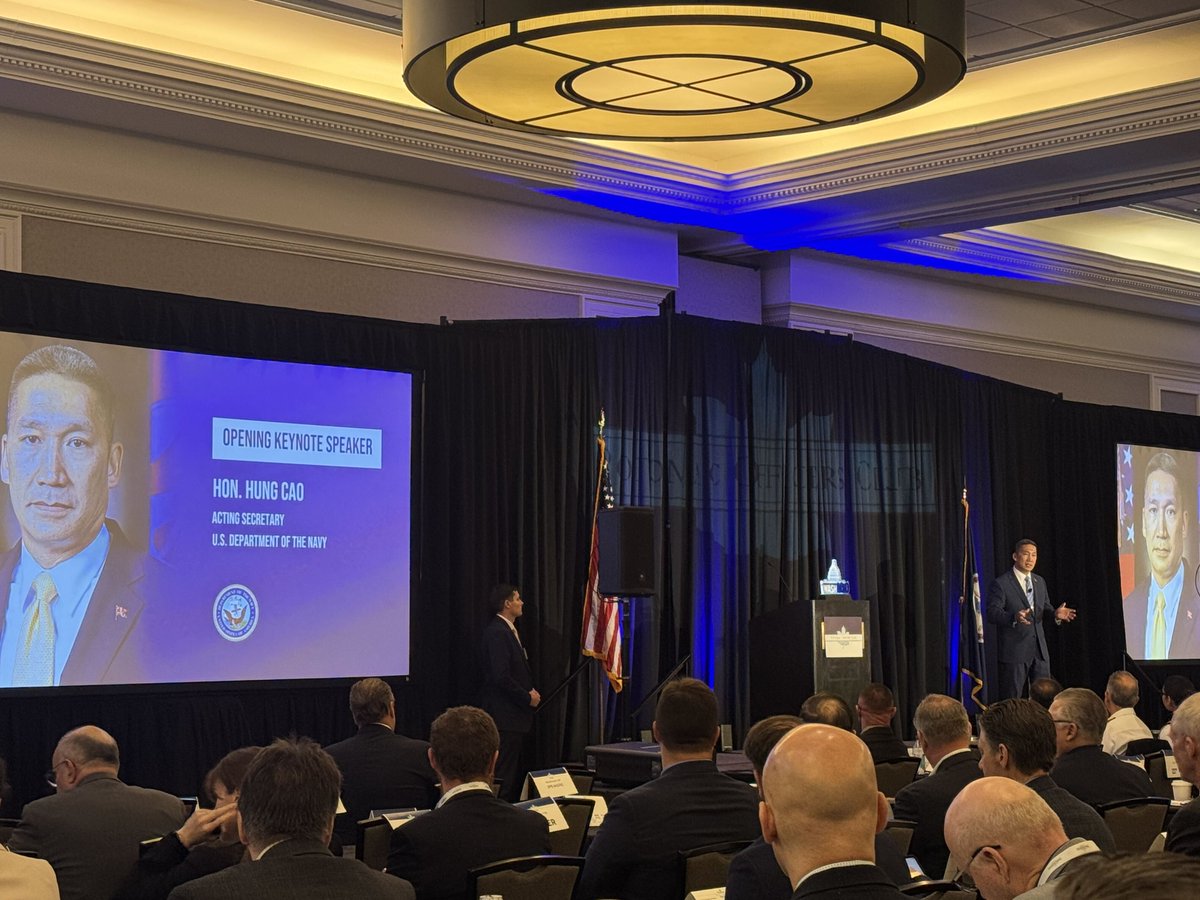
Last week, Seasats joined leaders from across the Navy and defense industry at the @PotomacOfficers' 2026 Navy Summit.
As the Navy moves toward a hybrid fleet, the focus is shifting from what autonomous systems could do to what it takes to field them faster, integrate them into existing operations, and deliver capability at scale.
#NavySummit #MaritimeDomainAwareness #AutonomousSystems #USV #DefenseTech #UnmannedSystems #Seasats
Seasats CEO Mike Flanigan recently joined @dronewarspod to discuss the world's first USV transit of the Taiwan Strait and what Lightfish found while collecting data in one of the world's most contested waterways.
Listen to the full episode through the link in the comments.
#Autonomy #Seasats #NavalWarfare #MaritimeDrones #DroneWars #Firestorm #Taiwan
Seasats participated in Silent Swarm 2026, advancing Electromagnetic Spectrum Operations alongside government and industry partners.
During the event, Seasats deployed a heterogeneous fleet of five autonomous surface vessels, including Lightfish and Quickfish, demonstrating coordinated multi-platform operations with minimal operators, while integrating next-gen maritime sensing and electromagnetic spectrum capabilities.
Notably, the production-run Quickfish hit the water, completing a two-week government exercise with multiple payloads. Built on the Lightfish stack, Quickfish delivers 40+ knot sprint speeds, high sea state operations, long range, a large payload bay for aerial vehicles, and an industry-first on-station patrol mode for weeks of deployment without refueling.
Thank you to @NAVSEACrane for the opportunity to advance autonomous maritime technology.
#SilentSwarm2026 #MaritimeAutonomy #Seasats #DefenseTech
Seasats' Lightfish was deployed at RIMPAC 2026 as part of AUKUS Pillar II undersea capability trials off the coast of Hawaii, the world's largest international maritime exercise that brought together 34 nations and more than 25,000 personnel.
Lightfish operated alongside Australian and @USNavy assets, contributing to the demonstration of interoperability between autonomous systems in a real-world maritime environment.
Link in comments.
#RIPMAC2026 #Hawaii #MaritimeDomainAwareness #AutonomousSystems #USV #UnmannedSystems
Seasats is live from @GlobalSOF's Indo-Pacific Irregular Warfare Symposium in Honolulu.
Find the Seasats team at Booth #511 as we showcase autonomous maritime systems built for persistent maritime awareness, distributed operations, and real-world deployment at scale.
#IndoPacific #MaritimeDomainAwareness #AutonomousSystems #USV #DefenseTech #IrregularWarfare #Seasats
Seasats is proud to welcome Major General Eric "Coach" Hill, USAF (Ret.), to our Advisory Board.
As a 32-year veteran and Deputy Commander of @AFSpecOpsCmd, Eric led U.S. and Coalition Special Operations Forces across the 72-country Global Coalition to defeat ISIS. His career spans flight test and acquisition, combat leadership, and multiple Pentagon tours.
Eric brings a rare combination of operational and acquisition experience, with a deep understanding of what it takes to turn emerging technology into capability that can be fielded, sustained, and scaled. His perspective will help Seasats accelerate the delivery of autonomous maritime systems built around the real-world requirements of U.S. and allied forces.
#Seasats #DefenseTech #MaritimeAutonomy #AutonomousSystems #DefenseInnovation #NationalSecurity #SpecialOperations
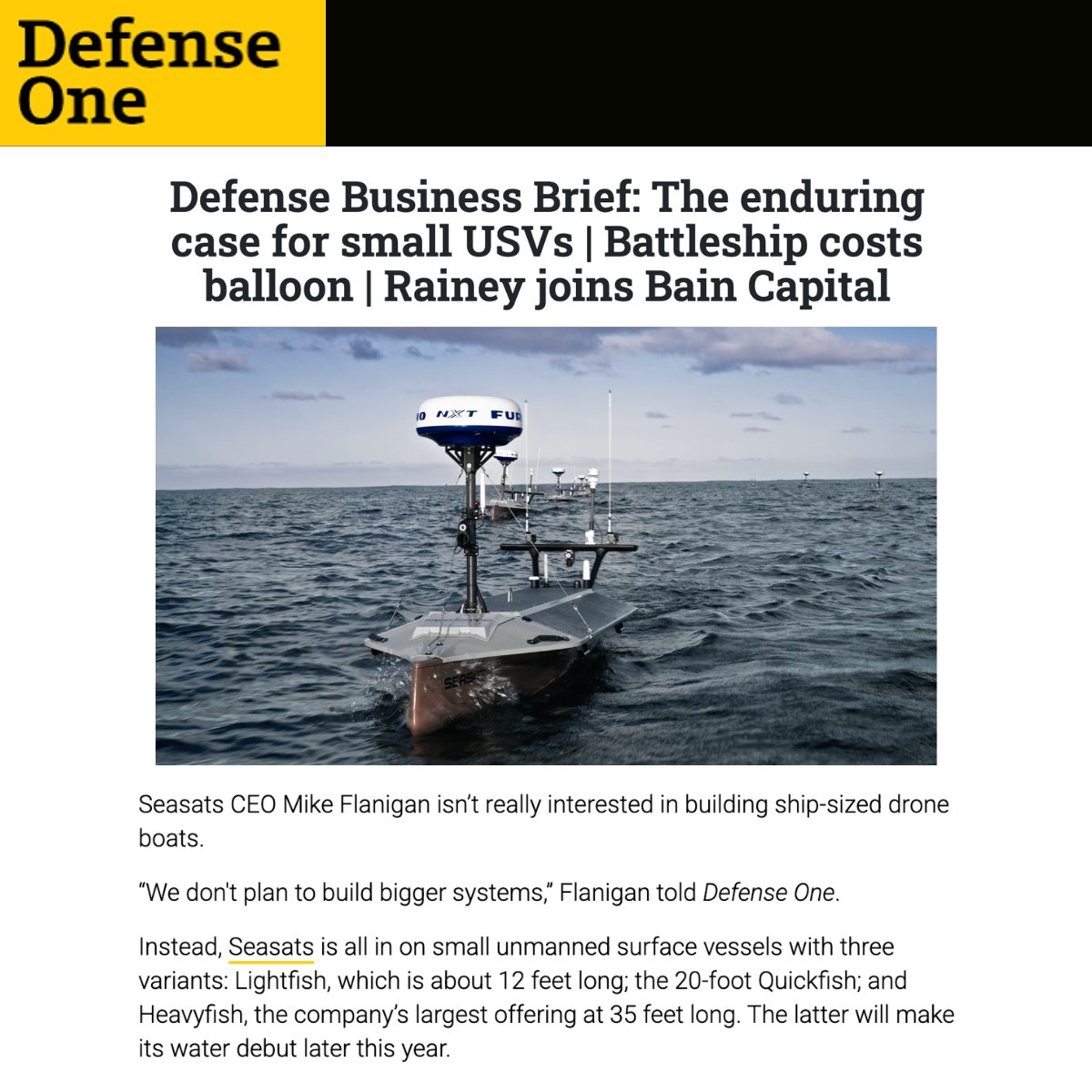
Seasats CEO Mike Flanigan spoke with @DefenseOne about our focus on small unmanned surface vessels and why their size is strategically more valuable than larger USVs.
"Vessels under 40 feet are much harder to spot. They're much faster to build. You can use them without regret. So you actually end up with a strategic advantage over something larger, like over 100 feet."
Visit the link in the comments to read more.
Hosting and employing UAS from our USVs is a core area of focus at Seasats, and Quickfish was built for it. Its large, watertight payload bay can accommodate several UAS of various types and sizes, so one system can be configured for very different missions — ISR, relay, strike — without changes to the underlying vessel.
Because the aircraft are stowed inside the bay, they are also concealed. From the outside, a Quickfish on station offers no indication of what it is carrying or why it is there. That ambiguity offers advantages. The bay also keeps the UAS dry and protected through transit, so they are ready when the mission calls for them.
This is the capability @DIU_x is targeting with the Suitable Warfighting Adaptive Payloads (SWAP-USV) challenge: mature, affordable USVs integrated with UAS to counter asymmetric maritime threats.
Quickfish is in production today and can be deployed on DIU's timeline. We look forward to competing.
#USV #MaritimeAutonomy #DefenseInnovation #DIU #Seasats
After a year of at-sea evaluation and refinement, Quickfish has officially entered production. Seasats' interceptor-class USVs are now available at scale.
To mark this milestone, the first two Quickfish off the line recently participated in a multi-week government exercise, carrying customer-specified payloads and delivering relevant mission effects.
Built on Seasats' proven technology stack, Quickfish combines 40+ knot sprint speeds with the endurance to remain at sea for weeks at a time. Its large modular payload bay supports a wide variety of mission systems, including the transport and deployment of unmanned aircraft. Engineered for full-ocean operations, Quickfish is self-righting and designed to survive Sea State 10 conditions.
Quickfish represents a new class of autonomous maritime capability, combining speed, persistence, and payload flexibility in a single platform. We're excited to see what our customers accomplish with it.
#Seasats #MaritimeAutonomy #DefenseTech #USV #AutonomousSystems #Quickfish
For more than two decades, Andrew Burcham has helped shape the companies and technologies driving today's autonomous maritime industry.
As Chief Revenue Officer at Seasats, Andrew leads business development and marketing functions, and oversees go-to-market strategy. He is focused on forging the partnerships that will accelerate adoption of unmanned surface vehicles where they can make the greatest operational impact.
"We're finally at a point in the industry where we can project USVs with meaningful payloads anywhere on the world's oceans, affordably and at scale. I find this tremendously exciting, and Seasats is uniquely positioned to demonstrate what that capability makes possible."
This post kicks off a new leadership spotlight series highlighting the people behind Seasats' mission. Over the coming months, we'll introduce more of the leaders creating the next generation of long-endurance USVs.
#DefenseTech #MaritimeAutonomy #AutonomousSystems #Leadership #Seasats #MeetTheTeam
The old and the new way of maritime surveillance meet on the high seas.
Great coverage from @CNN's @willripleyCNN, featuring our encounter with a Chinese warship in the Luzon Strait.
Check out the video in the comments.
#CNN#LuzonStrait#Seasats#USV#Autonomy#Lightfish #Taiwan