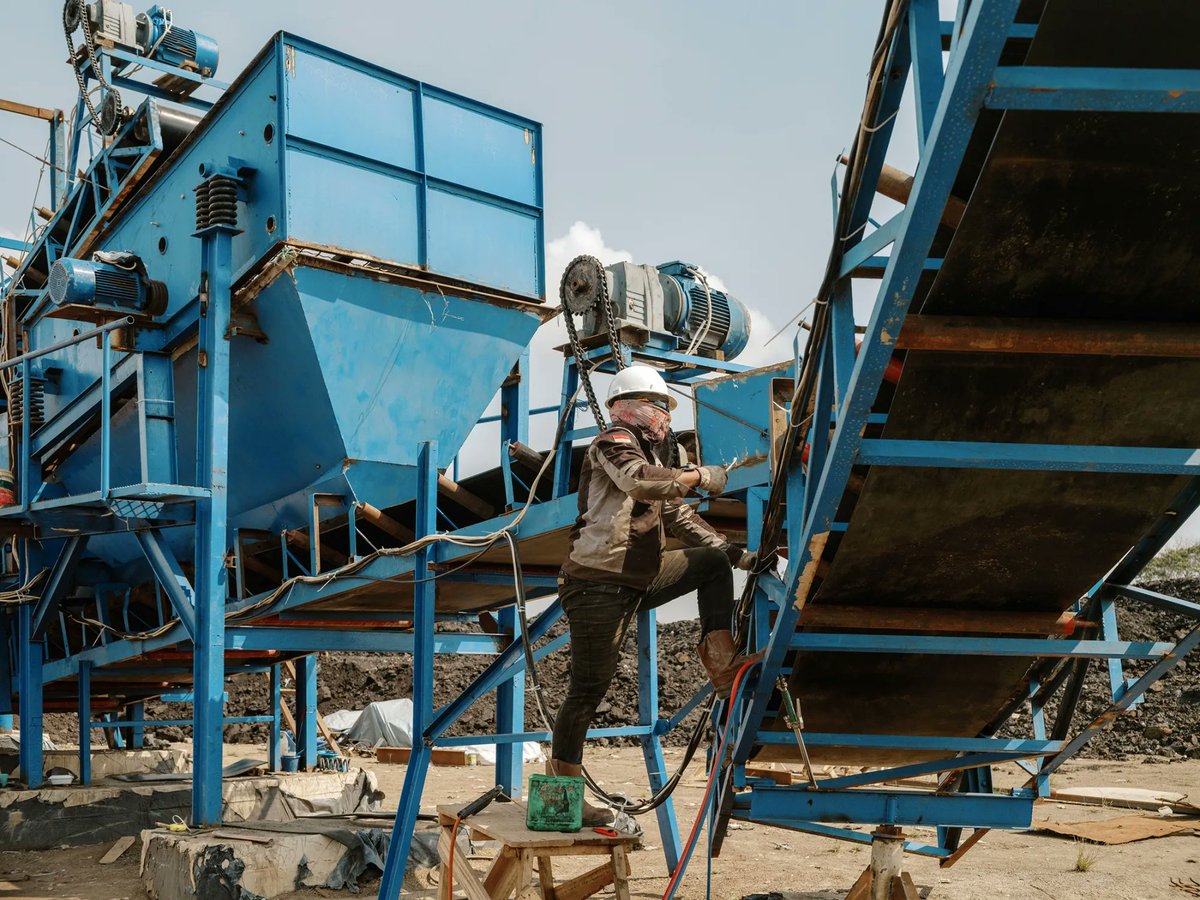
Coal doesn't have to burn to be valuable.
UNECE report: Transform Tajikistan's mines into feedstock suppliers for graphene, rare earths, and critical minerals. Capture methane for revenue. Create hi-tech clusters, not closures.
A just transition that creates value, not just eliminates jobs.
@ember_energy@GlobalMethane@seankidney@JuttaPaulusRLP @EuropeanCLimate
https://t.co/q7vr4iZr34 #EnergyTransition #JustTransition #CriticalMinerals #CoalMethane #CleanExit
“French parking lots could soon generate as much electricity as 10 nuclear power plants” https://t.co/m6REQx5kYv
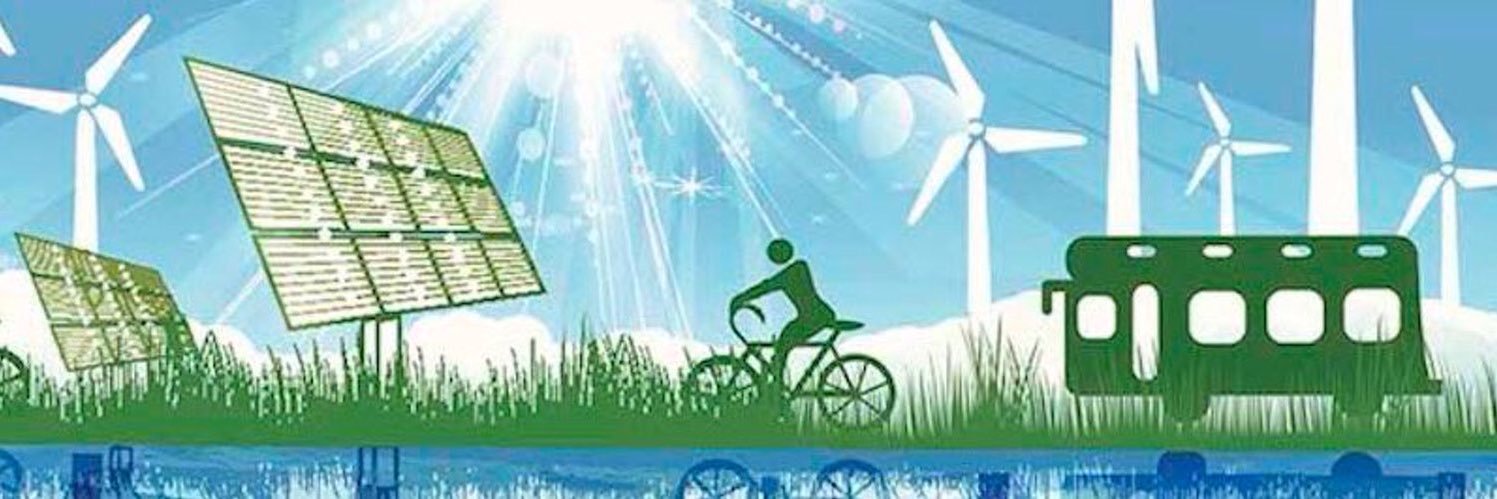
We have so many solutions. Stop the delays and implement them. #ActOnClimate#climate#energy#renewables#GreenNewDeal
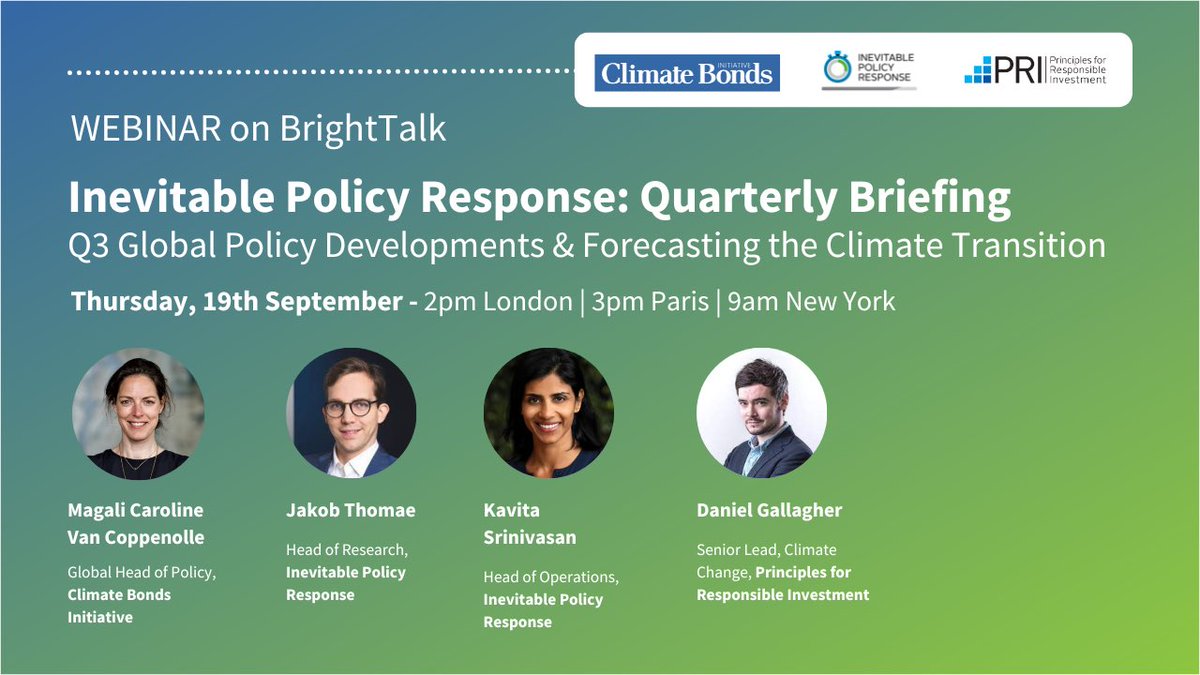
Today! Webinar! @InevitablePol_R
Quarterly Briefing with @PRI_News & @ClimateBonds. Global climate policy trends Q3 & deep dive into forecasting the climate transition. Thursday 19th Sept, 14:00 BST / 15:00 CEST. Register: https://t.co/IEIk3fdqEF #iprforecasts#climate
"Shell sold millions of carbon credits tied to [carbon capture and storage] that never took place"
Selling emissions credits for reductions that never happened from a technology that doesn't work (and pocketing the profits) must be peak greenwashing
https://t.co/M1Fx77lg1T
Sweden is late which means we need to work harder and faster to catch up. EU had a low carbon economy roadmap already 2011-2012 which laid the foundation for actions, the EU #Taxonomy, the #ECAP and the #EGD#SustainableFinanceEU Why don’t Swe #copywithpride 🌱
The chemical industry is a big source of CO2 emissions. But did you know that over 50% of the EU's chemicals primary production capacity needs reinvestment by 2030? EUR1tn! We have the opportunity to make this industry future-fit, and that means green. https://t.co/OnyMGMHmxr
In 1901, Dr. Allan Warner of the Isolation Hospital at Leicester, England, took a series of photographs of patients with smallpox.
This one is possibly the most famous.
The two boys are said to be 13 year-olds and infected with smallpox simultaneously during an epidemic of the disease in the United Kingdom, one of the last big ones there.
The boy on the left shows a full-blown presentation of smallpox, with the pus-filled pustules all over his body, concentrated on his face and arms. The boy on the right is at the hospital in the same isolation unit, because he is also showing some pustules (and perhaps a slight fever or malaise), though certainly not as many.
The difference is in the fact the boy on the right was vaccinated and didn't develop serious symptoms.
The earliest written description of a disease like smallpox appeared in China in the 4th century CE (Common Era). Early written descriptions also appeared in India in the 7th century and in Asia Minor in the 10th century.
Ali Maow Maalin was the last person to have naturally acquired smallpox caused by variola minor in October 1977.
Almost two centuries after Edward Jenner hoped that vaccination could annihilate smallpox, the 33rd World Health Assembly declared the world free of this disease on May 8, 1980.
2023 was a little sobering. It became clear that climate change impacts have really started — fires, heat, floods, storms, and more.
But despite that reality, I’m actually full of hope for 2024....... read on https://t.co/yq0wZAhxpc @ClimateBonds
As #COP28 draws to a close, @dingpingma of Chongqing Renewable Energy Society (CRES) says #BoldClimateActionIs promoting international cooperation. He advocates for global dissemination of cutting-edge #RenewableEnergy technologies.
🔋 Details here: https://t.co/u9oofFaRPD
2/Our panel delved into the vital importance of simplifying & harmonising #climate finance mechanisms. Check out our report, presented by our policy advisor Francesco Lombardi, for deeper insights: https://t.co/2uJgMGYZUU
#CBAM#COP28UAE
Yesterday at #COP28 @ThambiSimi led an insightful panel discussion, with @Lfernandoamaral, @sciencetargets, @seankidney, @ClimateBonds, Roberto Berrio & Yunwen Bai, highlighting that aligning food systems with the #ParisAgreement requires addressing #climate and #nature. �Yesterday at #COP28@ThambiSimi led an insightful panel discussion, with @Lfernandoamaral, @sciencetargets, @seankidney, @ClimateBonds, Roberto Berrio & Yunwen Bai, highlighting that aligning food systems with the #ParisAgreement requires addressing #climate and #nature. 🌍
@DavidLund6 Uhh China's emissions per capita overtook the OECD recently with 1/3 of the GDP per capita. China has committed to peaking emissions before 2030. So neither your numbers nor your logic make sense.
China's emmisions are growing because China's emmisions per capita are half of OECD countries and getting to OECD levels of economic production require OECD levels,of emmisions. Until the OECD countries can maintain very high levels of economic production at the same level of emmisions per capita as non OECD countries their emmissions will grow. Trying to stop that growth will lead to high levels of risk of war.
@fransglobal China has higher power capita emissions higher than the EU with one third of the GDP per capita. U.S. per capita emissions are obscene but that's no global yardstick to go by.
@laurimyllyvirta Yes but the emissions from the US per capita are far higher than those from China. As are those of Taiwan and ROK
A lot of western commentators seem to prefer to finger point at China rather than those three countries
It's a very common belief that China's high emissions or rapid emissions growth are mainly due to export industries. Like all misconceptions, this one persists because people want to believe in it.
In reality, trade (exports net of imports) accounts for about 10% of China's emissions, and trade-linked emissions peaked in 2007 when the global financial crisis hit. Peaked in absolute terms that is, not just as a share of emissions.
Start from the fact that China's two highest-emitting sectors are steel and cement. Less than 10% of the steel and none of the cement are exported. China simply uses extremely large amounts of carbon-intensive commodities for domestic demand.
My guess is that the myth of export-driven emissions persists for two reasons. One is people want China's emissions to be about "them", which gives them agency (if only through guilt). The other is people who want climate change to be the fault of "the west" alone, even more than it is in reality. I guess both of these also have to do with not wanting to engage with the complexity of the country, and rather ascribe China's emissions to a factor they (think they) can understand without peeking inside the country.
To be clear, export industries are one important part of China's emissions, and were a very significant part of the growth in emissions during the COVID pandemic. There are ways in which the rest of the world can influence China's emissions trajectory, including through trade, as well as diplomacy, investments, technology etc. but it's important to start with the reality of China's emissions and their drivers.
The world just doubled installed solar capacity in a mere 18 months
Because solar power is the cheapest source of electricity in history
https://t.co/DZ0xGFvQGs #climate#momentum
Major new pledges to @theGCF's 2nd replenishment at #COP28 summit:
🇺🇸$3bn
🇮🇹€300m
🇨🇭CHF135m
🇵🇹€4m
🇪🇪€1m
This takes the fund's replenishment total to a record-breaking $12.7bn.
🇦🇺&🇸🇪 still expected to announce pledges.
Keep track of all pledges here:
https://t.co/h6dwF6fkyd








![AssaadRazzouk's tweet photo. "Shell sold millions of carbon credits tied to [carbon capture and storage] that never took place"
Selling emissions credits for reductions that never happened from a technology that doesn't work (and pocketing the profits) must be peak greenwashing
https://t.co/M1Fx77lg1T](https://pbs.twimg.com/media/GMy2-o1WUAAVzT1.jpg)