BlueBirds 8, 9, and 10 are now fully deployed to their full size, each the world's largest communications arrays operating in Low Earth Orbit.
We invented a new way to design, manufacture at scale, deploy, and fly lightweight composite stackable architecture combined, with the world's largest and most advanced direct- to-device and radar phased-array with the ability to launch them in groups of 3, 5, 6, or 8 on a single launch.
Our BlueBird platform brings together high-performance space-based cellular broadband with peak data rates approaching 200 Mbps, space AI edge computing, and many mission-critical government applications, all on one platform where the largest-ever size matters!
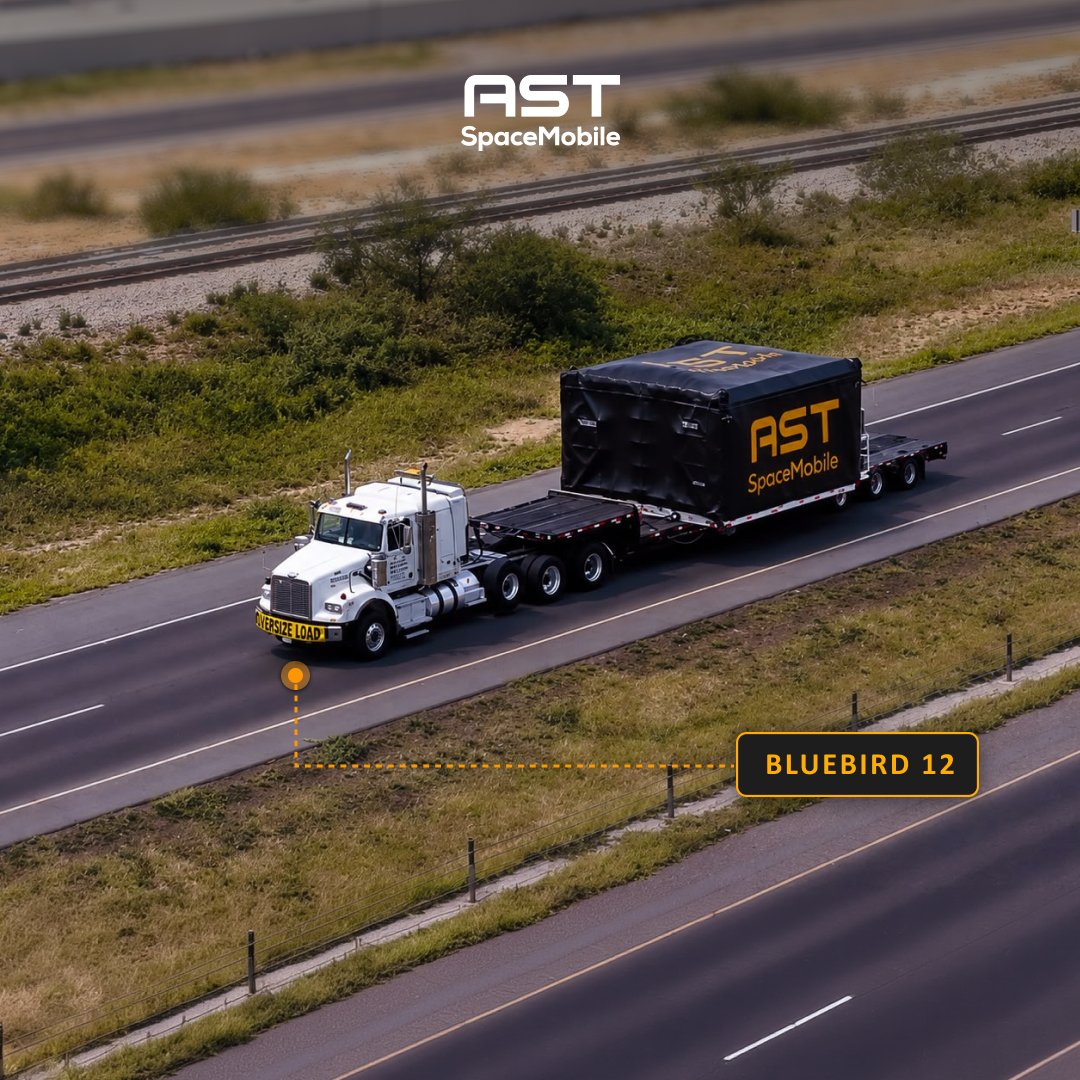
BlueBirds 11, 12 and 13 are already at the Cape preparing for their imminent launch. BlueBirds 14, 15 and 16 are right behind them. Production has already moved through satellite 42.
All of this is happening in Texas. 🤠🇺🇸��🌎📱
Investors ask me: when are high-growth stocks cheap enough to buy? How can I value them?
Here is how I do it.
For me, these stocks are not about the potential upside but about the potential downside. Take $ASTS as an example.
I always start by doing a reverse DCF analysis. I see a lot of comments that a reverse DCF is impossible on high-growth companies, but in my opinion, it gives you valuable insights.
For $ASTS, for example, they should be able to reach $2.86B in free cash flow to justify the current valuation. AST has a negative free cash flow at the moment and a revenue of $84.9 million. They don't have to reach it now, but if I want a 10% return each year from today's price, they should reach it in 2036.
How realistic is this?
I look at three major things: Full Potential, TAM, and SAM of the company. The full potential is what the company can reach in revenues without competition and with all the necessary equipment. The TAM is the total market demand for the service if there were no constraints with the current business model and products, and the SAM is the portion of the TAM that ASTS can actually reach.
A quick look at the Direct-to-Device market and you'll find that the forecast of the market is between $140 and $200 billion annually by the mid-2030s. If we look at the SAM,$ASTS already has an existing pool of nearly 3 billion subscribers via partners. Deutsche Bank analysts estimate 1.75 billion mobile users willing to pay for extra satellite services by the mid-2030s.
If AST SpaceMobile reaches an average market share of 35% and people pay around $2.5 extra/month for satellite services, you get a revenue of $18.37 billion. A realistic free cash flow margin for this kind of business model in a mature state fluctuates around 45% and 55%, so let's take 50%. The free cash flow would be $9.19B; the target looks highly realistic here.
I just want to warn you: these kinds of calculations always look very bullish for high-growth stocks, as you completely take out the execution risk. That is why I think the downside for stocks like these is way more important to look at.
So, how do you calculate the downside?
First thing I look at is the balance sheet. How much cash does the company have, what is the total debt, and what are the short-term liabilities?
For AST SpaceMobile, they have $3.5 billion in cash and cash equivalents. They also have $2.5 billion in other assets, pushing the total asset value just past the $6B mark. The downside is that they carry $3.4 billion in total liabilities, the vast majority of which is tied up in $3.0 billion of long-term debt. They also have a $1.41 billion burn rate at this level.
Management has a guidance of $150m to $200m in 2026, and a target of $1 billion in 2027. This should lower the burn rate rapidly.
AST also has some execution risks such as launch bottlenecks, manufacturing scaling, and heavy competition from Starlink.
I honestly don't see a protected downside here like I do with $PL, for example. With this burn rate and debt, there is no safety net for the stock to fall to. It's a very aggressive stock with a lot of execution and financial risks.
In this example, I'm happy to wait until the financials get a little bit better to recalculate my risk/reward.
@peterrhague Among other things, @Neuralink will enable quadriplegics to use their hands and walk again and the completely blind to see.
Jesus-level miracles.
$ASTS:🚨🇯🇵 AST SPACEMOBILE AND RAKUTEN AWARDED JAPAN'S $1 BILLION J-LEO PROJECT BEATING OUT STARLINK-KDDI CONSORTIUM
AST + Rakuten will now submit a formal grant application with detailed budget, procurement arrangements, financing plan and eligible costs that MIC/CIAJ will formally approve allowing the project to start likely by 2H July
Expect PR from Rakuten and/or AST SpaceMobile in the coming days
A few notable likely implications of this award:
✅Green lights full approval of commercial service for AST and Rakuten
✅The SatCo JV opens KDDI, NTT DoCoMo and Softbank to working with AST SpaceMobile since Rakuten's direct mutually exclusivity ends
✅Multi-launch Agmt w/ Mitsubishi Heavy for H3 rocket
✅Japanese Gov to provide $1B of funding over 3 years
✅Gov funding and backing enables the JV to be bankable and eligible for import/export bank Japanese JBIC-supported debt and guarantees as well as US EXIM financing
✅Future allocation of cellular and/or MSS spectrum - Japan has 120MHz of S-Band available for allocation
Award Notification: https://t.co/iuRiAcGbKm
Execution in motion.
Another delivery to Midland. In the world's largest cargo aircraft, for the world's largest satellites in low Earth orbit.
BlueBirds 8, 9, and 10 are in orbit and operational; 11, 12, and 13 are next. Satellites in production through BlueBird 37.
Nearly 60 mobile network operators. Over 3 billion subscribers. World's first space-based cellular broadband network. Designed to connect directly to everyday smartphones.🌎📶📱🇺🇸
Built in Texas. Broadband from space. A market we invented.
#ASTSpaceMobile #Broadband #ConnectingtheUnconnected #BlueBirds
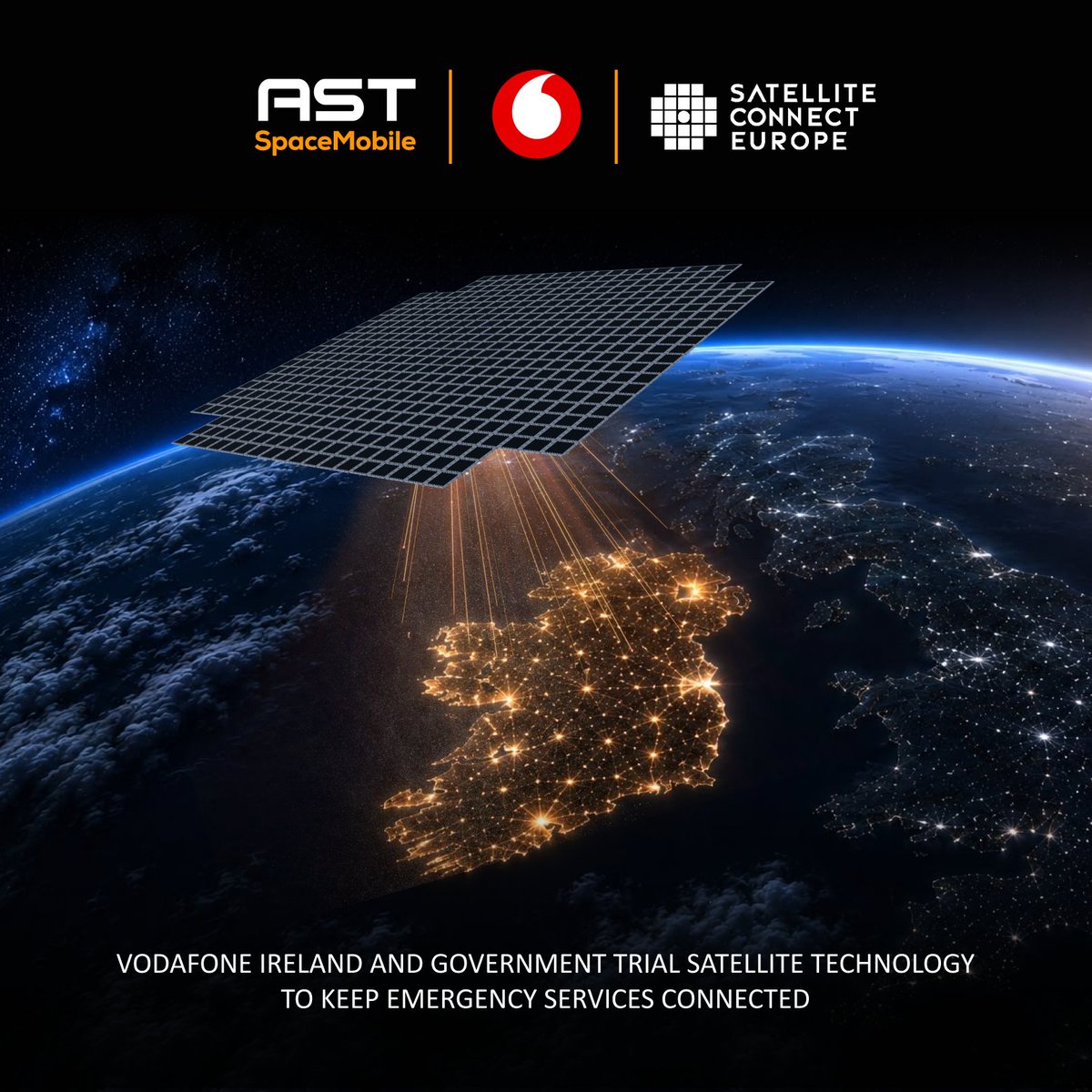
Vodafone España and Satellite Connect Europe sign commercial agreement to bring satellite-to-mobile broadband connectivity to Spain
https://t.co/xb6Z1yt8HW