what is agent looping
for the last two years we prompted agents one task at a time. that is starting to change
instead of asking an agent to build the landing page and then driving every step yourself, you set up a loop that handles discovery, planning, the work, checking, and iterating until the goal is met
looping is a setup you build. almost any agent harness can run it, it just depends on how you wire it up
at its simplest, looping is one agent working on itself:
> researches
> drafts
> checks the draft against a goal
> fixes what is weak
> runs that cycle again until the work clears the requirements
you are not prompting each step anymore. the agent repeats the cycle for you
the bigger version is a fleet looping. you give an orchestrator agent a goal, it breaks the goal into pieces, hands each piece to a specialist agent, and those specialists hand smaller jobs to their own subagents
the whole tree keeps looping through discovery, planning, execution, and verification until the goal is met
one agent looping is like a person redoing their own draft. a fleet looping is a whole team running a project end-to-end
you create a goal, and the system runs the loop until it finishes within the reqs you set
open and closed looping:
OPEN LOOPING is exploratory. it still has conditions and a goal, but you give the agent or the fleet a wide space to move in. it can try different paths, discover things, build something you did not fully spec out
this is the exciting end, it is what Peter and others are doing, and tbh it is where I want to spend more time
the catch is cost, an open loop with real room to explore burns an insane amount of tokens. for the 90 percent of people without an unlimited budget it is not runnable yet, and pointed at projects with a loose standard it turns into a slop machine
CLOSED LOOPING is bounded. a human designs the end-to-end path first:
> clear goal
> defined steps
> an eval at each step
> a point where it stops or hands back to you (and feeds back performance data)
the agents still loop, but inside framework you built. it gets better every run because each pass feeds the next, and it runs on a normal budget because the path is tight.
for most marketing work, closed is the one that pays off today.
> the orchestrator owns the goal
> the specialists own the steps
> the subagents do the narrow work
> an eval gate make sure its not slop
If I was forced to make $100K/month with ecom in 30 days starting from zero, here's exactly what I would do in 20 steps:
Days 1-3:
Pick the right category and build the foundation
Find a category where the buying decision has a strong trust component — supplements, kids products, beauty, pet, health-adjacent
Validate the market size before touching anything — minimum $500M+ addressable market
Find a white label manufacturer — target 80% gross margins before spending $1 on marketing
Build a 100% subscription offer — no one time purchases ever
Price at premium from day one — $10 signals $10 quality. Never apologize for your price.
Days 4-7:
Build the product and brand
Design packaging that makes customers want to display it proudly — your packaging is your #1 silent salesperson
Build a simple DTC website — no Amazon, no retail, own the customer relationship completely
Offer 50% off month one — this is the highest converting offer structure I have ever tested across two 9-figure businesses
Write 5 core educational pieces about what is wrong with your category — education builds trust faster than any ad
Days 8-15:
Launch influencer machine
Find 25 micro influencers in your category — mommy bloggers if kids, health creators if wellness
Pay flat fees — expect only 10% to convert, kill the other 90% fast
Give them guardrails on what they can and cannot claim — then let them speak in their own voice
Track every post — views, clicks, sales, hold rate. The market is voting every day. Your job is to listen.
Whitelist the 2-3 winners immediately as paid ads from their handle — this is where the real leverage lives
Days 16-30:
Scale what is working
Take winning influencer creative and run it as paid ads — 20-40% of budget behind whitelisted content
Text every new subscriber personally within 24 hours — not a bot, a real human
Let customers customize their order — it raises costs slightly but creates a moat billion dollar companies cannot replicate
Survey every customer who churns — their reason is your next product improvement
Pour everything behind the 1-2 channels converting — kill everything else immediately
The conservative math:
25 influencers × 10% conversion rate = 2-3 winners 2-3 winners whitelisted as paid ads = dramatically lower CAC Lower CAC + 80% gross margins = profitable from month one Profitable from month one = no VC needed, ever
$30/month subscription × 3,000 subscribers = $90,000 MRR At 200 new subscribers per day = $100K MRR in under 30 days
That is the floor.
One viral post can add 500 subscribers in 24 hours alone.
I did this with $0 venture capital.
$103M annual revenue.
$260M exit.
The playbook works.
Comment "ECOM" and I'll send you the full breakdown.
**must be following + retweet to receive.
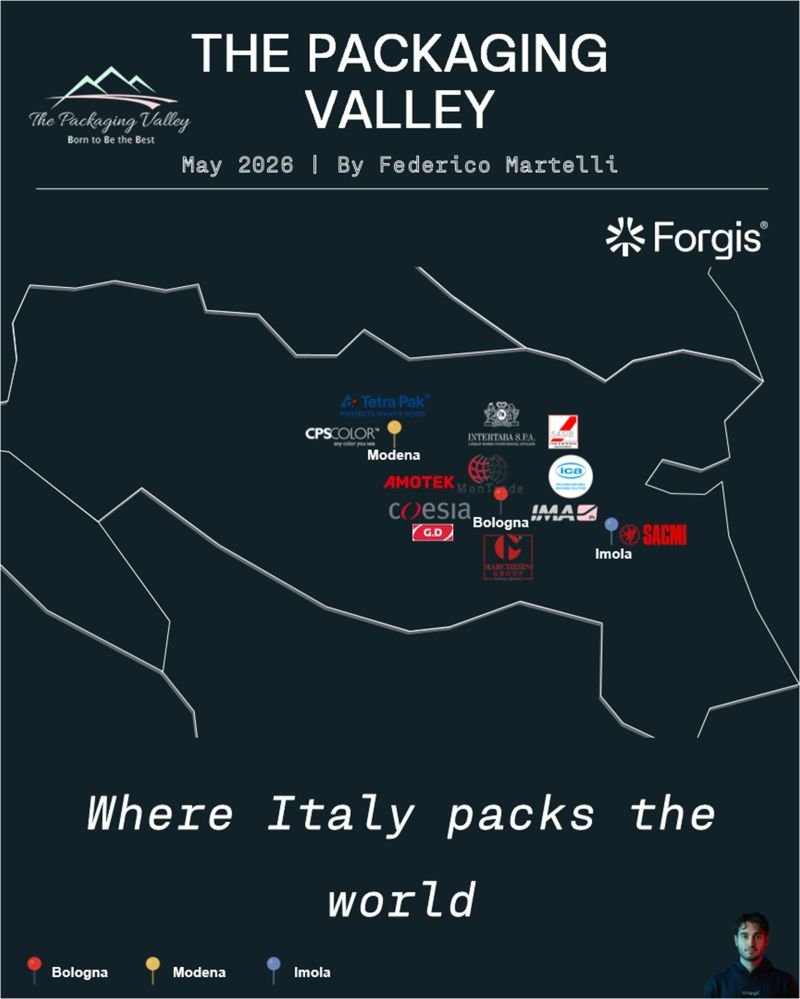
1 in 4 packaging machines on Earth was made in one small Italian valley
China is racing to steal it
But every cigarette pack, pill blister, and milk carton probably came from a machine built here
Here's the 100-year story of the secret packaging valley:
What got us there?
We stopped acting like an ecom store.
Instead of asking: “How do we get more orders?”
We started asking: “How do we make people actually remember us?”
That’s why we invested so heavily into:
- branding
- packaging
- content/photoshoots
- customer support
and making every touchpoint feel premium.
Ads bring customers. Branding makes them stay.
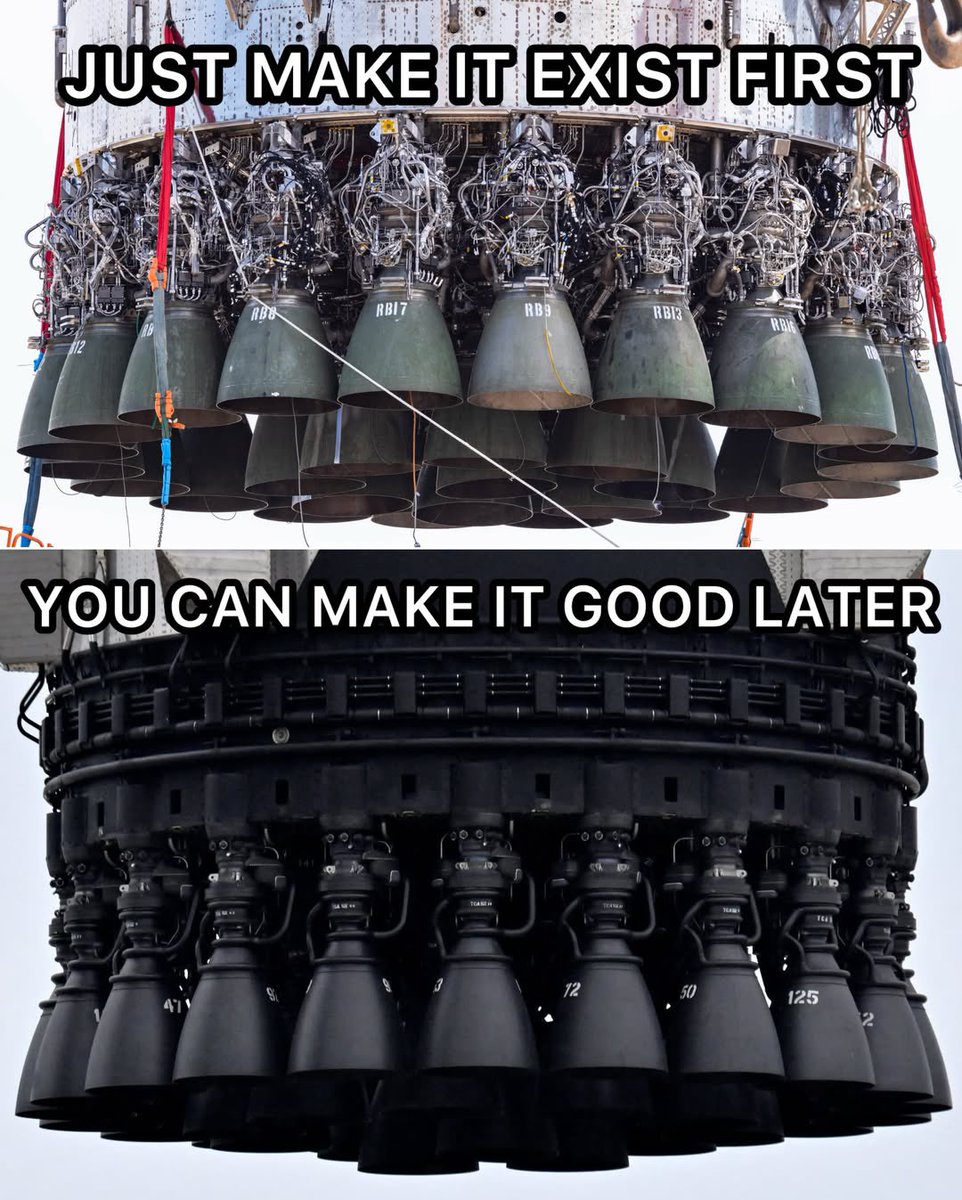
We just wrapped what began as an 8-hour challenge - and it ran for 200 hours without a failure
Shoutout to the team for the hardcore engineering behind F.03 and the robust Helix models powering it
Codex 5.5 use cases I found so far:
> made my internet faster
> made my local 6B SLM 3x faster
> made my macbook pro faster like new
> made a lightweight suite to write & test metal kernals
> made a skill to communicate with claude code in realtime
> made a pipeline to generate SFT dataset using Deepseek v4
> made a computer use workflow to fine tune models in Google Colab
> made 4 routines to test workflows on autopilot 3 times/day
Dozens of clean ecom brands lose their Shopify Payments every month.
⠀
Shopify finally said why. It's exactly what I've been saying.
⠀
Dudes with <0.5% chargeback rates, zero fraud disputes, custom products. Still getting hit.
⠀
You can't stop holds entirely. Scale fast and you're a target. Doesn't matter how clean you are.
⠀
Most of you think just because you have low chargeback rate and run clean you won't have issues. But that doesn't mean you seem like a real business in Shopify's eyes. End of day we're just a number to them.
⠀
We've seen a ton of different issues and figured out how to navigate through them. It comes down to your backend:
⠀
The basics:
• Good Product
• Don't leave orders unfulfilled
• Fast shipping
• Active & accurate social media presence (both business and personal)
• Great customer service
• Chargeback mitigation (Disputifier)
• Tracking numbers uploaded for every order (Parcelpanel)
• Non generic Policies and T&C on the website
⠀
Trip wires:
• No Kaching Precheck-style subscriptions (common flag recently)
• No fake reviews / AI doctors on the site
• Strong standing on external review sites (e.g. Trustpilot)
⠀
You could be running an entirely legit business, but your store doesn't feel that way when these companies use LLMs to scrape it.
⠀
The LLM scrape test:
⠀
Run your site through an LLM. Ask if it looks like a scam. Have it point out where it looks fake. Fix those.
⠀
Applovin does the same thing. Works for Applovin rejections too.
⠀
If you run a legit operation, getting it back is much easier.
⠀
You can prove stock where you're selling. Orders fulfilled and delivered fast. Happy customers. Site and social that don't look AI-generated.
⠀
But nothing in business is guaranteed, so if you don't have a backup processor ready, get one. If Shopify Payments goes down you lose all momentum while waiting to get back.
⠀
When you get hit, spam their email, live chat and phone with documentation every single day.
⠀
Be persistent. It becomes way easier to remove or lower your holds.
⠀
And don't send weak shit without proper documentation and evidence like 'I've been a Shopify merchant for X years and have always followed your terms.' That won't cut it.
⠀
Use Claude to write a legal-sounding response with all your proof points. Attach manufacturer invoices, tracking numbers with delivery confirmations, proof of address, proof of inventory.
⠀
Most ecom bros complain about these issues but never fix the foundations. The problem keeps following them no matter what they do.
⠀
Everyone wants to scale to $100k days. Few want to fix the backend that lets them stay there.
⠀
Few