Retro computing on Raspberry Pi Pico and RP2040 and RP2350 steroids.
Revitalize your vintage computers with our devices, a series of coprocessor boards.
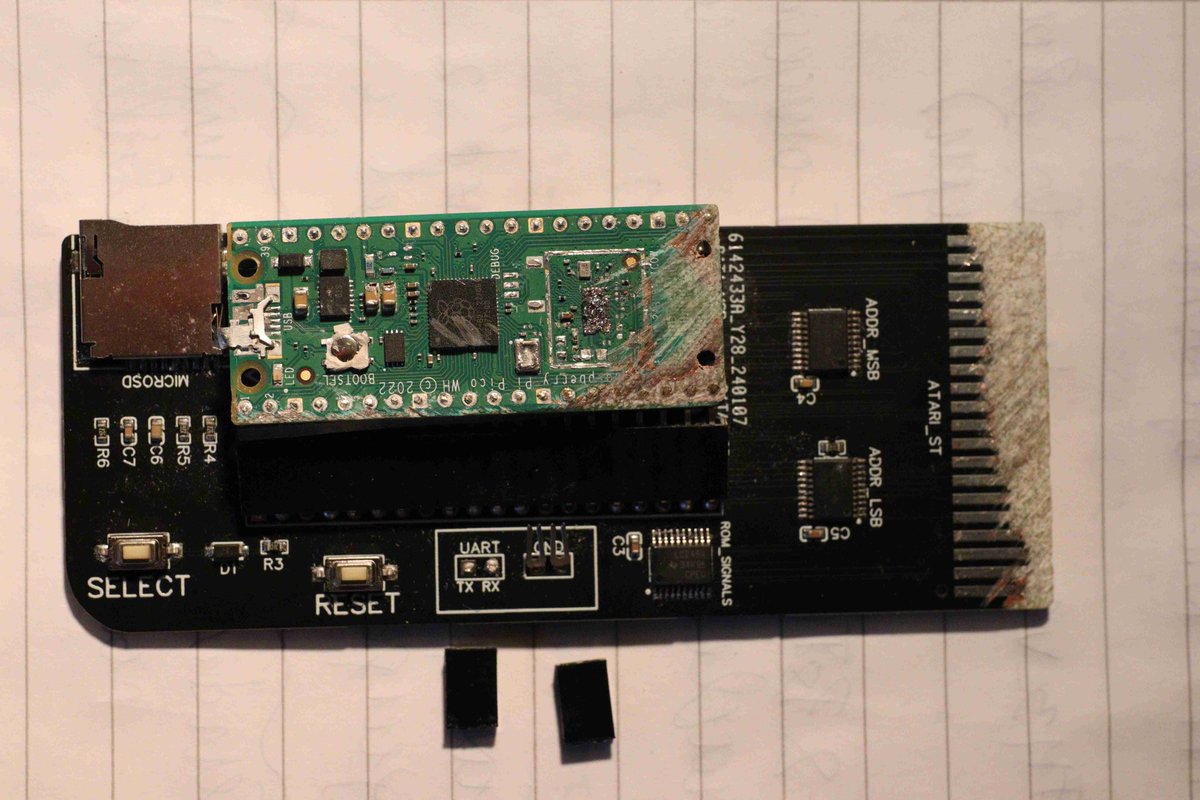
🚀 1/n This weekend, I unveiled Version 3 of the @SidecarTridge Multi-Device board! Time to dive into what’s new—how I made it better, slimmer, more compact, and even cheaper. Let’s break it down. 🧵👇
@keithclarkcouk Try dropping any powersave mode in the WiFi settings. It makes the http server hangs when entering in low power mode:https://t.co/YFJcKUiGVa
The SidecarTridge Soufflè is finally out. It was a hard one to ship, but here it is: an external IKBD keyboard emulator for the Atari Mega ST and Mega STE.
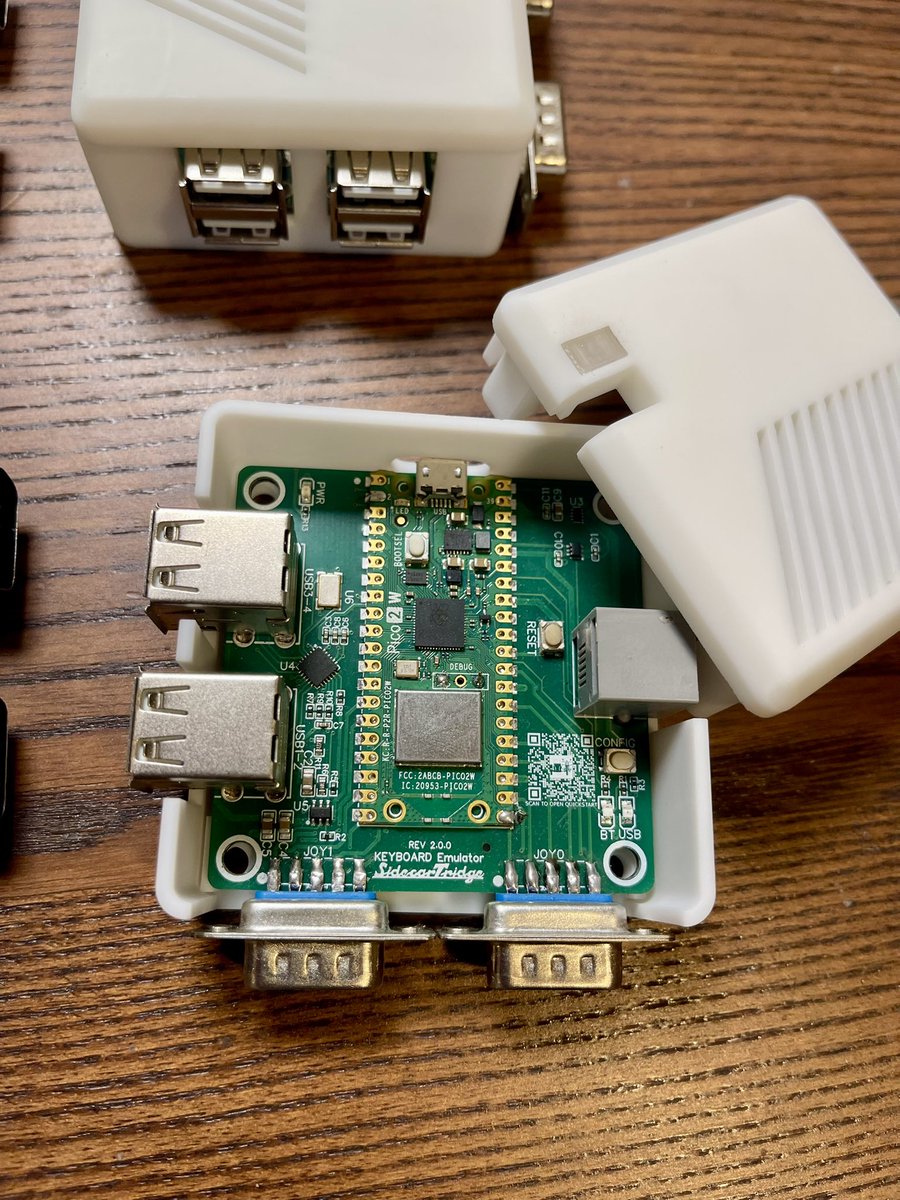
It plugs straight into the Mega keyboard port through a 1 m coiled RJ11 cable, taking the place of the original keyboard and behaving exactly like the IKBD the machine expects. No opening the case. No motherboard mods. No soldering. If your Mega keyboard is missing or dead, this brings the machine back to life in minutes.
What makes it fun: a built-in 4-port USB hub for modern keyboards, mice and gamepads, plus Bluetooth Classic and BLE for wireless input. And it does all that without throwing away your classic setup: two native DB9 outputs keep your original Atari mouse and joysticks fully working right next to the modern gear.
Everything is configured from a browser over Wi-Fi (pairing, keyboard layout, mouse speed, auto-fire), and firmware updates land through the on-board micro-USB connector. Running on an RP2350, with full IKBD emulation so software that expects the real controller stays happy.
Regular ST or STE with the internal 7-pin connector? That is what the internal Croissant board is for. Soufflè is the external option for the Mega port.
https://t.co/vF9KFTKHP3
Hey John!
It depends on the machine. On the ST, STe, and Mega ST, the 5V cartridge output is connected directly to the internal bus/cartridge interface, so it is not a separately powered or protected peripheral port. On the Mega STe, however, there is a fuse that limits the cartridge power to 500 mA.
The good news: the SidecarT has a fuse and diode to prevent overcurrent on the 5V USB-A connector, rated at 500 mA, similar to the Mega STe. This circuit protects the computer from overcurrent and load spikes coming from the USB-A by mistake.
The ST2VGA Enhanced definitely consumes less than 50 mA, and a SatanDisk should not consume more than about 200 mA. I don’t know about the other device, but I often connect more than one device to the SidecarT’s USB-A port and have never had a problem. Three devices? I’m not sure.
So ST/STE/MegaST: the cartridge port behaves like the 5V rail of the floppy disk unit.
MegaSTE: 500mA maximum. Considering the fuse could be damaged due to aging, I would be cautios.
Extremely important: do not feed more than 5 volts in the 5 volts rail, or any voltage in the GND. It will kill the old TTL chips of the computer. Learned the hard way.
👾 "Hay gente usando IA para ser productiva. Yo la uso para reabrir traumas de los 80". Diego Parrilla @sidecartridge rehace MIDI Maze sobre TCP/IP con Atari ST y Raspberry Pico. #OpenSouthCode26
https://t.co/23URvOXsSX
Atari ST screenshots at the press of a button — say hello to MD/Snap!
Simply install MD/Snap on your SidecarTridge Multi-device and each press of the SELECT button captures the screen to a PNG on your SD card.
Works with GEM and TOS apps, and a wide variety of games.
💾 https://t.co/1xEoEsnGWn
In Spain we have “derecho de admisión” for bars.
I kind of wish retro hardware had a soft version of that: “buddy, I love your enthusiasm, but this thing is for tinkerers. You may hate it by Tuesday.”
Sometimes the best support ticket is the sale you don’t make.
This Saturday I'm giving a talk at @Opensouthcode about retro hardware and AI-assisted development.
The actual project is a microfirmware for the SidecarTridge Multidevice that turns the Atari ST's MIDI ring into a TCP/IP ring. So you can play the original Midi Maze cartridge on a real Atari ST against other STs (or Hatari instances) over the internet, not over a daisy chain of MIDI cables in the same room. The 1987 protocol is left untouched. Only the transport changes.
Microfirmware:
https://t.co/vErAMSYOFr
As a side product, I also rebuilt Midi Maze itself for the browser, written from scratch with AI assistance. Running the original game, not the original hardware. It speaks the same protocol, so a browser tab can join the same deathmatch as a real Atari ST.
Browser version:
https://t.co/hH09IrZW4x
Talk:
https://t.co/dj6URKflzn
Croissant owners with zero fear and an open case: this one is for you.
We just published an experimental, fully unsupported hack to give your Croissant install USB device input. Yes, you can plug a USB keyboard (and optionally a USB mouse or a gamepad) into your Atari ST or STE on top of the Bluetooth IKBD path you already have.
The trick is dirty and beautiful: Croissant and Soufflè share the same Pico 2W and the same firmware base. What changes is the carrier board around it. Soufflè routes a built-in USB hub to the Pico's host port; Croissant just exposes the Pico's USB through the micro-USB connector you normally use for power and flashing. So... flash the Soufflè firmware onto your Croissant, hang a 4-port micro-USB OTG hub off that micro-USB port, plug your USB devices into the hub, boot the ST. The reference hub we tested costs about 3 euros on AliExpress.
Caveats (and they matter):
- The case stays open, or you cut a slot for the hub. There is no enclosure plan for this.
- No guaranteed power budget. Skip RGB-lit gaming keyboards or USB-powered storage.
- Some hubs will not enumerate. If yours doesn't, try another passive 4-port OTG hub.
- The Pico's micro-USB connector was not designed to carry a hanging hub long-term. Don't pull on it.
- Compatibility is not exhaustive. Same USB caveats as Soufflè.
It is unsupported on purpose. If you want plug-and-play USB on a Mega ST or Mega STE, that's already what Soufflè was designed for. But if you're on a 7-pin ST/STE and you like a good weekend hack, the full writeup is here:
https://t.co/7OLOpWSkFQ
My talk in the @OpenSouthCode next week will go deep in the development of this microfirmware with AI tools, and how development has evolved from 1986 to 2026.
Do you like first-person shooters? Did you know the grandfather of every modern FPS is MIDI Maze, a 1987 Atari ST game?
MIDI Maze invented network deathmatch. Up to 16 STs chained their MIDI ports into a ring (each machine's MIDI OUT into the next machine's MIDI IN) and shot at each other in real time. No PC, no LAN card, just a row of Atari STs and a pile of MIDI cables. A genre was born.
Today, the new MIDI-to-IP microfirmware for the SidecarTridge Multi-device puts that ring on your home Wi-Fi. The cartridge bridges the ST's MIDI to a small Python orchestrator on the LAN, and the orchestrator relays each node's traffic to the next node in the ring. Up to 16 players share the ring, mixing real Atari STs and Hatari emulators freely. Private rooms let several rings run on the same orchestrator.
MIDI-to-IP is also a public reference for AI-assisted SidecarTridge microfirmware development. The full iteration backlog (epics, stories, decisions, the orchestrator wire contract) lives in docs/epics/ inside the repo, committed to git as a working example of how an agent owns a microfirmware end to end.
Install it from the Booster app catalog. Fire up MIDI Maze. Bring your ring online.
https://t.co/gNEGTpPyF1
Salen las primeras unidades de pruebas del Soufflè, que serán las últimas diseñadas en este ciclo de tres años basado en los RP de Raspberry Pi y Atari 16 bits, que empezó en verano de 2023.
Nuevas arquitecturas y nuevos retos.
First Soufflé units off the bench. Drop-in IKBD for the Atari Mega ST/STE: pair a modern keyboard, mouse or gamepad over USB or Bluetooth, and the host still sees a stock HD6301 controller. Same timing, same quirks. Compatible with software that talks to the real chip.
https://t.co/eBHcbv3skT
@_the__Goat_@PostNL You have opinions, I have facts.
Btw: I never answer anonymous accounts, but you are an exception because obviously you don’t know what a “dude with a goat avatar” means for Spanish speaking people 🤣🤣🤣
Absolutely unacceptable delivery service from @PostNL in The Netherlands! The SidecarT arrived in shocking condition, with clear signs of mishandling and neglect. This is not the level of care and professionalism I expected.
If I am not wrong, this package was crunched under wheels truck. You could think this is an exceptional case, but no. I had several other shipments to Netherlands with the same problem: crunched with wheels marks.
I have shipped aeveral thousands shipments worldwide and never happened to me.
I dropped PostNL entirely and problem solved.
@_the__Goat_@PostNL It was packaged exactly as the other thousands packages shipped worldwide without major issues.
PostNL is the WORST European national-flag post company BY FAR. Shitty logistics and a completely careless last mile service.