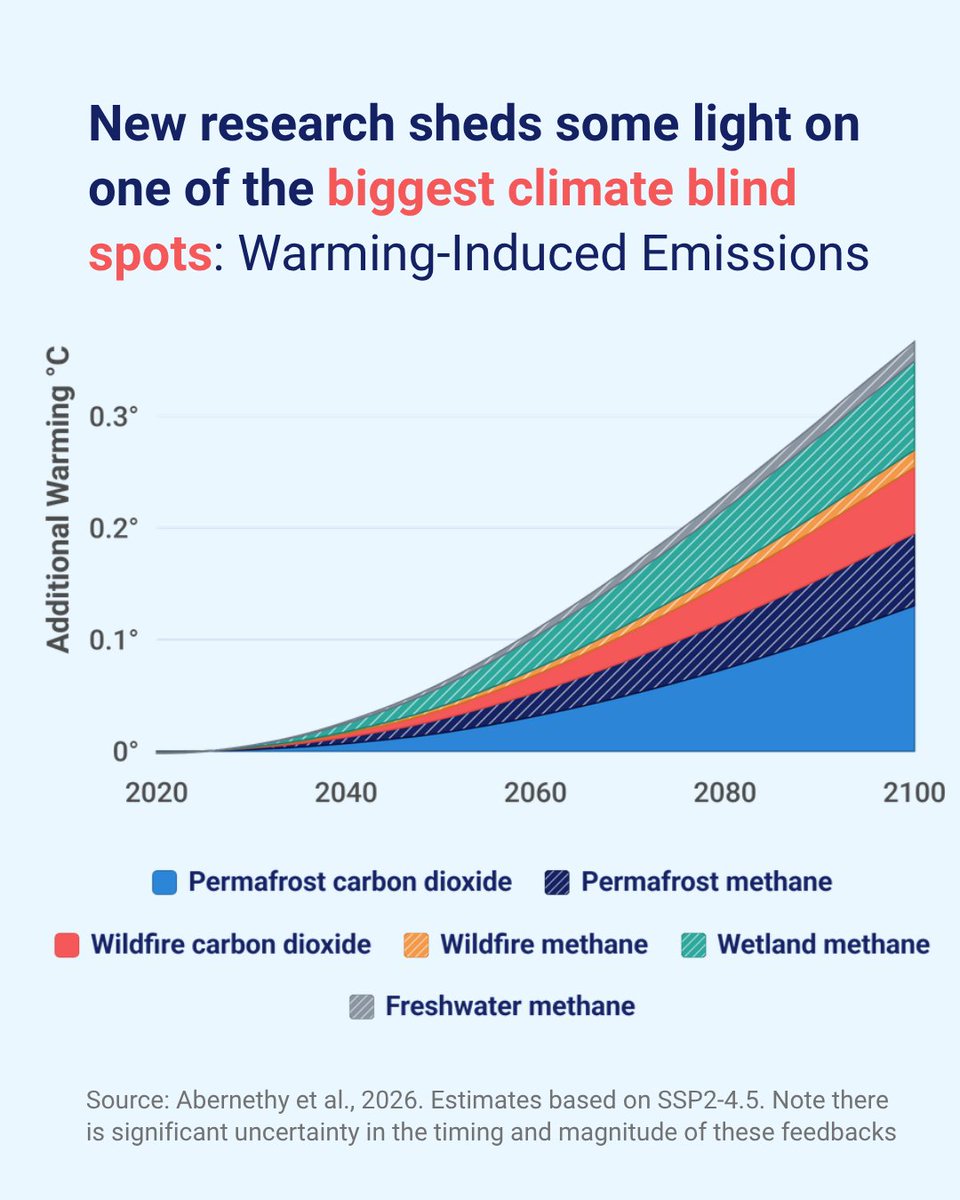
A new study led by @sparkclimate is detailing how wildfires, permafrost thaw and other changes are adding even more greenhouse gases into the atmosphere, and speeding up #ClimateChange at a scale not currently reflected in global estimates. https://t.co/vVSgQDReyw
Learn more about these findings in this interactive explainer: https://t.co/WU84LaqtnG
Read the publication in IOP Publishing’s Environmental Research Letters: https://t.co/blJn2IiyF4
New research led by Spark estimates warming-induced emissions from permafrost thaw, wildfires, and other sources could amplify global warming by approximately 20–30% & add an estimated 0.2–0.4°C of warming this century (with significant uncertainty).
These findings underscore the urgency of reducing anthropogenic emissions, incorporating these warming-induced emissions when setting climate policies, and investigating whether there are additional mitigation strategies to slow or reduce climate feedbacks.
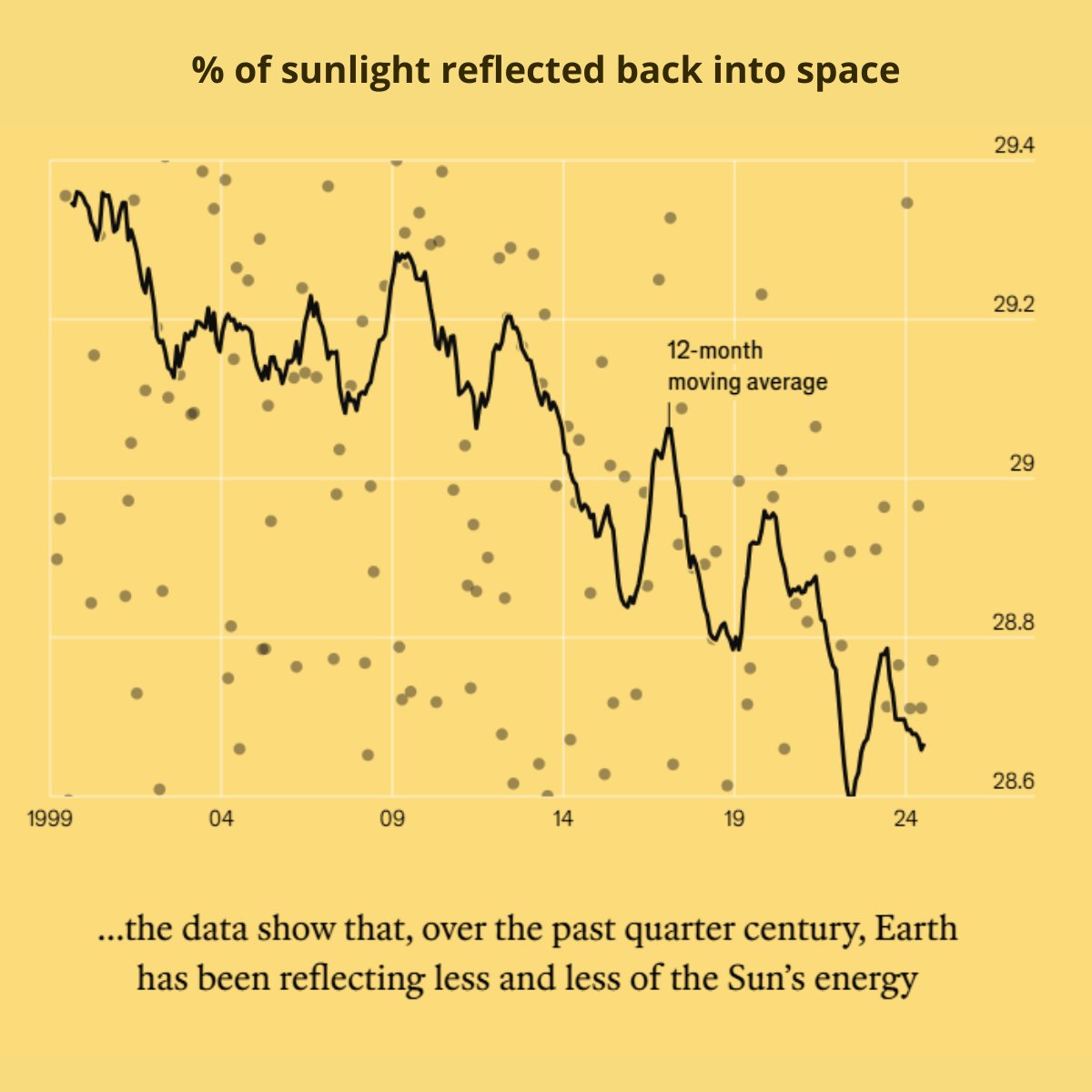
Big story in this week’s @TheEconomist about a major risk we are also increasingly focused on: Earth is reflecting less sunlight back into space, rapidly increasing Earth’s Energy Imbalance and making the world hotter.
Thank you to our contributing sponsors, @Gmethanehub and the Platform for Agriculture and Climate Transformation, whose generosity and support have made the 2026 State of the Science Summit: Reducing Methane from Animal Agriculture possible! #LivestockMethaneSummit 🐄 🐂
Maria Bowman from @sparkclimate shared Nitrous Oxide is 273x more potent trapping heat in atmosphere than CO2 & is critical we cut emissions immediately. New corn varieties can help improve Nitrogen uptake & reduce Nitrogen fertilizer which drives majority of ag N2O emissions. 2/
Tomorrow's the day! ����
The 2026 State of the Science Summit will commence, bringing together researchers, producers -- including dairy farmers and ranchers, industry leaders, and partners focused on mitigating methane and advancing practical, science-based solutions. 1/
#Methane is responsible for around 30% of current global warming — but cutting it could help slow warming relatively quickly.
As policy-makers, business leaders and civil society gather under France’s G7 presidency to discuss methane reduction, more than 250 scientists have issued a 10-point plan to accelerate action.
https://t.co/Ylee1e2KTN