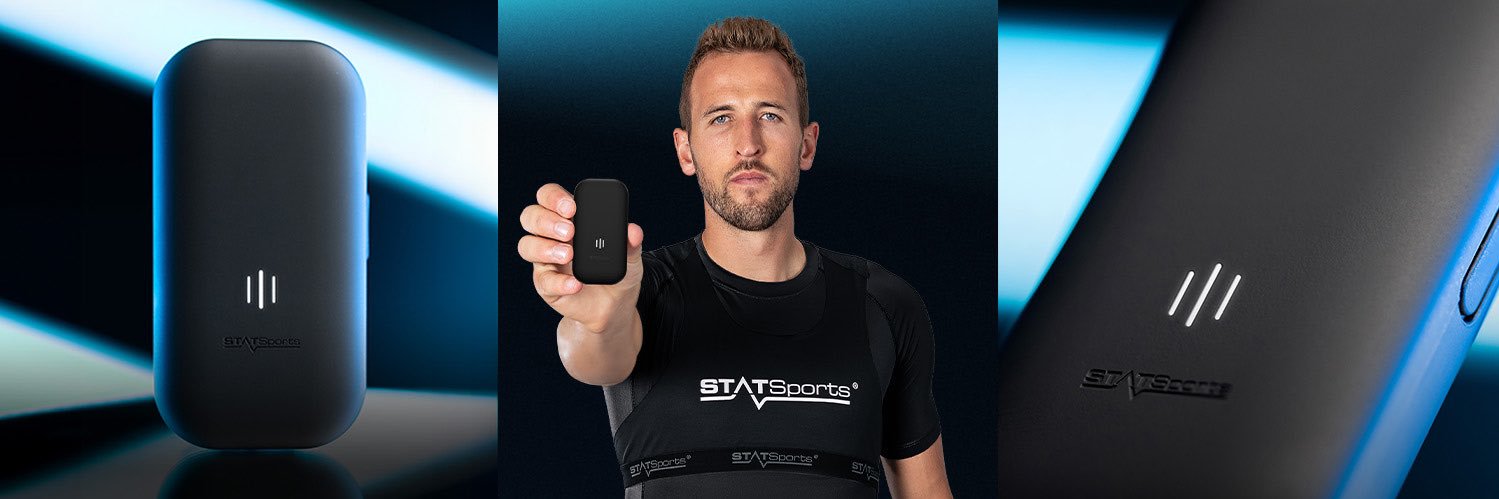
Today marks a landmark moment for our company.
We’re excited to announce that we have been acquired by @Sony – officially joining Sony's sports businesses.
Read more on the announcement here: https://t.co/EcqDHnuzxA
Can Sports Science Win the World Cup? 🏆
The answer is no, of course not. The best team of athletes, that are coached the best, and maybe has a little luck, will be the team lifting the trophy.
But that doesn’t mean sports science can’t influence the outcome.
@drpetertierney looks at the role sports science and performance staff can play in their team’s success at the tournament.
Full article here👇
https://t.co/pVVkHHZeQ6
The very best of luck to @louthgaa (and @MayoGAA) in today’s GAA Football Championship semi-final.
We supply both teams with our technology.
But, admittedly, we’re a little biased.
As the eyes of the football world are all on the World Cup, most players around Europe are starting to return to their clubs for pre-season.
Often the first step for players is testing and within this, comes aerobic capacity testing.
This is briliiant from @OUFCOfficial and their Head of Physical Performance @MWillmott90 - explaining what practitioners are actually looking at within testing and how that informs what pre-season looks like for each player.
Oxford's 6 minute test allows them to assess each players' MAS, as well as a number of HR metrics.
From there they can individualise their programmes over the first block of pre-season.
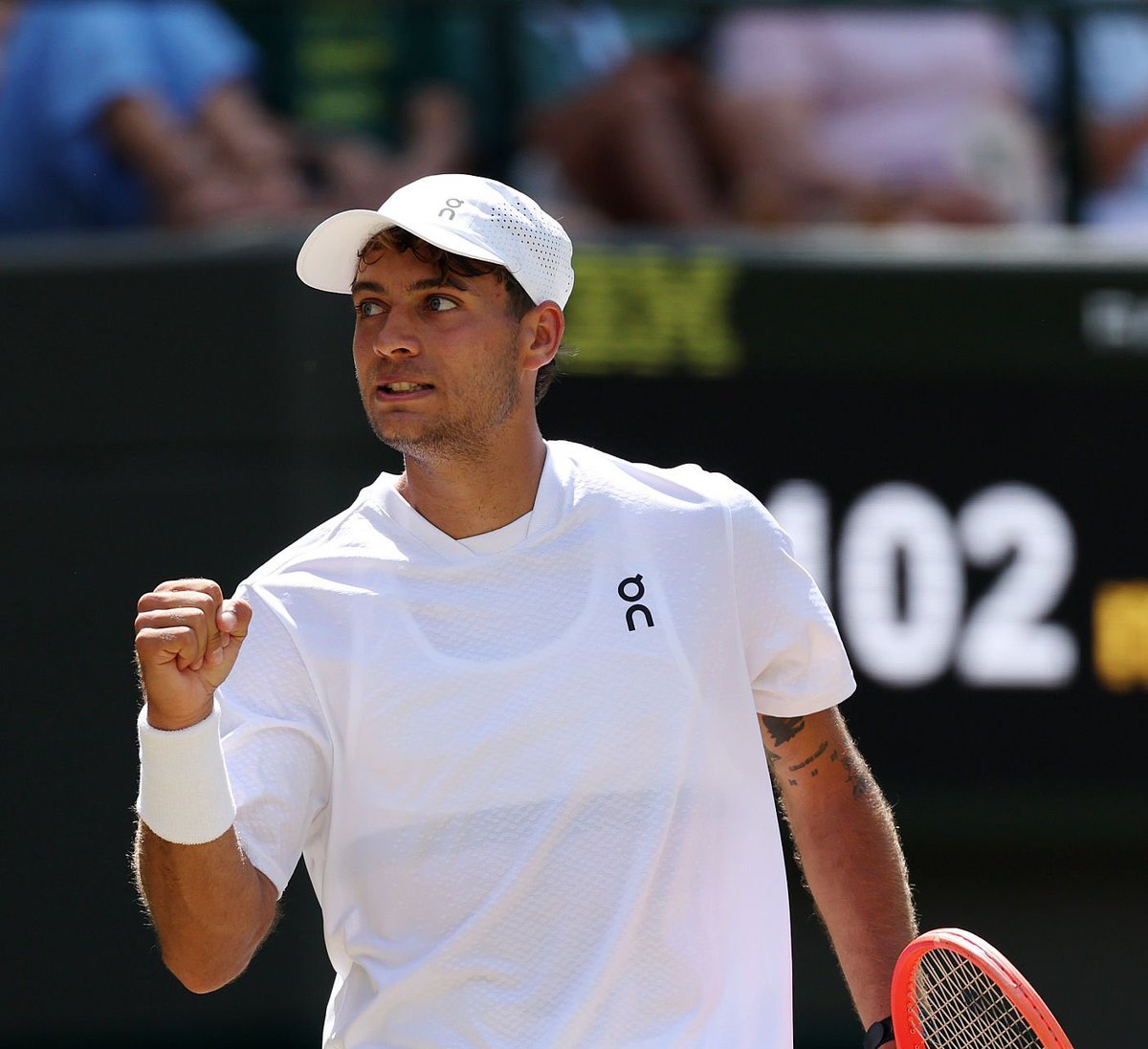
Wearable technology finally given the green light at Wimbledon.
The first time in its 149 year old history.
Players competing in Grand Slam tournaments now have access to real time performance data via STATSports technology.
Flavio Cobolli on Court 1 today ⬇️
Here is Flo Balogun doing at 15 what most male professional player can’t do in their prime. I wish him well against Belgium tonight. Arsenal Academy old boy. Long Term Athletic Development is very important.
Ahead of their huge Round of 16 tie in Mexico City, England are dealing with the kind of ‘worst-case scenario’ their performance staff would have tried to anticipate pre-tournament.
- Four day turnaround
- Nearly 2,500 mile round trip
- Extreme heat & altitude
- Multiple injuries in one position
Jarell Quansah’s return to training is a good example of the work going on behind the scenes with England’s staff to try and mitigate one of these factors.
Medical & performance staff will have planned Quansah’s load progression aiming to have him ready for tonight’s game.
As he progressed through each stage, decisions would have been supported by our live physical data to help staff objectively assess each session.
Getting those decisions right can be the difference between having a player available when it matters most, or not.
Saliba hit 34 km/h top speed on this recovery sprint to beat Almiron to the ball.
Positionally perfect. Doesn’t get too square, hips turned slightly so he’s in a good position to turn and accelerate if the ball is knocked past him.
We've worked alongside @selecaoportugal since 2016 - all with huge major tournament knockout ties like tonight's game as the end goal.
We have supported their performance staff on-pitch with reliable live data, and off-pitch with our Sonra Cloud data infrastructure across the federation.
With all teams within the federation operating under the same system, practitioners have the ability to track players' physical development, inform strategy decisions and build continuity throughout their international pathways.
This infrastructure has been a small part of what has been an incredibly productive decade for Portuguese football.
However, it does reflect the investment in the talent and structures behind the scenes, with the likes of João Brito and his team helping to create the environment that allows the on-pitch talent to perform.
A look inside @BelRedDevils World Cup preparations.
We spoke to Physical Coach @Gielenn_ , Sports Scientist @jaspersarne & Performance Coordinator Charle Jaspers about the physical preparation for Belgium's World Cup campaign, and the role our technology plays.
One of the most important things for Belgium especially mid-tournament, is the ability to access reliable, accurate live data.
This allows Belgium's staff to individualise training around matches, inform day to day training decisions and make critical return to play decisions during the tournament when there's absolutely no room for error.
Also really interesting to hear the process the performance staff go through to collaborate with the coaching team on the game model, as well as maintaining alignment with players' clubs throughout the tournament.
See the full video below - some brilliant insights around how a top international side prepares for a World Cup.
@stevemagness Current research points to:
- Huge increase in high intensity running demands
- Fixture congestion (more games, travel and shorter turnarounds)
- Reduced training time between matches (harder to load optimally)
- Less time for physical/mental recovery
A look inside @BelRedDevils World Cup preparations.
We spoke to Physical Coach @Gielenn_ , Sports Scientist @jaspersarne & Performance Coordinator Charle Jaspers about the physical preparation for Belgium's World Cup campaign, and the role our technology plays.
One of the most important things for Belgium especially mid-tournament, is the ability to access reliable, accurate live data.
This allows Belgium's staff to individualise training around matches, inform day to day training decisions and make critical return to play decisions during the tournament when there's absolutely no room for error.
Also really interesting to hear the process the performance staff go through to collaborate with the coaching team on the game model, as well as maintaining alignment with players' clubs throughout the tournament.
See the full video below - some brilliant insights around how a top international side prepares for a World Cup.
A word for our Sony colleagues over at @Hawkeye_view providing the semi-automated offside technology at the World Cup.
Looks and feels so much clearer than what we’re used to domestically.
It goes without saying that non-league football presents some of the most unique challenges in the game.
Players & coaches balancing work alongside football, limited contact time, midweek fixtures, short turnarounds, keeping players ready to perform - not to mention the fine margins between teams fighting for promotion at that level.
For @needhammktfc in the 7th tier Southern League Premier Division Central, it's no different.
We spoke to Ben Mendrys, the team's Strength & Conditioning Coach on how adding objective insights has helped the club better understand the demands of Step 3 football, plan training around its transitional style, manage player load through congested fixture schedules and support return to play.
A great insight into the challenges of non-league football, and how objective performance data can help coaches navigate them.
The GPS tracker has to be secured tightly against the body, between the shoulder blades.
So the garment needs to be compression material, and for obvious reasons, as unobtrusive as possible for players. Hence a “bra” like fit.