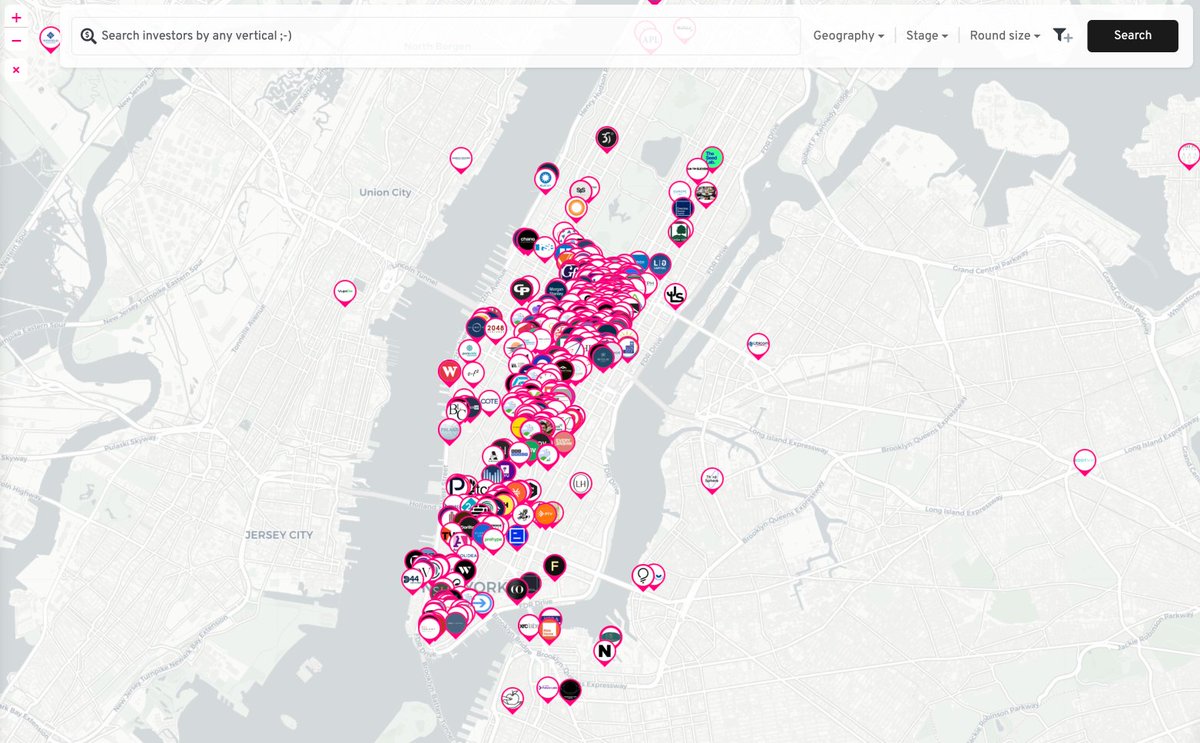
New York has hundreds of VCs. But do you know 10 who actually invest in your space?
Probably not. That’s why we built Google Maps for Venture Capital.
We call it OpenMap:
1️⃣ Go to OpenMap (link below)
2️⃣ Zoom into NYC
3️⃣ Filter by fintech, SaaS, pre-seed, or growth
4️⃣ See who’s active, where they’re based, and what they invest in
Then go deeper: check their website, find warm intros, and understand your local ecosystem.
If you’re a founder in NYC, you should know this map.
If you’re a VC in NYC, you should be on it.
🗽 Explore 700+ investors in New York City here → https://t.co/LNQZm8jlTJ
PS: Not in NYC? You’ll probably find your city there too.
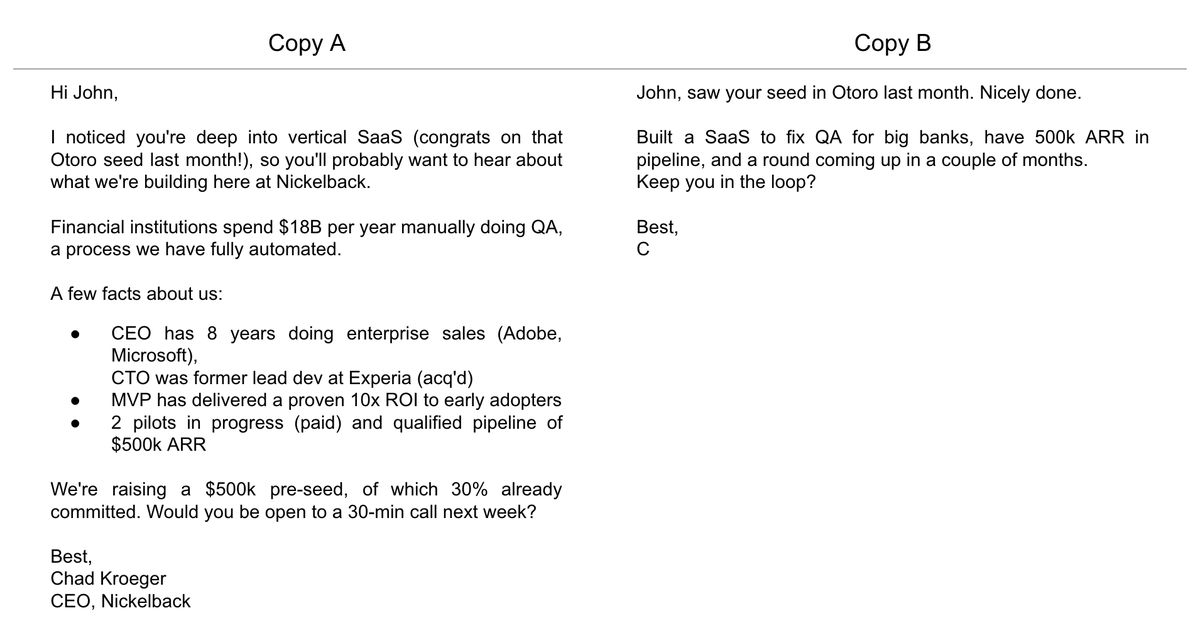
❌ "I'm reaching out because your investment style and track record appears to be a great match with what we're building."
Too generic => I don't believe you
✅ "I'm reaching out because you've invested in Otoro and Akin. We too digitize the back-office of US insurers."
Specific => I believe you
If your Team slide looks like this, you don't deserve to raise.
In the past 6 months, I've seen a MASSIVE increase in AI-generated pitch decks.
Which is fine, except ~50% of founders don't make the effort to insert a photo (and no product visuals either).
They one-shot a deck, click "Export to PDF" and that's literally it.
If you don't care about your startup, why should an investor?
@pavelreplies@kdcfcp2 La France devrait être numéro 1. C'est de loin le pays avec les meilleurs fondamentaux: architecture, gastronomie, nature, climat.
Le problème, ce sont les choix de société: économie, fiscalité, sécurité, éducation, etc.
Je rêve d'une France administrée à la Singapourienne.
VCs are not in the business of providing financial support to your startup.
What they want is a 10x to 100x return on their check.
Don't approach VCs with what you *need* but rather with what you *bring*.
When you raise VC money, you run your company in hypergrowth mode.
Higher rewards, but also higher risks.
This type of management increases the risk of failure.
A few bad quarters that become a bad year, an economic downturn that dries up VC money, or a downround that wipes out your equity are real threats.
That's the price of raising VC money: you're more likely to walk out butt-naked.
Founders raising in 2026, this is for you:
I built a visual playbook to help you raise your first round without wasting the whole year.
This is your step-by-step action plan from finding VCs to closing your round.
I wish I had this playbook at my first raise.
👉 Comment "playbook" for free access
Here's what's inside:
→ Understand the VC game (what VCs really want, where they invest)
→ Build your investor list (where to find relevant VCs, how to follow up)
→ Plan out your raise (SAFE vs equity, how much to raise)
→ Access investors (warm intros vs cold emails, how to get inbound leads)
If you're raising in 2026, you need this playbook.
👉 Comment "playbook" for free access
(Make sure you follow @StephNass to receive my DM)
Retweet this and help out a founder in your network
One of the most common and frustrating feedback I give founders:
improve the design of your pitch deck.
I know it's low priority, it's not supposed to matter, and it's not always a quick fix.
But it does make a difference.
@phylex0 VCs invest in spaces they know and understand. If you have to educate them about what the industry is and why there's a problem, they are unlikely to invest.
@Ameyaaazing@neuralunlock Simple. Investors care about 3 things:
- Traction e.g growth, usage, retention
- Track record e.g founders have non-trivial past achievements
- Who else is investing - must be someone they look up to
You need at least one of these to raise a round in good conditions
The bar for early stage founders is on another level right now.
Easier than ever to spin up prototypes, create pitch decks, run outbound campaigns, and talk to users. Having a simple MVP is becoming table stakes.
Raising with just an idea is pretty much dead.
Claude is an absolute scourge on pitch decks. This aesthetic is unmistakable.
I see 100s of decks/mo. The last 3 months esp. most of these are all color swapped clones.
If you can’t be bothered to differentiate your deck, how can you be trusted to differentiate your company.
asking a VC who passed on you for intros is a bad move
most founders do it anyway because they're out of options
not in your space and can't invest? the ask can work.
passed and could have invested? you're asking someone who already decided you weren't worth a check to vouch for you.
think about what that intro actually signals.