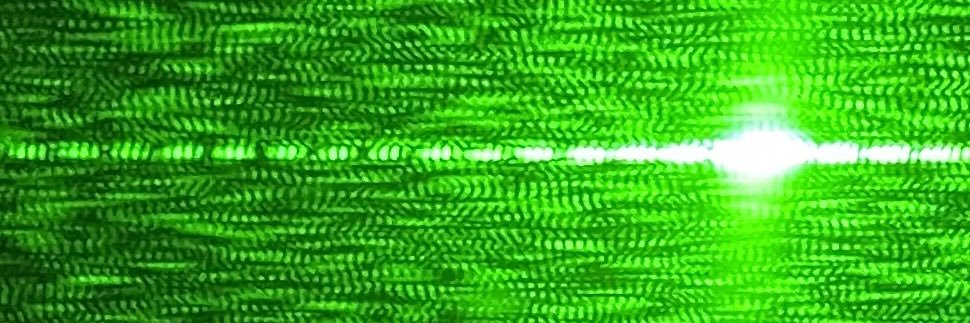
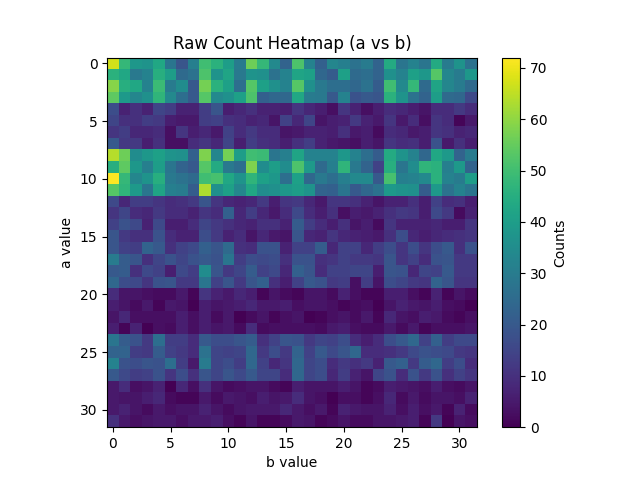
It’s surprisingly hard to recreate the 5-bit group-phase (arXiv) interference lanes and noise using modified quantum circuits or classical simulations (labeled 1-4 on threejs render and heatmap from paper). Here are some controls simplifying the oracle that show what happens when you remove or scramble different pieces of the structure. All circuits, calibration CSVs, raw results, backend data, and Threejs render code are open sourced on Qwork and GitHub.
Cool to see my 5-bit IBM quantum ECC key experiment get its second citation. Interesting paper on post-quantum migration and hybrid certificates for vehicular communications: https://t.co/wmWPBwlLhd
qsrl v0.2.15 is up on GitHub. Detached signatures now work cleanly with encrypted ML-KEM recipient archives, Inspect/Verify correctly report embedded vs detached signatures, and the desktop UI now supports scrolling for smaller windows.
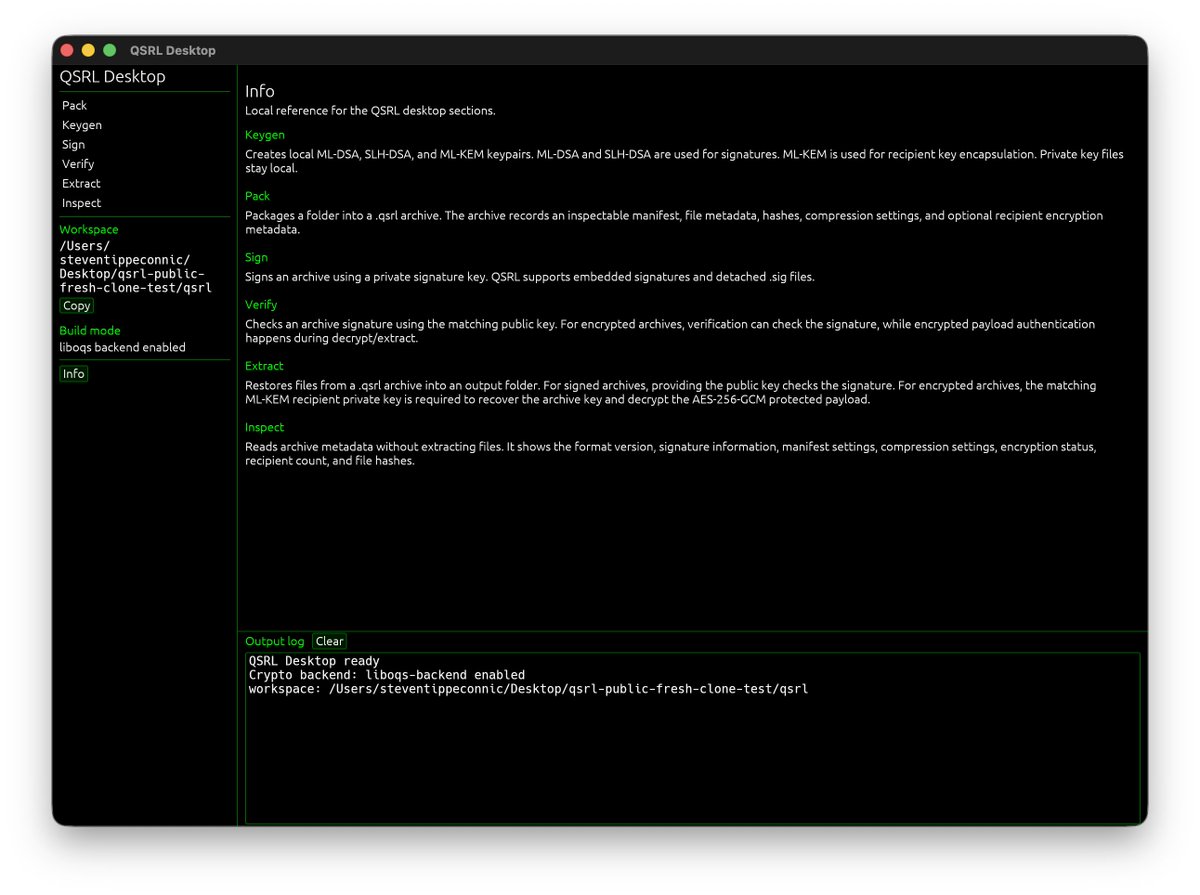
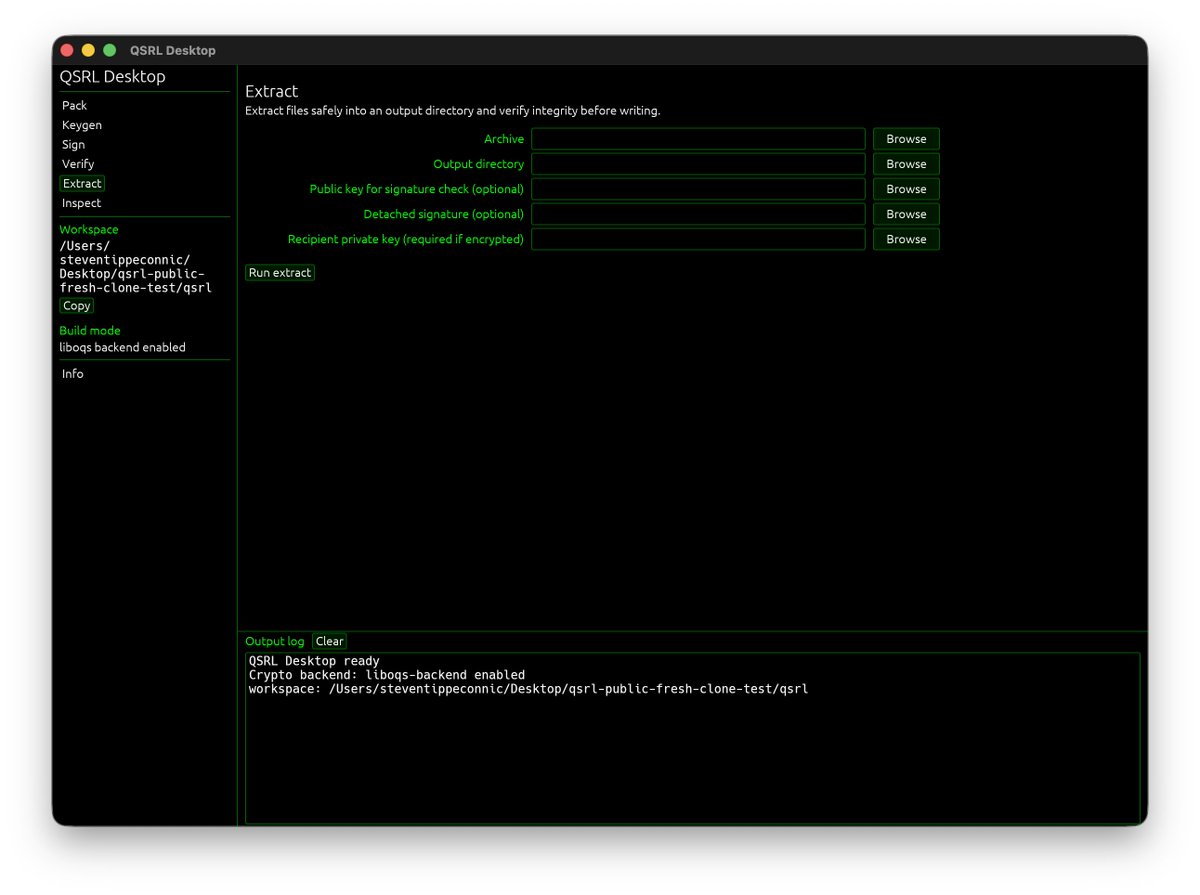
New update for qsrl v0.2.12 on GitHub. Added an Info tab for the desktop app, clarified the extract key labels for signature checks/encrypted archives, and cleaned up the form alignment across the UI.
Thanks! The main tradeoff is size/overhead more than usability. PQ keys and signatures are larger than classical ones, so archive/signature metadata is larger than classical options. But in local testing, latency still felt very usable. I tested a .qsrl archive around 3.26GB with no compression, 704 files, a ~114KB text manifest, ~28KB block table, and ~3.26GB payload, and the local pack/sign/inspect flow still worked smoothly. I chose ML-DSA and SLH-DSA because they cover two different NIST-standardized PQ signature families, lattice-based and stateless hash-based, and ML-KEM was a good fit for recipient key encapsulation. But I plan on adding more PQ signature schemes in updates.
Here’s a video showing qsrl running through the full local encrypted archive flow, generating ML-DSA and ML-KEM keys, packing a folder into a .qsrl archive, inspecting it, signing it, verifying it, then extracting it by checking the signature with the ML-DSA public key, recovering the archive key with the ML-KEM recipient private key, and decrypting the AES-256-GCM protected payload.
BitViewAR Version 6.1 is live ⚡️
This update improves crypto chart loading, adds better offline chart reliability, and introduces new visual color effects.
Definitely. The repeated runs are what make it interesting to me. QFT on a only keeps exposing the same low-b slice with the recurring k = 7 point at (a=25, b=1), while the other controls behave differently. QFT on b only collapses toward a=0/a=16, the half-oracles form branch only lanes, and Triple QFT disrupts the (a,b) projection.