$15,000. 48 HOURS. 🎥
Guys I’m doing a @Gamdom video challenge just for fun.
💰 $10,000 prize pool for IRL videos promoting Gamdom
🤖 Separate $5,000 prize pool for AI videos
Get creative. Make me laugh. Make something people wanna share.
Post with #Gamdom48 + #IRL or #AI.
Clock starts NOW ⏳
THANK YOU. Code Steve is irrelevant in this challenge 👊🏽👊🏽👊🏽
Steve is now in the most dangerous phase of betting: the phase where most people lose everything.
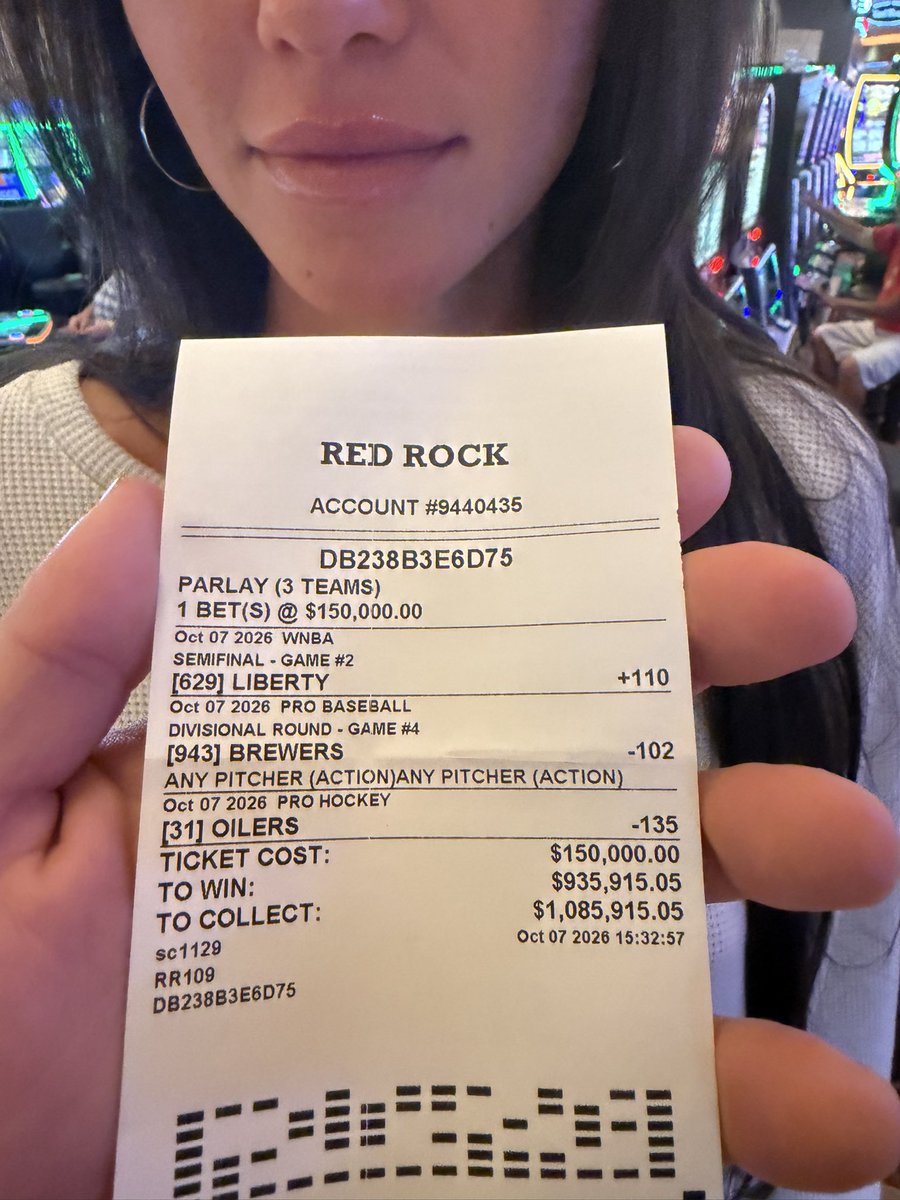
After losing over $3 million,@stevewilldoit changed his betting strategy. This is interesting for everyone else, because every bettor has gone through this at some point. Right now, he’s in the tilt phase, chasing his losses.
Before that, he was mostly playing regular singles. But when someone loses that much money, something interesting often happens ; it can completely change the way they look at betting.
The question is no longer:
"Is this a good bet?"
It becomes:
"How do I get my 3.2 million back?"
And this is where risk-seeking behavior comes in. It’s a well-known concept in psychology.
In Prospect Theory, risk-seeking means that people become more willing to take risky options instead of safer ones, particularly when they are in the domain of losses.
When you're already down a huge amount, a normal win of 200k or 300k can start to feel insignificant. Psychologically, it feels like it doesn't really change anything.
So you start looking for something that can make a much bigger impact.
That’s when bettors often start making mistakes; playing higher odds, taking more underdogs, chasing bigger upsets, or, like Steve, playing more combo bets with much higher overall odds.
The problem is that this type of behavior often leads to higher variance and potentially even bigger losses.
And you can see that with Steve.
If he had continued playing singles after being down 3.2 million, with roughly the same results, he would have ended up around the same level of loss.
Instead, he started playing combos. He hit roughly 50% of his bets, but because he was playing combos, his overall losses are now even bigger.
And the bigger the loss becomes, the more you feel like you need a big win to get back to where you were.
That’s how the cycle starts:
loss → more risk → another loss → bigger loss → even more risk.
For most bettors, one of the hardest things to do is simply forget about the loss.
To keep betting as if nothing happened. To stick to the same approach you had before the losing streak, but with an even more disciplined and controlled mindset.
Easy to say, much harder to do.
I’ve written about this before, but emotions are a bitch.
They affect your ego. They affect your mood. You see all the time, effort and money you've already invested, while the number on the screen keeps getting bigger and bigger.
That’s why the advice I always repeat is simple:
Discipline. Stick to your core strategy.
That’s the key to long-term success.
Emotional tilt rarely fixes a losing run.
Most of the time, it only creates a bigger loss and for many bettors, eventually, the loss of the entire bankroll.