The latest issue of @AirAttackMag includes this little piece I wrote on the emerging U.S. Wildland Fire Service and what it could mean for the future of aerial firefighting. (Starts on Pg. 68) https://t.co/NEbYfUexIZ
As we all witnessed in #LosAngeles earlier this year, wildfire is one of the few challenges that affects everyone, everywhere. Communities are more exposed and increasingly being decimated by fast-moving fires. Smoke-related mortality is climbing, and health systems are under strain. Families are losing homes, the insurance market is stressed, and response agencies are being pushed to the brink.
My new @AirAttackMag article (Below, Pg. 86) lays out a practical idea: a common international framework so every nation can measure wildfire impact the same way. It focuses on real data, shared metrics, and tools that help us respond faster and more effectively.
Using carbon-offset methodology as a universal language isn’t about politics. It gives agencies, decision-makers, and communities a clear way to understand consequences, improvements, and progress.
If this resonates, please share. The more aligned we are in how we measure wildfire impact, the faster we can protect communities, save lives, and reduce losses worldwide.
https://t.co/oWWBH0iOHj
Last night I had a chance to watch #TheLostBus, the new @Apple TV+ dramatization of the 2018 #CampFire in Paradise. I thought they did an exceptional job capturing both the immense challenges faced by first responders and the profound tragedy endured by the citizens of Paradise.
I still remember seeing the massive header that day. I remember the heroic efforts of our helicopter, air attack, and airtanker crews…airtanker pilots like Dave Kelly Jr., air attack crews like Shem Hawkins…risking everything well beyond the call of duty. And I remember the ground crews, saving lives and never giving up fighting a fire of almost biblical proportions.
A special thanks to Aerial Coordinator/Pilot Kevin LaRosa II for reaching out to ensure the @CAL_FIRE aircraft details were authentic, and it was great to see Chief John Messina not only advising technically but stepping into a key on-screen role.
It’s a must-watch…powerful and deeply human.
Yesterday we lost Aaron Clark, a kindred spirit, a friend, and a brother firefighter to an unforgiving line of duty cancer.
My last conversation with Aaron summed him up perfectly: he was a unicorn…there was never one like him before, and there will never be another after.
Like me, Aaron grew up in Santa Cruz, CA. He served his country as a proud United States Marine Corps Marine before moving to New York City with his wife, determined to join the FDNY. Not only did he succeed, he rose to the top as a member of Rescue 1 and the elite FDNY Emerald Society Pipes and Drums. A first, and likely forever, for any Santa Cruz boy.
Aaron, you’ll be deeply missed. My heartfelt condolences to the New York City Fire Department and all who had the privilege of serving alongside you. He gave all. Rest easy, brother.
24th Anniversary 9/11 Memorial
📍 USS Midway, San Diego
🗓️ Sept 11, 2025 – 2:30 PM
FDNY retirees say turnout may be light this year. Let’s prove them wrong. Show we still honor our promise to #NeverForget.
Free reception after at Firehouse Museum (FDNY meal).
Bring family. Share widely.
#911Memorial #SanDiego #USSMidway
This is incredible. I always say that every industry needs its own bold “Mars Mission”…a goal that pushes us farther downrange, drives innovation, and keeps us at the forefront of modernization. We never know how an idea might pivot to become exactly what’s needed, but it's powerful ambitions like these that fuel progress and meet the evolving expectations of those we serve.
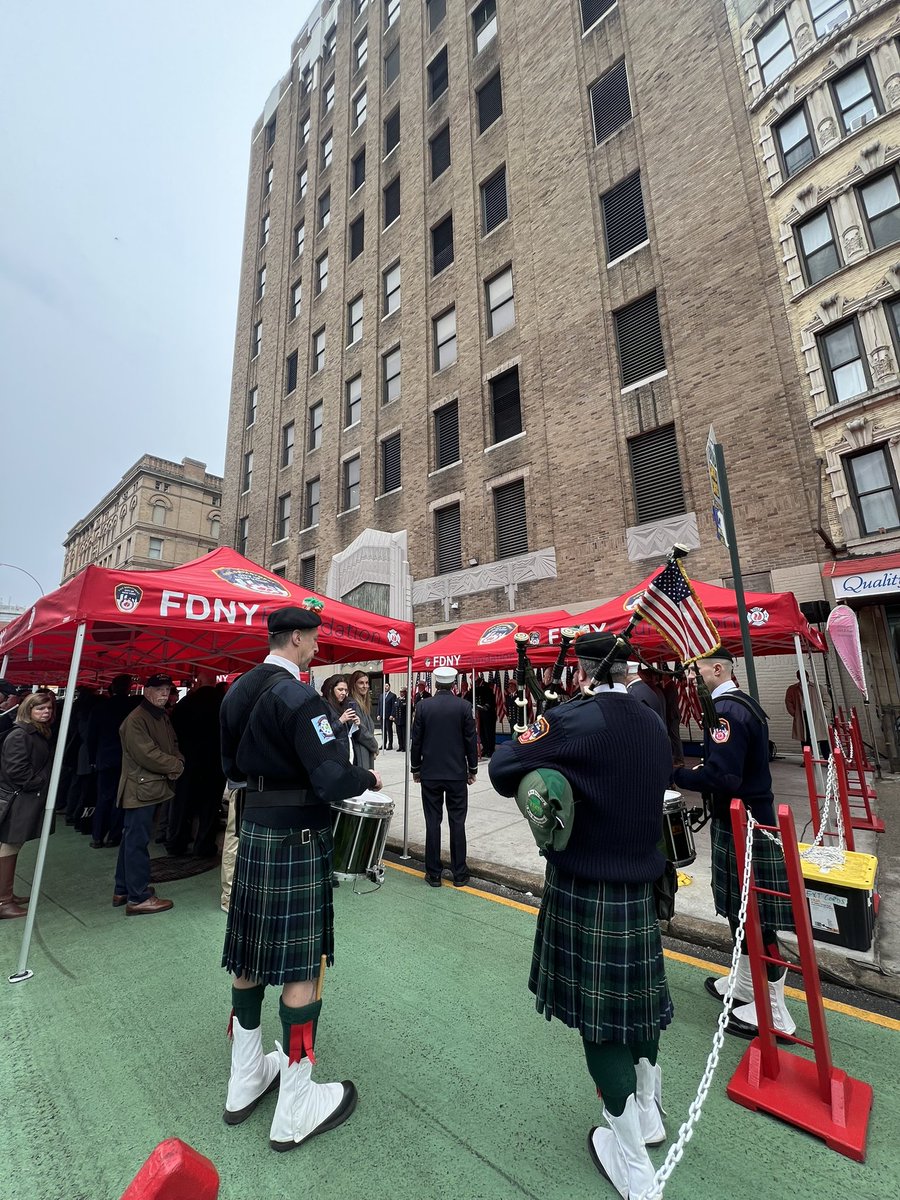
The FDNY Emerald Society Pipes and Drums are preparing to march down 5th Avenue for the Saint Patrick's Day Parade on Monday ☘️
“If you go down the roster of the FDNY pipes and drums, you'll see that they work in the busiest houses, in the busiest areas of the city because the guys in the band love the job. We take the pipe band very seriously and we take our career in the firehouse just as serious,” said Drum Major and Captain Liam Flaherty of Rescue 2
“It’s an honor and a privilege, really, to be part of the band and part of the Fire Department,” said Pipe Major and Firefighter Matt Doyle of Ladder 126.
The culture of any organization, for better or worse, is the unseen force that shapes the outcome of nearly every challenge it faces. It’s the foundation of every battle, every victory, and every loss.
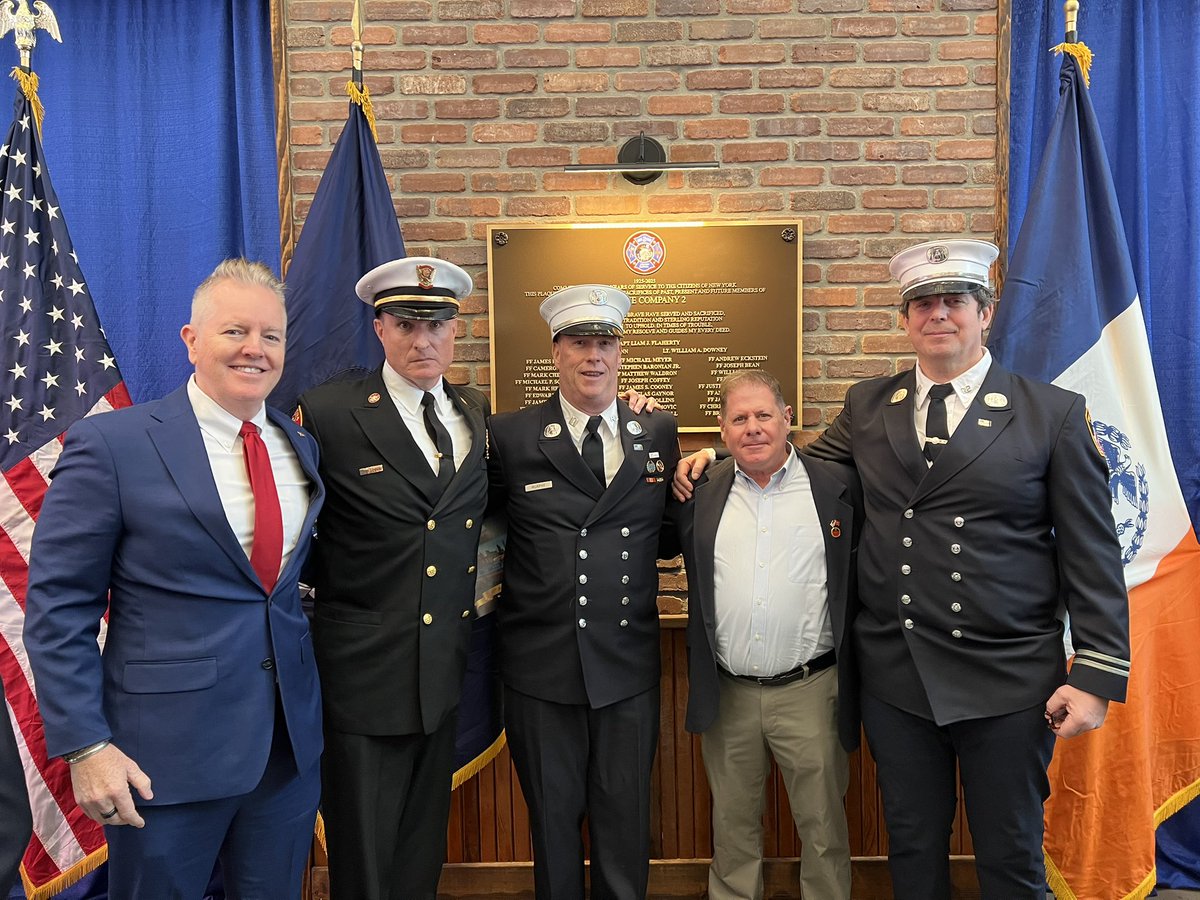
Yesterday, the #Brooklyn quarters of FDNY Rescue 2 became the center of the fire department universe as they celebrated 100 years of service.
Legendary and widely regarded as the busiest fire duty rescue company in the world, FDNY Rescue 2 has spent a century at the forefront of high-stakes operations. As a cornerstone of the FDNY’s elite teams, it has rightfully earned the nickname “The Rescue.”
I was honored to attend and witness the deep respect for Rescue 2, reflected in the presence of current and former department leaders…including commissioners and chiefs…along with hundreds of family members, friends, and fellow firefighters.
In its history, only 400 individuals have worn the blue Rescue 2 shield…just 0.5% to 1% of all @FDNY members who have served over the department’s 160-year existence. It’s a highly exclusive group.
One speaker noted that a key to Rescue 2’s success is its culture, which has remained consistent for 50 years. That stability starts at the top, with @CaptBrooklyn Liam Flaherty, a widely respected leader in the fire service.
I’m proud to call Liam and many past and present members of Rescue 2 my brothers. In the words of Commissioner Robert S. Tucker, here’s to “hundredS” more years.
For firefighters, police officers, soldiers, and citizens who have endured a shared tragedy, returning to or visiting the site afterward evokes a unique, invisible emotional impact. Decades later…after the smoke has faded, streets are scrubbed clean, and fresh paint conceals the scars—these places hold a lingering power, testifying that something profound happened here. A few are formally memorialized, like the World Trade Center down the street, but most remain unmarked.
Yesterday was the 50th anniversary of the New York Telephone Company Fire, widely regarded as the second deadliest in FDNY history, which erupted just after midnight on February 27, 1975. Seven hundred firefighters responded, a third of them injured by toxic gases. My friend Danny Noonan, one of the few survivors from Ladder 3, often spoke of how breathing the air felt like “inhaling razor blades.” He described the chaos of zero visibility, where he and his crew were entangled with the billion (!) feet of wiring in a maze of corridors burning three stories below street level, as drivers six blocks away relied on headlights well into the next day.
Danny passed away last year from an occupational illness associated with that fire. Yesterday, I was invited to join a commemoration led by @FDNYFC Robert Tucker, organized by the @FDNY, Sergio Nieto of the Fire Bell Club of NY, @FDNYpipeband, Danny’s family, and members of his former firehouse to honor that tragic night. A plaque now graces the wall above the sidewalk at 204 2nd Avenue, a permanent reminder of what transpired on this hallowed ground.
After years of hearing Danny’s stories, standing on that sidewalk and sitting on the curb felt surreal. There, hundreds of firefighters once coughed up “black stuff”…chlorinated dioxins…into gutters now dry and absent of any trace of that day.
This fire was also recently covered in 30 Fires You Must Know by Frank Leeb and Billy Goldfeder, where Danny shares more details of his experience. Here’s a short video as well: https://t.co/Ss9jb22nyz
With several high-profile aircraft accidents marking the start of 2025, the aviation industry has certainly faced heightened scrutiny and focus.
Unrelated to these incidents, aerial firefighting faced a tragic event in the summer of 2023 when two contracted helicopters collided mid-air in California, resulting in fatalities. This accident, along with a series of widespread close calls that year, highlighted a troubling pattern and prompted immediate action to improve safety.
In response, every aerial firefighting agency and operator in California collaborated swiftly to tackle the airspace management issue. Our efforts culminated in a comprehensive in-person training module, participated in by all agencies, which emphasized a Fire Traffic Area (FTA) protocol. A key outcome was the development of a tri-fold tactical checklist outlining standardized practices and callouts for various response scenarios. Sand table exercises incorporating this checklist became a core training component. Additionally, by 2025, all agency and contracted aircraft were mandated to equip, at minimum, a Traffic Avoidance System (TAS) and ADS-B In, integrating seamlessly with existing FAA National Airspace System standards.
Fast forward to January 9, 2025: This striking graphic, recently released by Esri and FlightAware, vividly illustrates the success of these measures during the first day of operations against the Los Angeles wildfires. Though the aircraft movements might appear chaotic, they reflect a meticulously coordinated aerial ballet. Two days later, on January 11, approximately 60 dedicated aircraft…five times the initial number…operated tactically within the same airspace. Remarkably, throughout the incidents, despite challenging 60-80 mph winds and with the excel of the widely reported collision between a Canadian CL-415 Super Scooper and a drone (along with 30 other unauthorized drone detections), no accidents or publicly documented incidents involving crewed firefighting aircraft occurred.
This outcome exemplifies industry teamwork, professionalism, and an effective Aviation Safety Management System (SMS) at work; identifying risks, implementing solutions, mitigating future tragedies, and enabling a large fleet to operate safely and efficiently in confined airspace. Incredible work that honors those we lost…on a large scale.
•On Being (Mentally) Starlink•
This video offers valuable insight into how @TomBrady approached his craft, making him one of the most effective leaders in professional sports. His method seems to be based on committing to a PhD-level understanding of the people and environment in his 360, coupled with the use of pre-planned tactical decision points. This approach removes guesswork and reduces the time spent on time-sensitive challenges, allowing him to be mentally quick, as he says, "Starlink before Starlink"…a step ahead when it matters most.
This mindset also applies well to aviation, and any field where uncontrollable and unexpected situations are part of normal operations. Confidence and knowledge in the readiness of both ground and air crews can mitigate many potential issues. Pre-determined decision points, from startup to shutdown, help prepare for low-frequency, high-risk situations that always happen, eventually.
One of my favorite aviation decision points is always being equally prepared for a go-around as for landing. It's a commitment to yourself before you even get into the aircraft, ensuring you're ready for the unexpected during one of the most critical phases of flight. (This is a general statement and not related to recent events).
I’d be curious to hear of any daily decision points others use in their respective industries!
(Video: @FOXSports)
#aviation #leadership #performance #SuperBowl2025
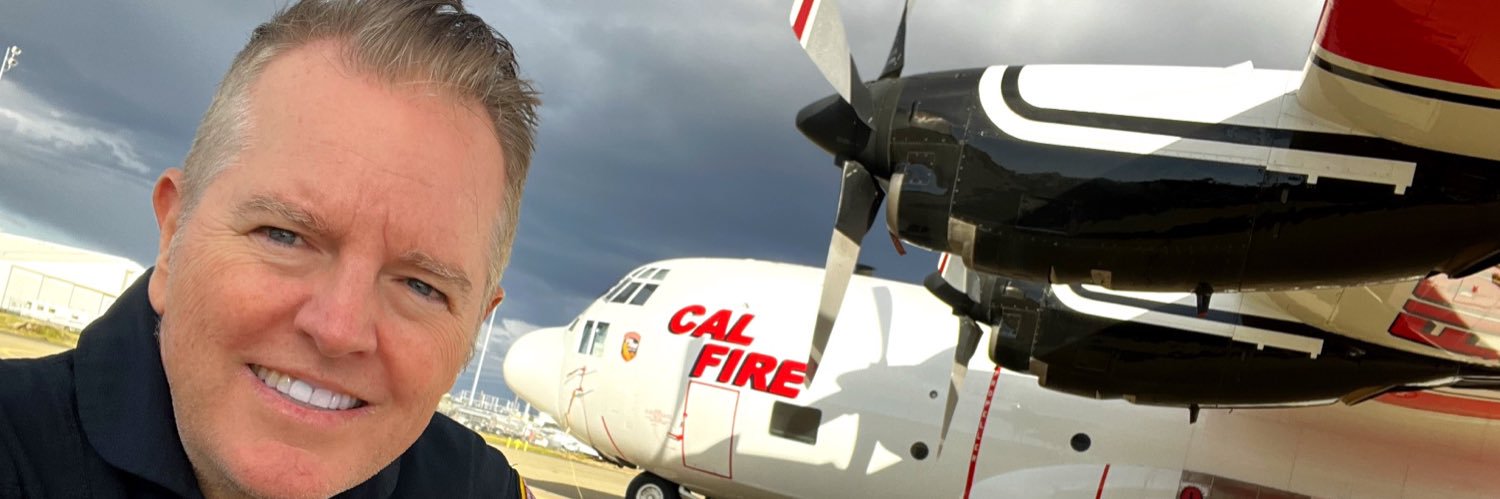
With the transfer of ownership of the seven C-130H’s complete, further retrofitting of the aircraft has begun. The C-130H’s will be used for rapid initial attack delivery of fire retardant on wildland fires.
These airtankers will provide additional support to CAL FIRE’s existing air fleet. The comprehensive strategy implemented during the transfer process underscores California's unwavering commitment to the long-term sustainability and effectiveness of the newly acquired C-130H airtankers in addressing the evolving challenges posed by wildfires.
#aerialfirefighting #airtanker #aviationlovers #aviation #aircraft