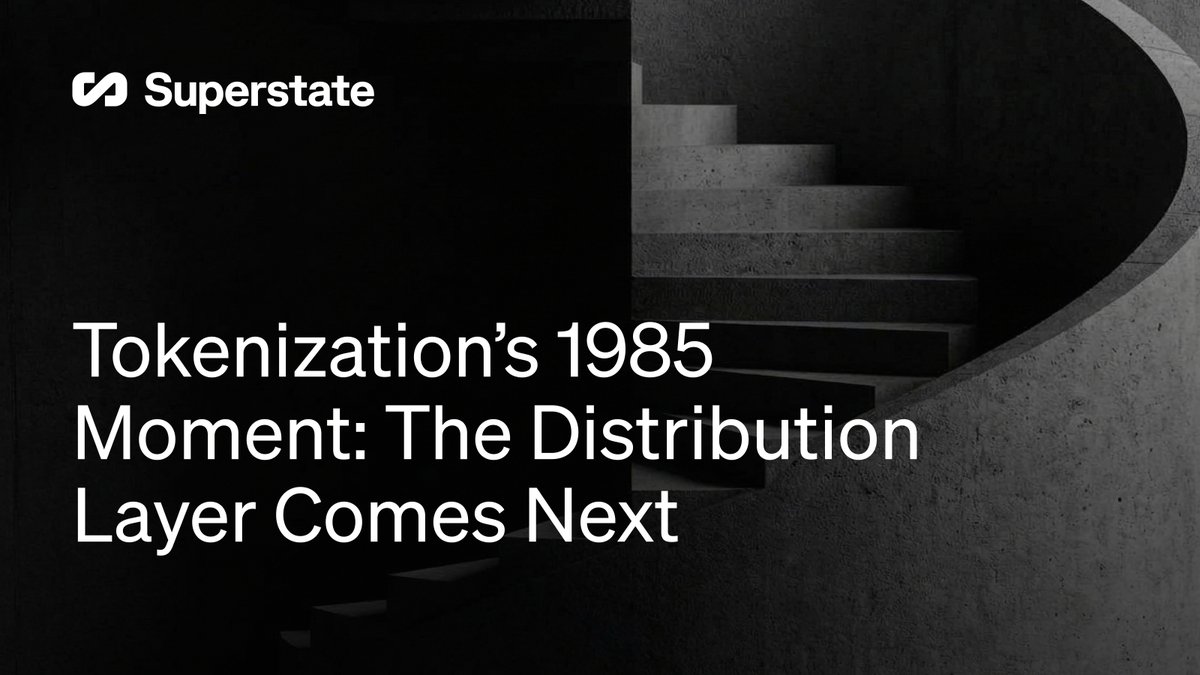
1/ Tokenization is approaching a 1985-style inflection point.
The assets exist. What's missing is the infrastructure to distribute them at scale.
Last time markets solved that problem, trillions followed.
https://t.co/uNBrFwMHnv
4/ More investment choice shouldn’t mean more operational complexity.
FundOS gives Earn platforms access to regulated tokenized funds through one investment layer, while they control the customer experience.
Learn more: https://t.co/xNfDoqSOky
1/ High APY is easy to market. A durable Earn program is harder to build.
Today’s Earn program customers care about more than the headline rate. They care about risk, liquidity, and what happens when incentives run out.
Earn programs need to evolve.
https://t.co/xNfDoqSOky
3/ Not every Earn customer wants the same thing.
Some want capital preservation, steady yield, and quick access to their money. Others will accept more risk or less liquidity for higher potential returns.
Strong Earn programs need many flavors for many customer tastes.
Putting an asset onchain is only the first-order benefit of tokenization. Then the fun begins: the asset can move through DeFi as collateral, access liquidity, and plug into new onchain markets.
Superstate-tokenized assets are built to do this.
A fund share doesn't have to do nothing.
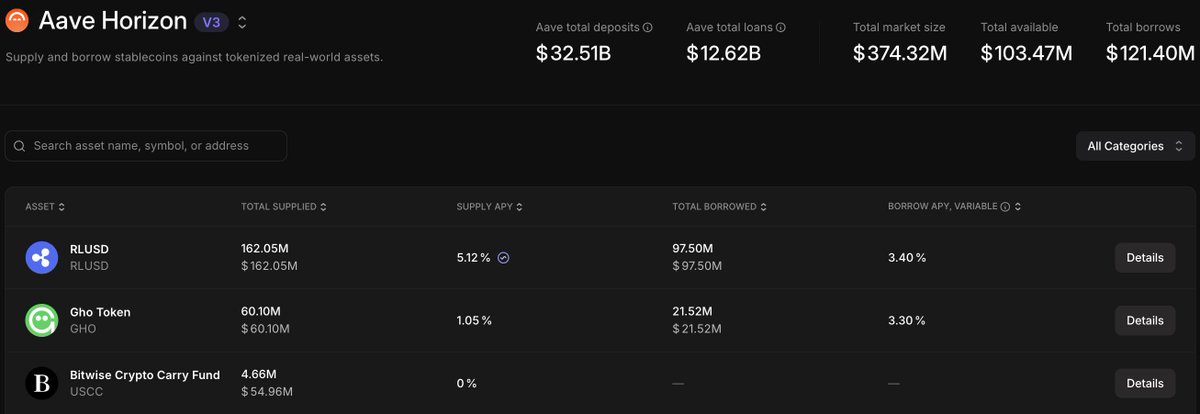
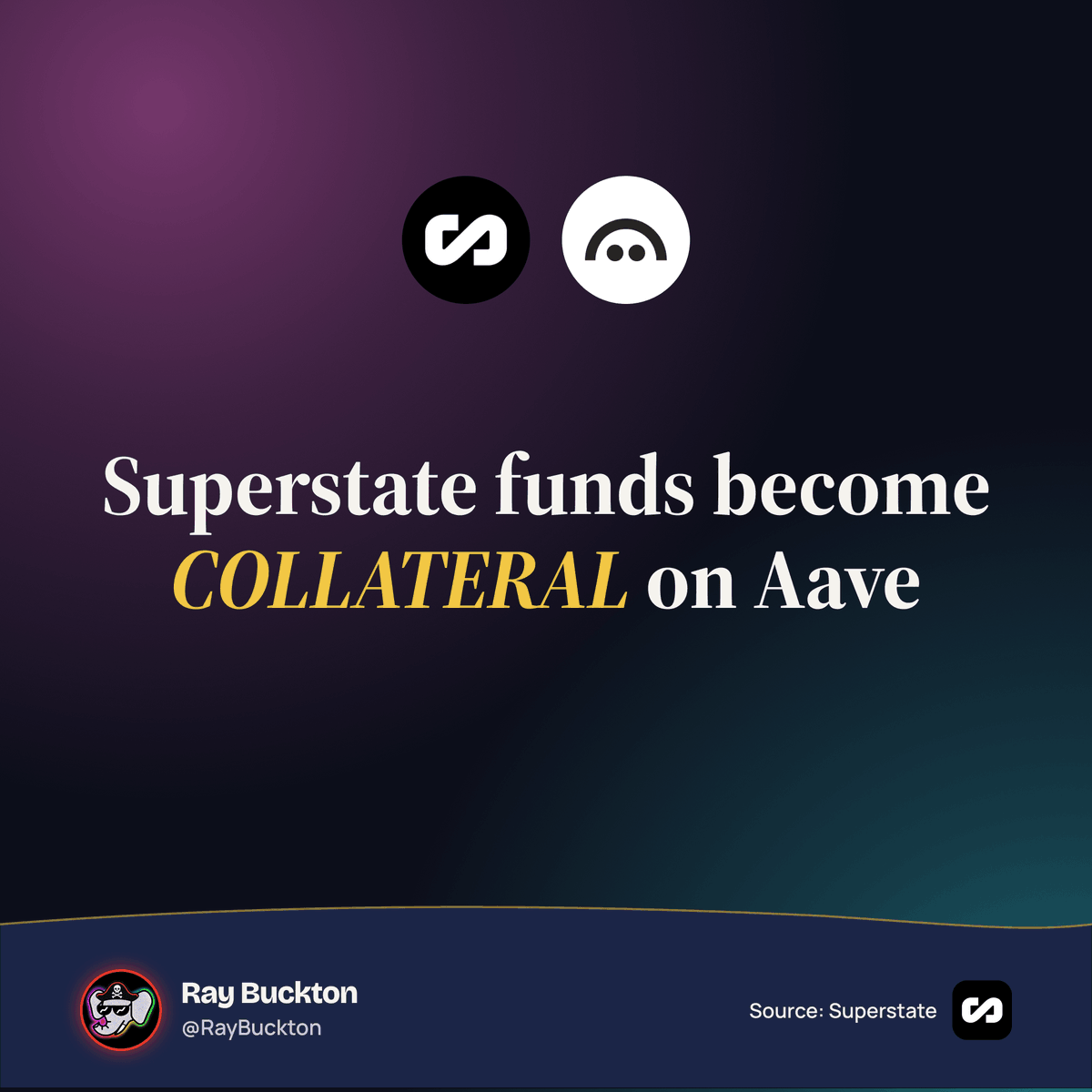
Holders are deploying USCC on @aave Horizon as collateral to tap stablecoin liquidity while maintaining their fund exposure.
Keep the fund. Unlock the capital.
@aave Horizon (RWA market) has ~$55m @Bitwise USCC currently being used as collateral to borrow stablecoins. Last 30d yield in USCC is ~6% vs ~3.5% borrow rate.
plenty room up to the cap for any savvy borrowers/loopers to take advantage of.
.@SuperstateInc USTB and USCC holders can now borrow stablecoins against their fund shares on @aave Horizon.
Citi said collateral mobility is one of tokenization's biggest use cases.
THE WORLD WILL BE TOKENIZED. 🐘
We’ve spent years building the rails for tokenized finance. Now imagine those rails connected to the distribution power of markets.
More investors. More access. A much bigger market.
@hiltnerjim on why distribution is the unlock: https://t.co/CMHsZmTwJN
Tokenized funds are scaling. The infrastructure around them should work alongside the TradFi giants already serving the market.
Superstate FundOS is built to do that.
More on our thinking: https://t.co/aATNrfTUdM
Tokenization expands where fund shares can be put to work. On @aave Horizon, USTB and USCC holders can use their shares as collateral to access stablecoin liquidity.
Regulated funds, connected to onchain credit.
New @Citi research positions Aave as a collateral mobility protocol for tokenized capital markets.
It calls collateral mobility one of tokenization’s most important use cases, with Aave able to take on functions that move tens of trillions of dollars in traditional finance.
Tokenization is starting to change how assets move through the financial system, as @business reports.
➕ 24/7 transfers
➕ Broader collateral uses
➕ Onchain finance
Superstate FundOS brings private funds, mutual funds, and ETFs onchain, expanding their reach.
Wall Street’s embrace of blockchain technology is moving beyond merely creating digital versions of stocks, bonds and money-market funds toward a bigger goal: changing how those assets move through the financial system https://t.co/2fsMx6fG98
We talk a lot about what can be tokenized.
Not enough about what needs to happen next.
Stocks and funds showed us the playbook: better distribution.
@hiltnerjim on what we can learn: https://t.co/TdJuyQd5tR
5/ The next phase will be about making tokenized assets easier to access, use, and distribute.
The lesson from the 1980s: integrate with the platforms, advisors, and custodians that already serve investors.
Meet capital where it lives.
Read more: https://t.co/uNBrFwMHnv
1/ Tokenization is approaching a 1985-style inflection point.
The assets exist. What's missing is the infrastructure to distribute them at scale.
Last time markets solved that problem, trillions followed.
https://t.co/uNBrFwMHnv
4/ Buying a tokenized fund can still require manual issuer onboarding, KYC, wallet whitelisting, and navigating diverse chains.
Traditional finance grew by making its plumbing invisible.
Tokenization is on the cusp of doing the same.
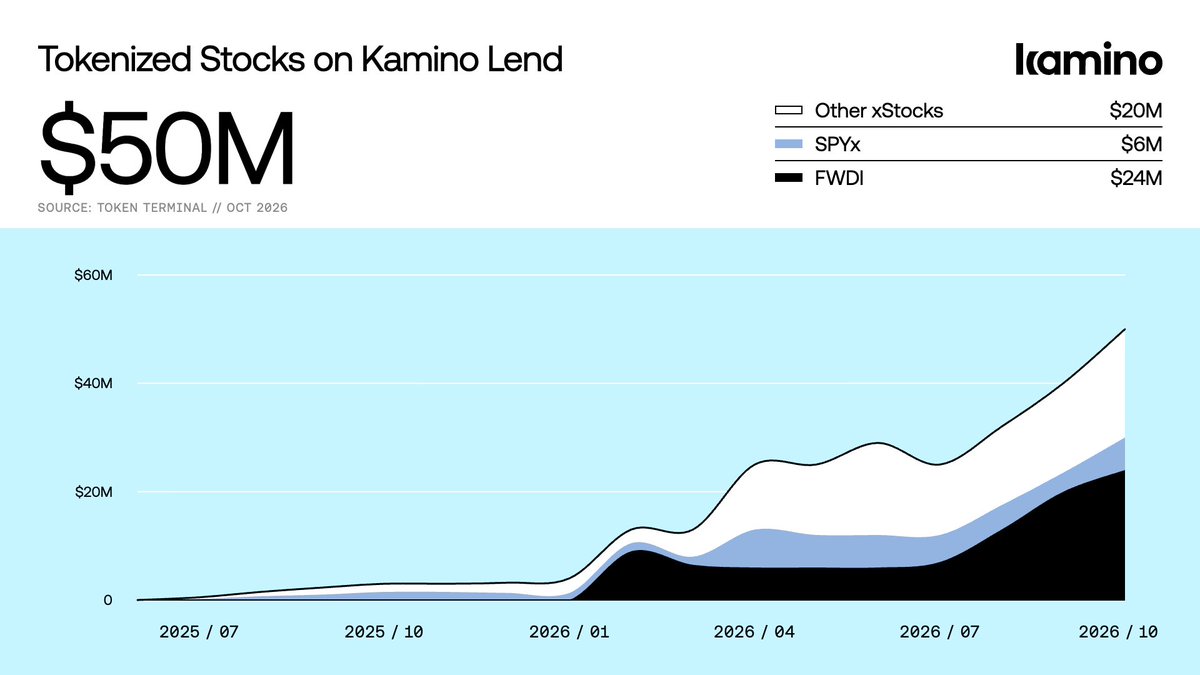
Nearly 10% of @FWDind stock ($FWDI) is already tokenized on @solana through Superstate.
Stocks should do more than sit. They should work in onchain finance.
See tokenized $FWDI in action on @kamino: https://t.co/XnJclJrEmK
We asked Robert Leshner (@rleshner), Co-Founder and CEO of @SuperstateInc, about the recent growth of tokenized equities, the value in different architectures, and why institutions should care.
"People are paying too much attention to whatever launched nine hours ago.
Someone makes a new stock token, everyone piles in, and suddenly that's the model. Most of it won't be.
The bigger change is companies upgrading how their securities are issued and recorded, and that takes years. And watch the startups.
Everyone at every conference wants to know what the big incumbents are doing, but the interesting stuff usually comes from somewhere else."
His full insights below. 👇