Stripe acquired OpenRouter. Ramp launched Router.
Both are leaning into stablecoins.
Cloud, mobile, and APIs are now table stakes, not an investable category.
The next era of finance is something else. https://t.co/tSlI1xTKkT
London is statistically much safer than almost every major US city.
Homicide rates per 100k residents:
🇬🇧 London: 1.1 (a record low)
🇺🇸 NYC: 2.8
🇺🇸 LA: 5.6
🇺🇸 Chicago: 11.7
🇺🇸 Philly: 12.3
Watch your phone around mayfair, sure
But in terms of violence, incomparable.
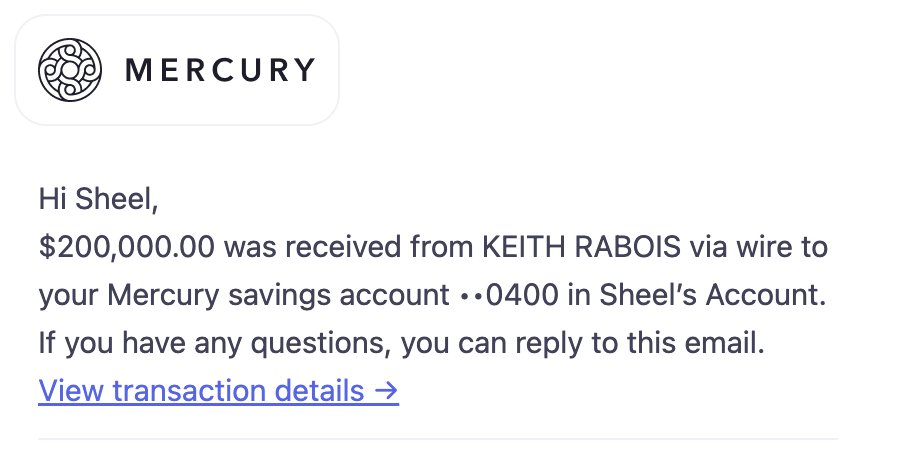
Bets settled. Thanks for playing ball, @rabois!
Keith's bets were that:
1) No SF-based company founded between March 2020 and Sept 2023 would exit above $10B. Cursor sold for $60B, and Anthropic is set to exit above $1T next week.
2) Democrats would lose the House
ngl it’s been so nice this week seeing all the crypto bros realise that london is actually wonderful and not the dystopian nightmare that social media would have you think it is
every time i visit nyc, i am reminded why london is my city 🩷
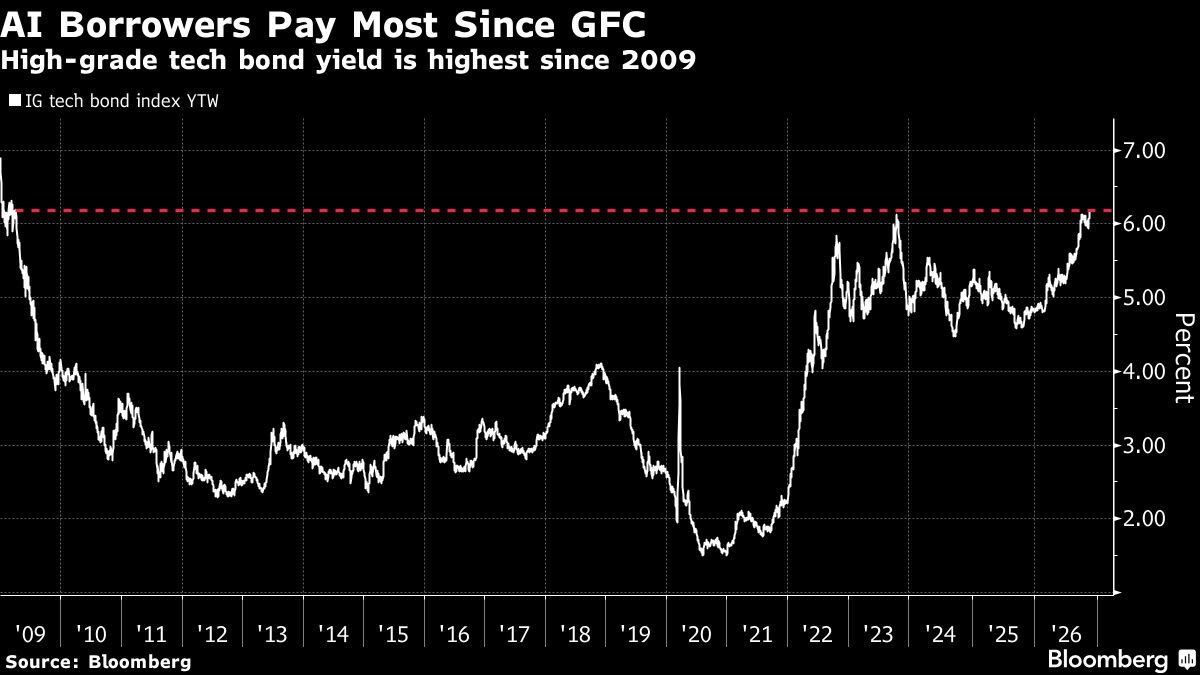
“.. Banks are dumping AI loans, tech bond buyers are saying no more and hedge funds are puking. The wheels are coming off the AI funding rush, implying much higher costs to clear the trillions of dollars in additional debt coming down the pike.”
@business@jessefelder
🚨 BREAKING: OpenAI launched ChatGPT Wallet with Visa, Mastercard and Amex.
Just when you thought Muse and Instinct were leading on commerce.
Here's how it works:
- Your dot (OpenAI's always-on agent) finds the item and you approve with Face ID.
- The card network gives the merchant a one-time token in place of your card number.
- The merchant recieves that network token, its processed by the network
- Your bank sees it too and recognizes it as coming from you / your card and wallet
It's live for US Pro subscribers, inside an app with more than 1.2B weekly users. OpenAI takes no cut for now.
---
This fixes a key issue in agentic commerce, most payments are a work around:
- Muse gets a single-use virtual card for each purchase, and Stripe charges your real card separately.
- Instinct gets a stablecoin budget and spends inside it without asking.
- ChatGPT charges your own card through a network token, so you keep your rewards and dispute rights.
OpenAI's pitch is "built with the payments ecosystem, not around it."
---
Remember: JPMorgan blocks outside agents from customer accounts.
Chase cards work in ChatGPT Wallet on day one, after you approve the link in the Chase app.
The cost is a Face ID check on every purchase which could get old pretty quickly.
Instinct's budget buys while you sleep, and OpenAI says spending limits come later.
Will banks let a token spend alone before shoppers get used to a balance their bank can't see?
---
Merchants still block agents.
Amazon, eBay and United block on purpose. CNBC reported another 37 retailers block by accident, with bot rules written for scrapers.
OpenAI's offer to merchants is that the dot uses your normal checkout and you keep the customer, pricing and returns. Its Commerce Partner Playbook launched today and should fix the accidents.
Amazon is harder. It says Muse hid its identity and stored customer logins (Meta disputes the logins), and a card token alone fixes neither.
---
If you sell online, find out this week if you block agents by accident, then decide on purpose.
Agent wallets are coming fast. Be ready.
Configurable accounts are the endgame of what an onchain account should be.
We’ve solved in-place migration of current EOAs with PQ proofing.
Pay tx fee directly with multisig balances
Tiered spending perms in the multisig with access keys
And it’s fast and cheap ⚡️
Tempo's speed has been really inspirational. Even more so once you learn of all of the technical investments they've made on fuzzing, DST, and AI tooling to build with more confidence. Top-tier.
David Vélez's @Nubank just made a record $1.1bn profit in one quarter.
Its efficiency ratio is 19.3%, which means 19 cents of operating cost for every dollar of net revenue. Four years ago it was 49%.
Q3 in numbers (growth is FX-neutral):
- Net income of $1.1bn, up 31%, at a 32% return on equity
- Gross revenue of $6.3bn, up 37%
- 143m customers, with 3.7m added in the quarter
- 65% of Brazilian adults are customers and 86.3% of them use Nu every month
- Loans up 33% to $41.6bn, deposits up 19% to $47.5bn
- Full-year efficiency ratio guidance cut to 19-19.5%
---
CFO Rob Livingston gave one reason costs came in under plan. Nu hired fewer people than it planned to, partly because AI gave its teams more capacity.
I interviewed David at Nu Stadium in September, the day after the US launch. He told me Nu had mapped 120 workflows across the bank, and that AI gave them a reason to go back through each process and ask what they could delete.
You can now see that work in the cost line.
The efficiency ratio fell a full point in a year while Nu launched in the US and took Nu Global, its stablecoin-based account, to 37 countries. Nu has capped the cost of both at one point of the ratio a year through 2027.
---
I'm keeping an eye on credit.
Loans more than 90 days late rose to 7.3% of the book, from 6.9% last quarter. Nu says most of the rise is mix. Loans that earn interest are where late payments happen, and they're now 61% of the book, up from 59%. Nu also says it chose to take more risk.
NuFormer, Nu's own AI model, feeds those credit decisions. David told me how it's changing them, and why he's more cautious about putting AI agents in front of customers.
Nu grew revenue 37% and hired below plan. If you run a bank, expect your board to ask why you can't.
🎧 My full interview with David Vélez: https://t.co/ykU3i13SXv
Mobile payments sucked in 2011.
It got a lot better in 2014 with Apple Pay.
Now it's normal.
Agentic commerce sucks in 2026.
It will get better with network tokenization (2029?)
And become at least 33% of online commerce within the decade from there.
Agentic commerce is not a good experience today.
However, people seem to mistake the early days of agentic commerce for the failure of the industry as a whole.
In reality, things are moving in the right direction.
@ForterGlobal published some incredible data that highlights where agentic commerce stands today:
1/ There is clear demand
Agentic orders are up 7.2x since the first week of August, and Muse placed more than half of all agentic orders in its first week.
Even before Muse, agentic orders grew 24% from August to September, or 48% once you count Instinct & Grok Bot, which first showed up Sept 1.
If users are naturally pushing agentic orders in the first week of Muse's launch, before any of Muse's widespread ads, then you know it's an inherent behavior that users are interested in.
2/ Muse's growth was net-additive to the industry
Muse didn't steal orders from other agents. After it launched, orders from OpenAI, Google and ChatGPT kept growing, up 4% month over month.
Muse brought in net-new demand.
3/ Browser automation drove the explosion
Browser automation, especially before companies started cracking down on bot detection, allowed these agents to shop freely.
Muse alone bought at 74% of all stores that got any agentic orders. Instinct followed behind at 50% coverage.
Many sites are blocking agents, so I am putting together my own report that tests 20+ agents on sites like Macy's, Target, Nike, Dick's and Amazon. I'll release that report soon 🙂
4/ Protocol agents reach minimal stores
OpenAI's checkout protocol reached only 24% of stores, and Google just 5%.
The issue with protocols is that they are bound to the merchants that have implemented said protocol. Relying on the store to integrate is a proven friction point for scaling agentic commerce.
5/ Agentic commerce is built for multi-item checkout
The average agentic order is $227 and reflects a lean towards multi-item checkouts.
Muse had an average order size of $213 and Instinct hit $239. Google averages only $100, since it only supports single-item checkout.
Of all agentic orders, only 27% are under $50, again pointing towards multi-item carts as the dominant use case.
6/ Travel still dominates
Travel hit $536 per order, over 2x the next category, which is physical goods at $235.
We're still early, and I question whether the average American will use agents for travel like the early adopters do, but for now, the data holds true.
7/ North America is 86% of agentic orders
Agentic commerce volume is almost all North America so far, which leaves a massive opportunity for all other geographic markets.
Agentic commerce is just getting started, and given some of this early traction in just the first few months, it feels like we're positioned for a wild ride.
Source: https://t.co/A4lBJkUhlM