Trent & Peak Archaeology now trades under the name York Archaeology. Please note, this account is no longer monitored. Follow @YArchaeology for updates.
We have a new name! The commercial archaeology and heritage branches of York Archaeological Trust (including Trent & Peak Archaeology) are now trading under the name York Archaeology - follow @YArchaeology for updates from now on.
#FindsFriday is a discoidal flint knife, found on a site in Derbyshire. This artefact dates to the Late Neolithic or Early Bronze Age and is part of an assemblage used for hunting and food preparation activities on the periphery of a settlement #PrehistoricArchaeology
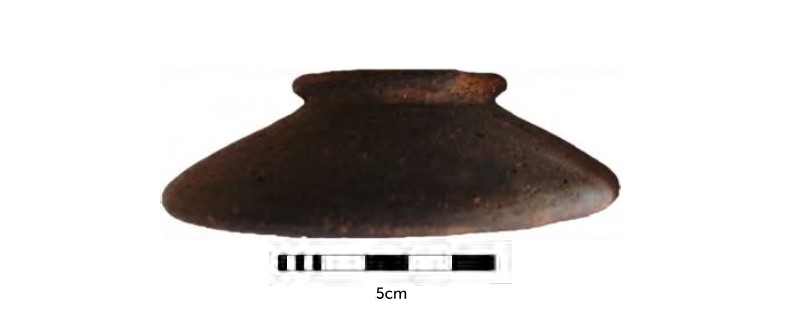
#FindsFriday is an Iron Age pottery lid, dated to the 1st century AD and found in Nottinghamshire. Pottery can provide usual information about a site such as the continuation of site use from the Iron Age through to the Roman Period #PrehistoricArchaeology#RomanArchaeology
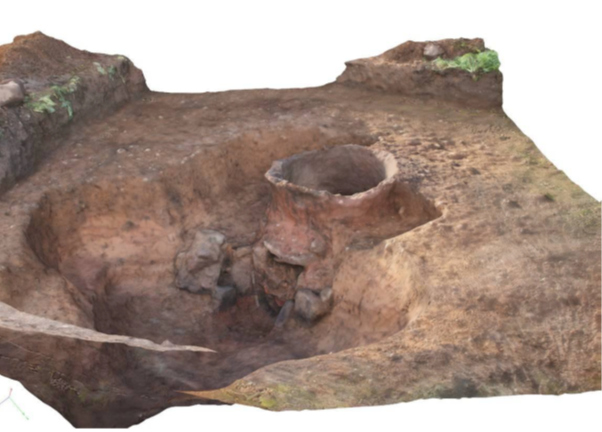
#FindsFriday is a #Roman pottery kiln, discovered on a site in Leicestershire. This was a single chambered sunken kiln and was used to fire Derbyshire ware type pottery. After it fell into disuse, it was filled with pottery from later kilns #RomanBritain#RomanArchaeology
#FindsFriday is a Roman amphora neck with handles, found in Staffordshire. Amphorae are common across the Roman Empire and were used for transporting non-local goods such as wine and olive oil. They provide information on trade routes and production centres #RomanArchaeology
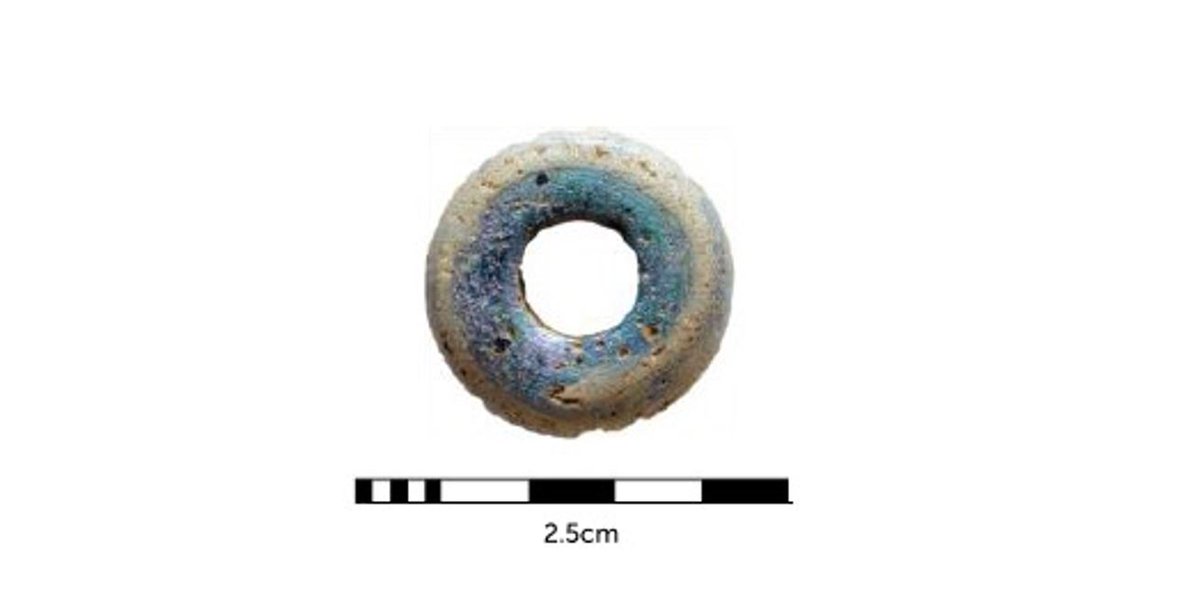
#FindsFriday is an #AngloSaxon annular glass bead of opaque blue glass with a white spiral, likely to date to the 7th century and found in Nottinghamshire. Beads like this were common in graves of the early Saxon period but became unpopular in later periods #BritishArchaeology
#Findsfriday is a medieval baluster jug base from a site in Nottingham. The outline of a second jug can be seen in the glaze on its base, showing the pottery was stacked inside the kiln. #MedievalArchaeology#MedievalPottery
#FindsFriday is a Bronze Age thumbnail scraper, found in Derbyshire. The flint assemblage from this site provides evidence of small transient communities moving through the landscape of Derbyshire, on a route used across multiple periods #PrehistoricArchaeology#PrehistoricFlint
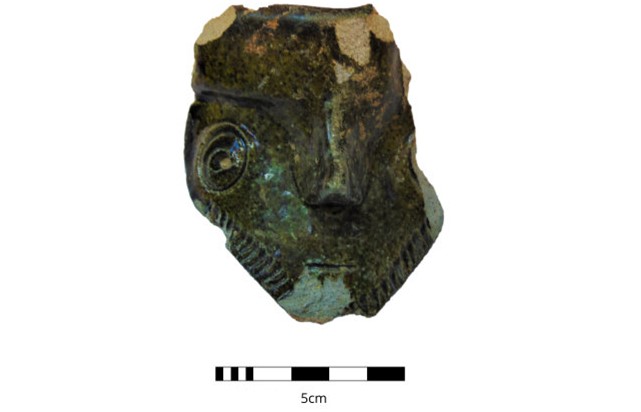
Our early #FindsFriday is a Medieval ‘face mask’ jug, found in Lincoln. Medieval pottery can feature anthropomorphic decorations such as faces, human figures or handles or feet shaped like arms, hands, or legs #MedievalArchaeology
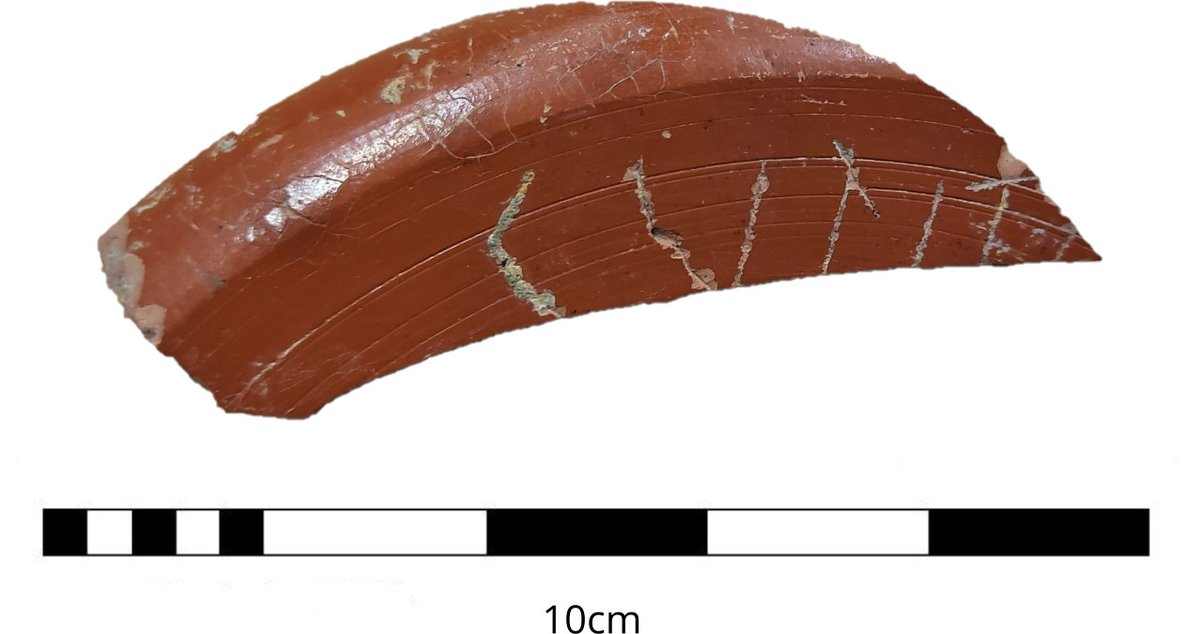
#Findsfriday is a Roman #Samian platter rim, found in Derby. A name, possibly Cupitus or Cupitianus is scratched into the surface of the pot, marking ownership #RomanArchaeology
#FindsFriday is a 1st-2nd century AD Roman pot sherd found in Nottinghamshire. It has been repaired using holes drilled into the pot and a metal wire threaded through like a staple, to reconnect or support a crack or break #RomanArchaeology#RomanPottery
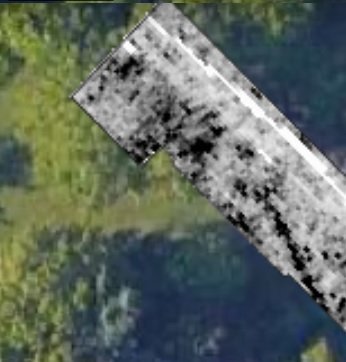
Could we have found the orangery?! The @MagSurveys data also revealed other garden features! We may have to dig two trenches... Places still available for @WeDig Wollaton Park, starting 9th Aug! Book now - https://t.co/jubvp1DrJm
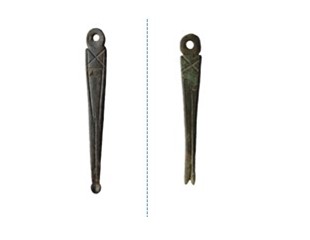
#FindsFriday is a Roman ear scoop and nail cleaner, part of a toilet set used to maintain personal hygiene. Found on a site in Derby, in close proximity and with shared decorative features, they are likely to be part of the same set. #RomanArchaeology
#FindsFriday is a medieval tile featuring a cat print. Ceramic building material was often made on site for medieval building projects and it is not uncommon to find animal prints in the surface of bricks and tiles. #MedievalArchaeology#Cats
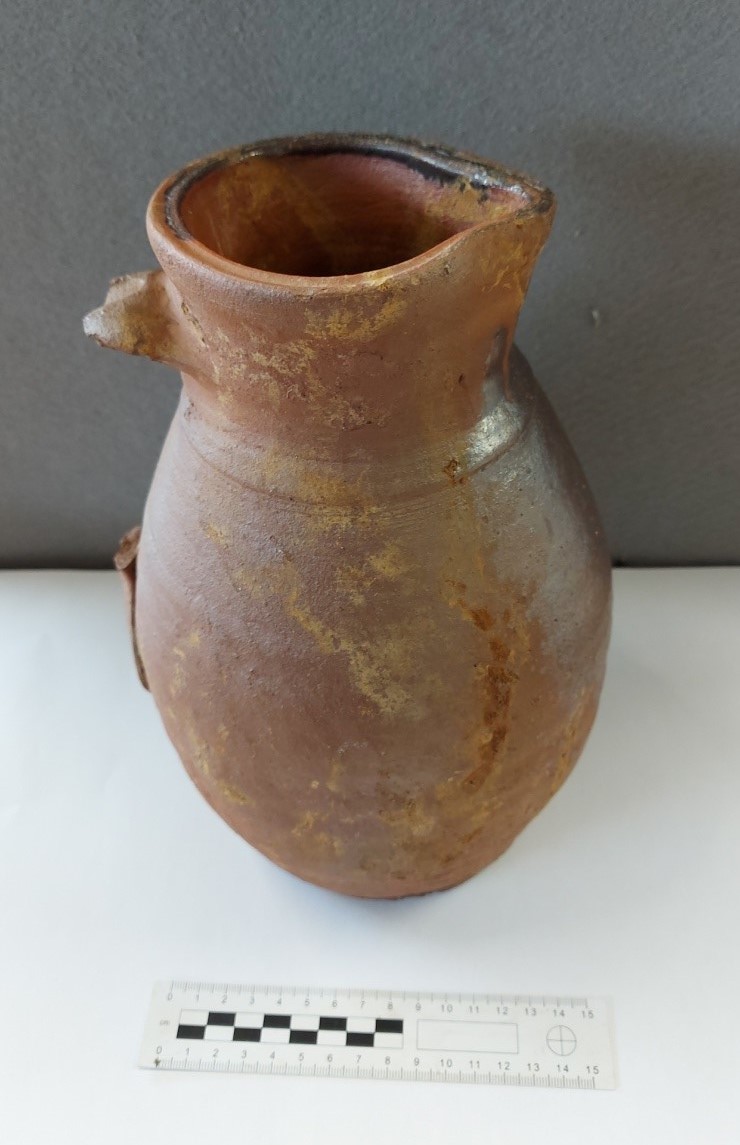
#FindsFriday this week is an almost complete jug, found in a well in Warwickshire. This is a Midland Purple jug, dated to the 15th – 16th century #Archaeology#BritishArchaeology
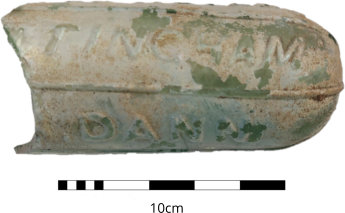
#FindsFriday is a 19th century ‘torpedo’ bottle, found in Nottingham. These were a type of bottle designed to be stored horizontally to allow the carbonated mineral water inside to stay fizzy. They are a frequent find on Victorian and Modern sites #PostMedievalArchaeology
This week’s #FindsFriday is a #Roman Millstone, found in Derbyshire. This may have been used within a waterpowered mill and used for grinding cereals. The grooves on its surface allow the flour to flow out from between the 2 millstones #RomanArchaeology#RomanBritain