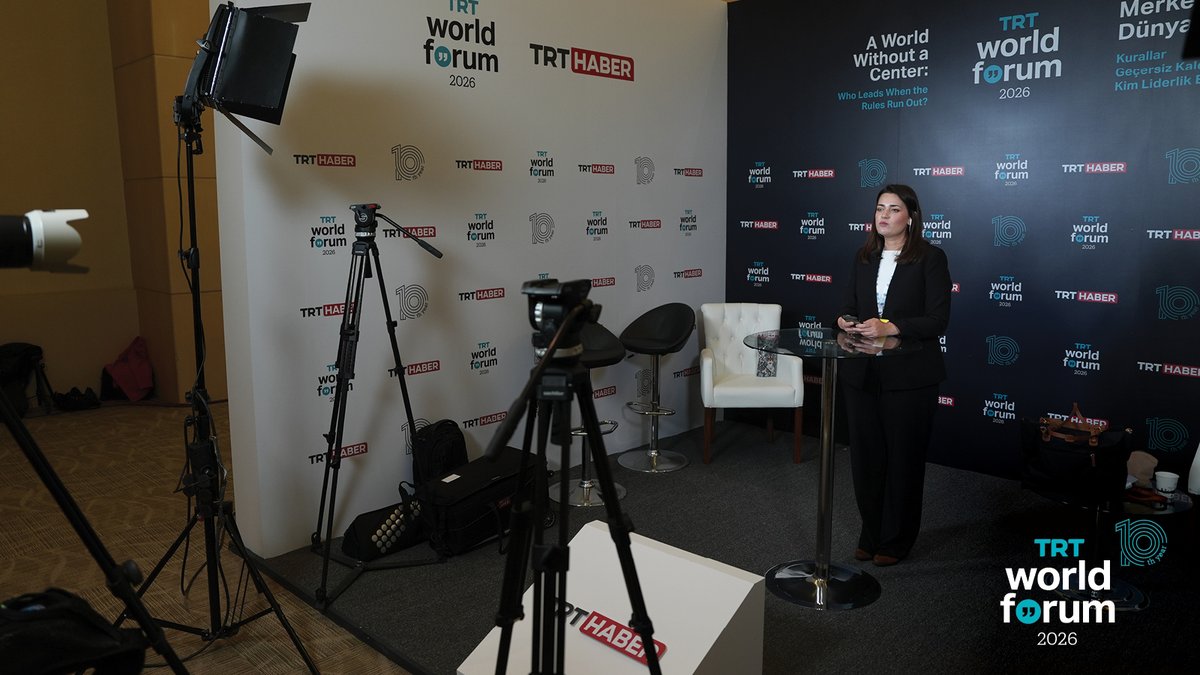
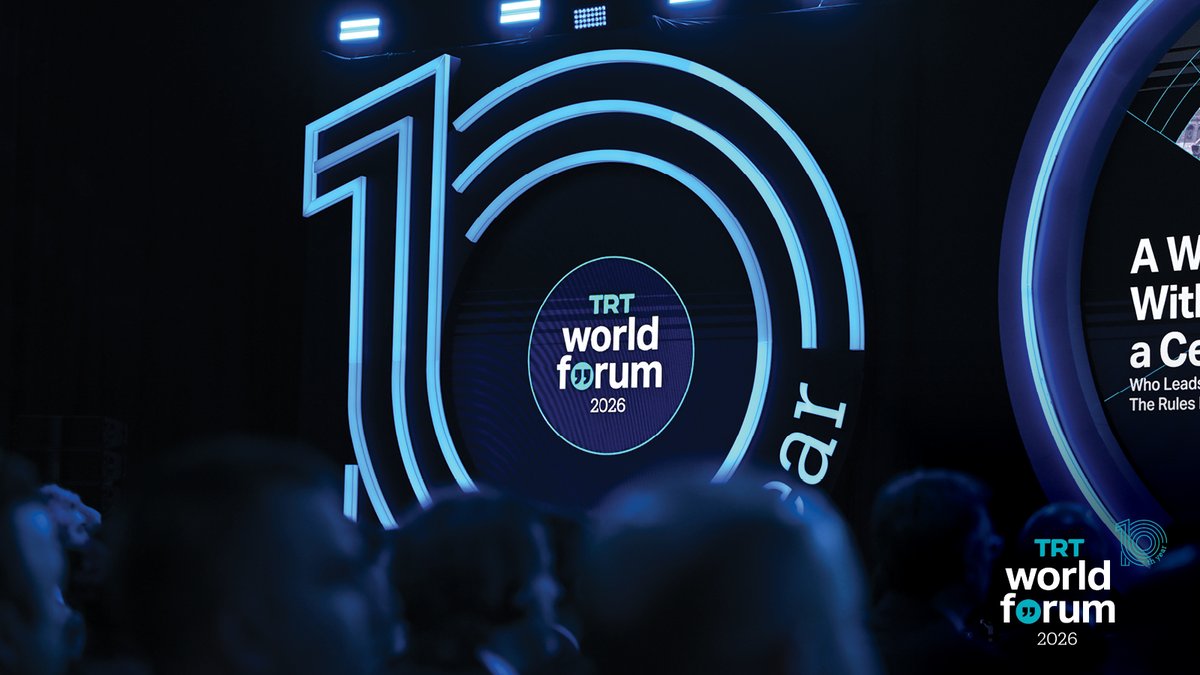
The 10th edition of #TRTWorldForum has come to a close!
Over two days, leading experts, policymakers and academics gathered in Istanbul to exchange ideas and explore the challenges shaping our shared future.
Thank you to all our speakers and participants for being part of this year's Forum.
#TRTWorldForum2026
That's a wrap on two days of dialogue, ideas and global perspectives at #TRTWorldForum2026!
With nearly 150 speakers from 43 countries, this year’s Forum sparked meaningful conversations on the challenges shaping our world.
The Forum may be over, but the conversations continue.
Thank you to everyone who made it possible. Until we meet again!
#TRTWorldForum
Dr. Tarek Mitri, Deputy Prime Minister, The Lebanese Republic, said that “The world in which we live is not one where assistance for economic recovery and infrastructure development ranks particularly high among international priorities. Most countries are preoccupied with their own security, stability and economic challenges. Some are attempting to avoid larger budget deficits, while others are cutting public expenditure. All of this makes our task considerably more difficult. Nevertheless, Lebanon is a society that has repeatedly demonstrated its capacity to recover. We have always managed to rebuild and get back on our feet.”
Prof. Steve Keen, Honorary Professor, University College London, argued that conventional economic thinking overlooks the risks posed by rising private debt, a key source of financial instability. He also warned against the role of the private financial sector in financing speculative policies and the military-industrial complex.
#TRTWorldForum2026
Dr. Fabian Zuleeg, Chief Executive and Chief Economist, European Policy Centre, said that “There is, in my view, enormous untapped potential for cooperation between Europe, the Middle East and North Africa. This potential is not being fully realised at present, and greater cooperation across these regions could make a significant contribution to reconstruction efforts.”
#TRTWorldForum2026
Angel Gurria, Former OECD Secretary-General; Mexican Minister, said that “By reducing investment risks at the initial stages, we can create the conditions necessary for private capital to flow into the region. National governments also have an important role in covering certain risks. Breaches of contract, non-compliance with obligations or currency incompatibilities should be addressed by governments or multilateral development banks.”
#TRTWorldForum2026
Beyond reconstruction: shifting trade routes, energy partnerships and investment flows are reshaping economies after the wars in the Middle East.
“Towards a Rocky Recovery: National Economies After the Wars in the Middle East” at #TRTWorldForum2026.
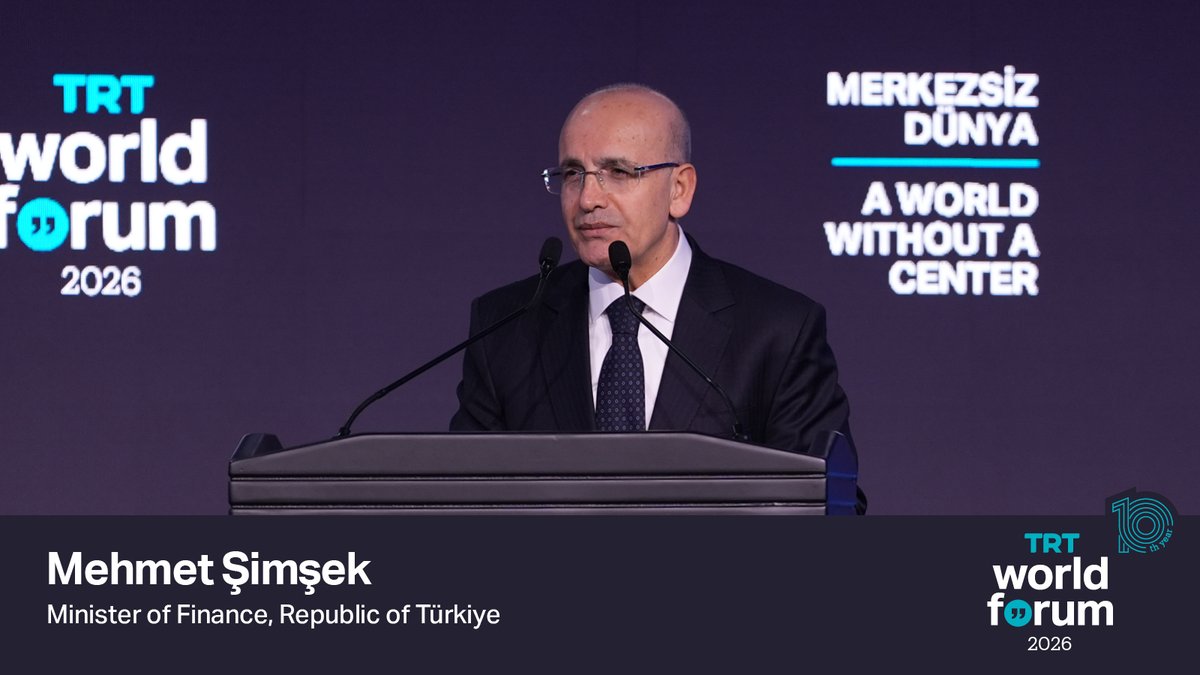
Mehmet Şimşek, Minister of Finance, Republic of Türkiye, said that “When we look at the region, much of it is in recession, not surprisingly. Countries on the front line have experienced substantial declines in their export and import volumes. Globally, growth is slower, financial conditions are tighter, and inflation is higher. It’s not all driven by war, but the war has had a big impact.”
#TRTWorldForum2026
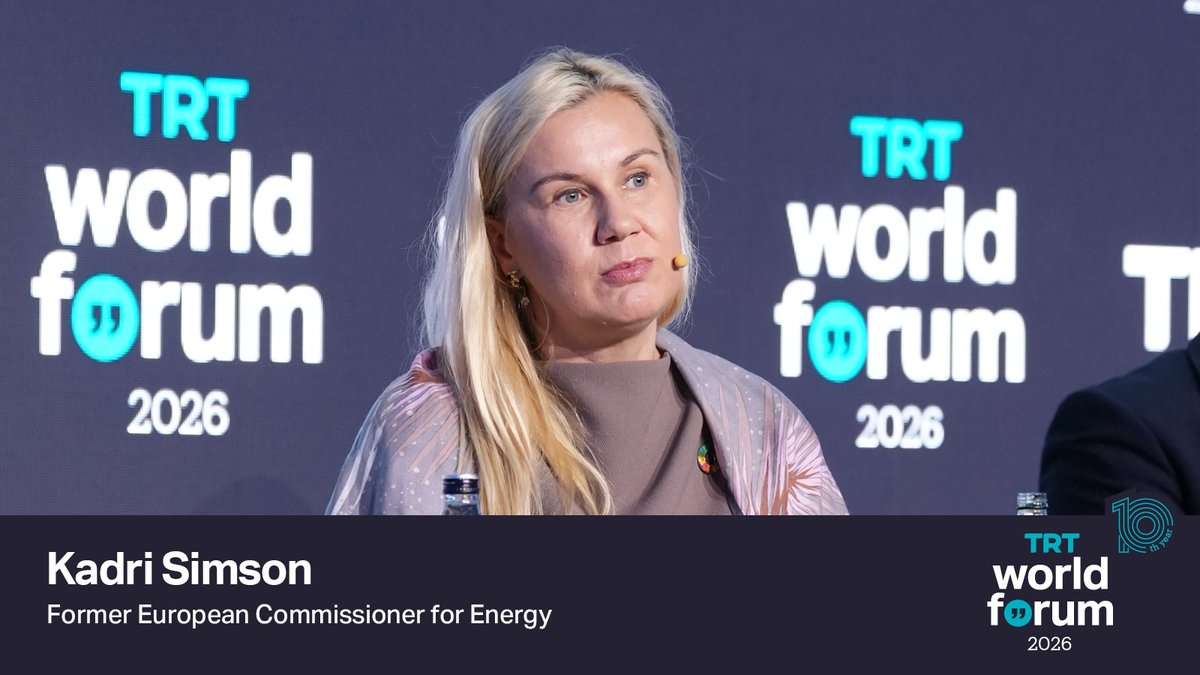
Kadri Simson, Former European Commissioner for Energy, emphasised Türkiye’s important role in European energy security, noting that the Southern Gas Corridor, which connects Azerbaijan to Europe via Türkiye, has repeatedly reached maximum capacity within a very short period when needed.
#TRTWorldForum2026
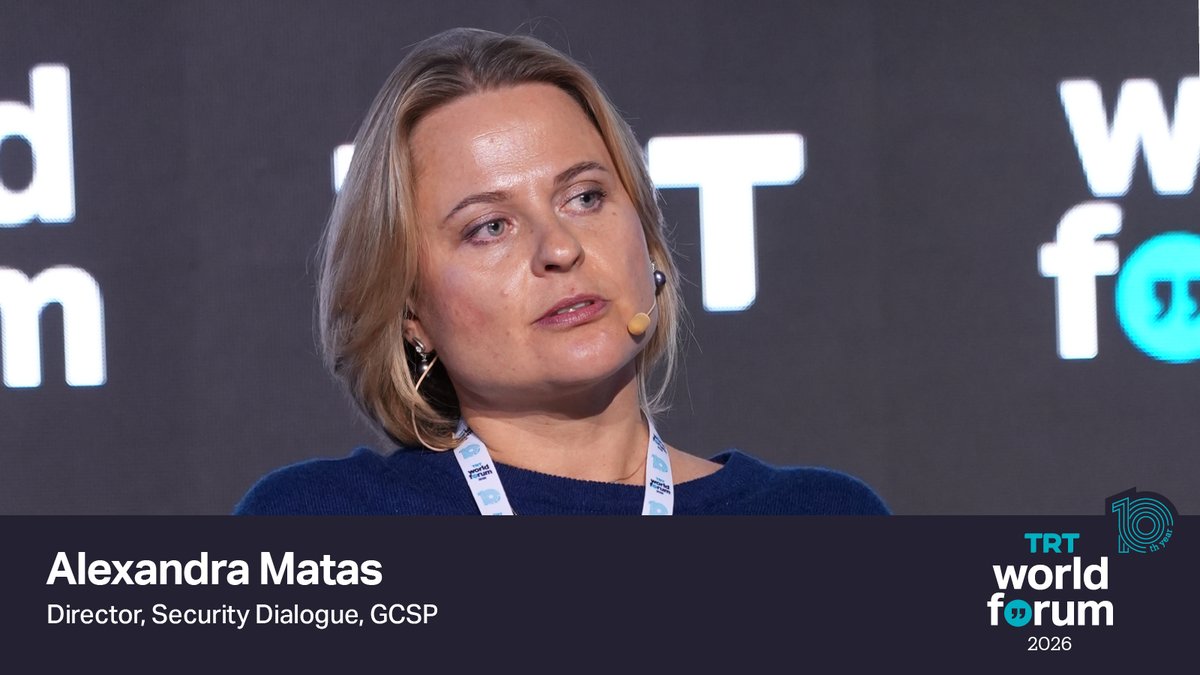
Alexandra Matas, Director, International Security Dialogue Department, Geneva Centre for Security Policy (GCSP), stated that “Multilateral institutions that promote diplomacy and dialogue are currently in decline, and that’s not the failure of those institutions. It’s basically the result of a lack of political will by major powers.”
#TRTWorldForum2026
Prof. Talha Köse, President, Turkish National Intelligence Academy, stressed that “We are now being tested in all areas, so we have to focus on resilience. Last week there were attacks on grocery store refrigerators. The nature of security is changing. It’s becoming more hybrid, so the actors have been changing. It is very important to have some early warning mechanism that is different than before.”
#TRTWorldForum2026
Nicu Popescu, Former Deputy PM & Foreign Minister, Moldova, noted that in an increasingly dangerous world, countries need to strengthen ties with their friends while approaching dialogue with adversaries and even enemies carefully, emphasising that diplomacy requires engaging with both allies and opponents.
#TRTWorldForum2026
Energy shocks move quickly from markets to politics.
“Aftershocks of Energy Crises: Institutions Under Strain” explores how governments and international institutions respond to the consequences of energy disruption.
#TRTWorldForum2026
Sharif Banna MBE, Founder and President, Sycamore Foundation, noted that a bias-free world is unlikely in the near future, but warned against the institutionalisation of biases through algorithms. He nevertheless expressed optimism about “algorithmic resistance”, citing the US midterm elections in Michigan, where people made their voices heard despite the influence of companies and governments.
#TRTWorldForum2026
Dr. Paul Biggar, Founder and CEO, Tech For Palestine, highlighted that every country has significant leverage over AI companies, as it can restrict their ability to operate in its market if their technologies are biased against its ethnic, religious or cultural values.
#TRTWorldForum2026
Khaled Koubaa, Founder and CEO, AT Worthy, said that “Each one of us brought our own biases, so technically, we are not neutral. But the right way of using it [AI] is to ensure that those companies have sufficient internal and external accountability and control mechanisms.”
#TRTWorldForum2026
Guillermo Christensen, Partner, K&L Gates, highlighted that the speed and complexity of technological developments make it difficult to understand why certain things happen, while legal systems are poorly equipped to anticipate challenges that have yet to emerge.
#TRTWorldForum2026
The concentration of algorithmic power and its impact on how information is produced, distributed and seen is the focus of “Who Is in Charge in the Algorithmic Age? Companies, Countries, Citizens”.
#TRTWorldForum2026
Prof. Burhanettin Duran, Head of Communications, Republic of Türkiye, argued that algorithms are not neutral: behind their decisions lie human choices shaped by commercial and political interests. He warned that when a handful of companies control what people see, they also shape what people think.
#TRTWorldForum2026
Prof. Peter Asaro, Professor, The New School; Chair, Stop Killer Robots, argued that AI-assisted targeting, as seen in Gaza and Iran, can increase civilian casualties by generating more targets while weakening human oversight and safeguards. He called for a full lifecycle regulatory approach that ensures accountability for states, militaries, technology developers and users.
#TRTWorldForum2026