Global trade keeps the world moving, but it’s still trapped in paper.
One transaction can involve 30 stakeholders, 240 paper copies and weeks of delays.
TWIN is the trusted trade network built to fix that. Watch how in just over 2 minutes.
#TrustedTrade
The World Economic Forum estimates digital trade facilitation could cut trade costs by up to 25%.
Not by moving anything faster, but by lowering what it costs to prove a shipment matches its paperwork.
Eight of the fourteen economies in East and Southeast Asia still trail developed countries on paperless trade adoption.
Some of the busiest ports in the world sit inside that group.
The goods move at sea speed.
The paperwork does not.
An exporter who ships on time, every time, for five years has built something a lender would want to see.
Almost none of it is written down anywhere a lender can read.
Each shipment clears and the record of it scatters across brokers, forwarders and email.
The track record exists. It just cannot be shown.
Chasing one shipment's paperwork can mean hundreds of emails, calls and re-sent copies.
Digitalized trade is linked to 90% fewer trade-related emails.
Less chasing. Faster trade.
A bank lending against a shipment mostly looks at the exporter's balance sheet, not the shipment.
A first-time exporter with a confirmed buyer and goods on the water can still fail that test.
So the smallest exporters get assessed on the thing they have least of.
An exporter pays for the crop, the packaging and the freight long before the buyer pays for the goods.
That gap can run for weeks or months. Wages and the next shipment both fall inside it.
The more an exporter sells, the more of its cash sits inside that gap.
Funding that gap is what lets the next order happen.
A funder lending against a shipment needs to know who is holding the goods, and when that changed.
Nine separate documents in a trade relate to that transfer of possession, and confirming them from another country means taking someone's word for it.
Funders lend on the assumption that the word might be wrong, and the exporter carries the difference.
$2.5 trillion of trade finance is requested and declined every year.
The goods are real. The buyers are real. The paperwork is in order. Still rejected.
Lenders fund what they can confirm for themselves, quickly enough to matter.
Around 70% of letters of credit are rejected the first time they are presented.
The cargo has usually sailed by then, and the exporter waits while the documents go back for correction.
The discrepancy is usually clerical.
Even so, the exporter is paid weeks after the buyer has the goods.
An exporter without the assets a bank wants as security still has places to borrow.
Buying agents and exporter-financiers advance cash against a shipment, and price it for what they cannot verify themselves.
For a lot of exporters, that is the only financing available.
Border administration can reach 20% of a good's retail price.
It reaches that level in part because the same details get checked at every handover, and no party can rely on the one before it.
A seller ships the goods, sends an invoice, and waits for the buyer to pay on agreed terms.
Most of global trade works this way.
Nobody guarantees that payment. It runs on trust built up over years.
A first-time exporter does not have years.
#TrustedTrade
Half of large companies can access trade finance on reasonable terms. For small companies it is about a third.
Same goods. Same buyers. Same routes.
The same documents, equally in order.
What separates them is how much of the business behind the trade a lender can verify for itself.
A single trade transaction can involve up to 27 documents and take two to three months to clear.
That overhead is close to fixed. It lands the same on a small cargo as on a large one.
Which is why the smallest exporters feel it most.
#TrustedTrade
Border delays can cut the value of a perishable cargo by up to 15%.
For flowers, fruit and vegetables, time spent waiting at a border shows up directly in the price the exporter gets.
Documents that arrive before the goods do keep more of that value with the grower.
#TrustedTrade
Cut flowers leave the farm on a fixed date. A credit decision does not.
By the time financing clears, the season it was meant to fund can be over.
Funding that tracks a verified shipment can move on the crop's schedule instead of the paperwork's.
#TrustedTrade
Finance follows the record.
When the exporter, the freight forwarder and the authorities all sign the same shipment record, a lender reads verified data rather than a bundle of copies.
That record is what lets a shipment stand behind a loan.
#TrustedTrade
The UK is the world's sixth-largest economy, with trade equal to 60% of its GDP.
A trade system that size deserves infrastructure built for speed, not paperwork.
#TrustedTrade
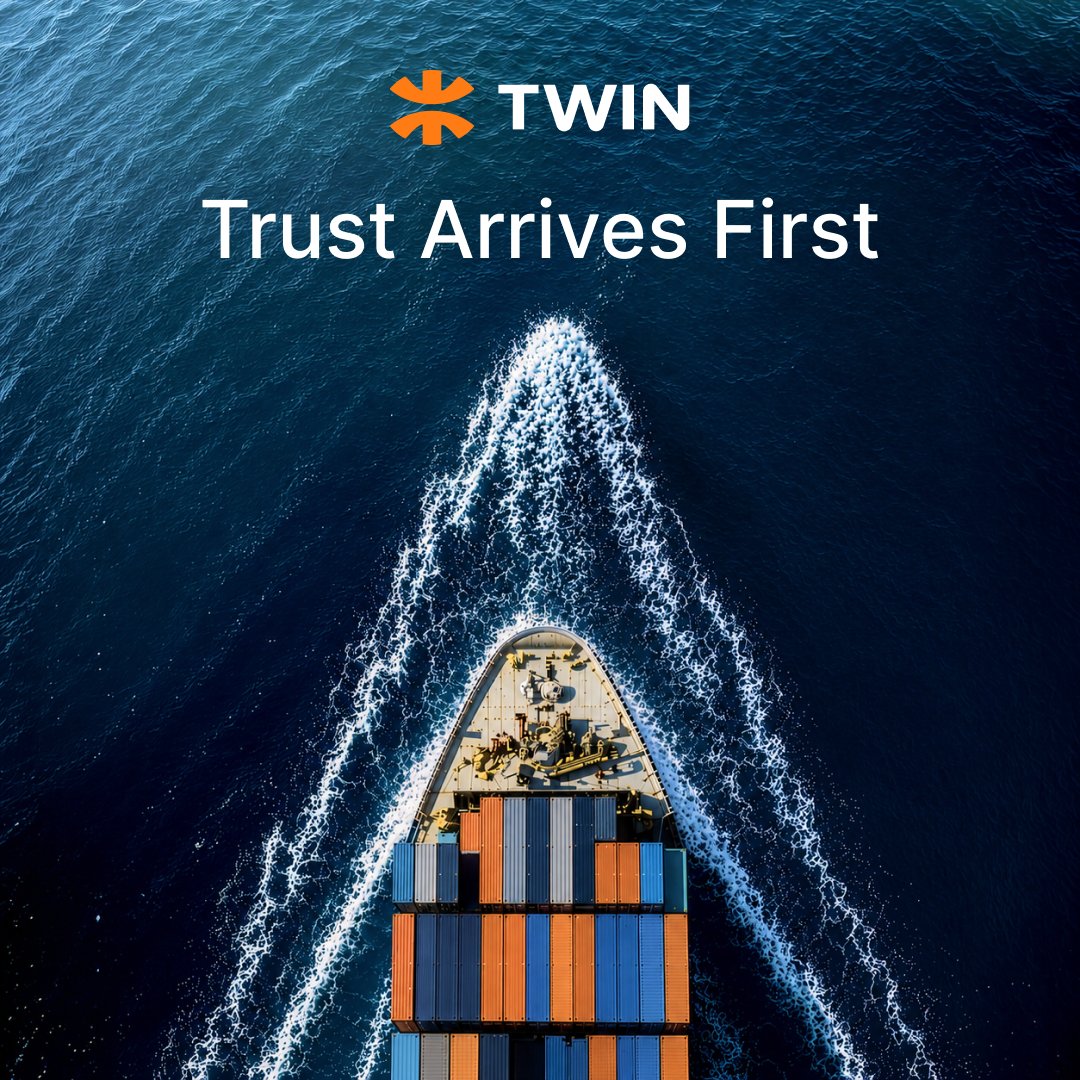
A container ship can be two weeks from port while the paperwork behind it is still being verified.
Copies can be emailed in seconds. Confirming they are genuine is the part that takes days.
TWIN settles it once. One record, signed by the parties who handled the goods and never rewritten after.
Trust arrives first.
#TrustedTrade
A lender deciding whether to fund a trade can take the exporter's word for it, or it can check the facts itself.
Checking has always been the harder option: copies of documents, sent by email, impossible to confirm from another country.
When the facts of a trade are recorded at source and signed by the parties responsible, that check becomes straightforward.
The decision rests on what is verifiable rather than on what has to be assumed.
#TrustedTrade